Wheat Bran Pellets
CN → US| HS Code | Tariff Rate | Origin | Destination | Doc |
|---|---|---|---|---|
| 2302100000 | 17.5% | CN | US | Official Doc |
| 2302900000 | 0.0% | CN | US | Official Doc |
Product Images
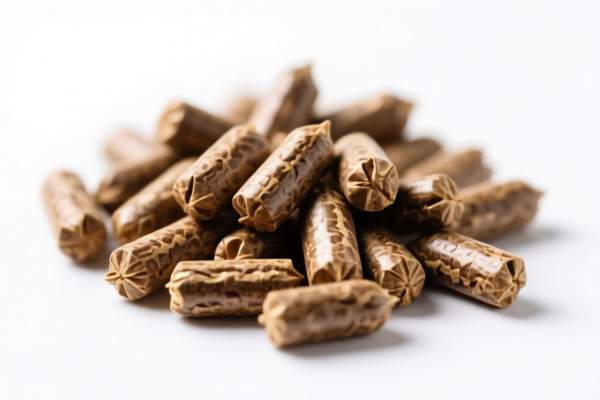
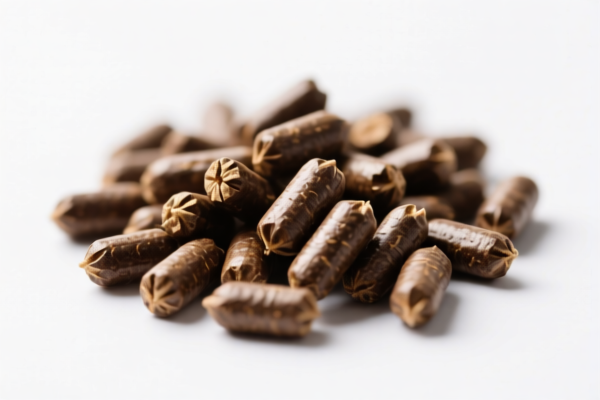
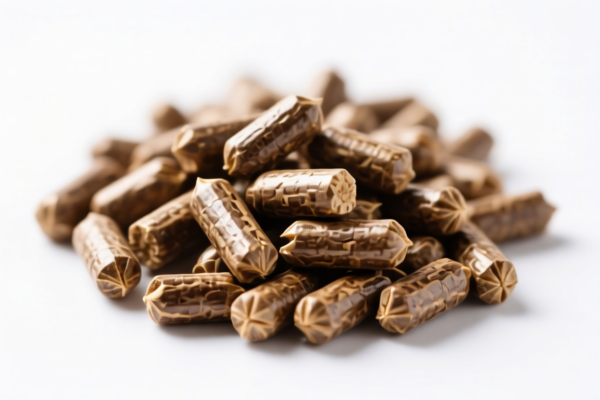
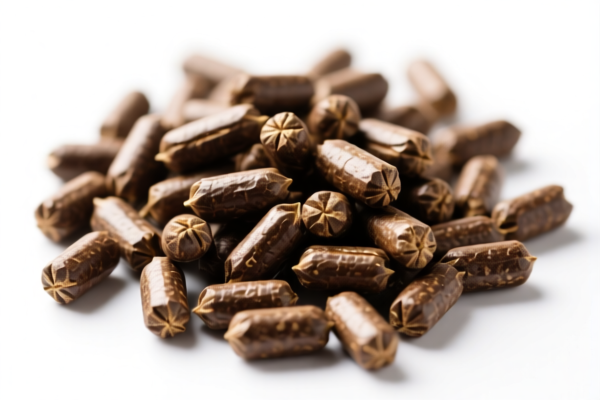
AI Analysis
🌾 Wheat Bran Pellets (Wheat Bran, Whether or not in the Form of Pellets)
🌐 HS Code Reference & Customs Clearance Guide | 2026 Latest Tariff Analysis | Professional Clearance Strategy
📌 Part 1: Product Definition & Classification: What Exactly is "Wheat Bran"?
Wheat bran is the hard outer layer of the wheat kernel, separated during the milling process. In international trade, its classification depends heavily on its form and origin.
Pelletized Wheat Bran: Bran that has been compressed into dense, uniform pellets. This form improves handling, reduces dust, and prevents segregation. Non-Pelletized Residues: Other flours, meals, or starch residues not specified elsewhere (e.g., standard bran, dust, or mixtures).
⚠️ Key Distinction Point:
- If the product is specifically "Wheat Bran", regardless of whether it is loose or pelleted → It belongs to 2302.10.00.00.
- If the product is a mixed residue from flour/starch manufacture that does not qualify as pure wheat bran (e.g., fine dust, unclassified milling waste) → It may fall under 2302.90.00.00.
📦 Part 2: HS Code Classification Details (2026 Latest Tariff Authority Comparison)
| HS Code | Product Description | Applicable Scenario | Tax Status |
|---|---|---|---|
2302.10.00.00 |
Wheat bran, whether or not in the form of pellets | Pure wheat bran, pelletized or loose, used for animal feed or food processing | ✅ Clear Tax Info |
2302.90.00.00 |
Other residues and waste from the manufacture of flour, meal, or starch | Unclassified milling waste, mixed bran, or non-bran residues | ❌ Error |
🔍 Crucial Reminder:
- Pelletization does NOT change the HS Code. Even if the wheat bran is compressed into pellets, it remains 2302.10.00.00.
- Do NOT confuse "Wheat Bran" with "Wheat Germ" or "Wheat Starch," which have different codes.
- If your product is a blended feed ingredient (e.g., wheat bran mixed with soybean meal), it may require a different classification (Chapter 23 mixtures).
💰 Part 3: 2026 Latest Tariff Rate Breakdown (Including Surcharge Tariffs & Policy Add-ons)
✅ Applicable Country: USA (US)
✅ Country of Origin: China (CN)
✅ Effective Date: 2025 (Current Status)
🎯 1. 2302.10.00.00 —— Wheat Bran (Pelletized or Not)
| Item | Content |
|---|---|
| Basic Tariff | 0.0% (Ad valorem) |
| Section 301 / Additional Tariff | +7.5% |
| Total Tax Rate | 7.5% |
| Tax Calculation | CIF Value × 7.5% |
| De Minimis Eligibility | ❌ No (General rule applies; low-value shipments may still be subject to inspection) |
| Legal Basis Path | USITC:2302.10.00.00 → Section 301: 7.5% surcharge on HS 2302.10.00.00 |
📌 Explanation:
- The Basic Tariff is 0%, making it theoretically duty-free under normal MFN (Most Favored Nation) status.
- However, due to Section 301 Trade Remedies, a 7.5% surcharge is applied to wheat bran products from China.
- Total Cost Impact: 7.5% of the CIF value.
- Note: This rate is significantly lower than many other agricultural products, but still requires careful declaration.
🚫 2. 2302.90.00.00 —— Other Residues (Failed to Retrieve)
| Item | Content |
|---|---|
| Basic Tariff | N/A |
| Additional Tariff | N/A |
| Total Tax Rate | Error / Failed to Retrieve |
| Recommendation | ❌ Do Not Use Unless Verified |
📌 Critical Warning:
- The system returned an "Error" for HS2302.90.00.00. This indicates that this code either:
1. Has a complex or variable tariff structure that is not directly retrievable in the current database.
2. Is not applicable to your specific product if it is pure wheat bran.
- Action: If your product is NOT pure wheat bran but a mixed residue, you MUST consult a customs broker to verify the exact rate, as it could be different from 7.5%.
🛠️ Part 4: Customs Clearance Practical Advice (Real-World Pitfall Avoidance Guide)
✅ 1. Required Documentation Checklist (Essential)
| Document | Must Provide | Description |
|---|---|---|
| ✅ Product Specification Sheet | ✔️ | Clearly state: "Wheat Bran," form (pellets/loose), protein content, moisture, ash content. |
| ✅ Certificate of Analysis (COA) | ✔️ | Proof that the product is indeed wheat bran, not a mixed feed. |
| ✅ Commercial Invoice | ✔️ | Must explicitly describe the product as "Wheat Bran, Pelleted" and match HS 2302.10.00.00. |
| ✅ Packing List | ✔️ | Detail net/gross weight, number of bags/bales. |
| ✅ Non-Wood Packaging Certificate | ✔️ | If shipped in wooden pallets, ISPM 15 compliance is required. |
| ✅ Phytosanitary Certificate | ⚠️ Optional | May be required by USDAAPHIS depending on origin and product state. |
✅ 2. Declaration Tips (Key Mnemonics)
🔥 "Bran is Bran, Pellet Doesn't Change Code. Declare Pure, Avoid Mixed Glue."
| Scenario | Correct Declaration | Wrong Practice |
|---|---|---|
| Pure Wheat Bran (Pelleted) | 2302.10.00.00 - Wheat Bran, Pelleted |
Declare as "Feed Mix" or "Grain Dust" → Risk of misclassification |
| Mixed Bran + Soybean Meal | Check Chapter 23 Mixtures (e.g., 2309.90) | Use 2302.10.00.00 → Incorrect! |
| Wheat Germ (not Bran) | 1104.23.00.00 or 1109.00.00.00 |
Use 2302.10.00.00 → Wrong Code |
| Industrial Wheat Starch Waste | 1108.19.00.00 or others |
Use 2302.90.00.00 → High Risk of Error |
✅ 3. Special Cases & Handling
| Situation | Handling Advice |
|---|---|
| High Moisture Content | Ensure moisture is declared. High moisture may trigger USDAAPHIS inspection for mold/pests. |
| Blended Products | If wheat bran is mixed with >5% other ingredients, it may be considered a "Prepared Feed" and require a different HS Code. |
| Food Grade vs. Feed Grade | Both fall under 2302.10.00.00, but food-grade may require FDA registration and prior notice. |
| Small Samples | Even small shipments are subject to customs inspection. Do not under-declare value. |
🌍 Part 5: Global Market Clearance Comparison (2026 Latest)
| Country/Region | Recommended HS Code | Tariff | Certification Requirements | Notes |
|---|---|---|---|---|
| 🇺🇸 USA | 2302.10.00.00 |
7.5% | FDA Prior Notice, USDAAPHIS (if applicable) | 7.5% surcharge applies to Chinese origin |
| 🇨🇳 China | 2302.10.00.00 |
0% - 5% | CIQ (Inspection & Quarantine) | Check latest Chinese tariff schedule for exact rate |
| 🇪🇺 EU | 2302 30 00 |
0% - 2.5% | Phytosanitary Certificate | VAT applies; check for anti-dumping duties |
| 🇬🇧 UK | 2302 30 00 |
0% - 5% | FSA (Food Standards Agency) | Post-Brexit rules apply |
| 🇯🇵 Japan | 2302.30.000 |
0% - 3% | Phytosanitary Certificate | Strict residue limits (pesticides) |
📌 Conclusion:
- USA imposes a 7.5% surcharge on wheat bran from China, making it more expensive than duty-free alternatives from other countries.
- EU and Japan have stricter phytosanitary and pesticide residue requirements. Ensure your product meets these standards.
- China typically has low or zero tariffs for imported wheat bran, but CIQ inspection is mandatory.
📌 Part 6: Common Mistakes & Pitfall Guide (Lessons Learned)
❌ Mistake 1: Declaring "Pellets" as a separate commodity
👉 Consequence: Misclassification → Delays & Fines.
👉 Fix: "Pellet" is a form, not a different product. Stick to 2302.10.00.00.
❌ Mistake 2: Mixing wheat bran with other feeds and declaring as pure bran
👉 Consequence: Customs may suspect fraud or misclassification → Audit & Penalties.
👉 Fix: If mixed, declare as "Prepared Feed" or the specific mixture code.
❌ Mistake 3: Ignoring the "Failed to Retrieve" error for 2302.90.00.00
👉 Consequence: If your product is not pure bran, you might apply the wrong rate.
👉 Fix: Verify your product composition. If it's not pure wheat bran, seek professional classification help.
❌ Mistake 4: Failing to provide a Certificate of Analysis (COA)
👉 Consequence: Customs may suspect the product is not agricultural feed → Hold for Inspection.
👉 Fix: Always include a COA from the manufacturer.
✅ Correct Declaration Example:
"Wheat Bran, Pelleted, Used for Animal Feed, Net Weight 1000kg, Origin: China, HS Code: 2302.10.00.00, Value: $500 USD"
🎯 Part 7: Conclusion: Professional Declaration, Save Time, Reduce Costs!
🎯 Remember the Mantra:
🔹 "Bran is Bran, Pellet is Form. Code 2302.10, Tariff 7.5%. Pure Declare, Mixed Avoid."
🔹 "HS Code Determines Duty, 7.5% is the Cost. Declare Accurately, Avoid Inspection Cost."
📌 Tips:
- If your wheat bran is non-Chinese origin (e.g., from EU, Australia, or North America), the 7.5% surcharge does NOT apply. Check for FTA (Free Trade Agreement) benefits.
- For USA imports, ensure FDA Prior Notice is submitted 4 hours before arrival (for food-grade) or as required for feed.
- Consider applying for an Advance Ruling if your product is borderline (e.g., highly mixed), to avoid post-clearance disputes.
📣 Take Action Now:
📞 Contact a Professional Customs Broker + Provide Product Photos + Submit FDA Prior Notice
🚀 Ensure Your Wheat Bran, Smooth Clearance, Efficient Export, Cost-Controlled!
✨ Professional Clearance Starts with Accurate Classification!
💼 Every Penny of Your Cost Deserves Precision!
Customer Reviews
About HS Code Classification
The Harmonized System (HS) is an internationally standardized nomenclature developed by the World Customs Organization (WCO) to classify traded products. Over 200 countries use the HS system as the basis for customs tariffs, trade statistics, and import/export regulations.
Each HS code follows a hierarchical structure:
- Chapter (2 digits) — Broad category of goods (e.g., Chapter 84: Machinery and Mechanical Appliances)
- Heading (4 digits) — More specific grouping within the chapter
- Subheading (6 digits) — Internationally standardized breakdown, used by all WCO member countries
- National subdivisions (8-10 digits) — Country-specific extensions for further classification, such as US HTSUS 10-digit codes
Correct HS code classification is essential for smooth customs clearance, accurate duty payment, and compliance with trade regulations. Misclassification can lead to customs delays, overpayment of duties, or penalties.
When importing from CN to US, the applicable tariff rates may include:
- Most-Favored-Nation (MFN) rate — The standard duty rate applied to WTO members
- General rate — Applied to countries without trade agreements
- Trade remedy duties — Additional tariffs such as Section 301 (anti-dumping), Section 232 (national security), or countervailing duties
The information provided on this page is for reference purposes only. For official classification, please consult with your local customs authority or a licensed customs broker.