Wheat Special Pesticide
CN → US| HS Code | Tariff Rate | Origin | Destination | Doc |
|---|---|---|---|---|
| 3808935010 | 40.0% | CN | US | Official Doc |
| 3808915001 | 40.0% | CN | US | Official Doc |
| 3808912501 | 41.5% | CN | US | Official Doc |
Product Images
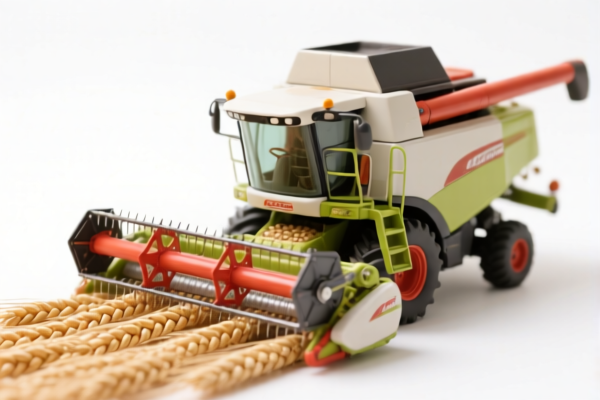
AI Analysis
🌾 Wheat Special Pesticide (Wheat-Specific Agrochemicals)
🌐 HS Code Reference & Customs Clearance Guide | 2026 Latest Tariff Analysis | Professional Compliance Strategy
📌 I. Product Definition & Classification: Do You Really Understand "Wheat Pesticides"?
Wheat Special Pesticides are specialized agricultural chemicals designed specifically for the protection of wheat crops. In international trade, they are categorized under Chapter 38 (Pharmaceutical Products), specifically heading 3808 (Insecticides, Rodenticides, Fungicides, Herbicides, and Similar Products).
These products are generally divided into three main functional categories: 1. Insecticides (杀虫剂): Targeting pests like aphids, locusts, or wheat mites. 2. Fungicides (杀菌剂): Targeting diseases like rust, powdery mildew, or Fusarium head blight. 3. Herbicides (除草剂): Targeting weeds in wheat fields.
⚠️ Key Classification Distinction:
- If the product contains aromatic or modified aromatic compounds specifically for insecticidal use → Classified under 3808.91.25.01.
- If the product is a general insecticide without specific aromatic constraints → Classified under 3808.91.50.01.
- If the product is a multi-purpose or unspecified formulation (e.g., mixed insect/fungicide/herbicide) → Classified under 3808.93.50.10.
📦 II. HS Code Classification Details (2026 Latest Tariff Authority Reference)
| HS Code | Product Description | Applicable Scenario | Tax Rate (CN Origin to US) |
|---|---|---|---|
3808.93.50.10 |
Wheat Special Pesticide (General/Multi-purpose) | Covers insecticides, fungicides, and herbicides generally. No material/form conflict. | 40.0% |
3808.91.50.01 |
Wheat-Specific Insecticide (General Aromatic) | Specifically for insecticides targeting wheat. Fits the category definition with no material conflict. | 40.0% |
3808.91.25.01 |
Wheat-Specific Insecticide (Aromatic/Modified Aromatic) | Specifically for insecticides containing aromatic or modified aromatic hydrocarbons. No material conflict. | 41.5% |
🔍 Important Reminder:
- 3808.91.25.01 carries the highest tax rate (41.5%) due to the specific chemical structure (aromatic/modified aromatic) triggering an additional 1.5% in base tariff compared to general insecticides.
- 3808.93.50.10 is the "catch-all" for mixed or non-specific wheat agrochemicals, maintaining a standard 40% total rate.
- All three categories are subject to the same surtax structure (Base + 301 Tariff + Section 122 Tariff).
💰 III. 2026 Latest Tariff Rate Breakdown (Including Surtaxes & Policy Additions)
✅ Applicable Country: United States (US)
✅ Origin: China (CN)
✅ Effective Date: Current (Including imports post-2025)
🎯 1. 3808.93.50.10 —— Wheat Special Pesticide (General/Multi-purpose)
| Item | Content |
|---|---|
| Base Tariff | 5.0% |
| Section 301 Surcharge (加征关税) | +25.0% |
| Section 122 Surcharge (122条款关税) | +10.0% |
| Total Tax Rate | 40.0% |
| Calculation Method | CIF Value × 40% |
| De Minimis Exemption | ❌ Not Eligible (Section 321 does not apply to Section 301/122 goods in most agricultural chemical contexts; check specific CBP rulings). |
| Legal Basis Path | 3808.93.50.10 → Section 301 → Section 122 |
📌 Explanation:
- The Base Tariff (5%) is the standard Most-Favored-Nation (MFN) rate for Chapter 38 pesticides.
- The Section 301 Surcharge (25%) is applied to a wide range of Chinese goods under the U.S.-China trade war.
- The Section 122 Surcharge (10%) is a newer or specific policy addition (as per your data), often targeting strategic or sensitive imports.
- Total: 40%. This is a high-cost entry requiring precise margin calculation.
🎯 2. 3808.91.50.01 —— Wheat-Specific Insecticide (General)
| Item | Content |
|---|---|
| Base Tariff | 5.0% |
| Section 301 Surcharge (加征关税) | +25.0% |
| Section 122 Surcharge (122条款关税) | +10.0% |
| Total Tax Rate | 40.0% |
| Calculation Method | CIF Value × 40% |
| De Minimis Exemption | ❌ Not Eligible |
| Legal Basis Path | 3808.91.50.01 → Section 301 → Section 122 |
📌 Note:
- Identical tax structure to3808.93.50.10.
- The distinction lies solely in the chemical composition and specific use. If it’s a pure insecticide without complex aromatic structures, it falls here.
- No cost advantage over the general category; compliance documentation must clearly state "Insecticide for Wheat."
🎯 3. 3808.91.25.01 —— Wheat-Specific Insecticide (Aromatic/Modified Aromatic)
| Item | Content |
|---|---|
| Base Tariff | 6.5% |
| Section 301 Surcharge (加征关税) | +25.0% |
| Section 122 Surcharge (122条款关税) | +10.0% |
| Total Tax Rate | 41.5% |
| Calculation Method | CIF Value × 41.5% |
| De Minimis Exemption | ❌ Not Eligible |
| Legal Basis Path | 3808.91.25.01 → Section 301 → Section 122 |
📌 Critical Insight:
- This is the most expensive category due to a higher Base Tariff (6.5%) compared to the standard 5%.
- The Surcharge (35%) remains the same.
- Why the higher base? Aromatic and modified aromatic compounds are often classified under stricter subheadings due to environmental or health regulations.
- Cost Impact: For every $10,000 CIF value, you pay $1,500 more in base duties compared to the other two codes.
🛠️ IV. Customs Clearance Practical Advice (Avoiding Pitfalls)
✅ 1. Required Documentation Checklist (All Must Be Provided)
| Document | Mandatory? | Description |
|---|---|---|
| ✅ Product Specification Sheet | ✔️ | Must clearly state active ingredients, concentration, and target crop (Wheat). |
| ✅ MSDS (Material Safety Data Sheet) | ✔️ | Essential for hazardous chemical classification. |
| ✅ Labeling & Packaging Photos | ✔️ | Must show English labels, hazard warnings, and "Wheat-Specific" usage. |
| ✅ Certificate of Origin (CO) | ✔️ | To verify Chinese origin and apply surtaxes correctly. |
| ✅ Commercial Invoice | ✔️ | Must match HS Code description precisely. |
| ✅ Usage Declaration | ✔️ | Explicitly state "For use on Wheat Crops Only" to avoid reclassification disputes. |
✅ 2. Declaration Strategy (Key Mnemonics)
🔥 “Specify Crop, Identify Chemistry, Declare Surcharge!”
| Scenario | Correct Declaration | Wrong Action |
|---|---|---|
| Pure Insecticide, Non-Aromatic | 3808.91.50.01 |
Misclassifying as General (3808.93) → Risk of penalty if audited. |
| Pure Insecticide, Aromatic | 3808.91.25.01 |
Misclassifying as General → Underpaying duties by 1.5%. |
| Mixed (Insect+Fungicide+Herbicide) | 3808.93.50.10 |
Splitting shipment → Unnecessary complexity. |
| Non-Wheat Specific Pesticide | Do Not Use these codes | Using "Wheat" label on non-wheat product → Fraud risk. |
✅ 3. Special Handling for Agrochemicals
| Situation | Handling Advice |
|---|---|
| EPA Registration | Ensure the product is EPA-registered for use in the US. Import without EPA registration will be detained or destroyed. |
| Hazardous Materials (HazMat) | Pesticides are often classified as HazMat. Ensure proper UN Packaging and HazMat Declaration on the Bill of Lading. |
| Section 122 Compliance | Verify if the product falls under the specific "Section 122" list. Non-compliance leads to seizure. |
| Origin Marking | Clearly mark "Made in China" on all packaging. |
🌍 V. Global Market Comparison (2026 Latest)
| Country/Region | Recommended HS Code | Tariff (CN Origin) | Key Certification | Remarks |
|---|---|---|---|---|
| 🇺🇸 USA | 3808.91.25.01 / 3808.91.50.01 / 3808.93.50.10 |
40.0% - 41.5% | EPA + FDA | High tariff burden. Surcharge applies. |
| 🇨🇳 China | 3808.91.25.01 / 3808.91.50.01 / 3808.93.50.10 |
~5% - 10% | Agri-Chemical Registration | Domestic production favored. |
| 🇪🇺 EU | 3808.93 / 3808.91 |
~6.5% | EFSA Approval | No Section 301/122 surtaxes. |
| 🇦🇺 Australia | 3808.91 / 3808.93 |
~5% - 10% | APVMA Approval | Strict biosecurity checks. |
| 🇯🇵 Japan | 3808.91 / 3808.93 |
~6.5% - 8.0% | MHLW Approval | Residue limits strictly enforced. |
📌 Conclusion:
- The US market is the most expensive due to the 35% surcharge (25% + 10%) on top of the base tariff.
- Europe and Asia have significantly lower tariffs but stricter environmental and residue regulations.
- Profit Margin Alert: For US exports, the 40-41.5% total duty can erase profits for low-margin products. Consider value-added formulation or alternative markets.
📌 VI. Common Mistakes & Pitfalls (Lessons Learned)
❌ Mistake 1: Misclassifying "Wheat Pesticide" as "General Chemical" (e.g., Chapter 29)
👉 Consequence: Underpayment of duties → Penalty + Back Tax (up to 5 years).
❌ Mistake 2: Ignoring the "Aromatic" distinction in 3808.91.25.01
👉 Consequence: Classifying as 3808.91.50.01 (40%) when it should be 3808.91.25.01 (41.5%) → Underpayment audit.
❌ Mistake 3: Failing to declare EPA Registration Number
👉 Consequence: Detention at Port. Product may be destroyed.
❌ Mistake 4: Not accounting for Section 122 Tariff
👉 Consequence: Unexpected 10% surprise cost at clearance.
✅ Correct Practice:
"Wheat-Specific Insecticide, [Active Ingredient], [Concentration], EPA Reg. No. [Number], For Agricultural Use Only, Made in China"
🎯 VII. Conclusion: Precision Classification Saves Money!
🎯 Remember Mnemonics:
🔹 "Aromatic Insecticide = 41.5% (Expensive)"
🔹 "General Insecticide = 40.0% (Standard)"
🔹 "Multi-purpose = 40.0% (Safe)"
🔹 "EPA Registration = Non-negotiable for US Entry"
📌 Pro Tip:
- If your product is not for wheat, do not use "Wheat-Specific" labels.
- Always verify the active ingredient’s chemical structure against HS Code definitions.
- Consult a Customs Broker for advance classification rulings if the chemical composition is complex.
📣 Immediate Action:
📞 Verify EPA Registration + Calculate Landed Cost (CIF + 40% Duty + Logistics)
🚀 Ensure Smooth US Customs Clearance with Accurate HS Codes!
✨ Professional Clearance Starts with Accurate Classification!
💼 Your Margin Depends on These Details!
Customer Reviews
About HS Code Classification
The Harmonized System (HS) is an internationally standardized nomenclature developed by the World Customs Organization (WCO) to classify traded products. Over 200 countries use the HS system as the basis for customs tariffs, trade statistics, and import/export regulations.
Each HS code follows a hierarchical structure:
- Chapter (2 digits) — Broad category of goods (e.g., Chapter 84: Machinery and Mechanical Appliances)
- Heading (4 digits) — More specific grouping within the chapter
- Subheading (6 digits) — Internationally standardized breakdown, used by all WCO member countries
- National subdivisions (8-10 digits) — Country-specific extensions for further classification, such as US HTSUS 10-digit codes
Correct HS code classification is essential for smooth customs clearance, accurate duty payment, and compliance with trade regulations. Misclassification can lead to customs delays, overpayment of duties, or penalties.
When importing from CN to US, the applicable tariff rates may include:
- Most-Favored-Nation (MFN) rate — The standard duty rate applied to WTO members
- General rate — Applied to countries without trade agreements
- Trade remedy duties — Additional tariffs such as Section 301 (anti-dumping), Section 232 (national security), or countervailing duties
The information provided on this page is for reference purposes only. For official classification, please consult with your local customs authority or a licensed customs broker.