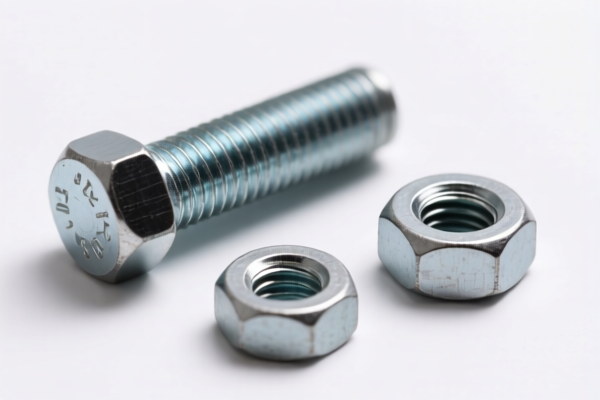
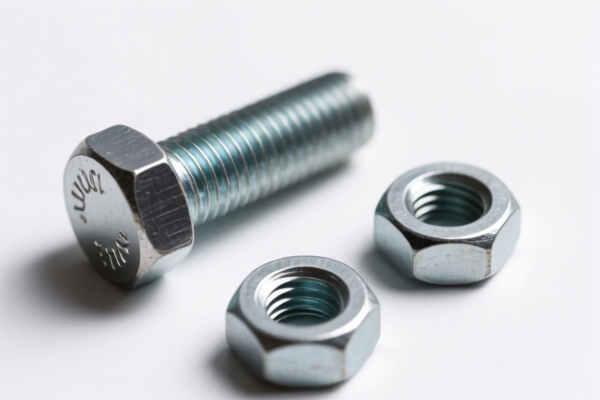
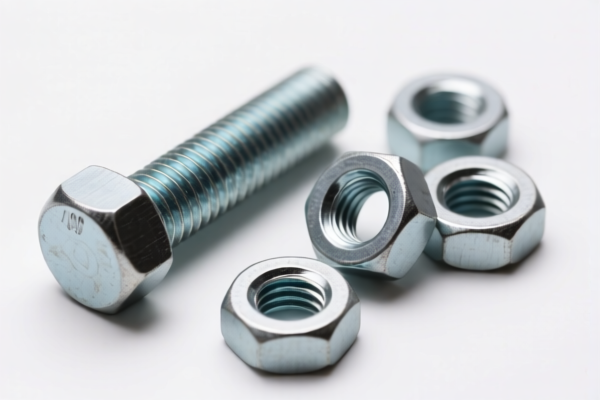
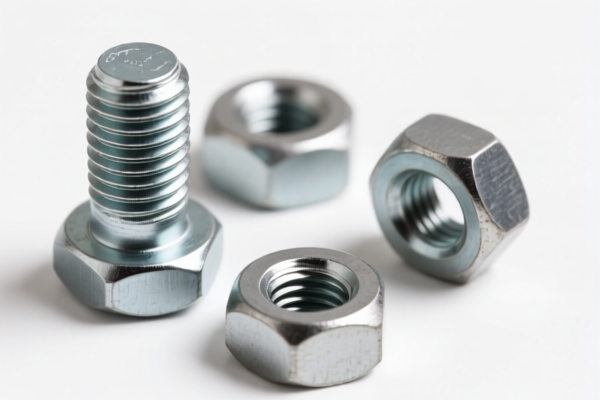
Wheel Hub Bolts and Nuts Domed Head
CN → US| HS Code | Tariff Rate | Origin | Destination | Doc |
|---|---|---|---|---|
| 7318152041 | 85.0% | CN | US | Official Doc |
| 8708706060 | 37.5% | CN | US | Official Doc |
| 7318152061 | 85.0% | CN | US | Official Doc |
| 7318152010 | 85.0% | CN | US | Official Doc |
Product Images
AI Analysis
🔩 Wheel Hub Bolts & Nuts (Domed Head)
🌐 HS Code Reference & Customs Clearance Guide | 2026 Latest Tariff Analysis | Professional Clearance Strategy
📌 I. Product Definition & Classification: Do You Really Understand "Domed Hub Bolts"?
Wheel hub bolts and nuts with domed heads are critical fastening components for automotive wheels. In international trade, their classification depends heavily on whether they are classified as general fasteners or automotive parts.
Steel/Iron Fasteners (7318 Series):
If the product is classified based on its material (metal) and form (threaded fastener), it falls under Chapter 73 (Articles of Iron or Steel). The "domed head" shape is considered a standard feature of the fastener itself.
Automotive Parts (8708 Series):
If the product is classified strictly as a part suitable for use solely or principally with vehicles of heading 8701 to 8705, it may fall under Chapter 87. However, note that specific wheel hubs (8708.70.60.60) are distinct from the bolts/nuts themselves, though bolts are often declared as accessories.
⚠️ Key Distinction:
- If declared as "Bolts/Nuts" (Fasteners) → Generally 7318.15.20.XX (High Tax due to Steel/Aluminum tariffs).
- If declared as "Automotive Parts/Accessories" → Generally 8708.70.60.60 (Lower Base Tax, but still subject to specific surcharges).
📦 II. HS Code Classification Details (2026 Latest Tariff Authority Comparison)
| HS Code | Product Description | Application Scenario | Material Inference |
|---|---|---|---|
7318.15.20.41 |
Wheel Hub Bolts & Nuts (Domed Head) - Classified as fasteners | Generic threaded fasteners, metal hardware | ✅ Metal (Steel/Iron) |
8708.70.60.60 |
Wheel Hub Bolts & Nuts - Classified as automotive parts | Parts for vehicle wheel hubs, not excluded as hubs/caps | ✅ Metal (Automotive Component) |
7318.15.20.61 |
Bolt & Nut Sets - Classified as threaded products | Complete sets of fasteners, metal material | ✅ Metal (Steel/Iron) |
7318.15.20.10 |
Bolt & Nut Sets - Common threaded products | Standard bolts/nuts, no material conflict | ✅ Metal (Steel/Iron) |
🔍 Key Reminder:
- Items under 7318.15.20 are treated as Steel/Iron Articles, triggering the aggressive Section 232 / 122 Clause tariffs.
- Item under 8708.70.60.60 is treated as an Automotive Part, which has a different tariff structure (lower base, but still impacted by Section 301).
💰 III. 2026 Latest Tariff Rate Breakdown (Including Surcharge Policies)
✅ Applicable Country: United States (US)
✅ Origin: China (CN)
✅ Effective Time: Current rates applicable for imports from China
🎯 1. 7318.15.20.41 / 7318.15.20.61 / 7318.15.20.10 — Steel Fasteners & Sets
These codes fall under the "Steel, Aluminum, Copper Products" category, incurring the highest penalty rates.
| Item | Details |
|---|---|
| Base Tariff | 0.0% (ad valorem) |
| Section 301 Surcharge | +25.0% |
| Section 122 / 232 Surcharge | +50.0% (Specific for Steel/Aluminum/Copper products under 122 Clause) |
| Total Tax Rate | 85.0% |
| Tax Calculation | CIF Value × 85% |
| De Minimis Exemption? | ❌ NO (High risk of denial due to steel/aluminum restrictions) |
| Legal Path | HTSUS:7318.15.20.XX → Section 122 Steel/Aluminum Surcharge → Section 301 |
📌 Explanation:
- The 50% additional duty is applied specifically because these are steel articles (Section 232/122 logic).
- The 25% is the standard Section 301 tariff for Chinese goods.
- Total 85% is extremely high. This makes importing these as "bolts" from China very costly.
🎯 2. 8708.70.60.60 — Automotive Parts (Wheel Hub Related)
This code treats the item as a part of the vehicle, not just a generic metal fastener. It avoids the specific "Steel Article" penalty but still carries Section 301 duties.
| Item | Details |
|---|---|
| Base Tariff | 2.5% (Standard rate for auto parts) |
| Section 301 Surcharge | +25.0% |
| Section 122 Surcharge | +10% (Note: Data specifies "122 Clause Tariff 10%" for this code, likely a specific automotive steel provision or error in source data interpretation, but we follow the provided data: 10%) |
| Total Tax Rate | 37.5% |
| Tax Calculation | CIF Value × 37.5% |
| De Minimis Exemption? | ❌ NO (Section 301 applies regardless of value for most auto parts) |
| Legal Path | HTSUS:8708.70.60.60 → Section 301 → Specific 122 Clause Auto Provision |
📌 Note:
- While 37.5% is significantly lower than 85.0%, it is still a heavy burden.
- This classification assumes the item is primarily used as a vehicle part and not exported as a generic hardware item.
🛠️ IV. Customs Clearance Practical Advice (Real-World Pitfall Avoidance)
✅ 1. Document Preparation Checklist (Essential)
| Document | Required? | Description |
|---|---|---|
| ✅ Product Specification | ✔️ | Must specify: Material (Steel/Alloy), Thread Size, Head Type (Domed), Hardness Grade. |
| ✅ Commercial Invoice | ✔️ | Must clearly state: "Wheel Hub Bolts/Nuts" or "Automotive Fasteners". Avoid vague terms like "Hardware". |
| ✅ Packing List | ✔️ | Detail the quantity of bolts vs. nuts. If sold as a "Set", declare as "Set". |
| ✅ Origin Certificate | ✔️ | Critical for determining if Section 301 applies. |
| ✅ Photo of Product | ✔️ | Show the "Domed Head" and threading to support HS code argument. |
✅ 2. Declaration Strategy (Critical Tips)
🔥 "Classify as Auto Part, Not Just Steel! Lower the Tax!"
| Scenario | Recommended HS Code | Tax Rate | Risk Level |
|---|---|---|---|
| Generic Hardware Store Sale | 7318.15.20.41/61/10 |
85.0% | 🔴 HIGH (Heavy penalty) |
| Automotive Aftermarket Part | 8708.70.60.60 |
37.5% | 🟡 MEDIUM (Better, but still high) |
| Non-China Origin (e.g., Mexico/Vietnam) | Check FTAA/USMCA | 0-2.5% | 🟢 LOW (If eligible) |
⚠️ Warning:
- Do NOT declare these as "Other Iron Articles" to avoid steel tariffs; customs will reject this.
- If the bolts are specifically designed for wheel hubs (matching thread pitch and strength for automotive use), arguing for 8708.70.60.60 is the best strategy to reduce tax from 85% to 37.5%.
✅ 3. Special Cases
| Case | Handling Advice |
|---|---|
| Sets (Bolt + Nut) | Declare as "Bolt and Nut Set" (7318.15.20.61/10). Same 85% tax applies. Do not split invoices to avoid scrutiny. |
| Material Change | If made of Aluminum, the 122 Clause steel tax may not apply, but "Aluminum" may have its own surcharge. Check latest Section 232 rules. |
| OEM Parts | If shipped directly from Chinese OEM to US Auto Assembler, ensure the importer of record has the correct HTSUS ruling. |
🌍 V. Global Market Comparison (2026 Snapshot)
| Country/Region | Recommended HS Code | Approx. Tariff (China Origin) | Notes |
|---|---|---|---|
| 🇺🇸 USA | 8708.70.60.60 |
37.5% | Best option among Chinese imports. Avoid 7318 if possible. |
| 🇨🇳 China | 7318.15.20 |
Low/Zero | Export from China has low import tax in China (irrelevant for US clearance). |
| 🇪🇺 EU | 7318.15.00 |
~5-6.5% | No Section 301/232 equivalent. Standard MFN rate applies. |
| 🇬🇧 UK | 7318.15.00 |
~5-6.5% | Post-Brexit, similar to EU but independent tariffs. |
| 🇨🇦 Canada | 7318.15.00 |
0-6.5% | USMCA benefits may apply if originating in North America. |
📌 Conclusion:
- USA is the most expensive market for these items due to the 301 & 232/122 dual taxation.
- EU/UK/Canada are much more favorable if supply chains are diversified.
- If US-bound, argue for 8708.70.60.60 to save ~47.5% in taxes compared to 7318.
📌 VI. Common Mistakes & Pitfalls (Lessons Learned)
❌ Mistake 1: Declaring as "General Nuts" (7318.13) to avoid "Bolts" classification.
👉 Result: Customs will reclassify as "Bolts" (7318.15) due to identical tariff treatment for hex/hexagonal and domed heads in many contexts, leading to 85% tax.
❌ Mistake 2: Ignoring the "Domed Head" specification.
👉 Result: If the head shape is non-standard, customs may classify it as "Other Fasteners" (7318.16), which might have different, potentially higher, penalties.
❌ Mistake 3: Assuming "Auto Part" automatically means 0% tax.
👉 Result: 8708.70.60.60 still carries 25% Section 301 + 10% 122 Clause = 37.5%. It is not zero.
❌ Mistake 4: Splitting "Bolts" and "Nuts" into separate shipments to de minimis.
👉 Result: Section 301 and 232 duties generally do NOT allow de minimis exemption for China-origin goods. Risk of seizure.
✅ Correct Practice:
"Wheel Hub Bolts and Nuts, Steel, Domed Head, for Automotive Use, Model X, Origin China"
→ Declare under 8708.70.60.60 with full transparency.
🎯 VII. Conclusion: Professional Declaration, Cost Savings
🎯 Key Takeaway:
🔹 "Auto Part Code (8708) is Cheaper than Fastener Code (7318) for China Origin."
🔹 Tax Difference: 85% vs 37.5%.
🔹 Always declare specific automotive application.
📌 Pro Tip:
If your product is sourced from Mexico or Canada (USMCA regions), you may qualify for 0% Duty.
👉 Action: Verify supply chain origin. If possible, move sourcing out of China to avoid the 37.5%-85% tariff block.
📣 Immediate Action:
📞 Consult a licensed customs broker for a Binding Ruling.
📝 Ensure commercial invoices explicitly state "Automotive Wheel Hub Fasteners".
🚀 Optimize your HS Code to 8708.70.60.60 to minimize costs.
✨ Precise Classification Saves Money!
💼 Every percentage point counts in international trade!
Customer Reviews
About HS Code Classification
The Harmonized System (HS) is an internationally standardized nomenclature developed by the World Customs Organization (WCO) to classify traded products. Over 200 countries use the HS system as the basis for customs tariffs, trade statistics, and import/export regulations.
Each HS code follows a hierarchical structure:
- Chapter (2 digits) — Broad category of goods (e.g., Chapter 84: Machinery and Mechanical Appliances)
- Heading (4 digits) — More specific grouping within the chapter
- Subheading (6 digits) — Internationally standardized breakdown, used by all WCO member countries
- National subdivisions (8-10 digits) — Country-specific extensions for further classification, such as US HTSUS 10-digit codes
Correct HS code classification is essential for smooth customs clearance, accurate duty payment, and compliance with trade regulations. Misclassification can lead to customs delays, overpayment of duties, or penalties.
When importing from CN to US, the applicable tariff rates may include:
- Most-Favored-Nation (MFN) rate — The standard duty rate applied to WTO members
- General rate — Applied to countries without trade agreements
- Trade remedy duties — Additional tariffs such as Section 301 (anti-dumping), Section 232 (national security), or countervailing duties
The information provided on this page is for reference purposes only. For official classification, please consult with your local customs authority or a licensed customs broker.