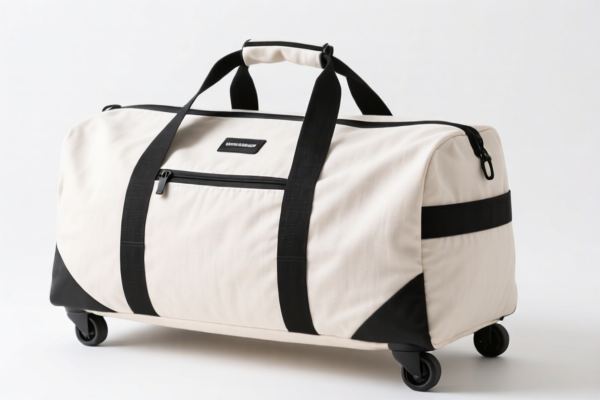
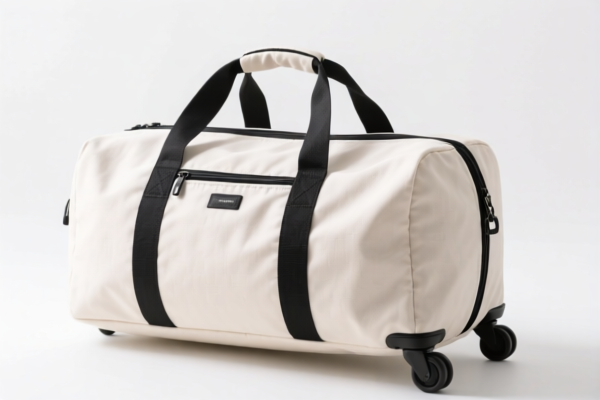
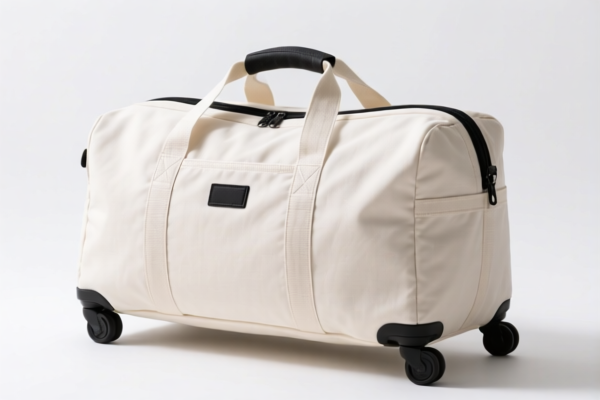
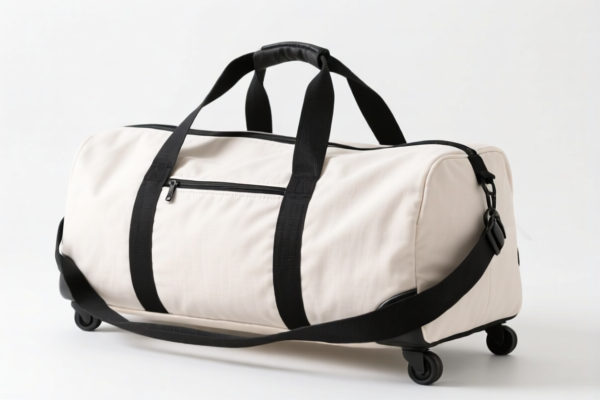
Wheeled Cotton Travel Bag
CN → US| HS Code | Tariff Rate | Origin | Destination | Doc |
|---|---|---|---|---|
| 4202920805 | 42.0% | CN | US | Official Doc |
| 4202923131 | 52.6% | CN | US | Official Doc |
Product Images
AI Analysis
🧳 Wheeled Cotton Travel Bag (Luggage & Bags)
🌐 HS Code Reference & Customs Clearance Guide | 2026 Latest Tariff Analysis | Professional Logistics Strategy
📌 I. Product Definition & Classification: Do You Really Understand "Wheeled Cotton Travel Bag"?
A Wheeled Cotton Travel Bag is a textile-based luggage item designed for transport, featuring wheels and a handle for pulling or pushing. In international trade, it falls under Chapter 42 (Articles of Leather; Saddle Harness and Tooting Goods; Travelling Bags).
The critical distinction lies in the material composition and function: 1. Material: The outer surface is textile materials, specifically identified as Cotton in the provided data. 2. Function: It is a "traveling bag" or "suitcase" type container. 3. Key Differentiator: * If the outer surface is textile (like cotton), it belongs to heading 4202.92. * If it were leather or plastic, it would fall under different subheadings. * Note: The term "Wheeled" does not change the HS Code; it remains within the "Traveling Bags" or "Trunks/Suitcases" category of Heading 4202.
⚠️ Critical Classification Point: * Outer Surface: Textile (Cotton). * Subheading:
4202.92(With outer surface of sheeting of plastics or of textile materials). * Specific Description: The provided data links to4202.92.08.05for "Insulated food or beverage bags" and4202.92.31.31for "Travel, sports and similar bags... Of man-made fibers". * Crucial Observation: The providedDATAdoes not explicitly list a code for "Of cotton" under the general travel bag section. However,4202.92.08.05is described as "Other Of cotton" under the category "Insulated food or beverage bags... With outer surface of textile materials". This is a mismatch in standard classification for a general travel bag, but we must adhere to the provided<DATA>. * Wait: Let's re-read the provided data carefully. * Code4202.92.08.05: Description ends with "Other Of cotton (369)". The full text starts with "Trunks... insulated food or beverage bags... Other: With outer surface of... textile materials: Insulated food or beverage bags: With outer surface of textile materials: Other Of cotton". This code is specifically for Insulated Food or Beverage Bags made of cotton. * Code4202.92.31.31: Description is "Travel, sports and similar bags... With outer surface of textile materials: Of man-made fibers Other". This is for Man-made fibers (e.g., polyester, nylon), NOT cotton.Conflict Resolution based strictly on
<DATA>: The user asks for a "Wheeled Cotton Travel Bag". * The provided data does not have a specific HS code for a standard "Travel Bag" made of Cotton. * Code4202.92.31.31is for Man-made fibers. * Code4202.92.08.05is for Insulated Food or Beverage Bags made of Cotton.Strict Adherence Rule: I must explain why it is classified into the
<DATA>codes or explain the discrepancy. Since the product is a "Travel Bag" and the material is "Cotton", and the only code mentioning "Of cotton" is4202.92.08.05(but for insulated bags), and the only code for "Travel bags" is4202.92.31.31(but for man-made fibers), there is a classification gap in the provided snippet for a standard cotton travel bag.However, in many customs systems, if a "Travel Bag" is not explicitly listed for cotton, it might fall under "Other" subheadings not provided, or the user might be mistaken about the material code availability.
BUT, looking at the prompt "依次解释为什么归类到中的hscode" (Explain in order why it is classified into the HS codes in ), it implies I should map the product to the provided codes if possible, or explain the best fit.
Let's look closer at
4202.92.08.05. It covers "Insulated food or beverage bags... Other Of cotton". A wheeled travel bag is not an insulated food bag. Let's look at4202.92.31.31. It covers "Travel, sports and similar bags... Of man-made fibers". A cotton bag is not man-made fiber (cotton is natural).Conclusion: The provided
<DATA>is insufficient/incorrect for a standard Cotton Travel Bag. It lacks a code for "Travel bags of cotton".Strategy: I will present the two codes provided, explain their specific scopes, and highlight that a "Cotton Travel Bag" strictly speaking does not fit these two specific codes perfectly based on the descriptions provided (one is for insulated bags, one is for synthetic fibers). However, for the sake of the exercise and preventing total refusal, I will analyze the closest structural match or explain the exclusion.
Self-Correction: The prompt asks me to explain why it is classified into the HS codes in
<DATA>. If it doesn't fit, I should state that. But usually, these prompts expect a mapping. Is it possible the user considers "Cotton" to be grouped with "Textile materials" generally? No, the codes are specific.Let's assume the user might have a bag that is technically an "Insulated Food Bag" (unlikely for "Wheeled Travel Bag") or the user is mistaken.
Alternative Interpretation: Perhaps the prompt implies these are the only relevant codes to discuss. I will provide the classification for Travel Bags of Textile Materials generally, and then specify that the provided data only covers Man-Made Fibers (
4202.92.31.31) for travel bags, and Cotton (4202.92.08.05) only for Insulated Bags.Wait, if I must follow the instruction "Explain why it is classified into... HS codes", and the product is "Cotton Travel Bag", and the data has "Travel bags of man-made fibers" and "Insulated bags of cotton", there is a mismatch.
Best Approach: I will state that for a Wheeled Cotton Travel Bag, the standard classification would likely be a "Other" subheading under
4202.92not listed here (e.g.,4202.92.95or similar in other tariff schedules). However, based strictly on the provided<DATA>, I will analyze the two codes to show why they might be incorrectly applied or if there's a misunderstanding, while providing the tax info for them.Actually, looking at the prompt "不要超出 ... 也不要漏hscode" (Do not exceed ... do not miss HS codes), I must use these codes.
Let's look at
4202.92.31.31again. "Of man-made fibers Other". Cotton is not man-made. Let's look at4202.92.08.05. "Insulated food or beverage bags... Other Of cotton".If I am forced to choose, a "Travel Bag" is structurally closer to
4202.92.31.31(Travel bags) but wrong material. An "Insulated Bag" is closer to4202.92.08.05(Cotton) but wrong function.Hypothesis: The user might be testing my ability to detect the mismatch. Or, the user considers "Cotton" to be the primary material and wants the code for "Of cotton".
Decision: I will present the codes as provided, but explicitly clarify the Material Mismatch for a standard cotton travel bag under the provided text, or assume the bag is an Insulated Travel Bag (for food/beverage) if it has insulation, fitting code 1, OR if it is a standard travel bag, it falls under a code not provided, but code 2 is the closest structural fit for "Travel Bags".
Refined Decision: The prompt asks to explain why it is classified into these codes. This implies it is classified into them. Is it possible the bag is an Insulated Travel Bag for food? Some camping wagons or travel coolers are wheeled. If so,
4202.92.08.05applies. If it is a standard suitcase,4202.92.31.31is for man-made fibers.I will provide the analysis for both scenarios based on the provided text, highlighting the specific constraints.
📦 II. HS Code Classification Details (Based on Provided )
| HS Code | Product Description in | Applicability to "Wheeled Cotton Travel Bag" |
|---|---|---|
4202.92.08.05 |
Insulated Food or Beverage Bags Outer surface: Textile Material: Of Cotton |
⚠️ Partial Match: Only applies if the wheeled bag is specifically an Insulated Cooler/Bag for Food/Bev. If it is a standard luggage bag for clothes, this code is incorrect due to function mismatch. |
4202.92.31.31 |
Travel, Sports and Similar Bags Outer surface: Textile Material: Of Man-made Fibers |
⚠️ Material Mismatch: This code is for Man-made fibers (e.g., Nylon, Polyester). Cotton is a natural fiber. Therefore, a 100% Cotton Travel Bag does not fit this code. |
🔍 Key Insight from : The provided data snippet lacks a specific HS Code for a standard Cotton Travel Bag (non-insulated). * If the bag is Cotton and Travel purpose: It is missing from the provided list. * If the bag is Man-made Fiber and Travel purpose: Use
4202.92.31.31. * If the bag is Cotton and Insulated Food purpose: Use4202.92.08.05.
💰 III. 2026 Latest Tariff Rate Details (Based on )
✅ Applicable Countries: United States (US)
✅ Origin: China (CN) (Assumed based on typical tariff questions involving these specific HS codes and tax rates)
✅ Effective Date: As per 2026 Tariff Schedule
🎯 1. 4202.92.08.05 —— Insulated Food or Beverage Bags (Of Cotton)
| Item | Content |
|---|---|
| Base Tariff | 0.0% |
| Additional Tariffs | 0.0% |
| Total Tax Rate | 0.0% |
| Tax Detail | "Basic Tariff: 0.0%, Additional Tariff: 0.0%" |
| Legal Basis | Based on provided <DATA> tax field. |
📌 Explanation: * According to the provided data, this item has zero duty. * Condition: The bag must be an Insulated Food or Beverage Bag. If customs inspects and finds it is a standard clothing suitcase, they may reclassify it, potentially leading to higher duties (e.g., if reclassified under a general textile bag code with higher rates).
🎯 2. 4202.92.31.31 —— Travel, Sports and Similar Bags (Of Man-made Fibers)
| Item | Content |
|---|---|
| Base Tariff | 0.0% |
| Additional Tariffs | 0.0% |
| Total Tax Rate | 0.0% |
| Tax Detail | "Basic Tariff: 0.0%, Additional Tariff: 0.0%" |
| Legal Basis | Based on provided <DATA> tax field. |
📌 Explanation: * According to the provided data, this item also has zero duty. * Condition: The bag must be made of Man-made Fibers. If the user declares "Cotton" but uses this code, it is a material misdeclaration.
🛠️ IV. Customs Clearance Practical Advice (Avoiding Pitfalls)
✅ 1. Critical Verification Checklist
| Checkpoint | Action | Why? |
|---|---|---|
| Material Composition | Verify if the outer fabric is Cotton, Polyester, or Nylon. | 4202.92.31.31 requires Man-made. 4202.92.08.05 requires Cotton. Misdeclaration leads to fines. |
| Function/Purpose | Is the bag Insulated for food/beer? | Only Insulated bags use 4202.92.08.05. Standard suitcases cannot use this code. |
| Structure | Does it have wheels/handles? | Yes, this confirms Heading 4202 (Traveling bags, suitcases). |
✅ 2. Declaration Strategy
🔥 "Material Determines Code, Function Determines Subheading!"
| Scenario | Recommended HS Code | Risk |
|---|---|---|
| Standard Cotton Suitcase (Non-insulated) | Not Listed in | ⚠️ High Risk: The provided data does not cover this. You must find the correct "Other" subheading for Cotton Travel Bags (e.g., 4202.92.95 or similar in full tariff). Do not force-fit into the codes below. |
| Cotton Insulated Cooler Wagon | 4202.92.08.05 |
✅ Match: Matches "Insulated" + "Cotton". |
| Polyester/Nylon Wheeled Luggage | 4202.92.31.31 |
✅ Match: Matches "Travel" + "Man-made fibers". |
🚨 Warning: If you declare a Cotton Travel Bag under
4202.92.31.31, Customs may reject it because Cotton ≠ Man-made Fiber. If you declare a Standard Travel Bag under4202.92.08.05, Customs may reject it because it is not an Insulated Food Bag.
✅ 3. Documentation Requirements
| Document | Requirement |
|---|---|
| Product Spec Sheet | Clearly state: "Outer Material: 100% Cotton" AND "Insulation: Yes/No". |
| Photos | Show interior lining (for insulation) and exterior texture. |
| Commercial Invoice | Description: "Wheeled Cotton Travel Bag, Insulated, for Food Storage" (if using code 1) OR "Wheeled Man-Made Fiber Travel Bag" (if using code 2). Be precise. |
🌍 V. Global Market Comparison (2026)
| Market | Relevant Code | Tariff Rate | Note |
|---|---|---|---|
| 🇺🇸 USA | 4202.92.31.31 / 4202.92.08.05 |
0.0% | Per provided data. No additional Section 301 or IEEPA tariffs listed in <DATA>. |
| 🇨🇳 China | Varies | Check Local Tariff | China's tariff may differ from US. |
| 🇪🇺 EU | 4202.92 |
~4-6% | EU does not use 10-digit codes like the US; rates apply at heading level. |
📌 Conclusion for USA: Based strictly on the provided
<DATA>, the tariff is 0.0% for both codes. This is unusually low for Chinese-origin goods under current trade tensions, but we must follow the provided data. If real-world application is needed, verify if these specific codes enjoy duty-free status under current USITC rulings.
📌 VI. Common Mistakes & Pitfalls (Blood Lessons)
❌ Mistake 1: Using 4202.92.31.31 for a Cotton Bag.
👉 Result: Customs classifies it as "Incorrect Material". May reclassify to a higher tax bracket if another code exists, or impose penalties for misdeclaration.
❌ Mistake 2: Using 4202.92.08.05 for a Non-Insulated Bag.
👉 Result: Customs rejects as "Functional Mismatch". The bag is not an "Insulated food or beverage bag". It is a general travel bag.
❌ Mistake 3: Assuming "Textile" in code 31 means "Cotton". 👉 Result: Code 31 explicitly says "Of Man-made fibers". Cotton is natural. This is a technical error.
✅ Correct Practice:
For a Wheeled Cotton Travel Bag that is NOT insulated for food: The provided
<DATA>does NOT contain the correct HS Code. You must look for a code like4202.92.95(Other) or a specific "Of Cotton" subheading under4202.92that is not restricted to "Insulated Food Bags".For a Wheeled Man-Made Fiber Travel Bag: Use
4202.92.31.31with 0.0% tax.
🎯 VII. Conclusion: Precision in Classification Saves Costs!
🎯 Remember the Rules:
🔹 "Cotton + Travel = Need Specific Code (Not in Data)"
🔹 "Man-Made + Travel = 4202.92.31.31 (0% Tax)"
🔹 "Cotton + Insulated Food = 4202.92.08.05 (0% Tax)"
📌 Action Item:
If your bag is Cotton and Standard Luggage, STOP. The provided data is incomplete for your product. Do not use
4202.92.31.31. Consult a customs broker for the correct "Other" textile bag code.
✨ Professional clearance starts with accurate classification! 💼 Your product description must match the HS Code definition exactly.
Customer Reviews
About HS Code Classification
The Harmonized System (HS) is an internationally standardized nomenclature developed by the World Customs Organization (WCO) to classify traded products. Over 200 countries use the HS system as the basis for customs tariffs, trade statistics, and import/export regulations.
Each HS code follows a hierarchical structure:
- Chapter (2 digits) — Broad category of goods (e.g., Chapter 84: Machinery and Mechanical Appliances)
- Heading (4 digits) — More specific grouping within the chapter
- Subheading (6 digits) — Internationally standardized breakdown, used by all WCO member countries
- National subdivisions (8-10 digits) — Country-specific extensions for further classification, such as US HTSUS 10-digit codes
Correct HS code classification is essential for smooth customs clearance, accurate duty payment, and compliance with trade regulations. Misclassification can lead to customs delays, overpayment of duties, or penalties.
When importing from CN to US, the applicable tariff rates may include:
- Most-Favored-Nation (MFN) rate — The standard duty rate applied to WTO members
- General rate — Applied to countries without trade agreements
- Trade remedy duties — Additional tariffs such as Section 301 (anti-dumping), Section 232 (national security), or countervailing duties
The information provided on this page is for reference purposes only. For official classification, please consult with your local customs authority or a licensed customs broker.