Whetstone
CN → US| HS Code | Tariff Rate | Origin | Destination | Doc |
|---|---|---|---|---|
| 6804300000 | 35.0% | CN | US | Official Doc |
| 6804230000 | 35.0% | CN | US | Official Doc |
Product Images
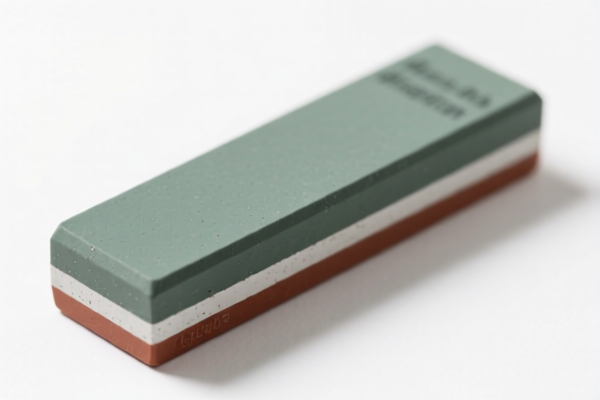
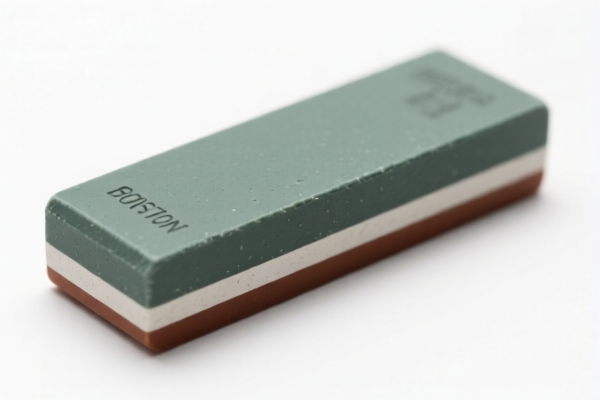
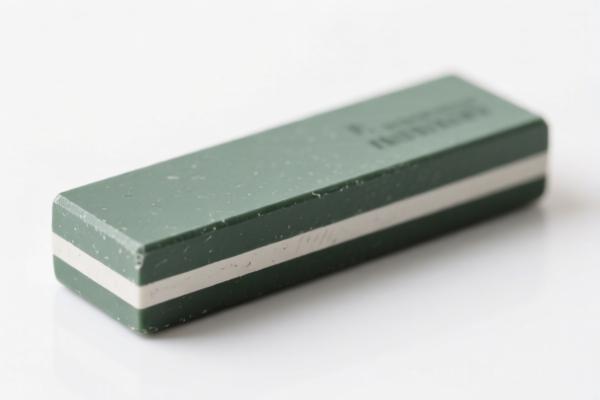
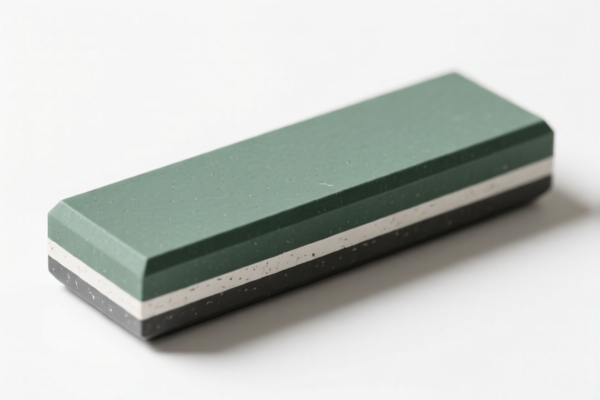
AI Analysis
🧱 Whetstones (Grinding & Polishing Stones)
🌐 HS Code Reference & Customs Clearance Guide | 2026 Latest Tariff Analysis | Professional Clearance Strategy
📌 I. Product Definition & Classification: Do You Really Understand "Whetstones"?
Whetstones (also known as grinding stones, millstones, or sharpening stones) are essential tools for grinding, sharpening, polishing, truing, or cutting materials. In international trade, they are classified based on their material composition and function. The key distinction lies between hand sharpening/polishing stones and other millstones/grinding wheels.
⚠️ Key Distinction Points:
- Hand sharpening/polishing stones: Specifically designed for manual use (e.g., knife sharpening, tool maintenance). Often made of natural stone or agglomerated abrasives. → HS 6804.30.00.00
- Other millstones/grinding wheels: Includes industrial grinding wheels, large-scale millstones, or stones not specifically for hand sharpening. If made of natural stone, they fall under HS 6804.23.00.00.
- Material Matters: Stones made of agglomerated natural/artificial abrasives or ceramics may fall under different subheadings depending on their specific structure and framework status.
📦 II. HS Code Classification Details (2026 Latest Tariff Authority Reference)
| HS Code | Product Description | Applicable Scenario | Material Type | Framework? |
|---|---|---|---|---|
6804.30.00.00 |
Hand sharpening or polishing stones | Knife whetstones, manual tool sharpening stones, precision polishing stones | Natural stone, agglomerated abrasives, or ceramics | ❌ No framework |
6804.23.00.00 |
Other millstones, grindstones, grinding wheels: Of natural stone | Industrial millstones, large natural stone grinding wheels, non-hand-sharpening stones | Natural stone only | ❌ No framework |
🔍 Important Reminder:
- Hand sharpening stones (even if made of natural stone) are explicitly separated from other natural stone millstones. If it’s intended for hand use, classify under 6804.30.00.00.
- Other natural stone millstones (not for hand sharpening) fall under 6804.23.00.00.
- Agglomerated abrasives or ceramic-based stones used for hand sharpening also fall under 6804.30.00.00, provided they are without frameworks.
💰 III. 2026 Latest Tariff Rate Details (Including Additional Taxes & Policy Additions)
✅ Applicable Country: United States (US)
✅ Country of Origin: China (CN)
✅ Effective Date: 2025 November 10 onwards (including subsequent imports)
🎯 1. 6804.30.00.00 —— Hand Sharpening or Polishing Stones
| Item | Content |
|---|---|
| Base Tariff Rate | 0% (ad valorem) |
| Additional Tariff (Section 301) | +25% (added duty on Chinese imports) |
| Total Tariff Rate | 25.0% |
| Tax Calculation | CIF Value × 25% |
| De Minimis Exemption Eligible? | ❌ No (deny_de_minimis) |
| Legal Basis Path | USITC:6804.30.00.00 → Footnote: Section 301 Additional Tariff |
📌 Explanation:
- "Hand sharpening or polishing stones" are explicitly listed under 6804.30.00.00.
- Although the base tariff is 0%, a 25% additional tariff applies to all Chinese-origin goods in this category.
- Total effective rate: 25%. This is a moderate-to-high tariff, requiring advance cost planning.
🎯 2. 6804.23.00.00 —— Other Millstones/Grindstones: Of Natural Stone
| Item | Content |
|---|---|
| Base Tariff Rate | 0% (ad valorem) |
| Additional Tariff (Section 301) | 0% (not subject to Section 301 additional duties) |
| Total Tariff Rate | 0.0% |
| Tax Calculation | CIF Value × 0% = $0 |
| De Minimis Exemption Eligible? | ✅ Yes (eligible for de minimis exemption if value < $800) |
| Legal Basis Path | USITC:6804.23.00.00 → No Section 301 footnote |
📌 Note:
- Natural stone millstones (not for hand sharpening) are exempt from Section 301 additional tariffs.
- Total effective rate: 0%. This is a tariff-free category, making it highly cost-effective for import.
- Crucial: If the stone is natural stone but intended for hand sharpening, it does NOT qualify for 0%. It must be classified under 6804.30.00.00 (25% tax).
🛠️ IV. Customs Clearance Practical Advice (Battle-Tested Pitfall Avoidance Guide)
✅ 1. Required Documentation Checklist (All Mandatory)
| Document | Required | Explanation |
|---|---|---|
| ✅ Product Specification Sheet | ✔️ | Must specify: type (hand sharpening vs. industrial), material (natural stone, agglomerated, ceramic), dimensions, weight |
| ✅ Product Photos (Clear Label/Marking) | ✔️ | Show intended use (e.g., "Knife Sharpening Stone") |
| ✅ Commercial Invoice | ✔️ | Clearly state: "Whetstone, Hand Sharpening, Natural Stone/Agglomerated Abrasive" |
| ✅ Packing List | ✔️ | Detail quantities, weights, and packaging type |
| ✅ Certificate of Origin (CO) | ✔️ | Required to prove Chinese origin (for Section 301 application) |
| ✅ Material Composition Statement | ✔️ | Confirm if natural stone, agglomerated, or ceramic to avoid misclassification |
✅ 2. Declaration Tips (Key Mantra)
🔥 "Hand Use = 25%, Industrial Natural Stone = 0%, Misclassification = Penalty!"
| Scenario | Correct Declaration | Wrong Practice |
|---|---|---|
| Knife sharpening stone (natural or abrasive) | 6804.30.00.00 (25%) |
Misdeclare as "natural stone millstone" → 0% (illegal, risk of penalty) |
| Large natural stone grinding wheel (industrial) | 6804.23.00.00 (0%) |
Misdeclare as "hand sharpening stone" → 25% (overpay) |
| Ceramic-based sharpening stone | 6804.30.00.00 (25%) |
Misdeclare as "ceramic tile" → incorrect HS, delay |
| Agglomerated abrasive whetstone | 6804.30.00.00 (25%) |
Split into parts → each part taxed separately, higher total |
✅ 3. Special Cases Handling
| Scenario | Handling Advice |
|---|---|
| OEM Custom Whetstones | Provide customer design specs to prove intended use (hand sharpening vs. industrial) |
| Set of Whetstones (Multiple Grits) | Declare as a single unit under 6804.30.00.00 if packaged together for hand use |
| Whetstones with Wooden Stands | If stand is integral, declare as one unit. If separable, stand may be classified separately (but hand sharpening stone remains 25%) |
| Industrial Diamond-Tipped Grinding Wheels | Not "hand sharpening" → may fall under 6804.23.00.00 if natural stone base, or other headings if synthetic |
🌍 V. Global Market Comparison (2026 Latest)
| Country/Region | Recommended HS Code | Tariff Rate | Certification Requirements | Notes |
|---|---|---|---|---|
| 🇺🇸 United States | 6804.30.00.00 |
25% (China origin) | None specific | 0% for 6804.23.00.00 |
| 🇨🇳 China | 6804.30.00.00 |
13% | None | Lower than US |
| 🇪🇺 European Union | 6804.30.00.00 |
3.5% | CE (if power tools involved) | Lower than US |
| 🇬🇧 United Kingdom | 6804.30.00.00 |
4.0% | UKCA (if applicable) | Post-Brexit tariffs apply |
| 🇯🇵 Japan | 6804.30.00.00 |
3.0% | PSE (if electric whetstones) | Low tariff, high quality standards |
📌 Conclusion:
- The US is the only major market applying Section 301 additional tariffs to hand sharpening stones.
- Natural stone industrial millstones enjoy 0% tariff in the US, making them highly competitive.
- EU, UK, Japan offer significantly lower tariffs (~3-4%) for hand sharpening stones.
📌 VI. Common Errors & Pitfall Avoidance Guide (Blood-Tested Lessons)
❌ Error 1: Declaring a hand sharpening stone as "natural stone millstone" to avoid 25% tax
👉 Consequence: Customs audit → penalty, back taxes, and possible seizure
❌ Error 2: Declaring an industrial natural stone millstone as "hand sharpening stone"
👉 Consequence: Overpay 25% tax unnecessarily → cost inflation
❌ Error 3: Omitting material composition (natural vs. agglomerated vs. ceramic)
👉 Consequence: Customs delay for reclassification → demurrage fees
❌ Error 4: Using vague terms like "grinding stone" without specifying hand use
👉 Consequence: Customs may assign 6804.23.00.00 (0%) or 6804.30.00.00 (25%) based on interpretation → uncertainty
✅ Correct Declaration Example:
"Whetstone, Hand Sharpening Stone, Natural Stone, 100x50x20mm, Model WS-100, Intended for Manual Knife Sharpening"
🎯 VII. Conclusion: Precise Classification Saves Money, Time, and Stress!
🎯 Remember the Mantra:
🔹 "Hand Sharpening = 25%, Industrial Natural Stone = 0%, Misclassification = Penalty!"
🔹 "HS Code Determines Tariff, 25% Difference Matters, Declare Accurately, Avoid Customs Delays!"
📌 Pro Tip:
- If your whetstones are shipped under $800 (de minimis threshold), and classified under 6804.23.00.00 (natural stone, industrial), they may be duty-free.
- However, hand sharpening stones (6804.30.00.00) do NOT qualify for de minimis exemption due to Section 301 additional tariffs.
- Consider pre-issuing an Advance Ruling from US Customs (CBP) if unsure about classification.
📣 Immediate Action Required:
📞 Contact a licensed customs broker + Provide product photos + Submit for HS Code Advance Ruling
🚀 Ensure your whetstones clear customs smoothly, avoid penalties, and maximize profit margins!
✨ Professional Customs Clearance Starts with Accurate Classification!
💼 Every dollar of tariff cost deserves precise calculation!
Customer Reviews
About HS Code Classification
The Harmonized System (HS) is an internationally standardized nomenclature developed by the World Customs Organization (WCO) to classify traded products. Over 200 countries use the HS system as the basis for customs tariffs, trade statistics, and import/export regulations.
Each HS code follows a hierarchical structure:
- Chapter (2 digits) — Broad category of goods (e.g., Chapter 84: Machinery and Mechanical Appliances)
- Heading (4 digits) — More specific grouping within the chapter
- Subheading (6 digits) — Internationally standardized breakdown, used by all WCO member countries
- National subdivisions (8-10 digits) — Country-specific extensions for further classification, such as US HTSUS 10-digit codes
Correct HS code classification is essential for smooth customs clearance, accurate duty payment, and compliance with trade regulations. Misclassification can lead to customs delays, overpayment of duties, or penalties.
When importing from CN to US, the applicable tariff rates may include:
- Most-Favored-Nation (MFN) rate — The standard duty rate applied to WTO members
- General rate — Applied to countries without trade agreements
- Trade remedy duties — Additional tariffs such as Section 301 (anti-dumping), Section 232 (national security), or countervailing duties
The information provided on this page is for reference purposes only. For official classification, please consult with your local customs authority or a licensed customs broker.