Whiskey Stones
CN → US| HS Code | Tariff Rate | Origin | Destination | Doc |
|---|---|---|---|---|
| 6815992000 | 35.0% | CN | US | Official Doc |
| 3926909910 | 22.8% | CN | US | Official Doc |
| 6815994170 | 35.0% | CN | US | Official Doc |
| 3926909989 | 22.8% | CN | US | Official Doc |
Product Images
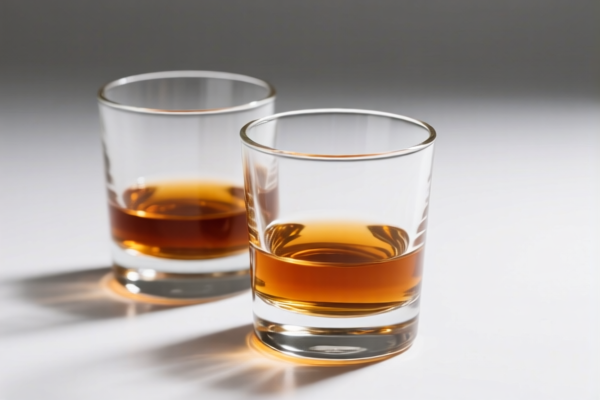
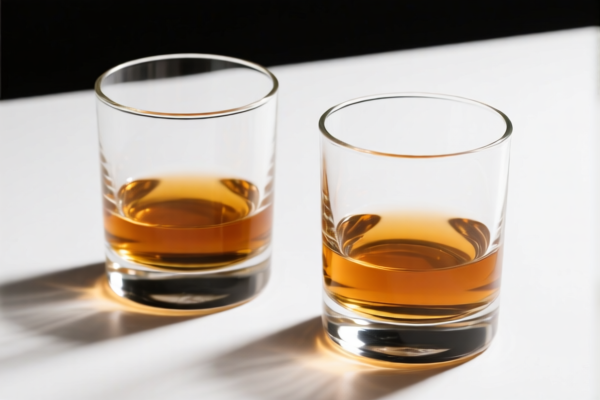


AI Analysis
🧊 Whiskey Stones (Whisky Chillers)
🌐 HS Code Reference & Customs Clearance Guide | 2026 Latest Tariff Analysis | Professional Entry Strategy
📌 I. Product Definition & Classification: Do You Really Know "Whiskey Stones"?
Whiskey stones are non-toxic, reusable ice substitutes designed to chill drinks without diluting them. They are typically made from soapstone, granite, marble, or other natural minerals. However, in international trade, they are often classified based on their material composition and packaging, leading to different HS codes and significantly different tax liabilities.
⚠️ Key Classification Dilemma:
- If the stones are loose, bulk, or simple geometric shapes primarily valued for their mineral substance → They are often classified under Chapter 68 (Articles of Stone) or Chapter 39 (Plastics/Glass if synthetic).
- If the stones are packaged as a set with a bag/box and explicitly marketed as "whiskey accessories," customs may scrutinize whether they are "articles of stone" (6815) or "articles of other materials" (3926).
- Crucial Distinction: Natural stone products (marble, granite) fall under 6815.99, while plastic/glass/synthetic alternatives may fall under 3926.90.
📦 II. HS Code Classification Details (Based on Provided Data)
Based on the provided dataset, here are the two main classification paths for Whiskey Stones depending on the material:
| HS Code | Summary Description | Material Type | Applicable Scenario |
|---|---|---|---|
6815.99.20.00 |
Articles of stone or other mineral materials | Natural Stone (Soapstone, Granite, etc.) | Unpainted, natural finish stone cubes; bulk or simple pack |
6815.99.41.70 |
Articles of minerals such as marble, limestone, or granite | Mineral Stone (Marble, Limestone, Granite) | Specifically identified as marble/limestone/granite items |
3926.90.99.10 |
Plastic articles of other materials (Glass/Plastic) | Plastic/Glass/Synthetic | Synthetic stones, resin, or glass cubes marketed as "whiskey stones" |
3926.90.99.89 |
Other articles of stone or other non-metallic materials | Mixed/Other Non-Metal | Composite materials or unclear material composition falling under "other" |
🔍 Important Note:
- The dataset explicitly links6815.99codes to natural mineral materials (stone, marble, granite).
- The dataset explicitly links3926.90codes to plastic, glass, or other non-metallic synthetic materials.
- Do not assume all "stones" are natural stone. Synthetic ice cubes are very common and fall under Chapter 39.
💰 III. 2026 Latest Tariff Rate Details (Including Surcharge & Policy Add-ons)
✅ Applicable Country: United States (US)
✅ Origin: China (CN)
✅ Effective Date: From November 10, 2025 (including subsequent imports)
🎯 1. Natural Mineral Whiskey Stones (6815.99 Series)
These codes cover natural stone products like soapstone, marble, or granite cubes.
| Item | Content |
|---|---|
| Base Tariff Rate | 0.0% (ad valorem) |
| Section 301 Surcharge | +25.0% |
| Section 122 Tariff (IEEPA) | +10.0% |
| Total Effective Tax Rate | 35.0% |
| Tax Calculation | CIF Value × 35% |
| De Minimis Exemption | ❌ Not Applicable (deny_de_minimis) |
| Legal Basis Path | USITC:6815.99.20.00 / 6815.99.41.70 → Section 301: 25% → IEEPA: 10% |
📌 Explanation:
- Although the base tariff for many stone articles is 0%, the 25% Section 301 surcharge and 10% Section 122 IEEPA tariff apply heavily.
- Total 35% is a significant cost driver for natural stone products from China.
- Warning: Even if the material is "just stone," the political tariffs make it expensive.
🎯 2. Plastic/Glass/Synthetic Whiskey Stones (3926.90 Series)
These codes cover synthetic ice cubes, resin, or glass stones.
| Item | Content |
|---|---|
| Base Tariff Rate | 5.3% (ad valorem) |
| Section 301 Surcharge | +7.5% |
| Section 122 Tariff (IEEPA) | +10.0% |
| Total Effective Tax Rate | 22.8% |
| Tax Calculation | CIF Value × 22.8% |
| De Minimis Exemption | ❌ Not Applicable (deny_de_minimis) |
| Legal Basis Path | USITC:3926.90.99.10 / 3926.90.99.89 → Section 301: 7.5% → IEEPA: 10% |
📌 Explanation:
- Plastic and glass articles have a higher base tariff (5.3%) but a lower Section 301 surcharge (7.5%) compared to stone (25%).
- Total 22.8% is significantly lower than the 35% for natural stone.
- Strategic Insight: If your product is made of high-quality synthetic material, classifying it correctly under 3926 can save ~12.2% in taxes compared to misclassifying it as stone.
🛠️ IV. Customs Clearance Practical Advice (Battle-Tested Pitfall Guide)
✅ 1. Preparation Checklist (Non-negotiable)
| Document | Required? | Explanation |
|---|---|---|
| ✅ Product Composition Certificate | ✔️ | Must clearly state material: "100% Soapstone," "Resin," or "Glass." |
| ✅ Product Photos (Packaged & Loose) | ✔️ | Show if items are sold as a set with a bag/box, which might affect "accessory" classification. |
| ✅ Commercial Invoice | ✔️ | Must specify "Whiskey Chillers" or "Reusable Ice Cubes." Avoid vague terms like "Decorative Stones." |
| ✅ Material Safety Data Sheet (MSDS) | ✔️ | Especially for synthetic resins or coated stones. |
| ✅ Certificate of Origin (CO) | ✔️ | Mandatory for proving Chinese origin to apply surcharges correctly. |
✅ 2. Declaration Strategy (Key Mnemonic)
🔥 "Material Defines Code, Synthetic Saves Tax!"
| Scenario | Correct HS Code | Error & Consequence |
|---|---|---|
| Natural Soapstone/Granite Cubes | 6815.99.20.00 or 6815.99.41.70 |
Misdeclare as plastic → 22.8% vs 35% → Underpayment Risk |
| Resin/Plastic/Glass Cubes | 3926.90.99.10 or 3926.90.99.89 |
Misdeclare as stone → 35% vs 22.8% → Overpayment (Loss of Profit) |
| Stone + Plastic Bag/Box Set | Still 6815.99 or 3926.90 |
Split declaration → Higher Tax on accessories |
| Unidentified "Stones" | Customs Will Assign | Likely 6815.99 by default → Assume 35% Tax |
📌 Critical Tip:
- If your stones are natural, use 6815.
- If your stones are synthetic (resin, acrylic, glass), use 3926.
- Do not use generic terms like "Whiskey Accessories" without specifying material.
✅ 3. Special Circumstances
| Situation | Handling Advice |
|---|---|
| Polished/Coated Stones | If coated with a non-mineral layer, it may shift to 3926 (plastic/coated article). |
| Gift Sets | Include box/bag in the main product declaration. Do not ship box separately. |
| Raw vs. Finished | Raw stone chunks may have different duties. Whiskey stones are finished goods. |
| Origin Labeling | Must clearly mark "Made in China" on product and packaging to avoid origin fraud penalties. |
🌍 V. Global Market Clearance Comparison (2026 Latest)
| Country/Region | Recommended HS Code | Tariff Rate (China Origin) | Certification | Notes |
|---|---|---|---|---|
| 🇺🇸 United States | 6815.99.20.00 (Stone)3926.90.99.10 (Plastic) |
35% (Stone) 22.8% (Plastic) |
None specific | High surcharges due to Section 301 & IEEPA |
| 🇨🇳 China | 6815.99 / 3926.90 |
0% - 5% (Import) | N/A | No surcharges |
| 🇪🇺 European Union | 6815.99 / 3926.90 |
0% - 4% | CE (if plastic) | No Section 301/122 equivalents |
| 🇨🇦 Canada | 6815.99 / 3926.90 |
0% - 5% | N/A | No surcharges |
| 🇬🇧 United Kingdom | 6815.99 / 3926.90 |
0% - 5% | UKCA (if plastic) | Post-Brexit rules apply |
📌 Conclusion:
- The US is the most challenging market due to Section 301 and IEEPA tariffs.
- Plastic/Synthetic stones (3926) are cheaper to import into the US than natural stone (6815).
- EU/Canada/UK have much lower tariffs, making them attractive alternatives if US market is too costly.
📌 VI. Common Mistakes & Pitfalls (Blood & Tears Lessons)
❌ Mistake 1: Declaring "Whiskey Stones" as "Decorative Garden Stones"
👉 Consequence: Misclassification → 122 IEEPA tariff may not apply, but Section 301 still might → Audit risk + fines.
❌ Mistake 2: Using 6815 for Resin/Plastic Stones
👉 Consequence: Overpaying 12.2% extra tax. You should use 3926.
❌ Mistake 3: Not specifying Material in Invoice
👉 Consequence: Customs defaults to most punitive code (6815 → 35%).
❌ Mistake 4: Assuming "Stone" means only Natural Stone
👉 Consequence: Synthetic stones are increasingly common. If not declared correctly, 22.8% (correct) vs 35% (incorrect).
✅ Correct Practice:
"Whiskey Chillers, 6 pcs, Material: 100% Soapstone (or Polyresin), For Beverage Cooling, Model: WS-001"
🎯 VII. Conclusion: Professional Declaration, Save Cost, Avoid Risks!
🎯 Remember the Mnemonic:
🔹 "Natural Stone 6815: 35% Total Tax"
🔹 "Plastic/Glass 3926: 22.8% Total Tax"
🔹 "Check Material First, Then Choose Code!"
📌 Pro Tip:
- If your product is natural stone, budget for 35% tax.
- If your product is synthetic, ensure you have material certification to claim the lower 22.8% tax under
3926.90.99.10.- Pre-ruling (Advance Ruling) is highly recommended for new suppliers to confirm HS code.
📣 Immediate Action:
📞 Contact Customs Broker + Provide Material Sample + Verify HS Code
🚀 Optimize Tariff, Clear Customs Smoothly, Maximize Profit!
✨ Professional Clearance Starts with Accurate Classification!
💼 Every Cent of Tax Saved is Pure Profit!
Customer Reviews
About HS Code Classification
The Harmonized System (HS) is an internationally standardized nomenclature developed by the World Customs Organization (WCO) to classify traded products. Over 200 countries use the HS system as the basis for customs tariffs, trade statistics, and import/export regulations.
Each HS code follows a hierarchical structure:
- Chapter (2 digits) — Broad category of goods (e.g., Chapter 84: Machinery and Mechanical Appliances)
- Heading (4 digits) — More specific grouping within the chapter
- Subheading (6 digits) — Internationally standardized breakdown, used by all WCO member countries
- National subdivisions (8-10 digits) — Country-specific extensions for further classification, such as US HTSUS 10-digit codes
Correct HS code classification is essential for smooth customs clearance, accurate duty payment, and compliance with trade regulations. Misclassification can lead to customs delays, overpayment of duties, or penalties.
When importing from CN to US, the applicable tariff rates may include:
- Most-Favored-Nation (MFN) rate — The standard duty rate applied to WTO members
- General rate — Applied to countries without trade agreements
- Trade remedy duties — Additional tariffs such as Section 301 (anti-dumping), Section 232 (national security), or countervailing duties
The information provided on this page is for reference purposes only. For official classification, please consult with your local customs authority or a licensed customs broker.