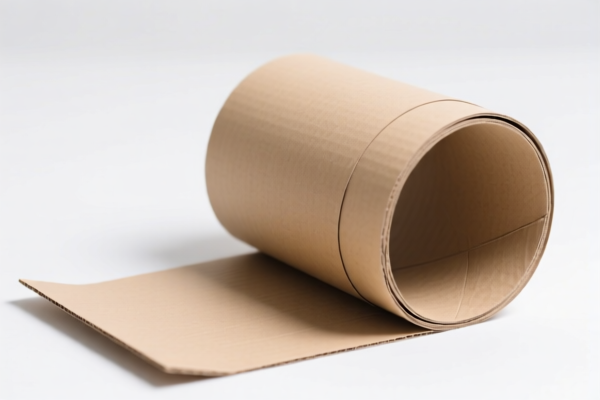
White Cardboard Roll
CN → US| HS Code | Tariff Rate | Origin | Destination | Doc |
|---|---|---|---|---|
| 4803004000 | 35.0% | CN | US | Official Doc |
| 4803002000 | 35.0% | CN | US | Official Doc |
| 4818100000 | 35.0% | CN | US | Official Doc |
| 4818900080 | 17.5% | CN | US | Official Doc |
| 4810131140 | 35.0% | CN | US | Official Doc |
Product Images



AI Analysis
🧻 White Cardboard Roll (White Toilet Paper)
🌐 HS Code Reference & Customs Clearance Guide | 2026 Latest Tariff Analysis | Professional Clearance Strategy
📌 I. Product Definition & Classification: Are You Sure It’s Just "Paper"?
"White Cardboard Roll" in trade terminology usually refers to White Toilet Paper (sanitary paper). In international trade, classification depends strictly on the material composition, processing degree, and intended use. While commonly called "cardboard" by laymen, sanitary paper is technically classified under Chapter 48 (Paper and Paperboard) but falls into specific subheadings based on whether it is "household/medical" or "industrial/other".
⚠️ Critical Distinction:
- If the product is soft, absorbent, and for personal hygiene (toilet paper, facial tissue) → Generally falls under 4803 or 4818.
- If the product is stiff, coated, or for industrial wrapping → It might be misclassified as generic paperboard (4810), leading to massive discrepancies.
- "Cardboard" vs. "Sanitary Paper": Customs authorities distinguish these by texture and absorbency. Do not use "Cardboard" in the commercial invoice if it is toilet paper; use "Toilet Paper Rolls" or "Sanitary Paper Rolls".
📦 II. HS Code Classification Details (2026 Latest Tariff Authority Comparison)
The provided data indicates four distinct HS Codes for similar-looking products. Here is the breakdown of why each code applies and the associated tax implications.
| HS Code | Product Description | Key Classification Criteria | Applicable Scenario |
|---|---|---|---|
4803.00.40.00 |
Sanitary Paper (Household/Medical) | Made of paper/cellulose; specifically for household hygiene (toilet paper). | ✅ Standard white toilet paper rolls for home use. |
4803.00.20.00 |
Sanitary Paper (Roll Form) | White, roll-form, cellulose-based, intended for sanitary use. | ✅ Generic white toilet paper rolls; emphasizes roll shape. |
4818.10.00.00 |
Sanitary Paper & Similar | Specifically for toilet paper, roll form, made of paper products. | ✅ Explicitly "Toilet Paper"; often used for branded consumer goods. |
4818.90.00.80 |
Other Sanitary Paper | Paper material, roll form, fits definition of sanitary paper but falls under "Other" subcategories. | ✅ Alternative classification for specific sanitary paper types not covered in 4803 or 4818.10. |
4810.13.11.40 |
Coated Paperboard / White Board | Coated paper material; classified under "Other" categories of paperboard, NOT sanitary paper. | ❌ High Risk: If declared as "Cardboard Roll" instead of "Toilet Paper", it may be misclassified here. |
🔍 Key Insight:
- Codes4803and4818are for Sanitary Paper (Toilet Paper).
- Code4810is for Paperboard/Coated Paper (often mistaken if the user calls it "Cardboard").
- Do NOT mix these: Sanitary paper and Paperboard have different technical specifications and customs scrutiny levels.
💰 III. 2026 Latest Tariff Rate Breakdown (Including Additional Taxes, Policy Add-ons)
✅ Applicable Country: United States (US)
✅ Origin: China (CN)
✅ Effective Date: 2025 November 10 onwards (including subsequent imports)
🎯 1. 4803.00.40.00 / 4803.00.20.00 / 4818.10.00.00 —— Sanitary Paper (Toilet Paper)
These three codes share the highest tax burden due to their classification as standard sanitary products.
| Item | Content |
|---|---|
| Base Tariff Rate | 0.0% (ad valorem) |
| USITC Additional Tariff | +25.0% (Under USITC Footnote provisions for Chinese goods) |
| Section 122 Tariff | +10.0% (Targeted tariff on specific Chinese consumer goods) |
| Total Effective Rate | 35.0% |
| Tax Calculation | CIF Value × 35% |
| De Minimis Exemption | ❌ Not Eligible (deny_de_minimis) |
| Legal Basis Path | USITC:4803.00.40.00 → FOOTNOTE:9903.88.01 → Section 122: Targeted Consumer Goods |
📌 Explanation:
- Base 0%: Normal MFN rate for paper products is often low or zero.
- 25% USITC: The standard 301 tariff on many Chinese paper products.
- 10% Section 122: A specific additional tariff applied to certain hygiene products from China.
- Total 35%: This is a high tariff for a consumable good. Profit margins must account for this.
🎯 2. 4818.90.00.80 —— Other Sanitary Paper (Alternative Classification)
This code offers a lower tariff rate, potentially due to a different sub-category interpretation (e.g., specific type of non-woven or treated sanitary paper).
| Item | Content |
|---|---|
| Base Tariff Rate | 0.0% (ad valorem) |
| USITC Additional Tariff | +7.5% (Reduced USITC surcharge for this specific subheading) |
| Section 122 Tariff | +10.0% (Still applies to Chinese sanitary goods) |
| Total Effective Rate | 17.5% |
| Tax Calculation | CIF Value × 17.5% |
| De Minimis Exemption | ❌ Not Eligible (deny_de_minimis) |
| Legal Basis Path | USITC:4818.90.00.80 → FOOTNOTE:Reduced Rate Provision → Section 122: Targeted Consumer Goods |
📌 Strategy Alert:
- If your product qualifies for4818.90.00.80, you save 17.5% in taxes compared to the other codes!
- Ensure your product specs (material, absorbency, branding) strictly match the "Other" category definition to avoid customs rejection.
🎯 3. 4810.13.11.40 —— White Paperboard (Misclassification Risk)
⚠️ WARNING: This code is for Coated Paperboard, not toilet paper. If you declare "White Cardboard Roll" and it is actually toilet paper, Customs will reclassify it, leading to penalties. However, if it is truly paperboard:
| Item | Content |
|---|---|
| Base Tariff Rate | 0.0% (ad valorem) |
| USITC Additional Tariff | +25.0% |
| Section 122 Tariff | +10.0% |
| Total Effective Rate | 35.0% |
| Tax Calculation | CIF Value × 35% |
| De Minimis Exemption | ❌ Not Eligible (deny_de_minimis) |
📌 Note: The tax rate is identical to the sanitary paper codes, but the customs entry type is different. This code is for industrial/commercial paperboard, not household hygiene.
🛠️ IV. Customs Clearance Practical Advice (Battle-Tested Pitfall Guide)
✅ 1. Required Documentation Checklist (Non-Negotiable)
| Document | Mandatory? | Explanation |
|---|---|---|
| ✅ Commercial Invoice | ✔️ | Must clearly state "Toilet Paper Rolls" or "Sanitary Paper", NOT "Cardboard Roll" (unless it is actual paperboard). |
| ✅ Product Specification Sheet | ✔️ | Include GSM (grams per square meter), ply (2-ply, 3-ply), material (100% virgin cellulose), and roll dimensions. |
| ✅ Material Composition Proof | ✔️ | Certificate of analysis showing cellulose content to prove it is "sanitary paper" (Chapter 48) and not fabric. |
| ✅ Packing List | ✔️ | Detail net/gross weight, number of rolls per carton, total cartons. |
| ✅ Freight Invoice | ✔️ | For CIF calculation. |
| ✅ Origin Certificate | ✔️ | Form A or general certificate to prove China origin (critical for tariff calculation). |
✅ 2. Declaration Tips (Key Mantras)
🔥 “Correct Name, Correct Code, Avoid Penalty!”
| Scenario | Correct Declaration | Incorrect Declaration | Consequence |
|---|---|---|---|
| Toilet Paper | White Toilet Paper Rolls |
White Cardboard Roll |
❌ High Risk: Customs may reject "Cardboard" for sanitary goods, leading to reclassification or delay. |
| High Tax Code (35%) | 4803.00.40.00 |
4818.90.00.80 (if not eligible) |
❌ Penalty: Misdeclaration leads to fines and back taxes. |
| Low Tax Code (17.5%) | 4818.90.00.80 (if eligible) |
4803.00.40.00 |
✅ Savings: Valid if product specs match "Other Sanitary Paper". |
| Paperboard (Actual) | White Coated Paperboard Rolls |
Toilet Paper |
❌ Safety Violation: Wrong HS Code, potential safety inspection failure. |
✅ 3. Special Case Handling
| Situation | Handling Advice |
|---|---|
| OEM Private Label | Ensure the invoice lists the Brand and Model. If the brand is well-known, Customs may scrutinize the value more closely. |
| Mixed Containers | If mixing Toilet Paper (35% tax) with Paperboard (35% tax), ensure each item is separately listed with its own HS Code. Do not lump all "Paper" items under one code if they differ in type. |
| "Cardboard" Misnomer | Never use "Cardboard" in the description if the product is toilet paper. Use "Sanitary Paper", "Toilet Paper", or "Tissue Paper". |
| Pre-Clearance | For large shipments, consider Advance Ruling if unsure between 4803 and 4818. |
🌍 V. Global Market Clearance Comparison (2026 Latest)
| Country/Region | Recommended HS Code | Tariff Rate | Certification Requirements | Notes |
|---|---|---|---|---|
| 🇺🇸 USA | 4803.00.40.00 / 4818.10.00.00 |
35% (CN Origin) | None specific, but FDA compliance for food-contact (if any) is recommended | 4818.90.00.80 at 17.5% if eligible. |
| 🇨🇳 China | 4803.00.40.00 |
0-5% | GB Standards (Sanitary Paper) | Low import tax, high quality standards. |
| 🇪🇺 EU | 4803.00 / 4818.10 |
6.5% (Most Favored) | CE (if applicable), REACH (chemicals) | No Section 122 or USITC 301 taxes. |
| 🇦🇺 Australia | 4803.00 |
5% | Australian Consumer Law | Low tariffs, strict labeling laws. |
| 🇯🇵 Japan | 4803.00 |
6-8% | JIS Standards | High quality expectations, strict on pulp source. |
📌 Conclusion:
- USA is the most expensive market for Chinese sanitary paper due to 35% total tariffs (25% + 10%).
- EU and Asia have lower tariffs (~5-8%), making them more competitive for Chinese exporters.
- Cost Optimization: Check if your product qualifies for4818.90.00.80(17.5%) in the US to save 17.5% in taxes.
📌 VI. Common Errors & Pitfall Guide (Blood & Tears Lessons)
❌ Error 1: Calling it "Cardboard Roll"
👉 Consequence: Customs may classify it as 4810 (Paperboard) or reject it for unclear description. If it’s toilet paper, this is a misdeclaration.
❌ Error 2: Assuming De Minimis Exemption
👉 Consequence: Sanitary paper is excluded from de minimis (Section 321). Even small shipments face full tariffs.
❌ Error 3: Ignoring Section 122
👉 Consequence: Failing to add the 10% Section 122 tariff results in underpayment, leading to fines and back taxes.
❌ Error 4: Mixing Codes in One BL
👉 Consequence: If you have both 4803 (35%) and 4818.90 (17.5%) in one shipment, they must be declared separately. Merging them causes customs delays.
✅ Correct Practice:
"White Toilet Paper Rolls, 100% Virgin Wood Pulp, 2-Ply, 100m/Roll, For Household Use, HS Code: 4803.00.40.00"
🎯 VII. Conclusion: Precise Classification Saves Money!
🎯 Remember the Mantra:
🔹 "Sanitary Paper, Not Cardboard; 35% Tax in US, Check 17.5% Option!"
🔹 "Section 122 is Real, Don’t Skip the 10%!"
📌 Pro Tip:
If your supplier claims "Cardboard" but the product is soft toilet paper, correct the name on the invoice to "Sanitary Paper". Misnaming leads to customs audits.
For the 17.5% rate (4818.90.00.80), consult a customs broker to verify if your specific pulp type and processing qualify.
📣 Action Required:
📞 Contact your freight forwarder to confirm HS Code eligibility.
📄 Prepare detailed product specs (GSM, Ply, Material).
🚀 Clear Customs Smoothly, Maximize Profit!
✨ Professional Clearance Starts with Accurate Classification!
💼 Every percent saved is pure profit!
Customer Reviews
About HS Code Classification
The Harmonized System (HS) is an internationally standardized nomenclature developed by the World Customs Organization (WCO) to classify traded products. Over 200 countries use the HS system as the basis for customs tariffs, trade statistics, and import/export regulations.
Each HS code follows a hierarchical structure:
- Chapter (2 digits) — Broad category of goods (e.g., Chapter 84: Machinery and Mechanical Appliances)
- Heading (4 digits) — More specific grouping within the chapter
- Subheading (6 digits) — Internationally standardized breakdown, used by all WCO member countries
- National subdivisions (8-10 digits) — Country-specific extensions for further classification, such as US HTSUS 10-digit codes
Correct HS code classification is essential for smooth customs clearance, accurate duty payment, and compliance with trade regulations. Misclassification can lead to customs delays, overpayment of duties, or penalties.
When importing from CN to US, the applicable tariff rates may include:
- Most-Favored-Nation (MFN) rate — The standard duty rate applied to WTO members
- General rate — Applied to countries without trade agreements
- Trade remedy duties — Additional tariffs such as Section 301 (anti-dumping), Section 232 (national security), or countervailing duties
The information provided on this page is for reference purposes only. For official classification, please consult with your local customs authority or a licensed customs broker.