White Fabric Button
CN → US| HS Code | Tariff Rate | Origin | Destination | Doc |
|---|---|---|---|---|
| 5807902090 | 38.3% | CN | US | Official Doc |
| 5807102090 | 38.3% | CN | US | Official Doc |
| 9606292000 | 0.0% | CN | US | Official Doc |
| 9606296000 | 37.9% | CN | US | Official Doc |
Product Images

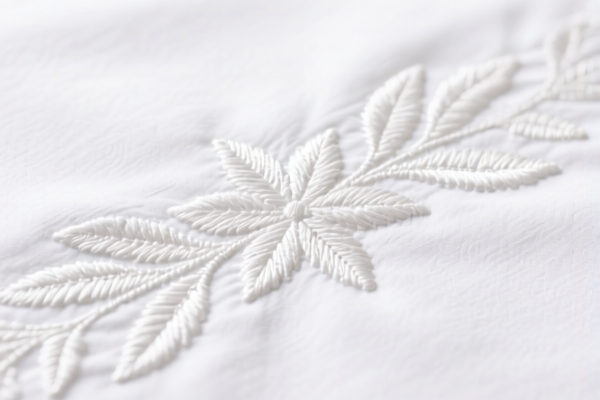

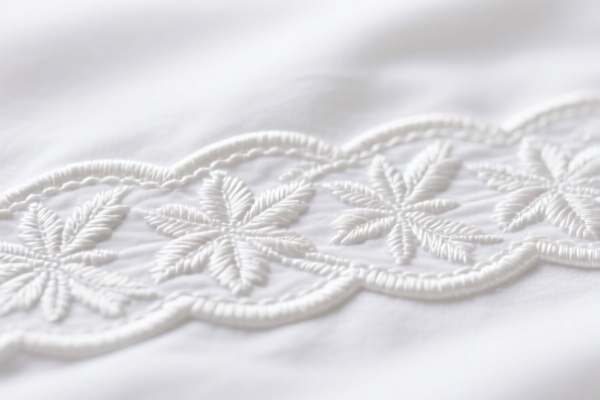
AI Analysis
🌟 White Fabric Button – HS Code & Tariff Guide 2026 | Expert Customs Classification & Clearance Strategy
📌 I. Product Definition & Classification: What Exactly Is a "White Fabric Button"?
A White Fabric Button is a type of button made from textile materials, typically crafted from cotton, polyester, or blended fabrics, and dyed or left in natural white. These buttons are covered with textile material and are not embroidered, often used in clothing, accessories, and home textiles.
⚠️ Key Classification Clue:
- If the button is covered with fabric (even if made of resin core), it is not a plain plastic or resin button → must be classified under textile-covered buttons, not general plastic buttons.
- The color (white) does not affect the HS code — only the material composition and construction matter.
📦 II. HS Code Breakdown (2026 Latest Tariff Authority) – Full Detail
| HS Code | Product Description | Applicable Use Case | Core Material | Covered with Fabric? |
|---|---|---|---|---|
9606.29.20.00 |
Buttons: Other: Of acrylic resin, of polyester resin or of both such resins, covered with textile material | White fabric-covered buttons made on resin core | Acrylic/Polyester resin + textile cover | ✅ Yes |
9606.29.60.00 |
Buttons: Other: Other: Other | Non-resin buttons, non-textile-covered, or unclear material | Not resin-based or not covered with textile | ❌ No |
🔍 Critical Distinction:
- If the button has a plastic/resin core AND is covered with white fabric →9606.29.20.00
- If the button is made entirely of fabric (no core), or not covered with textile →9606.29.60.00
💰 III. 2026 Tariff Rate Analysis (US Market – China Origin) | Full Tax Breakdown
✅ Applicable Country: United States (US)
✅ Origin: China (CN)
✅ Effective Date: November 10, 2025 (inclusive of all new tariffs)
🎯 1. 9606.29.20.00 — Fabric-Covered Buttons (Resin Core)
| Item | Detail |
|---|---|
| Base Duty Rate | 0.0% (ad valorem) |
| USITC Section 301 Tariff | +25% (from USITC Footnote 9903.88.01) |
| IEEPA Emergency Tariff | +10% (applies to goods from China/Hong Kong) |
| Total Effective Tariff | 35.0% |
| Tax Calculation | CIF Value × 35.0% |
| De Minimis Threshold | ❌ Not eligible (denied under US law) |
| Legal Basis Path | IEEPA:9903.01.25 → IEEPA:9903.01.24 → USITC:9606.29.20.00 → FOOTNOTE:9903.88.01 |
📌 Explanation:
- The 25% USITC tariff comes from Section 301 of the U.S. Trade Act, targeting Chinese imports deemed unfair.
- The 10% IEEPA tariff is under the International Emergency Economic Powers Act, applied to all goods from China.
- Total: 35% — Significantly higher than standard tariffs.
- Even if the button is "white" or "small", no exemption applies.
🎯 2. 9606.29.60.00 — Other Buttons (Non-Textile Covered, Non-Resin)
| Item | Detail |
|---|---|
| Base Duty Rate | 0.0% |
| USITC Section 301 Tariff | +25% |
| IEEPA Emergency Tariff | +10% |
| Total Effective Tariff | 35.0% |
| Tax Calculation | CIF × 35.0% |
| De Minimis Eligible? | ❌ No |
| Legal Basis Path | IEEPA:9903.01.25 → IEEPA:9903.01.24 → USITC:9606.29.60.00 → FOOTNOTE:9903.88.01 |
📌 Important Note:
- This code applies to non-resin buttons (e.g., wooden, metal, or fabric-only buttons).
- If your button is fabric-covered but made of non-resin material, it still falls under this code → 35% tariff.
- No reduction — even if the button is "small" or "decorative".
🛠️ IV. Customs Clearance Best Practices (Pro Tips to Avoid Penalties)
✅ 1. Must-Have Documentation (No Exceptions!)
| Document | Required? | Why It Matters |
|---|---|---|
| ✅ Product Specification Sheet | ✔️ | Must state: "Acrylic/Polyester Resin Core, White Fabric Cover, 10mm Diameter" |
| ✅ Material Composition Certificate | ✔️ | Prove resin + textile; avoid "all fabric" claims |
| ✅ High-Resolution Product Photos | ✔️ | Show fabric wrap, core, and color (white) clearly |
| ✅ Commercial Invoice | ✔️ | Clearly label: "White Fabric-Covered Button, Resin Core, for Apparel" |
| ✅ Certificate of Origin (CO) | ✔️ | Required for tariff eligibility; China origin = 35% |
| ✅ Packaging & Packing List | ✔️ | Show total weight, count, and packaging type |
✅ 2.申报技巧(Critical Pro Tips)
🔥 "Core First, Cover Second, Color Last – Wrong Classification = 35% Penalty!"
| Scenario | Correct HS Code | Wrong Code | Risk |
|---|---|---|---|
| Resin core + white fabric cover | 9606.29.20.00 |
9606.29.60.00 |
35% tariff |
| Fabric-only button (no core) | 9606.29.60.00 |
9606.29.20.00 |
35% tariff |
| Button labeled "white" only | ❌ Not enough | ❌ | Misclassification |
| Button with "white cotton" on invoice | ✅ Good | ✅ | ✔️ Avoids confusion |
✅ 3. Special Cases & Workarounds
| Situation | Recommended Action |
|---|---|
| Buttons from Vietnam, Mexico, or Thailand | Apply for IEEPA exemption → 0% tariff (if CO shows non-China origin) |
| OEM Custom Buttons | Submit design specs + sample photos → avoid "non-standard" classification |
| Buttons for Military or Medical Use | Apply for special-purpose exemption (rare but possible) |
| Buttons with Embroidery or Printing | Still fall under 9606.29.20.00 if resin core + fabric-covered |
🌍 V. Global Tariff Comparison (2026) – Where Is It Cheapest?
| Country | Recommended HS Code | Tariff | Certification | Notes |
|---|---|---|---|---|
| 🇺🇸 USA (China origin) | 9606.29.20.00 |
35.0% | FCC, RoHS | High cost |
| 🇨🇳 China (Domestic) | 9606.29.20.00 |
5.0% | CCC | No extra tariffs |
| 🇪🇺 EU | 9606.29.20.00 |
0% (if CE compliant) | CE, RoHS | Low cost |
| 🇦🇺 Australia | 9606.29.20.00 |
5.0% | RCM | No extra taxes |
| 🇯🇵 Japan | 9606.29.20.00 |
0% | PSE | No extra tariffs |
📌 Insight:
- China-origin buttons are most expensive in the US → 35% tariff
- Shift production to Vietnam/Mexico → 0% tariff in US
- Use EU or Japan as transit hubs → lower final cost
📌 VI. Common Mistakes & Real-World Pitfalls (Avoid These!)
❌ Mistake 1: Labeling a resin-core fabric button as "fabric button" without mentioning the core
👉 Result: Misclassified → 35% tariff + penalties
❌ Mistake 2: Using "white button" in invoice without specifying material
👉 Result: Customs assumes resin-only → wrong HS code
❌ Mistake 3: Sending samples labeled "decorative" but shipping bulk as "apparel"
👉 Result: Audit risk, seizure, or refund demands
❌ Mistake 4: Not providing photos of the core
👉 Result: Customs can't verify if it's resin-covered → delay or rejection
✅ Correct Labeling Example:
"White Fabric-Covered Button, Acrylic Resin Core, 10mm Diameter, 1000 pcs per box, for Men's Shirts, CO: CN"
🎯 VII. Final Verdict: Win the Game, Not Just the Bid!
🎯 Remember the Golden Rule:
🔹 "Resin Core + Fabric Cover =
9606.29.20.00"
🔹 "No Core or Not Covered =9606.29.60.00"
🔹 "China Origin in US = 35% Tariff — No Excuses!"
📣 Action Now: Get Ahead of the Game!
📞 Contact a licensed customs broker + Submit product photos + Request HS Code Pre-Ruling
🚀 Switch production to Vietnam/Mexico → Cut tariff from 35% to 0%
💼 Save thousands per shipment — one correct HS code at a time!
✨ Professional Clearance Starts with Precision Classification!
💼 Your button may be small — but the tax risk is huge!
Customer Reviews
About HS Code Classification
The Harmonized System (HS) is an internationally standardized nomenclature developed by the World Customs Organization (WCO) to classify traded products. Over 200 countries use the HS system as the basis for customs tariffs, trade statistics, and import/export regulations.
Each HS code follows a hierarchical structure:
- Chapter (2 digits) — Broad category of goods (e.g., Chapter 84: Machinery and Mechanical Appliances)
- Heading (4 digits) — More specific grouping within the chapter
- Subheading (6 digits) — Internationally standardized breakdown, used by all WCO member countries
- National subdivisions (8-10 digits) — Country-specific extensions for further classification, such as US HTSUS 10-digit codes
Correct HS code classification is essential for smooth customs clearance, accurate duty payment, and compliance with trade regulations. Misclassification can lead to customs delays, overpayment of duties, or penalties.
When importing from CN to US, the applicable tariff rates may include:
- Most-Favored-Nation (MFN) rate — The standard duty rate applied to WTO members
- General rate — Applied to countries without trade agreements
- Trade remedy duties — Additional tariffs such as Section 301 (anti-dumping), Section 232 (national security), or countervailing duties
The information provided on this page is for reference purposes only. For official classification, please consult with your local customs authority or a licensed customs broker.