White Mop Cloth
CN → US| HS Code | Tariff Rate | Origin | Destination | Doc |
|---|---|---|---|---|
| 6307101090 | 21.6% | CN | US | Official Doc |
| 6307102030 | 22.8% | CN | US | Official Doc |
| 9603908050 | 70.3% | CN | US | Official Doc |
| 9603404020 | 14.0% | CN | US | Official Doc |
| 5602909000 | 0.0% | CN | US | Official Doc |
| 5602906000 | 41.3% | CN | US | Official Doc |
Product Images
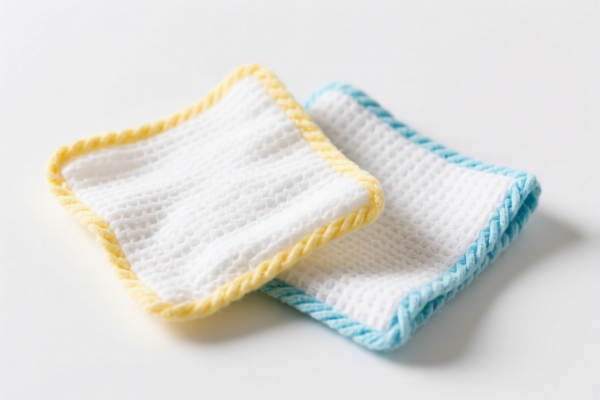
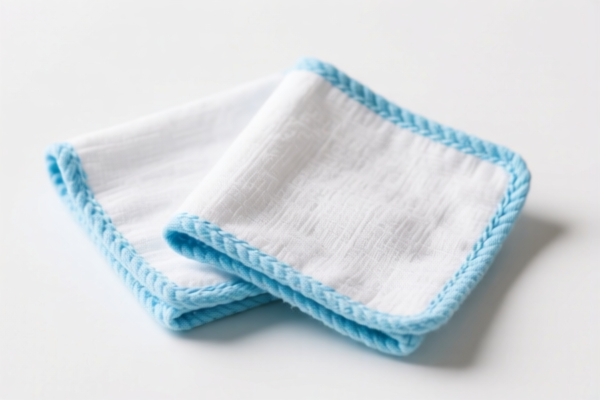
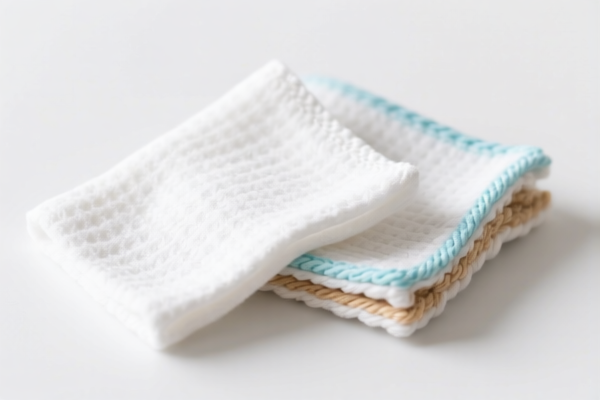
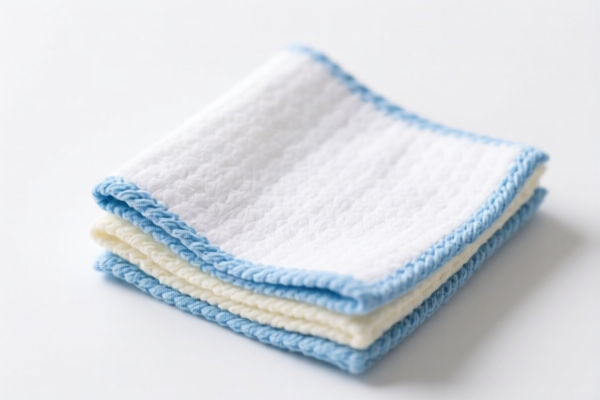
AI Analysis
🧹 White Mop Cloth (Cleaning Cloths & Mops)
🌐 HS Code Reference & Customs Clearance Guide | 2026 Latest Tariff Analysis | Professional Clearance Strategy
📌 I. Product Definition & Classification: Are You Labeling "Mop Cloths" Correctly?
White Mop Cloths are essential cleaning tools used in households, industrial facilities, and commercial services. In international trade, they are strictly categorized based on their material composition and specific function. Misclassification between "Floorcloths/Dusters" and general "Other Cleaning Cloths" is a common error that leads to clearance delays.
Key Distinction: * Floorcloths/Dusters/Cleaning Cloths: Specifically designed for cleaning floors, dusting surfaces, or mopping. These fall under Heading 6307.10. * Felt/Brushes: If the product is made of felt or is part of a brush assembly, it may fall under Heading 5602 or Heading 9603.
⚠️ Critical Classification Point:
- If the item is a cotton cloth specifically for cleaning/mopping → 6307.10.10.90
- If the item is felt (pressed fiber) → 5602.90.x0.xx
- If the item is a prepared knot/tuft or part of a brush/mop handle assembly → 9603.90.80.50
📦 II. HS Code Classification Details (2026 Latest Tariff Authority对照)
| HS Code | Product Description | Application Scenario | Material/Type |
|---|---|---|---|
6307.10.10.90 |
Other made up articles: Floorcloths, dishcloths, dusters... Other (369) | White cotton mop cloths, dishcloths, dusters, similar cleaning cloths | Cotton, Made-up Articles |
6307.10.20.30 |
Other made up articles... Floorcloths, dishcloths... Other | Other cleaning cloths not specified as dustcloths/mop cloths | Various, Made-up Articles |
5602.90.90.00 |
Felt... Other: Other: Other (414) | Felt sheets or pads used for cleaning/polishing, not woven/crocheted | Felt, Non-woven |
5602.90.60.00 |
Felt... Other: Other: Of man-made fibers | Synthetic felt cleaning pads, polishing cloths made of polyester/rayon | Man-made Fiber Felt |
9603.90.80.50 |
Brooms, brushes... mops... prepared knots/tufts... Other: Other Other | Prepared knots for brushes, mop heads attached to handles, or special cleaning tools | Brush Parts/Mops |
9603.40.40.20 |
Brooms, brushes... Paint pads and rollers: Other Paint pads | Specifically designed paint pads (not general cleaning mops) | Paint Applicators |
🔍 Key Reminder:
- White Cotton Mop Cloths are most commonly classified under6307.10.10.90as "Floorcloths... Dustcloths, mop cloths... of cotton."
- Do not confuse "Mop Cloths" (textile pieces) with "Mops" (assembled tools with handles). If it's just the cloth, it's 6307. If it's a full mop, check 9603.
- Felt cloths are not "textile cloths" but "felt," falling under 5602.
💰 III. 2026 Latest Tariff Rate Breakdown (Including Surtaxes & Policy Add-ons)
✅ Applicable Country: United States (US)
✅ Origin: China (CN)
✅ Effective Date: 2025/2026 Current Regulations
🎯 1. 6307.10.10.90 —— Floorcloths, Dishcloths, Dusters, Mop Cloths (Of Cotton)
| Item | Details |
|---|---|
| Base Tariff | 0.0% |
| Section 301 Surtax | 0.0% |
| Total Tax Rate | 0.0% |
| Tax Calculation | CIF Value × 0.0% = $0 |
| De Minimis Eligibility | ✅ Yes (Generally, under $800, if eligible) |
| Legal Basis | HTSUS 6307.10.10.90 |
📌 Explanation:
- This is a low-risk, low-duty item.
- As a "made-up article" of cotton for cleaning, it carries no base duty and no additional Section 301 surtax.
- Strategy: Ensure the description explicitly states "Cotton Mop Cloth" or "Floorcloth" to avoid misclassification into other headings.
🎯 2. 6307.10.20.30 —— Other Floorcloths, Dishcloths, Dusters
| Item | Details |
|---|---|
| Base Tariff | 0.0% |
| Section 301 Surtax | 0.0% |
| Total Tax Rate | 0.0% |
| Tax Calculation | CIF Value × 0.0% = $0 |
| De Minimis Eligibility | ✅ Yes |
| Legal Basis | HTSUS 6307.10.20.30 |
📌 Explanation:
- Similar to above, this is a "catch-all" for cleaning cloths not specified elsewhere.
- Strategy: Use this only if the material is not cotton (e.g., microfiber, blended fibers) and doesn't fit other specific categories.
🎯 3. 5602.90.90.00 & 5602.90.60.00 —— Felt (Non-woven)
| Item | Details |
|---|---|
| Base Tariff | 0.0% |
| Section 301 Surtax | 0.0% |
| Total Tax Rate | 0.0% |
| Tax Calculation | CIF Value × 0.0% = $0 |
| De Minimis Eligibility | ✅ Yes |
| Legal Basis | HTSUS 5602.90.x0.xx |
📌 Explanation:
- If your "mop cloth" is made of felt (pressed fibers, not woven), it falls here.
- Note: Felt is distinct from woven cotton cloths. Misidentifying felt as cotton can lead to queries.
🎯 4. 9603.90.80.50 —— Other Brooms, Brushes, Mops (Prepared Knots/Tufts)
| Item | Details |
|---|---|
| Base Tariff | 2.8% |
| Section 301 Surtax | 7.5% |
| Steel/Aluminum/Copper Surtax | 50% (If applicable parts are metal) |
| Total Tax Rate | 60.3% |
| Tax Calculation | CIF Value × 60.3% |
| De Minimis Eligibility | ❌ No (High duty) |
| Legal Basis | HTSUS 9603.90.80.50 |
📌 CRITICAL WARNING:
- Do NOT classify simple white cotton mop cloths here!
- This code applies to brushes, prepared knots, tufts, or mop heads with handles.
- If you are importing loose cotton cloths for mops, classify as 6307.10.10.90 (0%).
- Classifying a simple cotton cloth as a "brush part" or "mop" here triggers 60.3% tariff, which is a massive cost increase.
- Rule: Loose textile cloths = 6307. Assembled mop/brush = 9603.
🎯 5. 9603.40.40.20 —— Paint Pads
| Item | Details |
|---|---|
| Base Tariff | 0.0% |
| Section 301 Surtax | 0.0% |
| Total Tax Rate | 0.0% |
| Tax Calculation | CIF Value × 0.0% = $0 |
| Legal Basis | HTSUS 9603.40.40.20 |
📌 Note: Only for paint pads, not general cleaning mops.
🛠️ IV. Customs Clearance Practical Advice (Real-World Pitfall Guide)
✅ 1. Documentation Checklist (Must-Haves)
| Document | Required | Explanation |
|---|---|---|
| ✅ Product Specification Sheet | ✔️ | Must specify material (e.g., "100% Cotton," "Microfiber," "Felt") and use ("Cleaning Mop Cloth"). |
| ✅ Product Photos | ✔️ | Clear images showing the item is a cloth (flat, folded) not a brush/mop handle assembly. |
| ✅ Commercial Invoice | ✔️ | Description: "White Cotton Mop Cloth, for cleaning floors." Avoid vague terms like "Cleaning Tool." |
| ✅ Origin Certificate | ✔️ | To prove origin (if claiming preferential rates, though most are 0% here). |
✅ 2. Classification Strategy (Key Mnemonic)
🔥 “Loose Cloth = 6307 (0%), Assembled Mop = 9603 (60.3%)”
| Scenario | Correct HS Code | Risk if Incorrect |
|---|---|---|
| Loose White Cotton Cloth | 6307.10.10.90 |
0% |
| Loose Microfiber Cloth | 6307.10.20.30 |
0% |
| Felt Cleaning Pad | 5602.90.90.00 |
0% |
| Full Mop (Handle + Head) | 9603.90.80.50 |
60.3% (If misclassified as cloth) |
| Brush Knots/Tufts | 9603.90.80.50 |
60.3% |
📌 Critical Tip:
- If you are importing only the cloth part (no handle), ALWAYS use 6307.
- Customs may challenge you if the description says "Mop" without specifying "Cloth Only." Use "Mop Replacement Cloth" or "Floorcloth" to clarify.
✅ 3. Special Cases
| Situation | Handling Advice |
|---|---|
| Bundled with Handle | If sold as a complete mop, classify the entire unit as 9603 (60.3%). Do not split unless separately invoiced. |
| Felt vs. Cotton | Ensure material is correctly identified. Felt (5602) is not woven fabric. |
| Dusters vs. Mops | Both fall under 6307.10.10.90. No tax difference. |
🌍 V. Global Market Clearance Comparison (2026)
| Country/Region | Recommended HS Code | Tariff Rate | Notes |
|---|---|---|---|
| 🇺🇸 USA | 6307.10.10.90 |
0% | Best for cotton mop cloths. Avoid 9603. |
| 🇨🇳 China | 6307.10.10.90 |
Low (~1-5%) | Check local tariff schedule. |
| 🇪🇺 EU | 6307.10 |
0-4% | Generally low duty for cleaning textiles. |
| 🇬🇧 UK | 6307.10 |
0-4% | Post-Brexit tariff alignment similar to EU. |
📌 Conclusion:
- USA is the key market with 0% duty for correct classification (6307.10.10.90).
- The biggest risk is misclassifying as 9603.90.80.50, which incurs 60.3% tariff.
- Always emphasize "Cloth," "Fabric," or "Textile" in descriptions for loose mop heads.
📌 VI. Common Mistakes & Pitfalls (Lessons Learned)
❌ Mistake 1: Calling a loose cotton cloth a "Mop"
👉 Consequence: Customs may classify it as 9603.90.80.50 → 60.3% tariff instead of 0%.
👉 Fix: Use "Mop Cloth," "Floorcloth," "Cleaning Cloth."
❌ Mistake 2: Confusing Felt with Cotton
👉 Consequence: If declared as cotton but is felt, may trigger queries.
👉 Fix: Specify "100% Polyester Felt" if applicable.
❌ Mistake 3: Missing Material Specification
👉 Consequence: Customs cannot determine duty rate.
👉 Fix: Always state Material (Cotton/Microfiber/Felt) in invoice.
✅ Correct Declaration Example:
"White Cotton Mop Cloth, Non-woven, 40x40cm, For Floor Cleaning, HS Code 6307.10.10.90"
🎯 VII. Conclusion: Precise Classification Saves 60%+ in Duties
🎯 Remember This Key Rule:
🔹 "Loose Cloth = 6307 (0%) | Full Mop/Brush = 9603 (60.3%)"
🔹 "Call it a 'Cloth,' not a 'Mop,' if it has no handle!"
📌 Pro Tip:
For De Minimis shipments (under $800 to USA), ensure the HS Code is 6307.10.10.90 to guarantee 0% duty and smooth clearance. Misclassification as 9603 can lead to penalties and delayed entry.
📣 Immediate Action:
📞 Verify material composition.
📝 Use "Cotton Mop Cloth" in commercial invoices.
🚀 Secure 0% Duty Rate with Correct Classification!
✨ Professional Customs Clearance Starts with Accurate Classification!
💼 Every Dollar Saved in Duty is Pure Profit!
Customer Reviews
About HS Code Classification
The Harmonized System (HS) is an internationally standardized nomenclature developed by the World Customs Organization (WCO) to classify traded products. Over 200 countries use the HS system as the basis for customs tariffs, trade statistics, and import/export regulations.
Each HS code follows a hierarchical structure:
- Chapter (2 digits) — Broad category of goods (e.g., Chapter 84: Machinery and Mechanical Appliances)
- Heading (4 digits) — More specific grouping within the chapter
- Subheading (6 digits) — Internationally standardized breakdown, used by all WCO member countries
- National subdivisions (8-10 digits) — Country-specific extensions for further classification, such as US HTSUS 10-digit codes
Correct HS code classification is essential for smooth customs clearance, accurate duty payment, and compliance with trade regulations. Misclassification can lead to customs delays, overpayment of duties, or penalties.
When importing from CN to US, the applicable tariff rates may include:
- Most-Favored-Nation (MFN) rate — The standard duty rate applied to WTO members
- General rate — Applied to countries without trade agreements
- Trade remedy duties — Additional tariffs such as Section 301 (anti-dumping), Section 232 (national security), or countervailing duties
The information provided on this page is for reference purposes only. For official classification, please consult with your local customs authority or a licensed customs broker.