White Plastic Roller Shutter
CN → US| HS Code | Tariff Rate | Origin | Destination | Doc |
|---|---|---|---|---|
| 3925305000 | 22.8% | CN | US | Official Doc |
| 3925301000 | 20.8% | CN | US | Official Doc |
Product Images
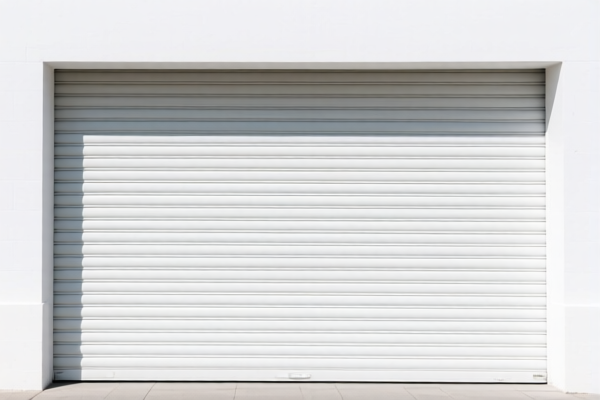
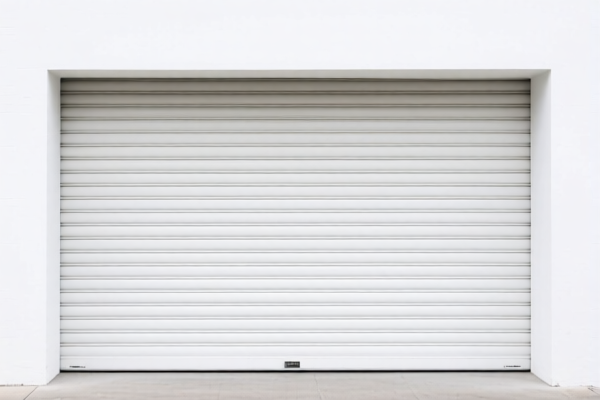
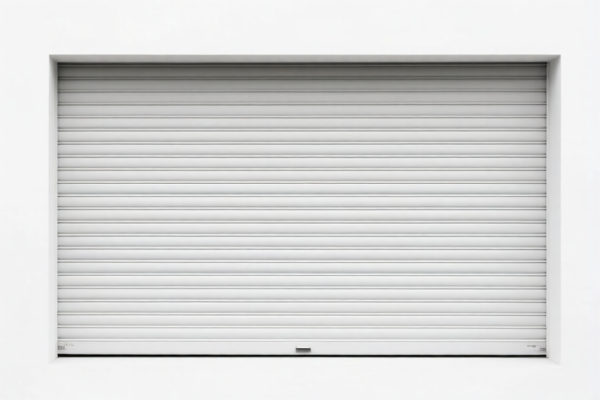
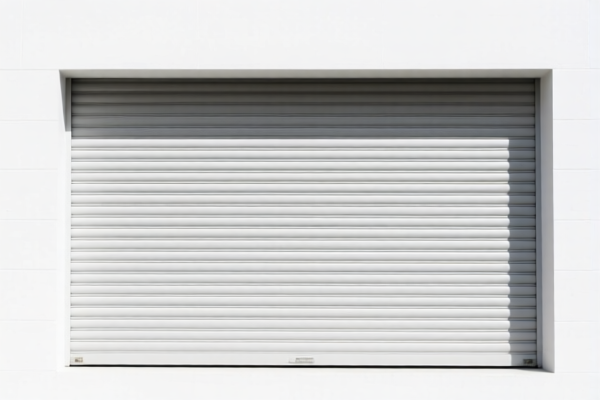
AI Analysis
🎨 White Plastic Roller Shutters (Window Treatments)
🌐 HS Code Reference & Customs Clearance Guide | 2026 Latest Tariff Analysis | Professional Clearance Strategy
📌 I. Product Definition & Classification: Do You Know "Plastic Shutters"?
White plastic roller shutters are architectural building components made primarily of polymers. They function as window coverings, light filters, or privacy screens. In international trade, they are strictly classified under "Builders' ware of plastics".
The critical distinction lies in the structure: * Roller Shutters (Blinds): Continuous fabric or slat material wound around a roller tube. * Venetian Blinds: Horizontal slats linked by cords/tapes. * Other Articles: Shutters not falling into the above specific sub-categories (e.g., solid panel shutters or unique mechanisms).
⚠️ Key Distinction Point:
- If the product is a curtain-like fabric wound on a tube → It is often considered a "Blind" (HS 3925.30.10).
- If the product is a rigid or semi-rigid shutter not specified elsewhere → It falls under "Other" (HS 3925.30.50).
Note: Customs authorities often scrutinize "Roller Shutters" to determine if they fit the "Blinds" definition. However, based on the provided data, we must analyze both potential codes.
📦 II. HS Code Classification Details (2026 Latest Tariff Authority对照)
| HS Code | Product Description | Applicable Scenario | Tax Rate (Total) |
|---|---|---|---|
3925.30.10.00 |
Builders' ware of plastics: Blinds (including venetian blinds) | Roller blinds, venetian blinds, vertical blinds made of plastic | 0.0% |
3925.30.50.00 |
Builders' ware of plastics: Other | Shutters, shutters not classified as "blinds", parts thereof | 12.8% |
🔍 Critical Analysis:
The term "Roller Shutter" can be ambiguous.
- If your product is essentially a roller blind (fabric/vinyl strip wound on a tube), it may qualify for3925.30.10.00(0% tax).
- If your product is a solid plastic shutter or a specific type of shutter not defined as a "blind," it defaults to3925.30.50.00(12.8% tax).
Strategy: Aim for the3925.30.10.00classification if structurally similar to blinds, as it offers significant duty savings.
💰 III. 2026 Latest Tariff Rate Details (Including Additional Duties)
✅ Applicable Country: United States (US)
✅ Origin: China (CN) (Assumed based on typical high-tariff scenarios; adjust if origin differs)
✅ Effective Time: Current US Trade Regulations
🎯 1. 3925.30.10.00 —— Blinds (Including Venetian Blinds)
| Item | Content |
|---|---|
| Base Tariff Rate | 0.0% |
| Section 301 Additional Duty | 0.0% |
| Total Tax Rate | 0.0% |
| Tax Calculation | CIF Value × 0% = $0 |
| De Minimis Eligibility | ❓ Check Current Status: Generally, plastic blinds are subject to trade remedies, but 0% base + 0% additional means no duty liability regardless of de minimis. |
| Legal Basis Path | HTSUS:3925.30.10.00 |
📌 Explanation:
- This code offers a zero-duty advantage.
- Ensure the product description clearly states "Roller Blinds" or "Venetian Blinds" rather than just "Shutters" to support this classification.
- "White Plastic" indicates material but does not change the functional classification if it operates like a blind.
🎯 2. 3925.30.50.00 —— Other Builders' Ware of Plastics
| Item | Content |
|---|---|
| Base Tariff Rate | 5.3% |
| Section 301 Additional Duty | 7.5% |
| Total Tax Rate | 12.8% |
| Tax Calculation | CIF Value × 12.8% |
| De Minimis Eligibility | ❌ Not Eligible (Section 321 De Minimis often excludes certain plastics or items under 301 duties, but with 0% base, 3925.30.10.00 is safer). |
| Legal Basis Path | HTSUS:3925.30.50.00 |
📌 Explanation:
- This is the default/higher-cost classification for plastic shutters not explicitly defined as "blinds."
- A 12.8% total duty is significantly higher than the 0% option.
- Misclassification here could lead to underpayment of duties if the item is actually a blind.
🛠️ IV. Customs Clearance Practical Advice (Combat Pitfalls Guide)
✅ 1. Document Checklist (Mandatory)
| Document | Required | Notes |
|---|---|---|
| ✅ Product Specification Sheet | ✔️ | Must define if it is a "Blind" or "Shutter." Include mounting type, slat width (if applicable), and material thickness. |
| ✅ Product Photos | ✔️ | Clear images of the rolled-up state and the extended state. If it looks like a blind, highlight this. |
| ✅ Commercial Invoice | ✔️ | Crucial: Use precise language. Avoid ambiguous terms like "Plastic Cover." Use "Plastic Roller Blinds" if classifying under 3925.30.10.00. |
| ✅ Packing List | ✔️ | Show components (roller tube, chain, brackets). Parts should not be shipped separately to avoid partial classification issues. |
| ✅ Material Certificate | ✔️ | Proof that it is 100% Plastics/PVC. If mixed with fabric, classification may change to textiles (Chapter 63), which has different duties. |
✅ 2. Declaration Tips (Key Mantra)
🔥 “Blind vs. Shutter: Define Function, Not Just Material!”
| Scenario | Correct Declaration | Wrong Practice |
|---|---|---|
| Product is a Roller Blind (fabric/plastic strip on tube) | HS 3925.30.10.00 Desc: "Plastic Roller Blinds" |
Describing as "Plastic Shutters" → Leads to 3925.30.50.00 → 12.8% Tax |
| Product is a Venetian Blind (horizontal slats) | HS 3925.30.10.00 Desc: "Plastic Venetian Blinds" |
Describing as "Plastic Slats" → Risk of misclassification |
| Product is a Solid Panel Shutter | HS 3925.30.50.00 Desc: "Plastic Shutters, Other" |
Attempting to claim "Blind" status → Audit Risk & Penalties |
| Product includes Parts (brackets/chains) | Declare as Whole Unit | Shipping parts separately → Higher duty on components |
✅ 3. Special Cases Handling
| Case | Handling Advice |
|---|---|
| Mixed Material (Fabric + Plastic Rods) | If the primary value/component is fabric, it may fall under Chapter 63 (Made-up furnishings). Check if duty is lower. Do not force it into Chapter 39 if it's primarily textile. |
| Custom Size/Color (White) | Color ("White") is cosmetic and does not affect HS Code. Do not rely on color for classification. |
| Automated/Motorized Shutters | If motorized, it may include electronic components. Check if the motor changes the classification to Chapter 85 (Electrical machinery). However, if the motor is integral to the blind system, it often remains in Chapter 39. |
| Sample Shipments | Even for samples, classify correctly. De minimis ($800) may apply, but duty rates still apply if declared. For high-value B2B, duty is unavoidable unless 0%. |
🌍 V. Global Market Comparison (2026 Latest)
| Country/Region | Recommended HS Code | Tariff (China Origin) | Certification Req. | Notes |
|---|---|---|---|---|
| 🇺🇸 USA | 3925.30.10.00 (Blinds) |
0.0% | None (General) | Best Option. If classified as "Other" (3925.30.50.00), tax is 12.8%. |
| 🇪🇺 EU | 3925.30.10.00 |
0% - 4.5% | CE (if applicable) | VAT applies separately. |
| 🇨🇳 China | 3925.30.10.00 |
0% - 5% | CCC (if applicable) | Low duty, focus on VAT. |
| 🇬🇧 UK | 3925.30.10.00 |
0% - 4.5% | UKCA | Post-Brexit rules apply. |
📌 Conclusion:
- The USA presents the biggest risk-reward gap: 0% vs. 12.8%.
- Action: Ensure product descriptions and physical form align with "Blinds" to secure the 0% rate.
- "Shutter" is a dangerous term in US customs for this item if it functions as a blind.
📌 VI. Common Mistakes & Pitfalls (Blood & Tears Lessons)
❌ Mistake 1: Using the term "Plastic Shutter" in the Invoice when it is a Roller Blind.
👉 Consequence: Customs defaults to HS 3925.30.50.00 → 12.8% Duty + potential penalties.
👉 Fix: Change description to "Plastic Roller Blinds".
❌ Mistake 2: Claiming 0% Duty for "Other Shutters" (3925.30.50.00).
👉 Consequence: Underpayment → Back taxes + Interest.
👉 Fix: Pay the 12.8% if it is indeed "Other."
❌ Mistake 3: Ignoring Motorization.
👉 Consequence: If motorized, customs may reclassify to Chapter 85.
👉 Fix: Declare motor specs if present.
❌ Mistake 4: Splitting Roller Tube + Fabric into separate shipments.
👉 Consequence: Parts may be taxed differently or higher.
👉 Fix: Ship as a complete unit.
🎯 VII. Conclusion: Professional Declaration Saves Money!
🎯 Remember the Mantra:
🔹 "Blind = 0% | Other = 12.8%"
🔹 "Don't call a Blind a Shutter!"
🔹 "Precise Description Wins the Tariff Battle!"
📌 Pro Tip:
If your product is a Roller Blind, explicitly use the words "Roller Blind" or "Venetian Blind" in all commercial documents. Avoid the word "Shutter" unless it is a rigid, non-fabric panel.
📞 Contact: Consult a licensed customs broker for a Pre-Ruling if unsure about the "Blind" vs. "Shutter" distinction for your specific design.
📣 Immediate Action:
📋 Revise Invoice Description: "White Plastic Roller Blinds, Model XYZ"
🚀 Verify HS Code:3925.30.10.00
💼 Save 12.8% on every shipment!
✨ Professional Customs Clearance Starts with Accurate Classification!
💼 Your Profit Margin is Protected by Precision!
Customer Reviews
About HS Code Classification
The Harmonized System (HS) is an internationally standardized nomenclature developed by the World Customs Organization (WCO) to classify traded products. Over 200 countries use the HS system as the basis for customs tariffs, trade statistics, and import/export regulations.
Each HS code follows a hierarchical structure:
- Chapter (2 digits) — Broad category of goods (e.g., Chapter 84: Machinery and Mechanical Appliances)
- Heading (4 digits) — More specific grouping within the chapter
- Subheading (6 digits) — Internationally standardized breakdown, used by all WCO member countries
- National subdivisions (8-10 digits) — Country-specific extensions for further classification, such as US HTSUS 10-digit codes
Correct HS code classification is essential for smooth customs clearance, accurate duty payment, and compliance with trade regulations. Misclassification can lead to customs delays, overpayment of duties, or penalties.
When importing from CN to US, the applicable tariff rates may include:
- Most-Favored-Nation (MFN) rate — The standard duty rate applied to WTO members
- General rate — Applied to countries without trade agreements
- Trade remedy duties — Additional tariffs such as Section 301 (anti-dumping), Section 232 (national security), or countervailing duties
The information provided on this page is for reference purposes only. For official classification, please consult with your local customs authority or a licensed customs broker.