White Shoe Covers
CN → US| HS Code | Tariff Rate | Origin | Destination | Doc |
|---|---|---|---|---|
| 3926201020 | 10.0% | CN | US | Official Doc |
| 4015900050 | 39.0% | CN | US | Official Doc |
| 3926204010 | 16.5% | CN | US | Official Doc |
| 4015900010 | 39.0% | CN | US | Official Doc |
Product Images
AI Analysis
👟 White Shoe Covers (Protective Footwear Covers)
🌐 HS Code Reference & Customs Clearance Guide | 2026 Latest Tariff Analysis | Professional Clearance Strategy
📌 I. Product Definition & Classification: What Exactly Are "White Shoe Covers"?
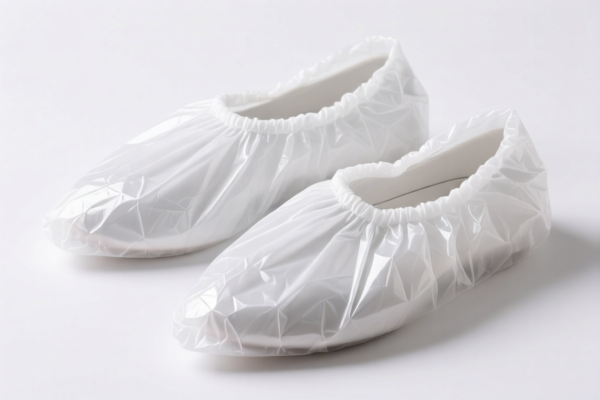
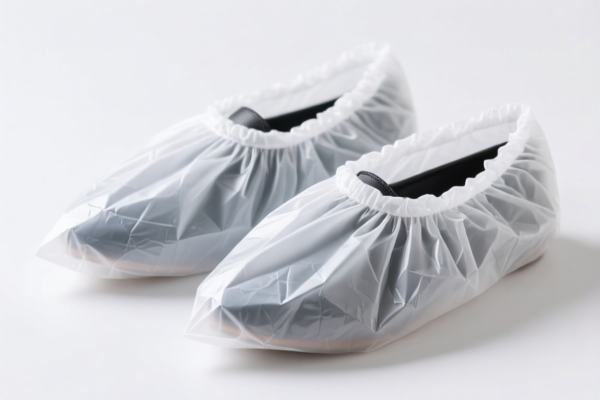
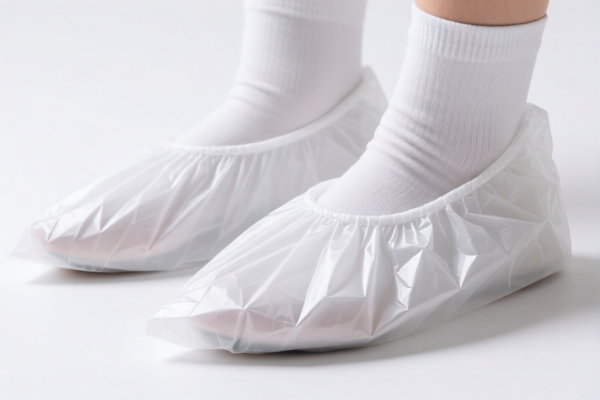
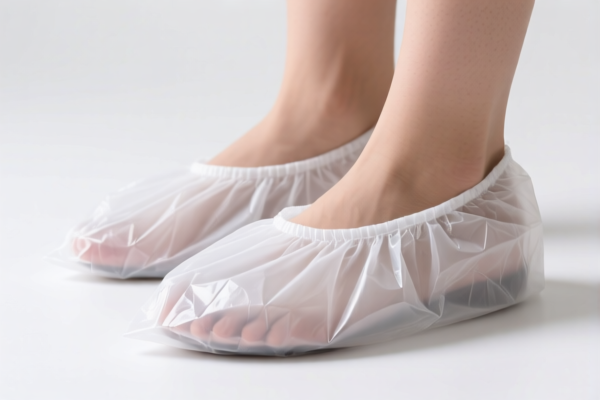
White shoe covers are lightweight, disposable protective items worn over shoes to prevent contamination of floors or to keep shoes clean in sterile, clean, or hygienic environments (e.g., hospitals, labs, food processing, construction). In international trade, they are classified differently based on their material composition and physical state.
They generally fall into two main categories: 1. Rubber/Synthetic Rubber Covers: Durable, elastic, often made from latex, nitrile, or polyurethane. These are treated as "other made up articles of rubber." 2. Plastic/Polyethylene Covers: Thin, disposable, non-woven or film-like. These are treated as "other articles of plastics" or "disposable plastic articles."
⚠️ Key Distinction:
- If the material is elastic rubber/synthetic rubber (feels stretchy, opaque/semi-opaque) → It belongs to Chapter 40 (Rubber).
- If the material is thin plastic/film (crinkly, transparent/opaque, non-elastic) → It belongs to Chapter 39 (Plastics).
- Do not misclassify as clothing (Chapter 61/62) unless they are integral parts of footwear, which shoe covers rarely are.
📦 II. HS Code Classification Details (2026 Latest Tariff Authority Comparison)
Based on the provided data, here are the four most likely HS Codes for White Shoe Covers, depending on the specific material and type.
| HS Code | Product Description | Material Inference | Usage/Category | Total Tax Rate |
|---|---|---|---|---|
4015.90.00.10 |
Other made up articles of vulcanized rubber | Vulcanized Rubber | Apparel Accessories / Other | 39.0% |
3926.20.10.20 |
Other articles of plastics, disposable | Disposable Plastic | Disposable Plastic Articles | 10.0% |
4015.90.00.50 |
Other made up articles of rubber | Compatible Elastic Rubber | Apparel Accessories / Other | 39.0% |
3926.20.40.10 |
Other articles of plastics, not disposable | Plastic / Non-disposable | Apparel Accessories / Other | 16.5% |
🔍 Key Takeaway:
- Rubber-based covers incur a high total tax of 39%.
- Plastic-based disposable covers incur a low total tax of 10%.
- Plastic-based non-disposable/durable covers incur 16.5%.
- The choice between4015.90.00.10and4015.90.00.50depends on the specific rubber compound (vulcanized vs. other elastic), but both have the same tax rate in this dataset.
💰 III. 2026 Latest Tariff Rate Breakdown (Including Surcharges & Policy Add-ons)
✅ Applicable Country: United States (US)
✅ Country of Origin: China (CN)
✅ Effective Date: 2025/2026 (Based on current IEEPA and Section 301 rules)
🎯 1. 4015.90.00.10 & 4015.90.00.50 —— Rubber Shoe Covers
| Item | Detail |
|---|---|
| Base Duty Rate | 4.0% (Ad valorem) |
| Section 301 Surcharge | +25.0% (USITC Footnote 9903.88.01 equivalent for rubber articles) |
| IEEPA Surcharge | +10.0% (Targeting China-origin goods, effective Nov 10, 2025) |
| Total Tax Rate | 39.0% |
| Tax Calculation | CIF Value × 39% |
| De Minimis Exemption? | ❌ No (deny_de_minimis applies) |
| Legal Path | IEEPA:9903.01.25 → USITC:4015.90.00.10 → FOOTNOTE:301 |
📌 Explanation:
- Base 4%: Standard MFN tariff for "Other made up articles of vulcanized rubber."
- 25% Surcharge: Section 301 tariff on specific rubber products from China.
- 10% IEEPA: International Emergency Economic Powers Act surcharge on Chinese goods.
- Total 39%: This is a high-cost classification. Importers must budget significantly for duties.
🎯 2. 3926.20.10.20 —— Disposable Plastic Shoe Covers
| Item | Detail |
|---|---|
| Base Duty Rate | 0.0% (Ad valorem) |
| Section 301 Surcharge | 0.0% |
| IEEPA Surcharge | +10.0% (Targeting China-origin goods) |
| Total Tax Rate | 10.0% |
| Tax Calculation | CIF Value × 10% |
| De Minimis Exemption? | ❌ No (deny_de_minimis applies for IEEPA goods) |
| Legal Path | IEEPA:9901.25 → USITC:3926.20.10.20 |
📌 Explanation:
- Base 0%: Many disposable plastic articles have low base duties.
- 0% Surcharge: This specific plastic HS code may be excluded from the highest tier of Section 301 tariffs (or the dataset reflects a 0% add-on).
- 10% IEEPA: Still subject to the baseline IEEPA surcharge for Chinese origin.
- Total 10%: This is a cost-effective classification. Highly recommended if the product is indeed disposable plastic.
🎯 3. 3926.20.40.10 —— Non-Disposable Plastic Shoe Covers
| Item | Detail |
|---|---|
| Base Duty Rate | 6.5% (Ad valorem) |
| Section 301 Surcharge | 0.0% |
| IEEPA Surcharge | +10.0% |
| Total Tax Rate | 16.5% |
| Tax Calculation | CIF Value × 16.5% |
| De Minimis Exemption? | ❌ No |
| Legal Path | IEEPA:9901.25 → USITC:3926.20.40.10 |
📌 Explanation:
- Base 6.5%: Standard duty for other plastic articles.
- 10% IEEPA: Applies as above.
- Total 16.5%: Moderate cost. Suitable for durable/reusable plastic shoe covers.
🛠️ IV. Customs Clearance Practical Advice (Real-World Pitfall Avoidance)
✅ 1. Required Documentation Checklist (Essential)
| Document | Mandatory? | Notes |
|---|---|---|
| ✅ Product Specifications | ✔️ | Must specify material (e.g., "Polyethylene PE" vs. "Nitrile Rubber"). |
| ✅ Material Safety Data Sheet (MSDS) | ✔️ | To confirm chemical composition and classify as plastic vs. rubber. |
| ✅ Product Photos | ✔️ | Clear images showing texture (elastic vs. crinkly film). |
| ✅ Commercial Invoice | ✔️ | Must clearly state "Disposables" or "Rubber Apparel Accessories." |
| ✅ Packing List | ✔️ | Include weight and dimensions for volume calculations. |
| ✅ Country of Origin Certificate | ✔️ | Crucial for applying IEEPA surcharges correctly. |
✅ 2. Declaration Strategy (Key Mantra)
🔥 "Material Determines Code, Disposables Save Duty, Rubber Costs More!"
| Scenario | Correct HS Code | Wrong Code | Consequence |
|---|---|---|---|
| Thin, crinkly, disposable cover | 3926.20.10.20 (10%) |
4015.90.00.10 (39%) |
Overpayment of 29% tax! |
| Stretchy, rubber-like cover | 4015.90.00.10 (39%) |
3926.20.10.20 (10%) |
Underpayment → Penalty + Back Taxes! |
| Reusable plastic cover | 3926.20.40.10 (16.5%) |
3926.20.10.20 (10%) |
Underpayment → Penalty! |
| Apparel accessory (general) | 4015.90.00.50 (39%) |
6117.10.90 (Clothing) |
Misclassification → Seizure Risk |
✅ 3. Special Situations
| Situation | Handling Advice |
|---|---|
| Mixed Materials | If a shoe cover has a rubber cuff and plastic body, declare based on the essential character (usually the main covering material). Provide a detailed breakdown. |
| OEM/Contract Manufacturing | Ensure the invoice reflects the actual manufacturer and origin to avoid IEEPA surcharges if shipped from a third country (e.g., Vietnam), though this is complex. |
| Bulk vs. Retail | Packaging size does not change the HS code, but ensure the invoice description matches the bulk nature to avoid duty evasion flags. |
🌍 V. Global Market Comparison (2026 Latest)
| Market | Recommended HS Code | Estimated Duty (China Origin) | Key Certifications | Remarks |
|---|---|---|---|---|
| 🇺🇸 USA | 3926.20.10.20 (Plastic Disposable) |
10% (IEEPA only) | FDA (if food contact), CPC | Lowest cost option |
| 🇺🇸 USA | 4015.90.00.10 (Rubber) |
39% (Base + 301 + IEEPA) | ASTM, ISO | High duty burden |
| 🇪🇺 EU | 3926.20.90 |
~2.5% (Plus VAT 19-27%) | CE, REACH | No IEEPA/301 |
| 🇨🇳 China | 3926.20.90 |
0-5% | None specific | Low barrier |
📌 Conclusion:
- For the US market, disposable plastic shoe covers (3926.20.10.20) are significantly cheaper to import than rubber ones.
- If your product is indeed plastic, ensure the declaration explicitly states "Disposable Plastic" to avoid being forced into the rubber category.
- Rubber shoe covers face a 39% total tax, making them less competitive unless they are premium reusable medical-grade items.
📌 VI. Common Mistakes & Pitfalls (Blood & Tears Lessons)
❌ Mistake 1: Declaring disposable plastic covers as "Rubber" because they look similar.
👉 Consequence: You pay 39% instead of 10%. Waste of $29,000 per $100k shipment!
❌ Mistake 2: Declaring rubber covers as "Plastic" to save duty.
👉 Consequence: Customs inspection reveals elasticity/rubber content. Audit, fines, and potential seizure.
❌ Mistake 3: Ignoring the IEEPA 10% surcharge.
👉 Consequence: Even if base duty is 0%, you must pay 10% for Chinese origin. Failure to declare leads to penalties.
✅ Correct Action:
"Disposable Plastic Shoe Covers, Non-Sterile, Polyethylene Material, Single-Use, Model XYZ"
HS Code:3926.20.10.20
Tax: 10%
🎯 VII. Conclusion: Smart Classification, Cost Savings, Efficient Clearance!
🎯 Remember the Mantra:
🔹 "Plastic Disposable = 10% (Gold!)"
🔹 "Rubber/Elastic = 39% (Silver, but heavy!)"
🔹 "Always verify material before declaring!"
📌 Pro Tip:
If your supplier claims the material is "Polyurethane," it might be classified as Rubber (4015) or Plastic (3926) depending on the specific formulation and cross-linking. Request a lab test or material certificate to confirm. If it’s elastic and stretchy, assume 39%. If it’s crinkly and disposable, assume 10%.
📣 Immediate Action:
📞 Contact your customs broker before shipping.
📦 Provide sample photos and material certificates.
🚀 Save money by choosing the right HS Code!
✨ Professional clearance starts with precise classification!
💼 Every dollar saved in duty is pure profit!
Customer Reviews
About HS Code Classification
The Harmonized System (HS) is an internationally standardized nomenclature developed by the World Customs Organization (WCO) to classify traded products. Over 200 countries use the HS system as the basis for customs tariffs, trade statistics, and import/export regulations.
Each HS code follows a hierarchical structure:
- Chapter (2 digits) — Broad category of goods (e.g., Chapter 84: Machinery and Mechanical Appliances)
- Heading (4 digits) — More specific grouping within the chapter
- Subheading (6 digits) — Internationally standardized breakdown, used by all WCO member countries
- National subdivisions (8-10 digits) — Country-specific extensions for further classification, such as US HTSUS 10-digit codes
Correct HS code classification is essential for smooth customs clearance, accurate duty payment, and compliance with trade regulations. Misclassification can lead to customs delays, overpayment of duties, or penalties.
When importing from CN to US, the applicable tariff rates may include:
- Most-Favored-Nation (MFN) rate — The standard duty rate applied to WTO members
- General rate — Applied to countries without trade agreements
- Trade remedy duties — Additional tariffs such as Section 301 (anti-dumping), Section 232 (national security), or countervailing duties
The information provided on this page is for reference purposes only. For official classification, please consult with your local customs authority or a licensed customs broker.