White Toilet Stool
CN → US| HS Code | Tariff Rate | Origin | Destination | Doc |
|---|---|---|---|---|
| 6910100020 | 15.8% | CN | US | Official Doc |
| 3922900000 | 41.3% | CN | US | Official Doc |
| 9401804046 | 35.0% | CN | US | Official Doc |
| 9401698011 | 35.0% | CN | US | Official Doc |
| 9401806028 | 35.0% | CN | US | Official Doc |
Product Images
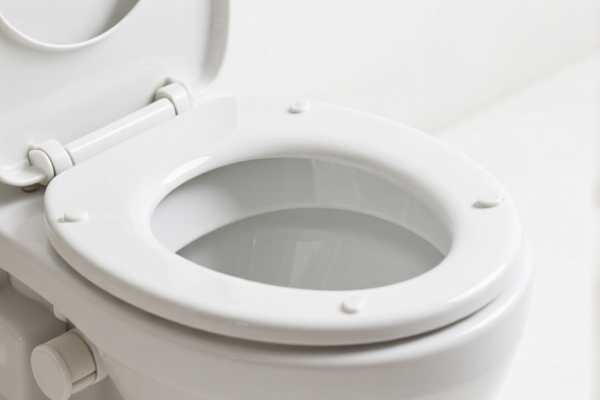
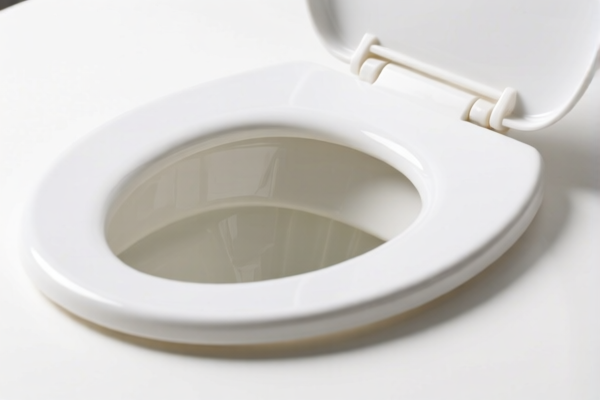
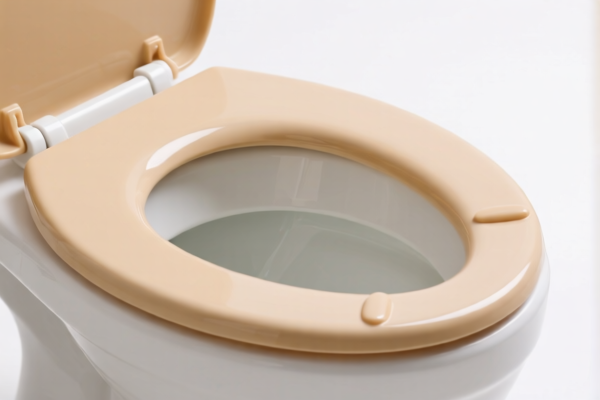
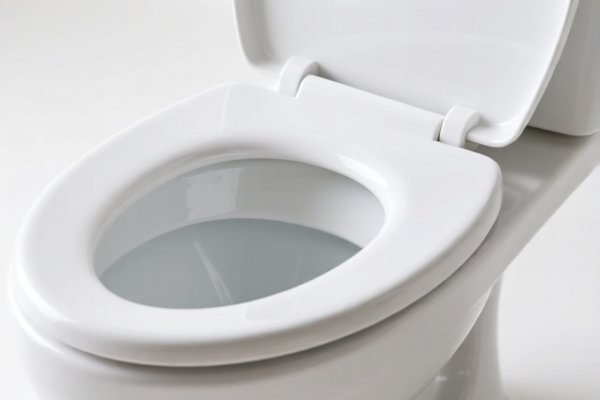
AI Analysis
🚽 White Toilet Stool (Potty Chair / Toilet Training Seat)
🌐 HS Code Reference & Customs Clearance Guide | 2026 Latest Tariff Breakdown | Professional Strategy
📌 I. Product Definition & Classification: What Exactly Is a "White Toilet Stool"?
A "White Toilet Stool" typically refers to one of two distinct products in international trade, both commonly used in bathroom settings but classified differently based on material and primary function:
- Plastic Toilet Training Seat / Potty Chair: A standalone stool or seat designed for children or adults, often made of polyethylene (PE) or polypropylene (PP). It is a finished product for specific hygiene assistance.
- Ceramic/Sanitary Ware Aid: Less common for "stool" terminology, but sometimes refers to toilet accessories or specific sanitary fixtures made of ceramic. However, "stool" strongly implies a non-fixed, often plastic, item.
⚠️ Critical Distinction:
- If it is a finished plastic seat/stool for bathroom use → It falls under Plastic Sanitary Ware (3922).
- If it is a ceramic fixture (like a bidet attachment or specific toilet part) → It might fall under Ceramic Sanitary Ware (6910), though "stool" rarely applies here.
- If it is a generic seat (like a chair) → It falls under Furniture (9401), but specific bathroom use often overrides this for sanitary items.
📦 II. HS Code Classification Details (Based on Provided Data)
The provided data offers four potential classifications. Here is the breakdown of why each might apply, with a focus on the most likely candidates for a "White Toilet Stool."
| HS Code | Product Description & Logic | Tax Rate | Key Reason for Match |
|---|---|---|---|
| 3922.90.00.00 | Plastic Sanitary Ware (Other) | 41.3% | Most Likely for Plastic Items. The summary states: "Material inferred as plastic via product name; use falls under other sanitary appliances." White plastic toilet seats/stools are classic examples of plastic sanitary ware not elsewhere specified. |
| 9401.80.40.46 | Plastic/Rubber Seats (Finished) | 35.0% | Alternative for Generic Seats. The summary notes: "Use is seating; form is finished; material inferred as plastic/rubber." Applies if the item is viewed primarily as a "chair/seat" rather than "sanitary ware." |
| 9401.69.80.11 | Other Household Seats (Plastic/Wood) | 35.0% | Household Furniture Angle. The summary says: "Fits 'household seat' definition; material inferred as plastic/wood." Used if the stool is considered general household furniture rather than specialized sanitary equipment. |
| 6910.10.00.20 | Ceramic Sanitary Ware (Toilet/Bidet) | 15.8% | Only for Ceramic. The summary states: "Form is toilet/bidet accessory; material inferred as ceramic/plastic via 'white'." Unlikely for a "stool" unless it is a specialized ceramic fixture. "Stool" usually implies plastic. |
🔍 Key Insight:
- Plastic "Toilet Stool" (e.g., for children or elderly assistance) is most accurately classified under 3922.90.00.00 because it is a sanitary appliance made of plastic.
- Classifications under 9401 (Furniture) are secondary unless the item is a generic bathroom stool not designed specifically for toilet hygiene.
- 6910 is likely incorrect unless the item is actually a ceramic toilet part.
💰 III. 2026 Latest Tariff Rate Breakdown (US Import from China)
✅ Applicable Country: United States (US)
✅ Origin: China (CN)
✅ Effective Date: November 10, 2025 onwards
🎯 1. 3922.90.00.00 — Plastic Sanitary Ware (Other)
This is the most probable classification for a white plastic toilet stool.
| Item | Detail |
|---|---|
| Base Tariff | 6.3% |
| Section 301 Tariff | +25.0% |
| IEEPA Tariff (122) | +10.0% |
| Total Effective Rate | 41.3% |
| De Minimis Exemption | ❌ Not Eligible |
| Legal Basis | 3922.90.00.00 → Section 301 → IEEPA 122 |
📌 Explanation:
- Plastic sanitary ware (like toilet seats, bidet attachments, potty chairs) is classified here.
- The 25% Section 301 tariff is a major cost driver.
- The 10% IEEPA tariff is an additional charge on Chinese goods.
- Total Cost Impact: For a $100 item, you pay $41.30 in duties alone.
🎯 2. 9401.80.40.46 / 9401.69.80.11 — Plastic/Wooden Household Seats
If the stool is considered general furniture rather than sanitary ware.
| Item | Detail |
|---|---|
| Base Tariff | 0.0% |
| Section 301 Tariff | +25.0% |
| IEEPA Tariff (122) | +10.0% |
| Total Effective Rate | 35.0% |
| De Minimis Exemption | ❌ Not Eligible |
| Legal Basis | 9401 → Section 301 → IEEPA 122 |
📌 Explanation:
- If customs views the item as a "chair" or "stool" for general use, the base rate is 0%.
- However, Section 301 (25%) + IEEPA (10%) still apply.
- Savings: This classification saves 6.3% compared to 3922. BUT, it risks misclassification if the item is clearly for sanitary use.
🎯 3. 6910.10.00.20 — Ceramic Sanitary Ware
Only if the "stool" is made of ceramic.
| Item | Detail |
|---|---|
| Base Tariff | 5.8% |
| Section 301 Tariff | 0.0% |
| IEEPA Tariff (122) | +10.0% |
| Total Effective Rate | 15.8% |
| De Minimis Exemption | ❌ Not Eligible |
| Legal Basis | 6910.10.00.20 → IEEPA 122 |
📌 Explanation:
- Ceramic sanitary ware has no Section 301 tariff.
- Total Rate: Only 15.8%, which is significantly cheaper.
- Risk: Misclassifying plastic as ceramic is fraud. Only use if the item is genuinely ceramic.
🛠️ IV. Customs Clearance Practical Advice (Avoiding Pitfalls)
✅ 1. Documentation Checklist (Mandatory)
| Document | Requirement | Note |
|---|---|---|
| Product Specification Sheet | ✔️ | Must clearly state Material (e.g., "100% Polyethylene") and Usage (e.g., "Toilet Training Stool"). |
| Product Photos | ✔️ | Show the item from multiple angles. Label "White Plastic Stool." |
| Commercial Invoice | ✔️ | Use precise description: "Plastic Toilet Training Seat/Stool, White, PP Material" |
| HS Code Declaration | ✔️ | Propose 3922.90.00.00 for plastic items. |
| Origin Certificate | ✔️ | If applicable, to verify China origin (subject to tariffs). |
✅ 2. Classification Strategy (Critical Decision)
| Scenario | Recommended HS Code | Reason |
|---|---|---|
| White Plastic Potty Chair/Stool | 3922.90.00.00 | Best fit for "plastic sanitary ware." Clear intent for bathroom use. |
| White Plastic Bathroom Stool (General) | 9401.69.80.11 | If not specifically for toilet use, but for bathing/sitting. Lower base rate, but same surcharges. |
| White Ceramic Toilet Accessory | 6910.10.00.20 | Only if made of ceramic. Lowest total tax. |
⚠️ Warning:
- Do not mislabel plastic as ceramic to save tax. Customs inspections are rigorous.
- Do not split the shipment into "seats" (9401) and "sanitary" (3922) to avoid Section 301. This is risky and can lead to penalties.
✅ 3. Special Considerations
- Children’s Products: If the stool is for children, it may require CPSC certification in the US. Ensure compliance with safety standards.
- Plastic Recycling Code: Include the resin identification code (e.g., PP #5, PE #2) on the product/packaging.
- Labeling: Clear "Made in China" labeling is mandatory.
🌍 V. Global Market Comparison (2026)
| Market | Recommended HS Code | Total Tax (China Origin) | Notes |
|---|---|---|---|
| 🇺🇸 USA | 3922.90.00.00 |
41.3% | High tariffs due to Section 301 + IEEPA. |
| 🇪🇺 EU | 3922.90.90 |
~4-6% | No Section 301. Lower total tax. |
| 🇨🇳 China | 3922.90.00 |
~5-8% | Domestic market rates apply. |
📌 Conclusion:
- The US market is the most challenging due to 41.3% total tariffs on plastic sanitary ware.
- Consider pricing strategy to absorb these costs or explore tariff engineering (e.g., if possible, classifying as general furniture9401at 35%, but only if defensible).
📌 VI. Common Errors & Pitfalls (Lessons Learned)
❌ Error 1: Classifying plastic toilet stool as 6910 (Ceramic)
👉 Consequence: Customs rejection, penalties, and potential seizure. "Stool" implies plastic, not ceramic.
❌ Error 2: Using 9401 for a clearly sanitary item to save 6.3%
👉 Consequence: High risk of audit. If customs agrees it’s sanitary, they will reassess at 3922 + penalties.
❌ Error 3: Ignoring IEEPA 10% and Section 301 25%
👉 Consequence: Underestimating landed cost. Total tax is 35-41.3%, not just the base rate.
✅ Best Practice:
"Declare plastic as plastic, sanitary as sanitary. Prepare for 41.3% tax in the US. Document material and use clearly."
🎯 VII. Conclusion: Professional Classification for Maximum Savings
🎯 Key Takeaway:
- For a White Plastic Toilet Stool, 3922.90.00.00 is the most accurate and defensible HS Code.
- Expect a 41.3% total tariff rate in the US.
- Ensure all documentation reflects plastic material and sanitary purpose to avoid misclassification risks.
📌 Pro Tip:
If you are importing large volumes, consider Advance Ruling from US CBP to confirm the HS Code. This provides legal certainty and avoids surprise duties.
📣 Immediate Action:
📞 Confirm Material: Is it plastic? If yes, prepare for 3922.
📄 Prepare Docs: Invoice, spec sheet, photos.
💰 Budget Tax: Calculate landed cost including 41.3% duty.
✨ Smart Classification, Clear Customs, Lower Costs!
💼 Every detail matters in international trade!
Customer Reviews
About HS Code Classification
The Harmonized System (HS) is an internationally standardized nomenclature developed by the World Customs Organization (WCO) to classify traded products. Over 200 countries use the HS system as the basis for customs tariffs, trade statistics, and import/export regulations.
Each HS code follows a hierarchical structure:
- Chapter (2 digits) — Broad category of goods (e.g., Chapter 84: Machinery and Mechanical Appliances)
- Heading (4 digits) — More specific grouping within the chapter
- Subheading (6 digits) — Internationally standardized breakdown, used by all WCO member countries
- National subdivisions (8-10 digits) — Country-specific extensions for further classification, such as US HTSUS 10-digit codes
Correct HS code classification is essential for smooth customs clearance, accurate duty payment, and compliance with trade regulations. Misclassification can lead to customs delays, overpayment of duties, or penalties.
When importing from CN to US, the applicable tariff rates may include:
- Most-Favored-Nation (MFN) rate — The standard duty rate applied to WTO members
- General rate — Applied to countries without trade agreements
- Trade remedy duties — Additional tariffs such as Section 301 (anti-dumping), Section 232 (national security), or countervailing duties
The information provided on this page is for reference purposes only. For official classification, please consult with your local customs authority or a licensed customs broker.