White plastic foil
CN → US| HS Code | Tariff Rate | Origin | Destination | Doc |
|---|---|---|---|---|
| 3920991000 | 41.0% | CN | US | Official Doc |
| 3920991000 | 41.0% | CN | US | Official Doc |
| 3920992000 | 39.2% | CN | US | Official Doc |
| 3920992000 | 39.2% | CN | US | Official Doc |
Product Images
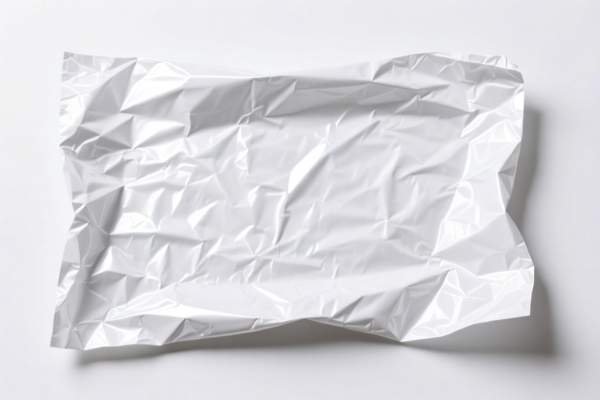
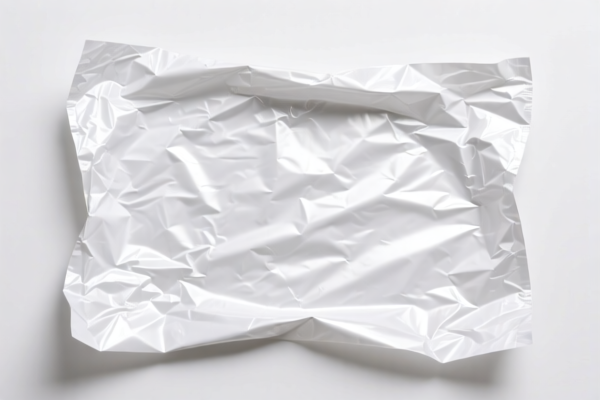
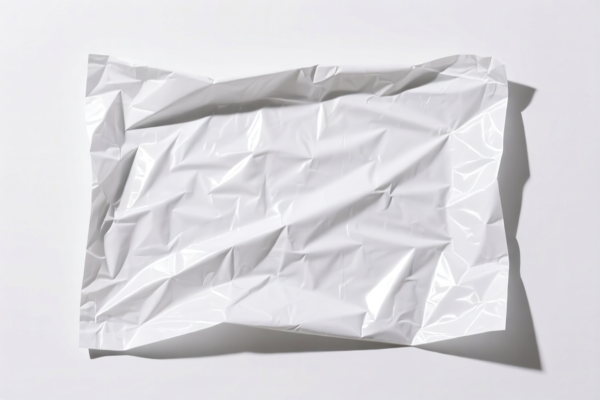
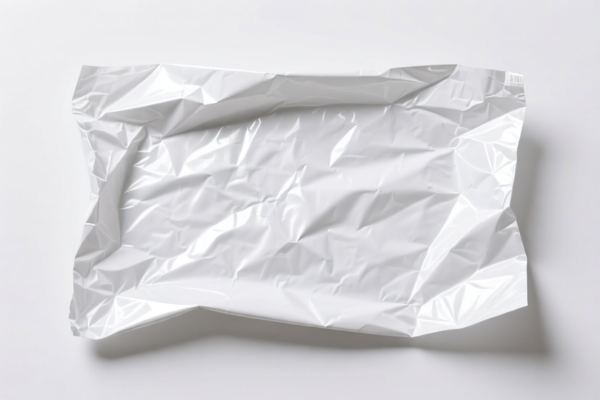
AI Analysis
🛡️ White Plastic Foil (Plastic Film/Sheet)
🌐 HS Code Reference & Customs Clearance Guide | 2026 Latest Tariff Analysis | Professional Clearance Strategy
📌 I. Product Definition & Classification: What Exactly is "White Plastic Foil"?
White plastic foil, typically referred to in international trade as plastic films, sheets, or membranes, is a versatile material used in packaging, construction, agriculture, and industrial applications. The key to accurate classification lies in determining whether the material is:
- Unlaminated/Uncoated: Pure plastic without significant backing.
- Laminated/Coated: Plastic bonded with paper, metal, or other materials (not applicable here based on "foil" implying single material or standard plastic film).
- Specific Chemical Composition: e.g., Polyethylene, Polypropylene, PVC, etc. (Note: The provided data groups these under generic "Other" categories if specific resin codes are not provided, focusing on form).
⚠️ Key Distinction:
- If it is a simple plastic film/sheet without further processing like lamination with metals or paper, it generally falls under Heading 3920.
- "Foil" in common language often refers to thin plastic films (not metal foil). Metal foils would fall under Chapter 76 (Aluminum) or 74 (Copper), but "White Plastic Foil" explicitly states plastic.
📦 II. HS Code Classification Details (2026 Latest Tariff Authority Comparison)
Based on the provided data, there are four valid HS Code entries for White Plastic Foil, split into two main tariff lines. The choice depends on the specific sub-category nuances (often related to thickness, specific polymer type, or whether it's considered "rigid" vs. "flexible" in specific national interpretations, though 3920 is generally non-cellular).
| HS Code | Product Description | Matching Logic & Summary | Total Tax Rate |
|---|---|---|---|
3920.99.10.00 |
Other plates, sheets, film, foil and strip, of plastics, not elsewhere specified | Summary 1: Material is plastic, form is film. Classified as "likely compliant" based on catch-all principles. Summary 2: Material (Plastic) and Form (Film/Sheet) match completely. Classified as "Other" plastic plates, sheets, film, foil, and strips. |
41.0% |
3920.99.20.00 |
Other plates, sheets, film, foil and strip, of plastics, not elsewhere specified | Summary 1: Material is plastic, form is film. Strong matching basis. Summary 2: Material is plastic, form is film/sheet/membrane. Classified as "Other" plastic plates, sheets, film, foil, and strips based on "Other" category rules. |
39.2% |
🔍 Critical Note:
- Both codes fall under 3920 (Plastic plates, sheets, film, foil and strip, unhardened).
- The difference between.10and.20often relates to specific national sub-divisions or slight variations in material properties not detailed in the summary (e.g., specific polymer type or thickness thresholds).
- Both are subject to high additional tariffs.
💰 III. 2026 Latest Tariff Rate Details (Including Surtaxes, Policy Add-ons)
✅ Applicable Country: United States (US)
✅ Country of Origin: China (CN)
✅ Effective Date: 2025 November 10 onwards (including subsequent imports)
🎯 1. 3920.99.10.00 —— White Plastic Foil (Catch-All/General Plastic Film)
| Item | Content |
|---|---|
| Basic Tariff | 6.0% |
| Section 301 Surcharge | +25.0% |
| Section 122 Tariff | +10.0% |
| Total Tax Rate | 41.0% |
| Tax Calculation | CIF Value × 41% |
| De Minimis Eligibility | ❌ No (deny_de_minimis) |
| Legal Basis Path | USITC:3920.99.10.00 → Section 301 → Section 122 |
📌 Explanation:
- 6.0% Basic Tariff: Standard MFN rate for plastic sheets/films.
- 25% Section 301: Trade war surcharge on Chinese plastics.
- 10% Section 122: Additional tariff imposed under Section 232/201 mechanisms or specific policy additions (as per provided data).
- Total 41%: This is a very high effective tariff rate. Cost must be factored into pricing.
🎯 2. 3920.99.20.00 —— White Plastic Foil (Specific Plastic Film/Sub-category)
| Item | Content |
|---|---|
| Basic Tariff | 4.2% |
| Section 301 Surcharge | +25.0% |
| Section 122 Tariff | +10.0% |
| Total Tax Rate | 39.2% |
| Tax Calculation | CIF Value × 39.2% |
| De Minimis Eligibility | ❌ No (deny_de_minimis) |
| Legal Basis Path | USITC:3920.99.20.00 → Section 301 → Section 122 |
📌 Note:
- 4.2% Basic Tariff: Slightly lower base rate than.10.
- Same Surtaxes: Still subject to 25% + 10% = 35% in additional duties.
- Total 39.2%: Marginally better than.10, but still extremely costly.
- When to use.20?: If the product fits the specific criteria for this sub-code (e.g., specific polymer type or physical dimensions defined in US HTSUS), it saves 1.8% in total duty.
🛠️ IV. Customs Clearance Practical Advice (Real-World Pitfall Avoidance)
✅ 1. Required Documentation Checklist (None are Optional)
| Document | Mandatory? | Description |
|---|---|---|
| ✅ Product Specification Sheet | ✔️ | Must specify: Material (e.g., PE, PP, PVC), Thickness (microns/mm), Color (White), Width, Length, Roll/Sheet format. |
| ✅ Commercial Invoice | ✔️ | Must clearly state: "White Plastic Film/Foil", HS Code, Origin (China), CIF Value. |
| ✅ Packing List | ✔️ | Detail roll weight, net weight, gross weight, dimensions. |
| ✅ Certificate of Origin (CO) | ✔️ | Confirm Chinese origin to apply correct (high) tariffs. If from Vietnam/Mexico, may reduce taxes. |
| ✅ Test Report (Optional but Recommended) | ✔️ | FDA compliance (if for food contact), RoHS, REACH (if applicable). |
| ✅ Bill of Lading (B/L) | ✔️ | Original B/L required. |
✅ 2. Declaration Tips (Key Mantra)
🔥 "Material Clear, Form Precise, Origin Honest, Tax Predictable!"
| Situation | Correct Declaration | Wrong Action |
|---|---|---|
| Plain White Plastic Film | 3920.99.10.00 or 3920.99.20.00 |
Misdeclare as "Paper" or "Textile" → High fraud penalty. |
| White Foil with Metal Layer | Likely 7606 (Aluminum) | Declare as plastic → Customs seizure. |
| White Plastic Film + Adhesive | Check if it becomes adhesive tape (3919) | Declare as simple film → Wrong classification. |
| Small Samples for Testing | Still declare properly | Assume "Gift" exemption → De minimis denied for Chinese goods. |
✅ 3. Special Cases Handling
| Situation | Handling Advice |
|---|---|
| Food-Grade Plastic Foil | Must provide FDA contact declaration. Same HS code, but stricter scrutiny on materials. |
| Recycled Plastic Foil | May have different environmental regulations. Still 3920, but check for plastic waste restrictions. |
| Custom Widths/Thicknesses | Ensure specs match the "Film" vs "Sheet" distinction if applicable. Thin = Film, Thicker = Sheet. |
| OEM/Private Label | Provide brand authorization if brand is registered. |
🌍 V. Global Main Market Clearance Comparison (2026 Latest)
| Country/Region | Recommended HS Code | Tariff Rate (China Origin) | Certification Requirements | Notes |
|---|---|---|---|---|
| 🇺🇸 USA | 3920.99.10.00 / .20 |
39.2% - 41.0% | None specific for film, but FDA if food contact | Highest cost market due to 35% surtaxes. |
| 🇨🇳 China | 3920.99.10.00 / .20 |
~6% - 10% (Import Duty) | CCC (if applicable), RoHS | Domestic market has lower barriers. |
| 🇪🇺 EU | 3920.99.90 |
~6.5% | REACH, CE (if consumer product) | No Trump-era tariffs. Standard EU duty. |
| 🇬🇧 UK | 3920.99.90 |
~6.5% | UKCA, REACH | Post-Brexit, aligns with EU but separate certification. |
| 🇮🇳 India | 3920.99.90 |
~7.5% - 15% | BIS, GST | Varies by state; higher than EU. |
📌 Conclusion:
- USA is the most expensive market for Chinese plastic films due to Section 301 and 122 tariffs.
- Consider Supply Chain Diversification: Sourcing from Vietnam, Thailand, or India may significantly reduce duties (often 0%~5% basic + no US surtaxes).
- EU/UK are stable alternatives with moderate tariffs.
📌 VI. Common Mistakes & Pitfall Guide (Lessons Learned)
❌ Mistake 1: Declaring "Plastic Foil" as "Aluminum Foil" (7606)
👉 Consequence: Customs audit finds plastic → Fraud penalty + back duties.
❌ Mistake 2: Ignoring the "Plastic" vs "Composite" distinction
👉 Consequence: If the foil has a paper backing, it may be classified under 4823 (Paper), not 3920. Wrong code leads to misclassification fines.
❌ Mistake 3: Assuming De Minimis applies to small shipments
👉 Consequence: De Minimis is denied for Chinese goods under Section 301/122. Even $1 samples are taxed.
❌ Mistake 4: Not specifying Thickness
👉 Consequence: Customs may downgrade to a higher-tariff "Sheet" category or reject the declaration for ambiguity.
✅ Correct Practice:
"White Plastic Film, Polyethylene (PE), Unprinted, Thickness: 0.05mm, Width: 50cm, Roll: 100m, HS Code: 3920.99.20.00, Origin: China"
🎯 VII. Conclusion: Professional Declaration, Cost Control, Efficiency!
🎯 Remember the Mantra:
🔹 "Plastic Film, High Tax, 41% is the Peak!"
🔹 "3920 is Key, But Watch the 25% + 10% Add-on!"
🔹 "If Value Matters, Look Away from China-US Direct!"
📌 Pro Tip:
- Pre-Ruling: Apply for an Advance Ruling from US CBP to confirm the exact HS Code (
3920.99.10.00vs.20) for your specific product specifications.- Supply Chain Shift: If shipping volumes are high, consider transshipping through a third country (e.g., Vietnam) if legally compliant, to avoid US surtaxes.
- Cost Calculation: Always budget for ~40% duty on US-bound Chinese plastic films.
📣 Take Action Now:
📞 Contact a licensed customs broker.
📄 Prepare detailed product specs (Material, Thickness, Width).
🚀 Optimize your supply chain, clear customs smoothly, and protect your profit margins!
✨ Professional Customs Clearance Starts with Accurate Classification!
💼 Every Dollar Saved is a Dollar Earned!
Customer Reviews
About HS Code Classification
The Harmonized System (HS) is an internationally standardized nomenclature developed by the World Customs Organization (WCO) to classify traded products. Over 200 countries use the HS system as the basis for customs tariffs, trade statistics, and import/export regulations.
Each HS code follows a hierarchical structure:
- Chapter (2 digits) — Broad category of goods (e.g., Chapter 84: Machinery and Mechanical Appliances)
- Heading (4 digits) — More specific grouping within the chapter
- Subheading (6 digits) — Internationally standardized breakdown, used by all WCO member countries
- National subdivisions (8-10 digits) — Country-specific extensions for further classification, such as US HTSUS 10-digit codes
Correct HS code classification is essential for smooth customs clearance, accurate duty payment, and compliance with trade regulations. Misclassification can lead to customs delays, overpayment of duties, or penalties.
When importing from CN to US, the applicable tariff rates may include:
- Most-Favored-Nation (MFN) rate — The standard duty rate applied to WTO members
- General rate — Applied to countries without trade agreements
- Trade remedy duties — Additional tariffs such as Section 301 (anti-dumping), Section 232 (national security), or countervailing duties
The information provided on this page is for reference purposes only. For official classification, please consult with your local customs authority or a licensed customs broker.