Whole Buffalo Hide and Skin, Unsplit
CN → US| HS Code | Tariff Rate | Origin | Destination | Doc |
|---|---|---|---|---|
| 4101501020 | 17.5% | CN | US | Official Doc |
| 4101201010 | 17.5% | CN | US | Official Doc |
| 4101901020 | 17.5% | CN | US | Official Doc |
| 4107194000 | 12.5% | CN | US | Official Doc |
| 4107124000 | 12.5% | CN | US | Official Doc |
Product Images
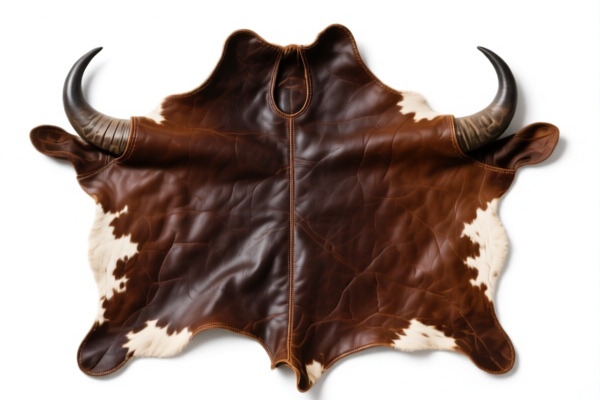
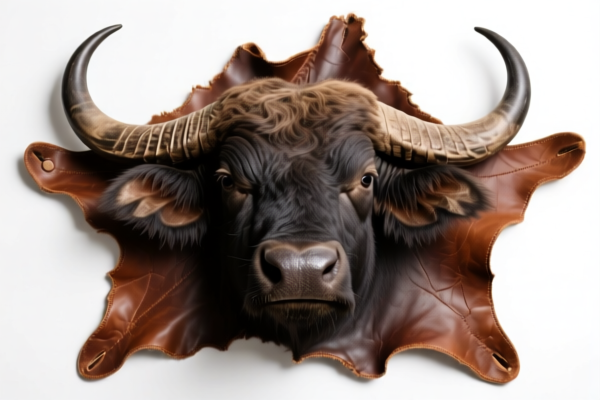
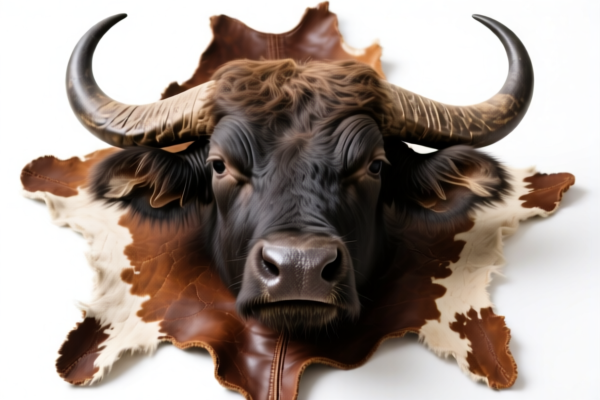
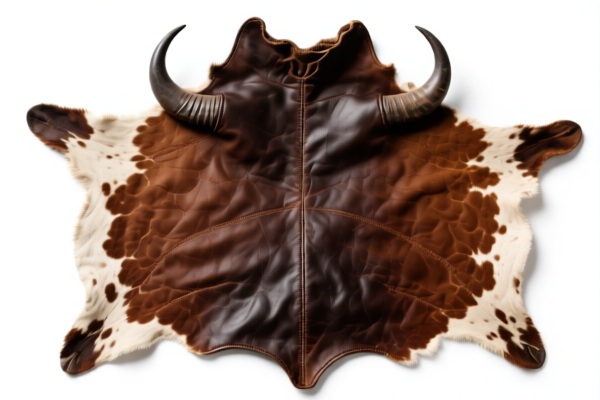
AI Analysis
🐂 Buffalo Hides & Skins: The Ultimate Guide to Unsplit Classification, Tariffs & Clearance Strategy
🌐 HS Code Reference & Clearance Guide | 2026 Current Tariff Analysis | Professional Customs Strategy
📌 I. Product Definition: What is "Unsplit Buffalo Hide"?
In the leather industry, "Unsplit" refers to the top grain layer of the animal hide. It is the densest, most durable, and highest-quality part of the skin, naturally containing the epidermis and part of the dermis. Unlike "split leather" (which uses the lower layers separated by mechanical splitting), unsplit leather retains its natural strength and texture.
Key Characteristics: * Material: Buffalo (Bubalus bubalis). Note: "Buffalo" in trade often distinguishes from "Cow/Beef" (Bos taurus), requiring specific HS classification. * State: Unsplit (Intact top layer). * Processing Stage: Can be Raw (Unguaged), Dried, or Tanned. * Appearance: Natural grain pattern, no artificial split layers.
⚠️ Critical Distinction:
- Raw vs. Tanned: Raw hides are classified under Chapter 41 (Section I), while Tanned/Chrome-treated hides fall under Chapter 41 (Section II).
- Buffalo vs. Cow: HS Codes differ significantly. Misclassifying Buffalo as Cow can lead to severe penalties or rejections.
- Unsplit vs. Split: Unsplit commands higher value and different duty rates than split leather.
📦 II. HS Code Classification Matrix (2026 Latest Tariff Schedule)
Based on the provided data, here are the precise HS Codes for Unsplit Buffalo Hides/Skins, categorized by processing stage:
| HS Code | Product Description | Processing State | Key Feature |
|---|---|---|---|
4101.50.10.20 |
Unprocessed Buffalo Hide | Raw / Unglued | Meets characteristics of whole raw cattle skin; not yet tanned. |
4101.20.10.10 |
Unstitched Buffalo Skin | Raw / Unglued | Animal category confirmed as cattle/buffalo; unglued state. |
4101.90.10.20 |
Dried Buffalo Hide | Dried / Raw | Preserved by drying; no tanning applied. |
4107.19.40.00 |
Whole Grain Buffalo Leather | Tanned / Chrome-Tanned | Whole hide, no hair, tanned or semitanned. |
4107.12.40.00 |
Whole Grain Buffalo Leather | Tanned / Chrome-Tanned | No hair, tanned leather, specific buffalo subtype. |
🔍 Why These Codes?
- Codes 4101.xxxxxxxx: Apply to Raw (unglued) hides. The distinction between50,20, and90lies in the specific preparation (e.g., fresh, salted, or dried).
- Codes 4107.xxxxxxxx: Apply to Tanned or Semitan Leather. "Whole" implies unsplit. "No hair" indicates dehaired processing.
💰 III. Detailed Tariff Structure (USA Import from China)
✅ Applicable Country: United States (US)
✅ Origin: China (CN)
✅ Effective Date: Post-2025 (Current Trade War Context)
🎯 1. Raw Hides & Skins (HS Codes: 4101.50.10.20, 4101.20.10.10, 4101.90.10.20)
These items are considered raw materials and attract a higher combined tax burden due to Section 301 and IEEPA tariffs.
| Item | Detail |
|---|---|
| Base Tariff Rate | 0.0% |
| Section 301 Tariff (Add-on) | 7.5% |
| Section 122 Tariff (IEEPA) | 10.0% |
| Total Effective Tax Rate | 17.5% |
| Calculation Basis | CIF Value × 17.5% |
| De Minimis Exemption? | ❌ No (Valued goods subject to full duty) |
| Legal Reference Path | USITC:4101.xxxx → Footnote 9903.88.01 (Section 301) → IEEPA:9903.01.25 (Section 122) |
📌 Explanation:
- Although the base MFN rate is 0%, the 17.5% total duty is significant.
- Section 122 Tariff: A specific national security/economic measure targeting certain Chinese textiles and hides.
- Section 301 Tariff: General tariffs on Chinese goods, applied at 7.5% for this category.
🎯 2. Tanned Buffalo Leather (HS Codes: 4107.19.40.00, 4107.12.40.00)
Tanned leather is classified differently, resulting in a lower additional tax burden but a base duty.
| Item | Detail |
|---|---|
| Base Tariff Rate | 2.5% |
| Section 301 Tariff (Add-on) | 0.0% |
| Section 122 Tariff (IEEPA) | 10.0% |
| Total Effective Tax Rate | 12.5% |
| Calculation Basis | CIF Value × 12.5% |
| De Minimis Exemption? | ❌ No |
| Legal Reference Path | USITC:4107.xxxx → IEEPA:9903.01.25 (Section 122) |
📌 Explanation:
- Base Duty: 2.5% applies to tanned leather of cattle/buffalo.
- No Section 301: Interestingly, tanned leather (4107) appears exempt from the 7.5% Section 301 add-on in this specific dataset, though this is subject to change.
- Section 122 Tariff: The 10% IEEPA tariff still applies, making the total 12.5%.
- Cost Advantage: Tanned leather is 5% cheaper in duty than raw hides (12.5% vs. 17.5%).
🛠️ IV. Customs Clearance Practical Advice
✅ 1. Required Documentation (Checklist)
| Document | Mandatory? | Purpose |
|---|---|---|
| Commercial Invoice | ✔️ | Must specify "Buffalo" (not just "Cow") and "Unsplit". |
| Packing List | ✔️ | Detail weight, number of hides, and dimensions. |
| Bill of Lading/Air Waybill | ✔️ | Standard shipping docs. |
| Certificate of Origin | ✔️ | Prove Chinese origin for accurate tariff calculation. |
| Processing Declaration | ✔️ | Critical: Must state "Raw", "Dried", or "Tanned/Chrome-Tanned". |
| Photographs | ✔️ | Show natural grain (to prove unsplit) and no synthetic coating. |
| Customs Bond | ✔️ | Required for formal entry into the US. |
⚠️ Warning: Do not use generic terms like "Leather" or "Hide" without specifying the animal species and processing stage. Customs may classify it under the highest duty bracket if uncertain.
✅ 2. Declaration Strategy (Pro Tips)
| Scenario | Recommended Declaration | Risk of Misclassification |
|---|---|---|
| Raw Buffalo Hide | "Unprocessed Buffalo Hide, Unsplit, Raw, Dried/Salted" | High risk if "Buffalo" is omitted (might be misclassified as Cow, 4101.20). |
| Tanned Leather | "Buffalo Grain Leather, Unsplit, Chrome Tanned, No Hair" | Medium risk. Must prove it is "Whole/Unsplit" to avoid lower-value split leather codes. |
| Mixed Shipments | Separate Declarations | High risk. Mixing raw and tanned in one line item causes delays. |
🔥 Golden Rule:
"Specify Species: Buffalo. Specify Structure: Unsplit. Specify Process: Raw/Tanned."
Ambiguity leads to inspections, delays, and potential penalties.
✅ 3. Special Considerations
| Issue | Advice |
|---|---|
| Species Verification | Use taxonomic terms if questioned. "Buffalo" (Bubalus bubalis) vs. "Cow" (Bos taurus). |
| Weight Declaration | Declare Net Weight accurately. Duties are ad valorem, but weight checks are common for hides. |
| Treatment Declaration | If tanned, specify the tanning method (e.g., Chrome, Vegetable). This affects the subheading within 4107. |
| Section 122 Tariff | Ensure the importer has the legal justification for paying the 10% IEEPA tariff. |
🌍 V. Global Market Comparison (2026)
| Country/Region | HS Code Range | Total Duty (China Origin) | Key Requirements | Notes |
|---|---|---|---|---|
| 🇺🇸 USA | 4101.xxxx / 4107.xxxx | 12.5% - 17.5% | CBP Entry, Bond | High duties due to Trade War policies. |
| 🇨🇳 China (Export) | 4101 / 4107 | 0% (Export Duty) | None | China does not tax exports of raw hides/leather. |
| 🇪🇺 EU | 4101 / 4107 | Varies (0-4%) | CE/REACH Compliance | No Section 301/122 equivalents. |
| 🇬🇧 UK | 4101 / 4107 | Varies (0-4%) | UKCA Marking | Post-Brexit tariff regime similar to EU. |
📌 Conclusion:
- USA is the most expensive market due to 17.5% max duty.
- EU/UK offer more competitive rates for leather goods.
- Consider supply chain diversification if targeting the US market heavily.
📌 VI. Common Mistakes & Pitfalls (Blood Lessons)
❌ Mistake 1: Calling "Buffalo" "Cow"
👉 Consequence: Incorrect HS Code (e.g., 4101.20 vs 4101.50). May result in penalties for false declaration.
❌ Mistake 2: Omitting "Unsplit"
👉 Consequence: Customs may assume "Split Leather" (lower value, different code). If inspected and found to be unsplit, overpayment of duty may occur, or underpayment penalties if the other way around.
❌ Mistake 3: Mixing Raw and Tanned in One Line Item
👉 Consequence: Customs will separate them, leading to delayed clearance and storage fees.
❌ Mistake 4: Ignoring Section 122 Tariff
👉 Consequence: Underpayment of the 10% IEEPA tariff. Back duties + Interest upon audit.
✅ Correct Practice:
"Buffalo Hide, Unsplit, Raw, Dried, Weight: 50kg, HS Code: 4101.90.10.20"
🎯 VII. Conclusion: Professional Clearance, Profit Protection!
🎯 Remember:
🔹 "Buffalo is not Cow. Unsplit is not Split. Raw is not Tanned."
🔹 "17.5% for Raw, 12.5% for Tanned. Know the code, save the cost."
🔹 "Section 122 applies to both. Don't forget the 10%."
📌 Pro Tip:
If you are importing Tanned Buffalo Leather, consider the 12.5% duty rate as a cost-saving advantage over Raw Hides (17.5%). Ensure your supplier provides accurate Tanning Certificates.
📣 Immediate Action:
📞 Verify HS Code with a licensed Customs Broker.
📄 Prepare detailed product descriptions.
🚀 Clear Customs Smoothly, Maximize Profit!
✨ Professional Customs Clearance Starts with Accurate Classification!
💼 Your Every Penny Counts in International Trade!
Customer Reviews
About HS Code Classification
The Harmonized System (HS) is an internationally standardized nomenclature developed by the World Customs Organization (WCO) to classify traded products. Over 200 countries use the HS system as the basis for customs tariffs, trade statistics, and import/export regulations.
Each HS code follows a hierarchical structure:
- Chapter (2 digits) — Broad category of goods (e.g., Chapter 84: Machinery and Mechanical Appliances)
- Heading (4 digits) — More specific grouping within the chapter
- Subheading (6 digits) — Internationally standardized breakdown, used by all WCO member countries
- National subdivisions (8-10 digits) — Country-specific extensions for further classification, such as US HTSUS 10-digit codes
Correct HS code classification is essential for smooth customs clearance, accurate duty payment, and compliance with trade regulations. Misclassification can lead to customs delays, overpayment of duties, or penalties.
When importing from CN to US, the applicable tariff rates may include:
- Most-Favored-Nation (MFN) rate — The standard duty rate applied to WTO members
- General rate — Applied to countries without trade agreements
- Trade remedy duties — Additional tariffs such as Section 301 (anti-dumping), Section 232 (national security), or countervailing duties
The information provided on this page is for reference purposes only. For official classification, please consult with your local customs authority or a licensed customs broker.