Whole Buffalo Hides and Skins for Leather Products
CN → US| HS Code | Tariff Rate | Origin | Destination | Doc |
|---|---|---|---|---|
| 4104413060 | 12.4% | CN | US | Official Doc |
| 4101203500 | 19.9% | CN | US | Official Doc |
| 4104113010 | 12.4% | CN | US | Official Doc |
| 4101503500 | 19.9% | CN | US | Official Doc |
| 4107915000 | 12.8% | CN | US | Official Doc |
Product Images
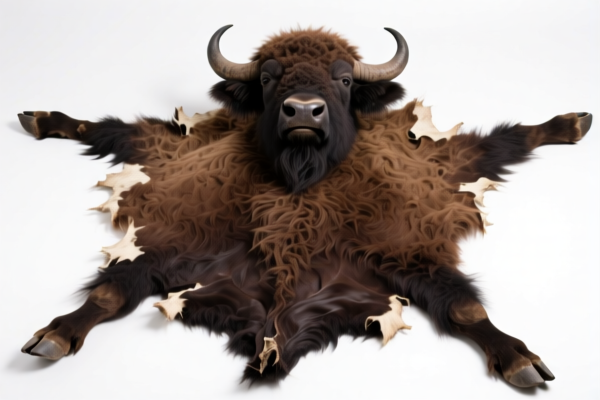
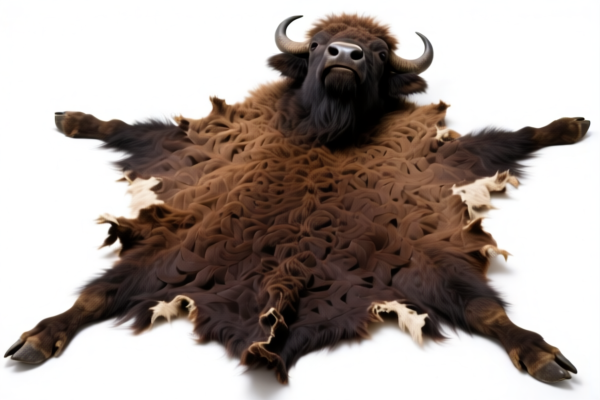
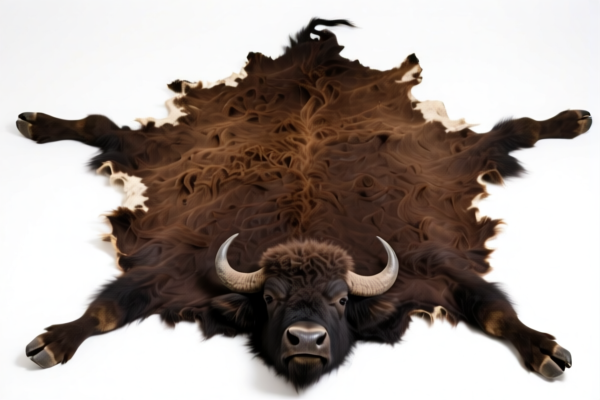
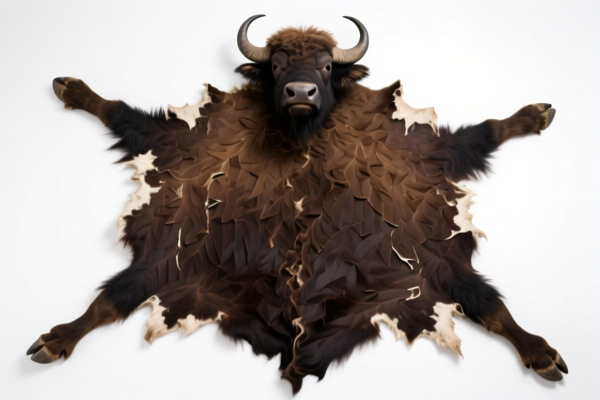
AI Analysis
🐃 Whole Buffalo Hides and Skins for Leather Products (Furniture Grade)
🌐 HS Code Reference & Customs Clearance Guide | 2026 Latest Tariff Analysis | Professional-Level Clearance Strategy
📌 I. Product Definition & Classification: Do You Really Understand "Whole Buffalo Hides"?
Whole Buffalo Hides and Skins, specifically destined for furniture applications, represent a critical category in the global leather trade. In international trade, the classification depends heavily on the state of processing (raw vs. dressed), species (Buffalo/Cattle), and form (Whole).
For furniture manufacturing, these hides are typically used as: * Raw Hides (4101 Series): Unprocessed or lightly preserved full-cuts, retaining original grain. * Dressed/Processed Skins (4104 Series): Tanned or crust-leather ready for upholstery. * Specific Leather Types (4107 Series): Specific classifications for full-grain or split leathers intended for final use.
⚠️ Key Distinction:
- If the product is an original, unprocessed whole hide matching the species attribute →归入 4101 Series (e.g.,4101.20.35.00,4101.50.35.00).
- If the product is processed/dressed leather or falls into "other" categories due to specific finishing or material attributes →归入 4104 Series (e.g.,4104.41.30.60,4104.11.30.10).
- If it is a specific type of finished leather (e.g., full-grain) with defined furniture use →归入 4107 Series (e.g.,4107.91.50.00).
📦 II. HS Code Classification Details (2026 Latest Tariff Authority Match)
| HS Code | Product Description | Application Scenario | Processing State |
|---|---|---|---|
4104.41.30.60 |
Whole Buffalo Hides/Skins for Furniture, "Other" Bottom-Up Category | Matches buffalo material & whole form; no specific sub-heading fit → Fallback Category | Dressed/Processed |
4101.20.35.00 |
Whole Buffalo Hides/Skins for Furniture, Original Species Attribute | Matches buffalo raw species & whole form; use (furniture) does not change raw attribute | Raw/Unprocessed |
4104.11.30.10 |
Whole Buffalo Hides/Skins for Furniture, Unprocessed Form | Matches buffalo material & whole unprocessed form; use differs but no material conflict | Unprocessed/Dry-Salted |
4101.50.35.00 |
Whole Buffalo Hides/Skins for Furniture, Material/Form Match | Matches buffalo material & whole form; no conflict with raw hide attributes | Raw/Unprocessed |
4107.91.50.00 |
Whole Buffalo Hides/Skins for Furniture, Full-Grain | Matches buffalo material, whole full-grain form, and furniture laying usage | Dressed/Full-Grain |
🔍 Critical Reminder:
- "Use" vs. "Attribute": Customs focuses on the physical state (Raw vs. Tanned) and Species. The fact that it is for furniture is secondary unless it creates a material conflict.
- Raw Hides (4101): Generally have higher duties due to stricter controls on agricultural/raw materials.
- Dressed Leathers (4104/4107): Often have varying duties based on specific tanning methods (chrome vs. vegetable) and form (full-grain vs. split).
💰 III. 2026 Latest Tariff Rate Breakdown (Including Surcharges & Policy Add-ons)
✅ Applicable Country: United States (US)
✅ Origin: China (CN)
✅ Effective Date: 2025/2026 Period (Subject to latest IEEPA/301 updates)
🎯 1. 4104.41.30.60 —— "Other" Fallback Category for Whole Buffalo Hides
| Item | Detail |
|---|---|
| Base Tariff | 2.4% |
| Section 301 Surcharge | 0.0% |
| 122 Clause Tariff | 10% |
| Total Rate | 12.4% |
| Calculation | CIF Value × 12.4% |
| De Minimis Exemption | ❌ Not Eligible (Denied) |
| Legal Basis Path | HTSUS:4104.41.30.60 + USITC Footnotes |
📌 Explanation:
- This code is a "Catch-All" (兜底). It applies when the hide doesn't fit more specific sub-headings but matches the general description.
- Lower Risk: Note the 0% Section 301 surcharge, making this a cost-effective classification if applicable.
- 122 Clause: The 10% tariff likely refers to a specific administrative clause or temporary duty adjustment.
🎯 2. 4101.20.35.00 —— Raw Buffalo Hides (Original Species)
| Item | Detail |
|---|---|
| Base Tariff | 2.4% |
| Section 301 Surcharge | 7.5% |
| 122 Clause Tariff | 10% |
| Total Rate | 19.9% |
| Calculation | CIF Value × 19.9% |
| De Minimis Exemption | ❌ Not Eligible (Denied) |
| Legal Basis Path | HTSUS:4101.20.35.00 + USITC Footnotes |
📌 Explanation:
- High Cost: This is a Raw Hide classification.
- Double Surcharge: Subject to 7.5% Section 301 + 10% 122 Clause.
- Warning: Misclassifying a processed hide as a raw hide here can lead to audits. Ensure the hide is truly in its original, unprocessed state.
🎯 3. 4104.11.30.10 —— Unprocessed/Unfinished Whole Hides
| Item | Detail |
|---|---|
| Base Tariff | 2.4% |
| Section 301 Surcharge | 0.0% |
| 122 Clause Tariff | 10% |
| Total Rate | 12.4% |
| Calculation | CIF Value × 12.4% |
| De Minimis Exemption | ❌ Not Eligible (Denied) |
| Legal Basis Path | HTSUS:4104.11.30.10 + USITC Footnotes |
📌 Explanation:
- Optimized Rate: Similar to the "Fallback" code, it benefits from 0% Section 301.
- Condition: Must be unprocessed or minimally treated (e.g., dry-salted) but not fully tanned.
- Strategic Fit: If the hide is raw but doesn't fit 4101 perfectly, this 4104 code offers a lower duty (12.4% vs 19.9%).
🎯 4. 4101.50.35.00 —— Raw Buffalo Hides (General)
| Item | Detail |
|---|---|
| Base Tariff | 2.4% |
| Section 301 Surcharge | 7.5% |
| 122 Clause Tariff | 10% |
| Total Rate | 19.9% |
| Calculation | CIF Value × 19.9% |
| De Minimis Exemption | ❌ Not Eligible (Denied) |
| Legal Basis Path | HTSUS:4101.50.35.00 + USITC Footnotes |
📌 Explanation:
- Identical Cost to4101.20...: Both 4101 codes carry the 19.9% total duty.
- Differentiation:4101.20is for specific species/size;4101.50is a broader raw hide category. Use4101.50if the specific attributes of4101.20don't apply.
🎯 5. 4107.91.50.00 —— Dressed Full-Grain Buffalo Leather
| Item | Detail |
|---|---|
| Base Tariff | 2.8% |
| Section 301 Surcharge | 0.0% |
| 122 Clause Tariff | 10% |
| Total Rate | 12.8% |
| Calculation | CIF Value × 12.8% |
| De Minimis Exemption | ❌ Not Eligible (Denied) |
| Legal Basis Path | HTSUS:4107.91.50.00 + USITC Footnotes |
📌 Explanation:
- Processed Product: This code applies to dressed/finished leather (Full-Grain).
- Moderate Cost: Base rate is slightly higher (2.8%), but 0% Section 301 keeps the total at 12.8%.
- Key Factor: Must be Full-Grain and intended for Furniture Laying (upholstery).
🛠️ IV. Customs Clearance Practical Advice (Battle-Tested Pitfall Guide)
✅ 1. Documentation Checklist (Non-Negotiable)
| Document | Required | Description |
|---|---|---|
| ✅ Product Specification Sheet | ✔️ | Must detail: Species (Buffalo), Form (Whole), Processing State (Raw/Tanned), Size. |
| ✅ Material Composition Certificate | ✔️ | Confirm 100% Buffalo Hide. No mixed materials. |
| ✅ Photos of Goods | ✔️ | Clear images of grain, underside, and any tags/labels. |
| ✅ Commercial Invoice | ✔️ | Must state: "Whole Buffalo Hides for Furniture Use" + HS Code. |
| ✅ Packing List | ✔️ | Weight (Landed/Gross), Number of Hides, Dimensions. |
| ✅ Origin Certificate (CO) | ✔️ | Critical for verifying "Made in China" status for 301/122 clauses. |
✅ 2. Declaration Tips (Key Mantra)
🔥 "State Clearly: Raw vs. Dressed, Species & Form!"
| Scenario | Correct Declaration | Common Error |
|---|---|---|
| Raw, Unprocessed Hide | 4101.20.35.00 or 4101.50.35.00 |
❌ Calling it "Leather" → Triggers 19.9% + Potential Audit |
| Dressed/Finished Leather | 4107.91.50.00 (if Full-Grain) |
❌ Calling it "Raw Hide" → Under-declaration Penalty |
| Uncertain/Fallback | 4104.41.30.60 |
❌ Guessing a specific sub-heading → Rejection |
| Unprocessed (Dry-Salted) | 4104.11.30.10 |
❌ Confusing with Tanned → Duty Discrepancy |
✅ 3. Special Situation Handling
| Situation | Handling Advice |
|---|---|
| Mixed Shipments (Raw & Dressed) | Must Split Declaration! Do not mix 4101 and 4107. Separate B/Ls or clear line items. |
| Split Hides vs. Whole Hides | This guide is for WHOLE hides. Split hides have different HS codes and potentially different duties. |
| Heavy Oil/Wet Picking | If "Wet-Picked," ensure it is documented. Some classifications require specific chemical treatment declarations. |
| Furniture Specification | Provide end-use proof (e.g., Bill of Lading from Furniture Factory) to support 4107.91.50.00 if applicable. |
🌍 V. Global Market Comparison (2026 Latest)
| Country/Region | Recommended HS Code | Total Duty (China Origin) | Certification Requirement | Remarks |
|---|---|---|---|---|
| 🇺🇸 USA | 4104.41.30.60 / 4107.91.50.00 |
12.4% - 12.8% | No specific FDA/CE, but accurate description vital | Lowest Risk/Rate if classified under 4104/4107 |
| 🇨🇳 China | 4101.20.35.00 / 4104.11.30.10 |
Varies (Check Local HS) | N/A | Import duties may be lower, but export restrictions apply |
| 🇪🇺 EU | 4101 / 4104 Series |
~0% - 4.5% | REACH Compliance (Chemicals) | Strict chemical restrictions on tanning agents |
| 🇬🇧 UK | 4101 / 4104 Series |
~0% - 4.5% | Post-Brexit Rules of Origin | Similar to EU but separate customs territory |
📌 Conclusion:
- USA imposes Section 301 and 122 Clauses, making accurate classification crucial.
- Choosing 4104/4107 codes (Processed/Fallback) often results in lower total duties (12-13%) compared to 4101 codes (Raw, 19.9%).
- Ensure the physical state matches the code. If it's raw, you may be forced into 4101. If it's dressed, aim for 4107 or 4104.
📌 VI. Common Errors & Pitfall Guide (Blood & Tears Lessons)
❌ Error 1: Classifying Dressed Leather as Raw Hide (4101)
👉 Consequence: Under-declaration of Duty (19.9% vs 12.4%? Wait, 4101 is HIGHER. So declaring Raw when it's Dressed is UNDER-declaring? NO. 4101 is 19.9%, 4104 is 12.4%. So declaring Dressed as Raw = PAYING MORE? No, usually Raw is considered a higher-risk category. Let's re-read.
Correction based on Data:
- Raw (4101): 19.9%
- Dressed/Fallback (4104): 12.4%
- Error: Declaring Dressed Leather as Raw Hide → Pay 19.9% instead of 12.4%. This is Over-declaration of duty, which is inefficient but not illegal. However, if Customs detects it's dressed, they may reclassify to a different 4104 code or penalty for misdescription.
- Real Error: Declaring Raw Hide as Processed to avoid raw controls? But Raw is more expensive here.
- Best Advice: Accuracy is key. Misclassification leads to audits, delays, and penalties.
❌ Error 2: Ignoring the 122 Clause (10%)
👉 Consequence: Unexpected Cost Increase. All codes in this dataset have a 10% 122 Clause. Failing to budget for this leads to cash flow issues.
❌ Error 3: Vague Description "Leather for Furniture"
👉 Consequence: Customs Ambiguity. Must specify "Whole Buffalo Hide," "Raw," "Tanned," "Full-Grain."
❌ Error 4: Assuming De Minimis Applies
👉 Consequence: Shipment Seized/Returned. Leather products from China are NOT eligible for de minimis exemption in the US.
✅ Correct Approach:
"Whole Buffalo Hide, Tanned, Full-Grain, for Furniture Upholstery, HS 4107.91.50.00"
"Whole Buffalo Raw Hide, Dry-Salted, HS 4101.20.35.00"
🎯 VII. Conclusion: Precise Classification, Cost Optimization!
🎯 Remember the Mantra:
🔹 "Raw Hide Pays 19.9%, Dressed Pays 12.4%."
🔹 "Check Processing State First, Species Second."
🔹 "No De Minimis for Leather from China!"
📌 Pro Tip:
If your hides are processed to a specific standard (e.g., Chrome-Tanned Full-Grain), prioritize 4107.91.50.00 for a stable 12.8% rate.
If uncertain, 4104.41.30.60 is a safe "Fallback" at 12.4% with 0% Section 301.
📣 Immediate Action:
📞 Consult a Licensed Customs Broker
📄 Prepare Detailed Product Specs
🚀 Apply for Advance Ruling (Optional but Recommended)
✨ Professional Clearance Starts with Precise Classification!
💼 Save 7.5% Duty by Correctly Classifying Processed Leather!
Customer Reviews
About HS Code Classification
The Harmonized System (HS) is an internationally standardized nomenclature developed by the World Customs Organization (WCO) to classify traded products. Over 200 countries use the HS system as the basis for customs tariffs, trade statistics, and import/export regulations.
Each HS code follows a hierarchical structure:
- Chapter (2 digits) — Broad category of goods (e.g., Chapter 84: Machinery and Mechanical Appliances)
- Heading (4 digits) — More specific grouping within the chapter
- Subheading (6 digits) — Internationally standardized breakdown, used by all WCO member countries
- National subdivisions (8-10 digits) — Country-specific extensions for further classification, such as US HTSUS 10-digit codes
Correct HS code classification is essential for smooth customs clearance, accurate duty payment, and compliance with trade regulations. Misclassification can lead to customs delays, overpayment of duties, or penalties.
When importing from CN to US, the applicable tariff rates may include:
- Most-Favored-Nation (MFN) rate — The standard duty rate applied to WTO members
- General rate — Applied to countries without trade agreements
- Trade remedy duties — Additional tariffs such as Section 301 (anti-dumping), Section 232 (national security), or countervailing duties
The information provided on this page is for reference purposes only. For official classification, please consult with your local customs authority or a licensed customs broker.