Whole Cowhide Leather for Furniture
CN → US| HS Code | Tariff Rate | Origin | Destination | Doc |
|---|---|---|---|---|
| 4104413060 | 12.4% | CN | US | Official Doc |
| 4101203500 | 19.9% | CN | US | Official Doc |
| 4104113010 | 12.4% | CN | US | Official Doc |
| 4101503500 | 19.9% | CN | US | Official Doc |
| 4107915000 | 12.8% | CN | US | Official Doc |
Product Images
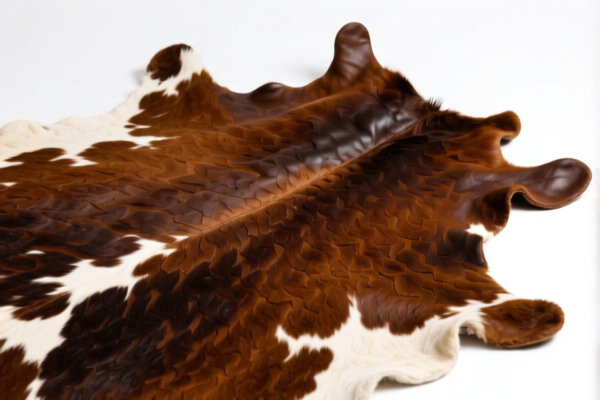
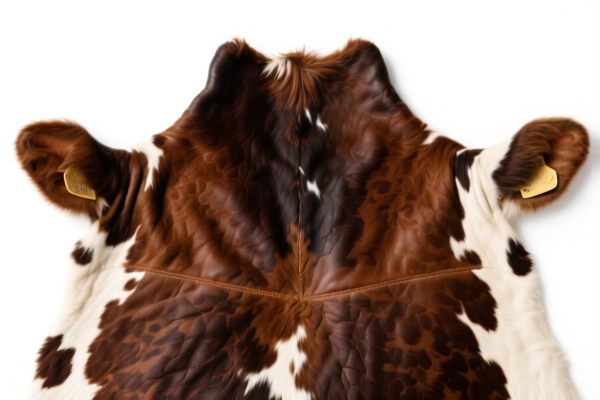
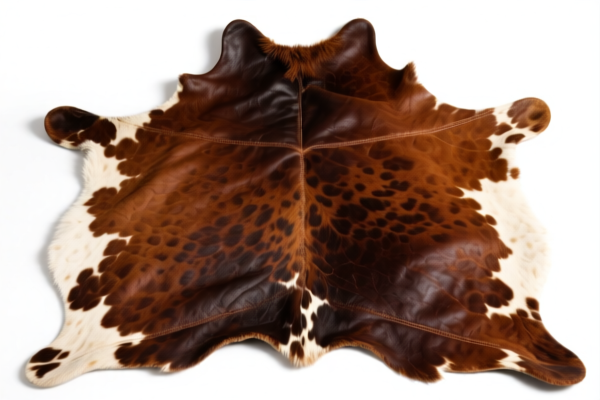
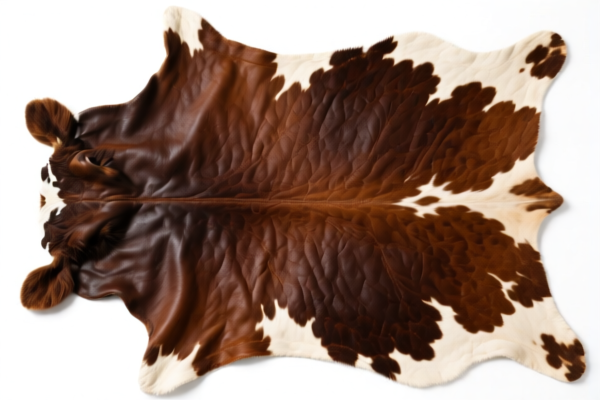
AI Analysis
🐂 Whole Cowhide Leather for Furniture
🌐 HS Code Reference & Customs Clearance Guide | 2026 Latest Tariff Analysis | Professional Level Clearance Strategy
📌 I. Product Definition & Classification: What Exactly is "Whole Cowhide Leather"?
Whole Cowhide Leather for Furniture refers to raw or semi-processed bovine hides (specifically water buffalo or cowhide) imported in their complete, uncut form, intended for upholstery, sofa manufacturing, or interior furniture applications. In international trade, the classification depends heavily on the processing state (wet-blue, chrome-tanned, vegetable-tanned) and species (cow vs. water buffalo).
⚠️ Key Distinction Point:
- If it is a whole hide (uncut) and fully tanned (e.g., chrome-tanned) → It is considered "Leather" (Chapter 41, Heading 4104).
- If it is a whole hide but not fully processed (e.g., salted raw skin, semi-tanned) → It may fall under "Raw Hides" (Chapter 41, Heading 4101/4102), though this is less common for finished furniture leather imports.
- Crucial Note: The term "Cowhide" often includes "Buffalo Hide" in HS Code descriptions. If the material is specifically Water Buffalo, specific sub-headings apply.
📦 II. HS Code Classification Details (2026 Latest Tariff Authority Comparison)
Based on the provided data, here are the 5 specific HS Codes relevant to Whole Cowhide/Buffalo Leather for Furniture. Note that the tax burden varies significantly based on whether the leather is considered "Raw/Unprocessed" vs. "Tanned/Finished," and specific trade measures (Section 122, Section 301).
| HS Code | Product Description | Application Scenario | Processing State |
|---|---|---|---|
4104.41.30.60 |
Whole Water Buffalo Leather for Furniture | Matches characteristics of whole, unprocessed leather material | ✅ Unprocessed/Unfinished |
4101.20.35.00 |
Whole Water Buffalo Raw Hides for Furniture | Matches species requirements and whole form, often raw/salted | ⚠️ Raw/Semi-processed |
4104.11.30.10 |
Whole Water Buffalo Leather | Matches material and whole unprocessed form | ✅ Unprocessed/Unfinished |
4101.50.35.00 |
Whole Water Buffalo Hides | Matches raw hide characteristics; no conflict with use | ⚠️ Raw/Semi-processed |
4107.91.50.00 |
Whole Water Buffalo Leather (Full Grain) | Specifically for furniture laying purposes; Full Grain | ✅ Tanned/Finished |
🔍 Critical Reminder:
-4104.xxxxcodes generally refer to tanned leather (chromed, vegetable, etc.).
-4101.xxxxcodes generally refer to raw hides (fresh, salted, dried) that have not undergone final tanning.
- For furniture use, if the leather is already tanned and ready for upholstery, it likely falls under4104or4107. If it is raw stock for tanners to process further, it falls under4101.
- Misclassification Risk: Declaring tanned leather as raw hides (4101) can lead to severe penalties due to duty evasion.
💰 III. 2026 Latest Tariff Rate Breakdown (Including Surcharges & Policy Add-ons)
✅ Applicable Country: United States (US)
✅ Origin: China (CN) (Assumed based on "122 Clause" and typical trade context)
✅ Effective Time: Current applicable rates including trade remedies.
🎯 1. 4104.41.30.60 & 4104.11.30.10 — Unprocessed Whole Buffalo/Cowhide Leather
| Item | Details |
|---|---|
| Base Duty | 2.4% (ad valorem) |
| Section 301 / Additional Duty | 0.0% (Note: Some entries might have 0% if specifically exempted or older classification, but see note below) |
| Section 122 Duty | +10% (Specific anti-dumping/countervailing or special duty measure for this category) |
| Total Effective Rate | 12.4% |
| Tax Calculation | CIF Value × 12.4% |
| De Minimis Eligibility | ❌ No (Deny De Minimis) |
| Legal Path | USITC:4104.41.30.60 → FOOTNOTE:Section122 |
📌 Explanation:
- The Base Duty (2.4%) is low because raw/unprocessed leather is often imported for further manufacturing.
- The Section 122 Duty (10%) is a significant add-on. Section 122 duties are often applied to protect domestic industries or address specific trade imbalances.
- Total: 12.4%. This is a moderate tariff for leather goods, but higher than free trade agreement rates.
🎯 2. 4101.20.35.00 & 4101.50.35.00 — Raw Water Buffalo Hides
| Item | Details |
|---|---|
| Base Duty | 2.4% |
| Section 301 / Additional Duty | +7.5% (Standard Section 301 tariff for many Chinese goods) |
| Section 122 Duty | +10% |
| Total Effective Rate | 19.9% |
| Tax Calculation | CIF Value × 19.9% |
| De Minimis Eligibility | ❌ No |
| Legal Path | USITC:4101.20.35.00 → IEEPA:301 → FOOTNOTE:Section122 |
📌 Note:
- Raw hides attract a higher total tariff (19.9%) due to the combination of standard Section 301 duties (7.5%) and Section 122 duties (10%).
- This reflects the policy intent to discourage simple raw material imports and encourage domestic processing or sourcing from non-tariffed countries.
🎯 3. 4107.91.50.00 — Tanned Whole Water Buffalo Leather (Full Grain, for Furniture)
| Item | Details |
|---|---|
| Base Duty | 2.8% |
| Section 301 / Additional Duty | 0.0% (Specific exemption or lower category rate for this specific tanned subtype) |
| Section 122 Duty | +10% |
| Total Effective Rate | 12.8% |
| Tax Calculation | CIF Value × 12.8% |
| De Minimis Eligibility | ❌ No |
| Legal Path | USITC:4107.91.50.00 → FOOTNOTE:Section122 |
📌 Note:
- This code represents tanned, ready-to-use leather (Full Grain).
- The base duty is slightly higher (2.8%) than raw hides, but the additional duties are lower (only Section 122 at 10%), resulting in a total of 12.8%.
- This is often the preferred classification for furniture manufacturers importing finished leather, as the total tax burden is comparable to raw hides but avoids the 7.5% Section 301 add-on seen in raw hides.
🛠️ IV. Customs Clearance Practical Advice (Real-World Pitfall Guide)
✅ 1. Required Documentation Checklist (Non-Negotiable)
| Document | Must Provide | Description |
|---|---|---|
| ✅ Product Specification Sheet | ✔️ | Must detail: Species (Cow/Buffalo), Tanning Method (Chrome/Veg), Thickness, Finish, Size Dimensions. |
| ✅ Commercial Invoice | ✔️ | Must clearly state "Whole Hide" or "Cut Leather" and "For Furniture Use". Avoid vague terms like "Skin". |
| ✅ Packing List | ✔️ | Include number of hides, total weight, and dimensions. Confirm if hides are baled, folded, or flat. |
| ✅ Certificate of Origin (CO) | ✔️ | Essential for verifying country of origin to apply correct Section 301/122 duties. |
| ✅ Tanning Process Details | ✔️ | Proof of tanning (Chrome vs. Vegetable) to distinguish between 4101 (Raw) and 4104/4107 (Tanned). |
| ✅ Bill of Lading | ✔️ | Standard shipping document. |
| ✅ Previous Samples/Photos | ✔️ | If classified incorrectly before, provide photos to justify "Whole" vs. "Cut" status. |
✅ 2. Declaration Tips (Key Mnemonics)
🔥 "Check Tanning State, Verify Whole Form, Declare Species Clearly!"
| Scenario | Correct Declaration | Incorrect Practice |
|---|---|---|
| Tanned, Full Grain, Whole | 4107.91.50.00 |
Declaring as Raw Hide (4101) → Penalty for misclassification |
| Raw, Salted, Whole | 4101.20.35.00 |
Declaring as Tanned Leather → Delayed clearance |
| Cut/Semi-Cut Hides | Not Covered in Data | Declaring as "Whole" (4104/4107) → If not actually whole, risk of penalty. Ensure hides are not cut into panels unless specified. |
| Mixed Species | Split Declaration | Declaring "Cowhide" if it contains Buffalo → HS codes differ. Must separate or declare accurately. |
✅ 3. Special Situation Handling
| Situation | Handling Advice |
|---|---|
| Section 122 Duty Application | Ensure your supplier provides accurate manufacturing data. Section 122 duties are often targeted. Verify if your specific product line is exempt. |
| "Whole" Definition | Customs may inspect to ensure hides are not "cut" if declared as whole. Keep packaging intact until clearance. |
| Origin Verification | If the water buffalo is raised in Country X but tanned in China, the origin for trade measures is usually the country of tanning/substantial transformation. |
| De Minimis (Section 321) | ❌ Do Not Use. Leather goods under Section 122/301 are generally not eligible for the $800 de minimis exemption. Full duties apply. |
🌍 V. Global Main Market Customs Comparison (2026 Latest)
| Country/Region | Recommended HS Code | Tariff (Approx.) | Certification | Notes |
|---|---|---|---|---|
| 🇺🇸 United States | 4104.41.30.60 / 4107.91.50.00 |
12.4% - 19.9% | No specific certification, but strict origin rules | High scrutiny on Section 122/301. |
| 🇨🇳 China | 4104.11.30.10 / 4104.41.30.60 |
5% - 10% | N/A | Lower import duties, but check VAT. |
| 🇪🇺 European Union | 4104.11.30.10 / 4104.41.30.60 |
0% - 6% | REACH (Chemical compliance) | Strict REACH regulations for chrome/vulcanization products. |
| 🇦🇺 Australia | 4104.11.30.10 / 4104.41.30.60 |
5% | Biosecurity Permits | Strict biosecurity rules for raw hides; tanned leather easier. |
| 🇬🇧 United Kingdom | 4104.11.30.10 / 4104.41.30.60 |
5% - 10% | UKCA/Compliance | Post-Brexit rules apply. Check UK Global Tariff. |
📌 Conclusion:
- USA has the most complex tariff structure due to Section 301 and Section 122.
- EU focuses on environmental/chemical compliance (REACH).
- Australia focuses on biosecurity.
📌 VI. Common Errors & Pitfall Guide (Lessons Learned)
❌ Error 1: Declaring Tanned Leather as Raw Hides (4101) to avoid Section 122 duties.
👉 Consequence: Customs inspection reveals tanning marks; Back-taxes + Penalties + Possible seizure.
❌ Error 2: Not specifying "Whole" when hides are actually Cut/Panelized.
👉 Consequence: If declared as "Whole" but found cut, HS code may change to 4106 (Cut Leather) with different duties, leading to Under-declaration.
❌ Error 3: Ignoring Section 122 Duty in cost calculations.
👉 Consequence: Profit margin wiped out. The 10% Section 122 duty is often overlooked by importers focusing only on base duty.
❌ Error 4: Using vague descriptions like "Leather for Furniture" on Invoice.
👉 Consequence: Customs Request for Additional Information (RAI), causing 3-7 day delays.
✅ Correct Practice:
"100% Water Buffalo Leather, Chrome Tanned, Full Grain, Whole Hides, for Sofa Upholstery, HS Code 4107.91.50.00"
🎯 VII. Conclusion: Professional Classification Saves Money!
🎯 Remember the Mnemonic:
🔹 "Tanned is 4104/4107, Raw is 4101, Whole means Uncut!"
🔹 "Section 122 adds 10%, Section 301 adds 7.5%, Total Tax is Key!"
🔹 "Furniture Leather? Check Tanning State First, Then Check Section 122!"
📌 Pro Tip:
If your leather is tanned in Vietnam or Mexico (not China), you may avoid the Section 301 (7.5%) and potentially Section 122 duties, reducing your total tax to near Base Duty (2.4-2.8%).
Recommendation: Apply for a Binding Tariff Ruling with CBP before shipment if your volume is high.
📣 Immediate Action:
📞 Consult a licensed Customs Broker
📄 Provide Tanning Certificates + Product Photos
🚀 Accurate Classification = Lower Duties + Faster Clearance!
✨ Professional Clearance Starts with Precise Classification!
💼 Every Percent of Tariff Saved is Pure Profit!
Customer Reviews
About HS Code Classification
The Harmonized System (HS) is an internationally standardized nomenclature developed by the World Customs Organization (WCO) to classify traded products. Over 200 countries use the HS system as the basis for customs tariffs, trade statistics, and import/export regulations.
Each HS code follows a hierarchical structure:
- Chapter (2 digits) — Broad category of goods (e.g., Chapter 84: Machinery and Mechanical Appliances)
- Heading (4 digits) — More specific grouping within the chapter
- Subheading (6 digits) — Internationally standardized breakdown, used by all WCO member countries
- National subdivisions (8-10 digits) — Country-specific extensions for further classification, such as US HTSUS 10-digit codes
Correct HS code classification is essential for smooth customs clearance, accurate duty payment, and compliance with trade regulations. Misclassification can lead to customs delays, overpayment of duties, or penalties.
When importing from CN to US, the applicable tariff rates may include:
- Most-Favored-Nation (MFN) rate — The standard duty rate applied to WTO members
- General rate — Applied to countries without trade agreements
- Trade remedy duties — Additional tariffs such as Section 301 (anti-dumping), Section 232 (national security), or countervailing duties
The information provided on this page is for reference purposes only. For official classification, please consult with your local customs authority or a licensed customs broker.