Whole Dyed Animal Fur
CN → USProduct Images
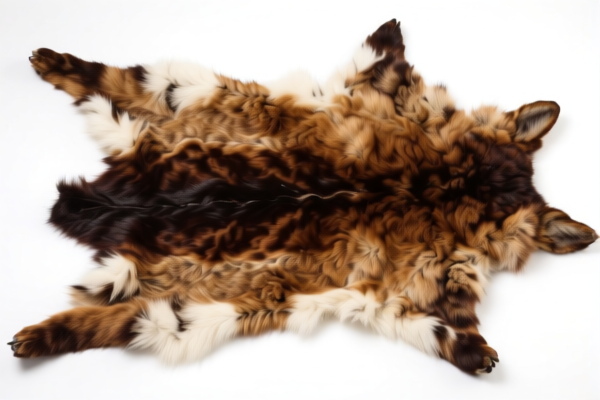
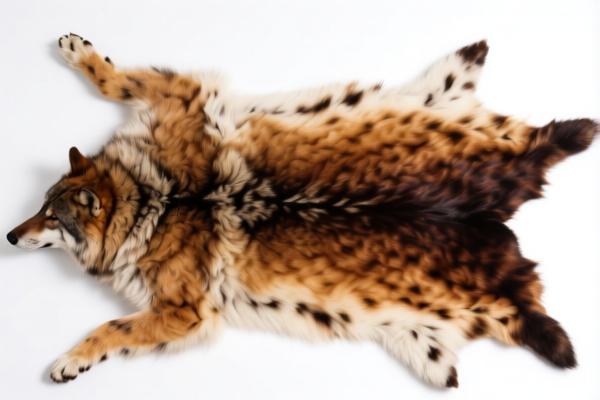
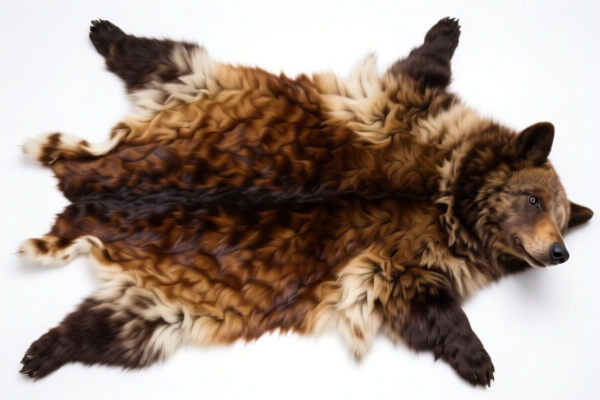
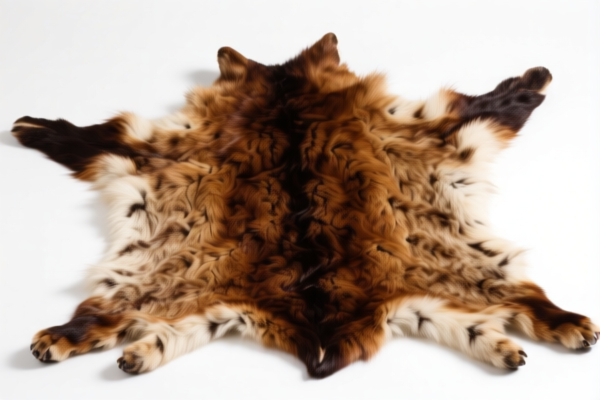
AI Analysis
🧥 Whole Dyed Animal Fur (Unworked/Prepared Skins)
🌐 HS Code Reference & Customs Clearance Guide | 2026 Latest Tariff Analysis | Professional-Level Strategy
📌 1. Product Definition & Classification: Do You Really Understand "Whole Dyed Animal Fur"?
Whole Dyed Animal Fur refers to animal skins or hides that have been tanned (usually vegetable or chrome tanned) and dyed, but not further prepared (i.e., not cut into pieces, not sewn into garments, and not processed into leather fabrics). These are typically used as raw materials for further manufacturing (e.g., coats, hats, trimmings).
In international trade, it is critical to distinguish between: - Whole Skins/Hides (Chapter 43): The final tanned/dyed skin in its natural shape. - Leather Goods (Chapter 42): Finished products like bags, belts, or jackets. - Cut Pieces (Chapter 43, different subheading): If the skin has been cut into non-whole shapes.
⚠️ Key Distinction Point:
- If the fur is whole (unbroken skin), dyed, and tanned → Classified under Chapter 43.
- If the fur is not dyed or only lightly cured → Might fall under Chapter 41 (Raw Hides/Skins).
- If cut into shapes (e.g., for lining or trim) → May fall under 4302.30 or 4302.40 depending on origin and value.
📦 2. HS Code Classification Details (2026 Latest Tariff Authority Comparison)
| HS Code | Product Description | Application Scenario | Is It Whole/Unbroken? |
|---|---|---|---|
4302.10.00 |
Whole skins, not further prepared | Raw dyed fur for manufacturing coats, linings | ✅ Yes |
4302.20.00 |
Whole skins, with head, tail, paws | Ornamental or full-body fur products | ✅ Yes |
4302.30.00 |
Skins cut into pieces (e.g., for collars, cuffs) | Trim materials, linings | ❌ No (Cut) |
4104.41.00 |
Tanned/Dyed Bovine Leather (not fur) | Footwear, bags | ❌ Different Animal |
4203.21.00 |
Gloves, Mittens, Aprons of Fur | Finished Goods | ❌ Not Raw Material |
🔍 Important Reminder:
- All "Whole Dyed Animal Fur" must be classified under 4302.xx.
- Do NOT classify as leather goods (Chapter 42) unless it is already a finished product.
- Do NOT classify as raw hides (Chapter 41) if it has been tanned/dyed.
💰 3. 2026 Latest Tariff Rate Details (Including Additional Taxes)
✅ Applicable Country: United States (US)
✅ Origin: China (CN)
✅ Effective Date: 2025-11-10 onwards (including subsequent imports)
🎯 1. 4302.10.00 —— Whole Skins, Not Further Prepared (Dyed)
| Item | Content |
|---|---|
| Basic Tariff Rate | 10% (ad valorem) |
| USITC Additional Tariff | +25% (from USITC Footnote 9903.22.01) |
| IEEPA Additional Tariff | +10% (for China/HK products, from 2025-11-10) |
| Total Tariff Rate | 45% |
| Tax Calculation | CIF Value × 45% |
| De Minimis Eligibility | ❌ No (deny_de_minimis) |
| Legal Path | IEEPA:9903.01.25 → IEEPA:9903.01.24 → USITC:4302.10.00 → FOOTNOTE:9903.22.01 |
📌 Explanation:
- "USITC Additional Tariff 25%": From the Section 301 Tariff Act.
- "IEEPA 10%": Additional tariff under the International Emergency Economic Powers Act.
- Total 45% is very high. Must be planned in advance!
🎯 2. 4302.20.00 —— Whole Skins, With Head, Tail, Paws
| Item | Content |
|---|---|
| Basic Tariff Rate | 10% |
| USITC Additional Tariff | +25% |
| IEEPA Additional Tariff | +10% |
| Total Tariff Rate | 45% |
| Tax Calculation | CIF × 45% |
| De Minimis Eligibility | ❌ No |
| Legal Path | IEEPA:9901.25 → IEEPA:9903.01.24 → USITC:4302.20.00 → FOOTNOTE:9903.22.01 |
📌 Note:
- Same tax rate as above.
- Even if the fur is for decorative purposes, if it is whole, it applies to this code.
🛠️ 4. Customs Clearance Practical Advice (Practical Pitfall Avoidance Guide)
✅ 1. Required Documents Checklist (None Can Be Missing)
| Document | Required | Explanation |
|---|---|---|
| ✅ Product Specification Sheet | ✔️ | Animal species, tanning method, dye color, dimensions |
| ✅ Tanning Certificate | ✔️ | Proof of tanning process (chrome/vegetable) |
| ✅ Product Photos (Including Label) | ✔️ | Clear view of the whole skin, brand, origin label |
| ✅ Third-Party Test Report | ✔️ | REACH, Prop 65, CPSIA (if applicable) |
| ✅ Commercial Invoice | ✔️ | Clearly state "Whole Dyed Animal Fur, Not Further Prepared" |
| ✅ Certificate of Origin (CO) | ✔️ | If non-China product, may qualify for preferential rates |
| ✅ Packing List | ✔️ | Indicate relationship between skins and accessories |
✅ 2. Declaration Tips (Key Mantra)
🔥 "Whole skins, no cuts, correct species, avoid penalty!"
| Scenario | Correct Declaration | Wrong Practice |
|---|---|---|
| Whole dyed fur | 4302.10.00 or 4302.20.00 |
Misdeclare as "Leather" → Higher inspection |
| Cut fur pieces | 4302.30.00 |
Misdeclare as "Whole" → Incorrect tax rate |
| Finished fur coat | 4303.10.00 |
Misdeclare as raw fur → Penalty |
| Non-animal fur (faux) | 5703.xx.xx |
Misdeclare as real fur → Fraud charges |
✅ 3. Special Cases Handling
| Scenario | Handling Advice |
|---|---|
| CITES Regulated Species | Must provide CITES Permit. Without it, goods will be seized. |
| Mixed Animal Species | Declare separately for each species. Mixed declarations cause delays. |
| OEM Custom Fur | Provide customer order + design drawings to avoid "non-standard" classification. |
| Fur for Medical Use | Rare, but if applicable, provide proof for potential exemption. |
🌍 5. Global Market Customs Clearance Comparison (2026 Latest)
| Country/Region | Recommended HS Code | Tariff | Certification Requirements | Notes |
|---|---|---|---|---|
| 🇺🇸 USA | 4302.10.00 |
45% (China Origin) | CITES + CPSIA (if trim) | High tariff + strict CITES |
| 🇨🇳 China | 4302.10.00 |
10% | None | No additional tariffs |
| 🇪🇺 EU | 4302.10.00 |
5-10% | CITES + REACH | Strict animal welfare laws |
| 🇦🇺 Australia | 4302.10.00 |
5% | CITES | No additional tariffs |
| 🇯🇵 Japan | 4302.10.00 |
5-10% | CITES | No additional tariffs |
📌 Conclusion:
- USA is the most expensive market for whole dyed animal fur from China due to additional tariffs.
- CITES (Convention on International Trade in Endangered Species) is critical. If the fur is from endangered species (e.g., mink, fox, sable), CITES permit is mandatory globally.
📌 6. Common Errors & Pitfall Guide (Lessons Learned)
❌ Error 1: Misdeclaring "Whole Fur" as "Leather Garments"
👉 Consequence: Tariff error + CITES violation if not declared properly.
❌ Error 2: Failing to provide CITES Permit for regulated species
👉 Consequence: Seizure, fines, and blacklisting by customs.
❌ Error 3: Declaring "Fur Lining" as "Whole Fur"
👉 Consequence: Incorrect tax rate (45% vs 10-20%) → Overpayment or Underpayment penalties.
❌ Error 4: Using vague terms like "Animal Skin" without species specification
👉 Consequence: Customs cannot determine CITES status → Hold at port.
✅ Correct Practice:
"Whole Dyed Mink Fur Skins, Tanned, Chrome-Tanned, Dyed Black, CITES Permit Attached, Model XYZ"
🎯 7. Conclusion: Professional Declaration, Save Time, Reduce Costs!
🎯 Remember the Mantra:
🔹 "Whole skins, no cuts, correct species, CITES ready!"
🔹 "HS Code determines fate, tax rate varies, CITES is key, declare accurately!"
📌 Tips:
If your fur originates from Vietnam, Mexico, Thailand, Malaysia, you may apply for IEEPA Exemption, tariff only 0%-10%.
Suggest applying for Advance Ruling (Pre-classification) to avoid clearance risks.
📣 Act Immediately:
📞 Contact professional customs broker + Provide product photos + Apply for HS Code Pre-classification
🚀 Let your fur, pass customs smoothly, efficient export, profit doubled!
✨ Professional clearance starts with accurate classification!
💼 Every cent of your cost deserves precise calculation!
Customer Reviews
About HS Code Classification
The Harmonized System (HS) is an internationally standardized nomenclature developed by the World Customs Organization (WCO) to classify traded products. Over 200 countries use the HS system as the basis for customs tariffs, trade statistics, and import/export regulations.
Each HS code follows a hierarchical structure:
- Chapter (2 digits) — Broad category of goods (e.g., Chapter 84: Machinery and Mechanical Appliances)
- Heading (4 digits) — More specific grouping within the chapter
- Subheading (6 digits) — Internationally standardized breakdown, used by all WCO member countries
- National subdivisions (8-10 digits) — Country-specific extensions for further classification, such as US HTSUS 10-digit codes
Correct HS code classification is essential for smooth customs clearance, accurate duty payment, and compliance with trade regulations. Misclassification can lead to customs delays, overpayment of duties, or penalties.
When importing from CN to US, the applicable tariff rates may include:
- Most-Favored-Nation (MFN) rate — The standard duty rate applied to WTO members
- General rate — Applied to countries without trade agreements
- Trade remedy duties — Additional tariffs such as Section 301 (anti-dumping), Section 232 (national security), or countervailing duties
The information provided on this page is for reference purposes only. For official classification, please consult with your local customs authority or a licensed customs broker.