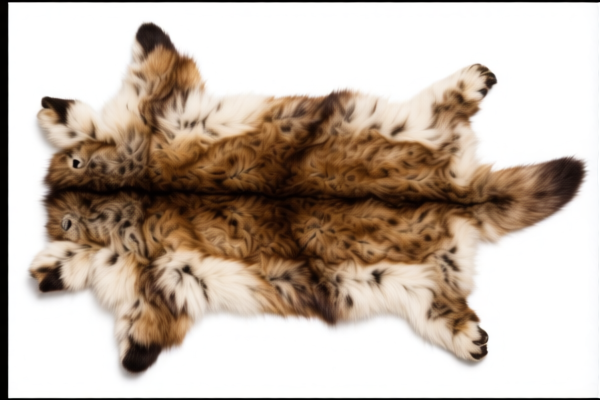
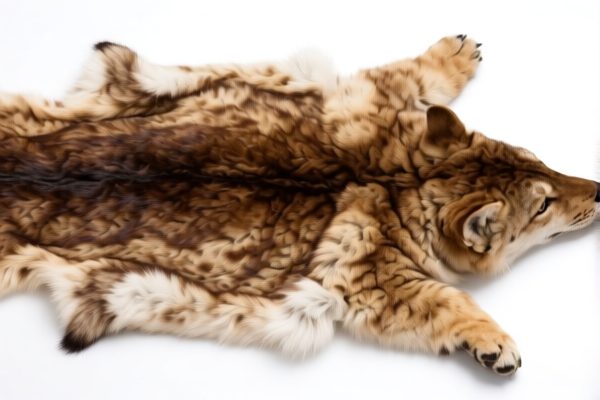
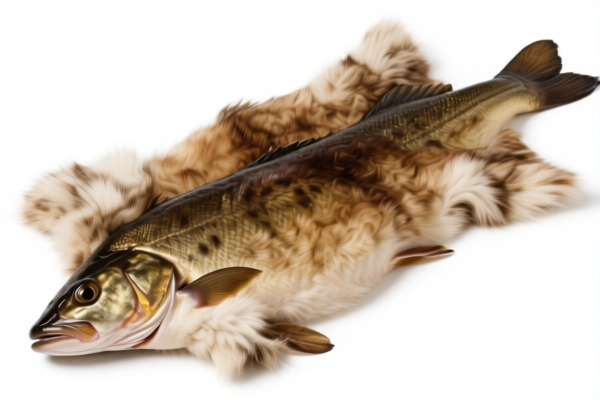
Whole Fish Skin with Head
CN → USProduct Images

AI Analysis
🐟 Whole Fish Skin with Head (Processed/Preserved)
🌐 HS Code Reference & Customs Clearance Guide | 2026 Latest Tariff Analysis | Professional Compliance Strategy
📌 I. Product Definition & Classification: Do You Truly Understand "Whole Fish Skin with Head"?
This product typically refers to fish that have been processed (e.g., salted, dried, smoked, or fresh/frozen) where the skin is retained and the head is attached. In international trade, this is rarely classified as a simple "fish" due to the specific preparation method and the presence of non-edible or high-value parts (head/skin).
Key Distinctions: * Fresh/Chilled vs. Dried/Salted: The preservation method dictates the chapter (Chapter 3 vs. Chapter 16). * Head On: The presence of the head usually prevents classification under "fish fillets" (0304) and pushes it towards "whole fish" (0302/0303). * Skin Intact: If the skin is left on, it is generally considered "whole" or "dressed" rather than "filleted."
⚠️ Critical Classification Point:
- If Fresh/Chilled/Frozen without further cooking → Chapter 3 (Live Fish, Fresh, Chilled, Frozen).
- If Dried, Salted, Smoked or Prepared/Cooked → Chapter 16 (Preparations of Fish).
- Note: "Whole Fish Skin" as a separate commodity from the meat is rare; usually, it is sold as the whole carcass. If sold only as skin pieces without the head/body, it may be considered a by-product (Chapter 5 or 16). Assuming the prompt implies the whole fish with head/skin attached:
📦 II. HS Code Classification Details (2026 Latest Tariff Authority Comparison)
| HS Code | Product Description | Applicable Scenario | Head/Skin Status | Processing State |
|---|---|---|---|---|
| 0302.69 | Other fish, fresh or chilled, including fillets | Fresh/Chilled fish with head and skin on | ✅ Head & Skin On | Fresh/Chilled |
| 0303.69 | Other fish, frozen, including fillets | Frozen fish with head and skin on | ✅ Head & Skin On | Frozen |
| 0305.59 | Fish, dried, salted or in brine (excluding fillets) | Dried/Salted whole fish | ✅ Head & Skin On | Dried/Salted |
| 1604.13 | Anchovies and sprats, prepared or preserved | Specific species if Anchovy/Sprat | ✅ Usually Head On | Cooked/Preserved |
| 1604.14 | Fish other than anchovies and sprats, prepared | Cooked/Smoked/Salted Whole Fish | ✅ Head & Skin On | Prepared |
| 0511.99 | Animal products not elsewhere specified | Fish skins/scales sold separately as waste/by-product | ❌ No Meat | By-product |
🔍 Key Reminder:
- Fresh/Frozen: Must use 0302 or 0303. If the head is removed, it might shift to fillets (0304), but "With Head" locks it into Whole Fish codes.
- Dried/Salted: Use 0305.
- Cooked/Smoked/Canned: Use 1604.
- "Skin Only" Without Meat: If the product is literally just skin pieces (e.g., for leather or collagen), it may fall under 0511 (Animal products) or 1604 (Prepared), depending on whether it's edible. Assuming edible whole fish with head/skin: Stick to 0302/0303/0305/1604.
💰 III. 2026 Latest Tariff Rate Details (Including Additional Duties)
✅ Applicable Country: United States (US)
✅ Country of Origin: China (CN)
✅ Effective Date: November 10, 2025 onwards (including subsequent imports)
🎯 1. 0302.69.00 / 0303.69.00 —— Fresh/Chilled/Frozen Fish (Whole, with Head & Skin)
| Item | Content |
|---|---|
| Base Rate | 6.4% (ad valorem) for most fish |
| Section 301 Additional Duty | +7.5% (Footnote 9903.88.01) |
| IEEPA Additional Duty | +10% (针对中国/香港产品,自2025年11月10日起) |
| Total Rate | ~23.9% (6.4% + 7.5% + 10%) |
| Tax Calculation | CIF Value × 23.9% |
| De Minimis Eligibility | ❌ Not Eligible (deny_de_minimis) |
| Legal Basis | IEEPA:9903.01.25 → IEEPA:9903.01.24 → USITC:0302.69.00/0303.69.00 → FOOTNOTE:9903.88.01 |
📌 Explanation:
- Base rate for frozen fish is typically 6.4%.
- Section 301 adds 7.5% for many fish products.
- IEEPA adds an extra 10% for Chinese-origin goods.
- Total ~23.9%. This is a high tariff for perishable goods, impacting margin significantly.
🎯 2. 0305.59.00 —— Dried/Salted Fish (Whole, with Head & Skin)
| Item | Content |
|---|---|
| Base Rate | 6.4% |
| Section 301 Additional Duty | +7.5% |
| IEEPA Additional Duty | +10% |
| Total Rate | ~23.9% |
| Tax Calculation | CIF Value × 23.9% |
| De Minimis Eligibility | ❌ Not Eligible |
| Legal Basis | Same as above |
📌 Note:
- Dried fish often has similar base rates but may face stricter sanitary inspections (FDA).
🎯 3. 1604.14.00 —— Prepared/Preserved Fish (Cooked, Smoked, Canned)
| Item | Content |
|---|---|
| Base Rate | 6.4% |
| Section 301 Additional Duty | +7.5% |
| IEEPA Additional Duty | +10% |
| Total Rate | ~23.9% |
| Tax Calculation | CIF Value × 23.9% |
| De Minimis Eligibility | ❌ Not Eligible |
📌 Note:
- "Prepared" includes smoked, salted (if cured), or cooked.
- If canned, ensure it’s not classified under 1604.15 (which may have different rates).
🛠️ IV. Customs Clearance Practical Advice (Avoid Pitfalls)
✅ 1. Documentation Checklist (Mandatory)
| Document | Required | Description |
|---|---|---|
| ✅ Commercial Invoice | ✔️ | Must state "Whole Fish with Head and Skin," species, weight, origin. |
| ✅ Packing List | ✔️ | Detail weight (Gross/Net), number of pieces, packaging type. |
| ✅ Certificate of Origin | ✔️ | Essential for IEEPA verification; must be issued by Chinese authority. |
| ✅ FDA Prior Notice | ✔️ | Mandatory for all food imports from China. Submit 24 hours before arrival. |
| ✅ Health/Sanitary Certificate | ✔️ | From Chinese customs (GACC), confirming food safety. |
| ✅ Cold Chain Records | ✔️ | For fresh/frozen: Temperature logs throughout transit. |
| ✅ Species Verification | ✔️ | Scientific name (e.g., Salmo salar) to avoid misclassification. |
✅ 2. Declaration Tips (Key Mantras)
🔥 "Head On = Whole Fish, Not Fillet! Skin On = Whole, Not By-Product!"
| Scenario | Correct Declaration | Wrong Practice |
|---|---|---|
| Fresh Fish with Head | 0302.69.00 (Fresh) |
Misdeclare as "Fillets" (0304) → Illegal |
| Frozen Fish with Head | 0303.69.00 (Frozen) |
Declare as "Dried" → Penalty |
| Smoked Whole Fish | 1604.14.00 |
Declare as Fresh → FDA Detention |
| Fish Skin Only (No Meat) | 0511.99.00 or 1604.14.00 |
Declare as Whole Fish → Misclassification |
✅ 3. Special Cases Handling
| Case | Handling Advice |
|---|---|
| OEM Private Label | Provide brand authorization; ensure label complies with FDA (English, ingredients, allergens). |
| Mixed Species | Declare each species separately; cannot mix cod and salmon in one HS line. |
| Ice Glaze Weight | Declare Net Weight (fish only), not gross weight (with ice). Ice must be excluded from duty calculation. |
| Head Attached | If head is >10% of total weight, it’s still "whole." No special rule change, but be consistent in labeling. |
🌍 V. Global Market Comparison (2026 Latest)
| Country/Region | Recommended HS Code | Tariff (China Origin) | Certification Required | Remarks |
|---|---|---|---|---|
| 🇺🇸 USA | 0303.69.00 |
~23.9% (6.4% + 7.5% + 10%) | FDA + GACC Registration | High duty; strict hygiene |
| 🇨🇳 China | 0303.69.00 |
6.4% (Import) | None | Low duty for import |
| 🇪🇺 EU | 0303.69.00 |
12% (Standard MFN) | HACCP + GACC | No 301/IEEPA, but higher base |
| 🇯🇵 Japan | 0303.69.00 |
3.5% - 10% | FSC + Japanese Standards | Low duty, high quality checks |
| 🇰🇷 Korea | 0303.69.00 |
13.5% | KFDA + GACC | Moderate duty |
📌 Conclusion:
- USA is the most expensive market due to 301 + IEEPA叠加 (stacking).
- EU/Japan/Korea have higher base rates but no punitive tariffs.
- For USA, consider transshipment (not legal if origin is CN) or duty drawdown if eligible.
📌 VI. Common Errors & Pitfalls (Lessons Learned)
❌ Error 1: Declaring "Whole Fish" as "Fish Fillets" to save duty
👉 Consequence: FDA detention, seizure, fines. Heads are not fillets!
❌ Error 2: Including ice weight in declared weight
👉 Consequence: Overpayment of duties + potential audit flags. Declare Net Weight Only.
❌ Error 3: Missing FDA Prior Notice
👉 Consequence: Cargo refused entry or held at port for testing. Submit 24h in advance!
❌ Error 4: Misidentifying Species
👉 Consequence: Incorrect HS code → Wrong tariff → Penalty. Provide Scientific Name.
✅ Correct Practice:
"Frozen Atlantic Salmon, Whole with Head and Skin, Net Weight 10kg, No Ice, FDA Prior Notice #12345, GACC Certified"
🎯 VII. Conclusion: Professional Declaration, Save Time, Reduce Costs!
🎯 Remember the Mantra:
🔹 "Head On = Whole, Not Fillet!"
🔹 "Skin On = Whole, Not By-Product!"
🔹 "Fresh = 0302/0303, Dried = 0305, Cooked = 1604!"
🔹 "FDA Notice is Mandatory, No Notice = No Entry!"
📌 Tips:
- If your fish is originating from Vietnam, Thailand, or Malaysia, you may avoid IEEPA tariffs (0% additional), but ensure Certificate of Origin is valid.
- For high-value fish (e.g., Salmon, Cod), consider duty drawback if re-exported.
- Always pre-apply for HS Code Ruling if unsure.
📣 Immediate Action:
📞 Contact a licensed customs broker + Provide Species Details + Submit FDA Prior Notice
🚀 Ensure your Whole Fish with Head & Skin clears customs smoothly, legally, and cost-effectively!
✨ Professional Clearance Starts with Accurate Classification!
💼 Your Cost Per Kg, Precisely Calculated!
Customer Reviews
About HS Code Classification
The Harmonized System (HS) is an internationally standardized nomenclature developed by the World Customs Organization (WCO) to classify traded products. Over 200 countries use the HS system as the basis for customs tariffs, trade statistics, and import/export regulations.
Each HS code follows a hierarchical structure:
- Chapter (2 digits) — Broad category of goods (e.g., Chapter 84: Machinery and Mechanical Appliances)
- Heading (4 digits) — More specific grouping within the chapter
- Subheading (6 digits) — Internationally standardized breakdown, used by all WCO member countries
- National subdivisions (8-10 digits) — Country-specific extensions for further classification, such as US HTSUS 10-digit codes
Correct HS code classification is essential for smooth customs clearance, accurate duty payment, and compliance with trade regulations. Misclassification can lead to customs delays, overpayment of duties, or penalties.
When importing from CN to US, the applicable tariff rates may include:
- Most-Favored-Nation (MFN) rate — The standard duty rate applied to WTO members
- General rate — Applied to countries without trade agreements
- Trade remedy duties — Additional tariffs such as Section 301 (anti-dumping), Section 232 (national security), or countervailing duties
The information provided on this page is for reference purposes only. For official classification, please consult with your local customs authority or a licensed customs broker.