Whole Fox Fur with Tail
CN → US| HS Code | Tariff Rate | Origin | Destination | Doc |
|---|---|---|---|---|
| 4103902000 | 20.8% | CN | US | Official Doc |
| 4103901190 | 17.5% | CN | US | Official Doc |
| 4303100060 | 39.0% | CN | US | Official Doc |
| 4303900000 | 35.0% | CN | US | Official Doc |
| 4301900000 | 10.0% | CN | US | Official Doc |
| 4301606000 | 17.5% | CN | US | Official Doc |
Product Images
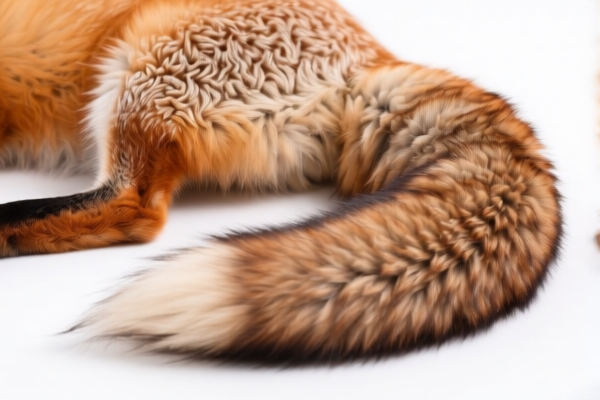
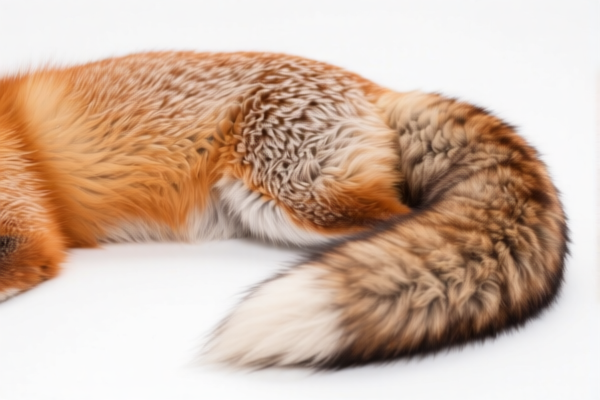
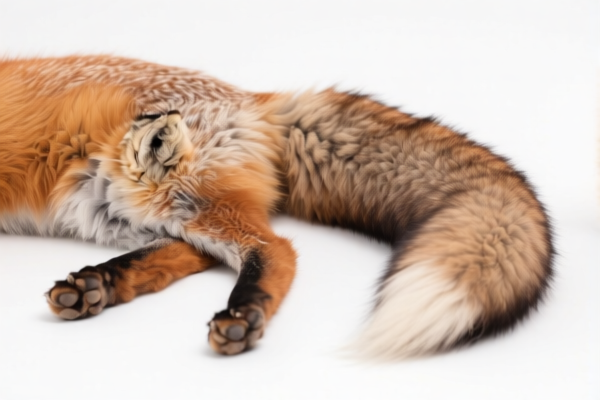
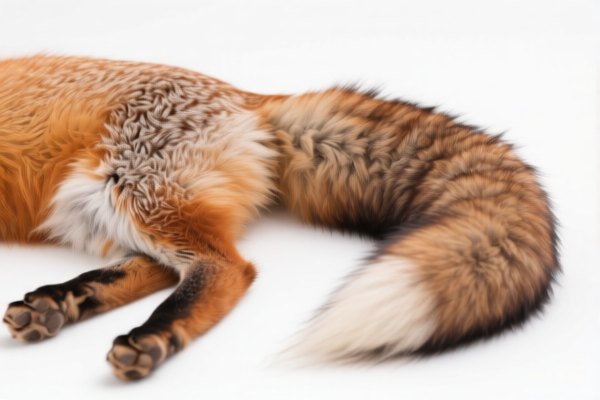
AI Analysis
🦊 Whole Fox Fur with Tail (整张带尾生狐皮)
🌐 HS Code Reference & Customs Clearance Guide | 2026 Latest Tariff Analysis | Professional Clearance Strategy
📌 I. Product Definition & Classification: What Exactly is "Whole Fox Fur with Tail"?
"Whole Fox Fur with Tail" is a raw material used primarily in the luxury fashion industry for coats, trims, and accessories. In international trade, the classification strictly depends on the processing stage of the fur. It is NOT a single HS Code entry. The critical distinction lies in whether the hide has been: 1. Raw/Untanned: Just skinned and dried. 2. Pre-tanned (Rawhide): Processed but not fully tanned for final use. 3. Fully Tanned/Finished: Ready for sewing into garments.
⚠️ Key Distinction Point:
- If it is skinned, dried, but NOT tanned → Chapter 41 (Raw Hides).
- If it is fully tanned and dressed → Chapter 43 (Furskins).
- Misclassification Risk: Declaring tanned fur as raw hide (or vice versa) triggers massive duty differences and potential penalties.
📦 II. HS Code Classification Details (2026 Latest Tariff Authority)
Based on the provided data, there are 6 possible HS Codes for products described as "Fox Fur with Tail." The correct code depends on the specific physical state of the product.
| HS Code | Product Summary | Applicable Scenario | Tax Rate (Total) | Key Condition |
|---|---|---|---|---|
4103.90.20.00 |
Whole fox fur with tail, other un-tanned raw hides | Raw, dried fox pelts without final tanning process | 20.8% | Must be un-tanned. "Other" implies not specifically listed elsewhere in 41.03. |
4103.90.11.90 |
Whole fox fur with tail, other pre-tanned raw hides | Hides that have undergone pre-tanning (chemical preservation) but are not finished goods | 17.5% | "Pre-tanned" means partially processed, not raw, not finished. |
4303.10.00.60 |
Fox fur heads, other furskin articles for apparel | Finished fox fur pieces, specifically for apparel accessories or parts | 39.0% | Applies if the product is considered a "fur article" or specific apparel component. |
4303.90.00.00 |
Fox fur heads, other furskin articles | General finished furskin articles not specifically named (e.g., collars, trimmings) | 35.0% | Finished goods, non-apparel specific or general accessory. |
4301.90.00.00 |
Fox fur heads, compliant with form requirements | Finished, tanned fox furs meeting specific shape/form standards | 10.0% | Lowest Duty! Applies to fully processed, ready-to-use finished furskins. |
4301.60.60.00 |
Fox fur heads, containing heads, fox raw hides | Tanned fox furskins that include the head | 17.5% | Specific sub-category for tanned furs with heads retained. |
🔍 Critical Analysis:
- Chapter 41 (Codes 4103...): Refers to Raw/Pre-tanned hides. These are inputs for further processing.
- Chapter 43 (Codes 4301/4303...): Refers to Finished/Tanned furskins or articles. These are closer to final products.
- Note on Description: The input data uses the term "Fox Fur Heads" for Chapter 43 codes. In practice, "Whole Fox Fur with Tail" often includes the head. If the product is finished tanned fur (ready for sewing), it falls under Chapter 43. If it is raw, it falls under Chapter 41.
💰 III. 2026 Latest Tariff Rate Breakdown (Including Surtaxes & Policy Add-ons)
✅ Applicable Country: United States (US)
✅ Origin: China (CN) (Assumed based on "122 Clause" and typical surtax context)
✅ Effective Date: 2025-11-10 onwards (including subsequent imports)
🎯 1. Raw/Pre-tanned Hides (Chapter 41) - High Surtax Risk
A. 4103.90.20.00 (Un-tanned)
| Item | Detail |
|---|---|
| Base Duty | 3.3% |
| Section 301 Surtax | 7.5% |
| Section 122 Tariff | 10.0% |
| Total Duty | 20.8% |
| De Minimis Exemption? | ❌ NO (Section 321 exemption generally does not apply to textiles/furs from China due to specific exclusions) |
| Legal Path | Base: 3.3% → Sec301: +7.5% → Sec122: +10% |
B. 4103.90.11.90 (Pre-tanned)
| Item | Detail |
|---|---|
| Base Duty | 0.0% |
| Section 301 Surtax | 7.5% |
| Section 122 Tariff | 10.0% |
| Total Duty | 17.5% |
| De Minimis Exemption? | ❌ NO |
| Legal Path | Base: 0.0% → Sec301: +7.5% → Sec122: +10% |
📌 Explanation:
- Section 122 Tariff (10%): A specific additional duty often applied to certain imports under emergency trade provisions.
- Section 301 (7.5%): The standard US-China trade war tariff on many Chinese goods.
- Base Duty: Varies by processing stage. Pre-tanned hides have a 0% base, but still face surtaxes.
🎯 2. Finished/Tanned Furskins (Chapter 43) - Mixed Duty Structure
C. 4301.90.00.00 (Tanned, Form-Compliant)
| Item | Detail |
|---|---|
| Base Duty | 0.0% |
| Section 301 Surtax | 0.0% |
| Section 122 Tariff | 10.0% |
| Total Duty | 10.0% |
| De Minimis Exemption? | ❌ NO (Usually) |
| Legal Path | Base: 0.0% → Sec301: 0.0% → Sec122: +10% |
📌 Explanation:
- This is the most favorable rate (10%) among the listed options for finished goods.
- Key Condition: The product must be fully tanned and meet the "form requirements" for furskins in Chapter 43. It does not attract the 7.5% Section 301 surtax (likely due to specific exclusions or lower priority ranking for finished furs in this specific tariff schedule version).
- Strategy: If you can classify the product as a finished, tanned furskin (4301.90.00.00) rather than a raw hide (4103), you save 10.8% in total duties.
D. 4301.60.60.00 (Tanned, with Head)
| Item | Detail |
|---|---|
| Base Duty | 0.0% |
| Section 301 Surtax | 7.5% |
| Section 122 Tariff | 10.0% |
| Total Duty | 17.5% |
| De Minimis Exemption? | ❌ NO |
| Legal Path | Base: 0.0% → Sec301: +7.5% → Sec122: +10% |
📌 Explanation:
- Even though it is tanned, this specific sub-category incurs the 7.5% Section 301 surtax.
- Total: 17.5%.
E. 4303.90.00.00 & 4303.10.00.60 (Finished Articles)
| Item | Detail |
|---|---|
| Base Duty | 0.0% - 4.0% |
| Section 301 Surtax | 25.0% (High!) |
| Section 122 Tariff | 10.0% |
| Total Duty | 35.0% - 39.0% |
| De Minimis Exemption? | ❌ NO |
| Legal Path | Sec301: +25% → Sec122: +10% |
📌 Explanation:
- WARNING: These codes apply to finished fur articles (e.g., collars, garments, or parts).
- They incur the maximum Section 301 surtax of 25% (not 7.5%).
- Total Duty: 35% to 39%. This is significantly higher than raw hides or basic tanned furskins.
- Avoidance Strategy: Do NOT classify simple whole fox pelts as "fur articles" unless they are already sewn into garments or specific accessories. Keep them as furskins (4301) to avoid the 25% surtax.
🛠️ IV. Customs Clearance Practical Advice (Expert Pitfall Avoidance)
✅ 1. Documentation Checklist (Mandatory)
| Document | Required? | Purpose |
|---|---|---|
| ✅ Commercial Invoice | ✔️ | Must clearly state: "Whole Fox Fur with Tail", "Tanned/Un-tanned", "Origin: CN". |
| ✅ Packing List | ✔️ | Specify quantity, weight (gross/net), and package dimensions. |
| ✅ Fur Processing Certificate | ✔️ | Crucial! Must declare: Raw, Pre-tanned, or Fully Tanned. This determines Chapter 41 vs. 43. |
| ✅ Species Declaration (CITES) | ✔️ | Fox species must be declared. If CITES-listed, an export permit from origin is required. |
| ✅ Product Photographs | ✔️ | Clear images of the back, belly, and tail. Must show condition (dried, tanned, etc.). |
| ✅ Material Composition | ✔️ | 100% Fox Fur. No synthetic lining if declared as raw hide. |
✅ 2. Declaration Strategy (Key Mnemonics)
🔥 “Tanned is Chapter 43, Raw is Chapter 41. Article vs. Skin makes the rate vary!”
| Scenario | Correct Classification | Duty Rate | Risk |
|---|---|---|---|
| Raw, Dried Fox Pelt | 4103.90.20.00 |
20.8% | Low risk if clearly raw. |
| Pre-tanned (Chemical Preserved) | 4103.90.11.90 |
17.5% | Medium risk. Must prove "pre-tanned" status. |
| Fully Tanned, Ready-to-Use Pelts | 4301.90.00.00 |
10.0% ✅ BEST | High scrutiny. Must prove tanning process. |
| Tanned Pelt with Head | 4301.60.60.00 |
17.5% | Medium risk. |
| Finished Fur Collar/Trim | 4303.90.00.00 |
35.0% | Avoid if possible. High duty. |
| Garment Made of Fox Fur | 4303.10.00.60 |
39.0% | Avoid unless it is a garment. |
📌 Critical Tip:
- If you are importing raw or pre-tanned pelts for further processing, ensure the documentation explicitly states "FOR FURTHER MANUFACTURING".
- If you are importing finished tanned pelts, aim for4301.90.00.00(10%) by proving they are "furskins" and not "articles."
- Never declare a raw hide as a "finished article" to avoid scrutiny, but also never declare a finished article as a "raw hide" to evade the 25% surtax — this is customs fraud.
✅ 3. Special Handling & Prohibited Actions
| Issue | Handling Advice |
|---|---|
| CITES Compliance | Check if the fox species is CITES Appendix I or II. If yes, Export Permit from origin country is mandatory. No permit = Seizure. |
| Zoonotic Disease | Raw hides may be subject to USDAAPHIS inspection for disease risk. Ensure proper fumigation/processing. |
| Section 122 Tariff | The 10% S122 tariff is non-negotiable for these codes. Plan for it in your cost structure. |
| Origin Labeling | Must clearly mark "Product of China" on each package. |
| De Minimis ($800) | Do NOT rely on Section 321 De Minimis exemption for Chinese-origin furs. The surtaxes (301/122) generally bypass the $800 threshold exemption for these specific goods. |
🌍 V. Global Market Comparison (2026 Context)
| Market | Recommended HS Code | Duty Estimate | Notes |
|---|---|---|---|
| 🇺🇸 USA | 4301.90.00.00 |
10.0% | Best rate for tanned. 4103 codes are 17.5-20.8%. |
| 🇪🇺 EU | 4301.30 |
~3.5% - 5% | Lower base duty, but strict CITES and animal welfare laws. |
| 🇨🇳 China | 4301.10 |
~5% - 7% | Import duty for finished furs. |
| 🇬🇧 UK | 4301.30 |
~3.5% | Post-Brexit tariff structure aligns closely with EU. |
| 🇨🇦 Canada | 4301.30 |
~5% | Similar to US but without Section 301 surtaxes for China. |
📌 Conclusion:
- The US is the most expensive market for Chinese-origin furs due to Section 301 and Section 122 tariffs.
- Strategy: If possible, process furs in a third country (e.g., Vietnam, Turkey) to change origin and avoid US surtaxes.
- If importing to the US, aim for4301.90.00.00(10%) by ensuring products are fully tanned and classified as "furskins" rather than "articles" or "raw hides."
📌 VI. Common Mistakes & Pitfalls (Blood Lessons)
❌ Mistake 1: Declaring "Finished Fur Garment" as "Raw Fox Hide"
👉 Consequence: Customs audit reveals tanning marks → Penalty + 25% Surtax Back-pay!
❌ Mistake 2: Using "De Minimis" ($800) for Chinese Fox Fur
👉 Consequence: CBP rejects entry → Holds, Delays, and Seizure Risk.
❌ Mistake 3: Ignoring CITES
👉 Consequence: Confiscation of entire shipment and potential criminal charges.
❌ Mistake 4: Misclassifying Tanned Pelts as "Fur Articles" (4303)
👉 Consequence: Duty jumps from 10% to 35%. Unnecessary cost increase.
✅ Correct Approach:
"Fully Tanned Fox Furskins, Whole with Tail, Origin China, For Further Manufacturing, CITES Permit Attached"
🎯 VII. Conclusion: Professional Classification Saves Money
🎯 Remember the Mnemonic:
🔹 "Raw is 41, Tanned is 43. Article is 25%, Skin is 10%. S122 adds 10% always!"
🔹 "CITES is King, Origin is Key. Don’t guess, just verify!"
📌 Pro Tip:
If your fox furs are tanned in Turkey or Italy and then shipped to the US, you may qualify for lower or no Section 301 tariffs. Consider supply chain diversification.
📣 Immediate Action:
📞 Consult a licensed customs broker before shipment.
📄 Obtain CITES Permits if required.
📊 Calculate landed cost using 10% (for tanned) or 17.5-20.8% (for raw) as your baseline for US imports.
✨ Professional Clearance Starts with Accurate Classification!
💼 Every Percent Saved is Pure Profit!
Customer Reviews
About HS Code Classification
The Harmonized System (HS) is an internationally standardized nomenclature developed by the World Customs Organization (WCO) to classify traded products. Over 200 countries use the HS system as the basis for customs tariffs, trade statistics, and import/export regulations.
Each HS code follows a hierarchical structure:
- Chapter (2 digits) — Broad category of goods (e.g., Chapter 84: Machinery and Mechanical Appliances)
- Heading (4 digits) — More specific grouping within the chapter
- Subheading (6 digits) — Internationally standardized breakdown, used by all WCO member countries
- National subdivisions (8-10 digits) — Country-specific extensions for further classification, such as US HTSUS 10-digit codes
Correct HS code classification is essential for smooth customs clearance, accurate duty payment, and compliance with trade regulations. Misclassification can lead to customs delays, overpayment of duties, or penalties.
When importing from CN to US, the applicable tariff rates may include:
- Most-Favored-Nation (MFN) rate — The standard duty rate applied to WTO members
- General rate — Applied to countries without trade agreements
- Trade remedy duties — Additional tariffs such as Section 301 (anti-dumping), Section 232 (national security), or countervailing duties
The information provided on this page is for reference purposes only. For official classification, please consult with your local customs authority or a licensed customs broker.