Whole Mink Fur (with Claws)
CN → US| HS Code | Tariff Rate | Origin | Destination | Doc |
|---|---|---|---|---|
| 4301100020 | 17.5% | CN | US | Official Doc |
| 4301100010 | 17.5% | CN | US | Official Doc |
| 4302110010 | 37.1% | CN | US | Official Doc |
| 4302110020 | 37.1% | CN | US | Official Doc |
| 4301100020 | 17.5% | CN | US | Official Doc |
Product Images
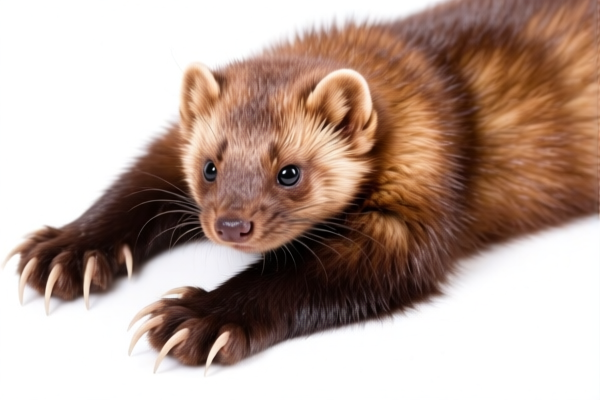
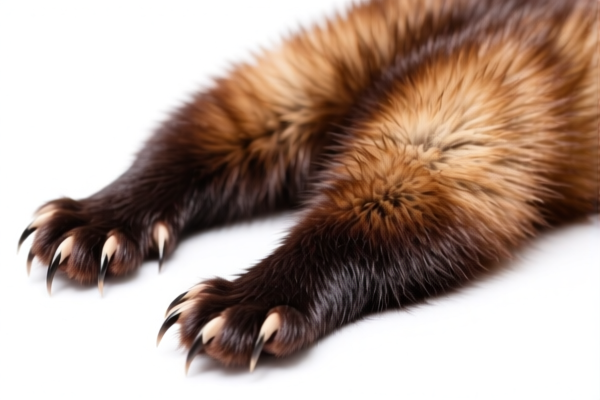
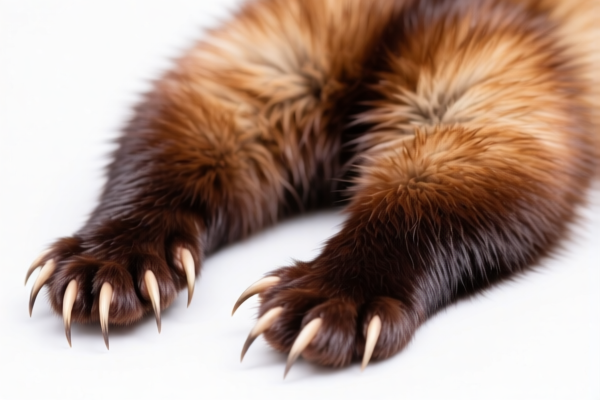
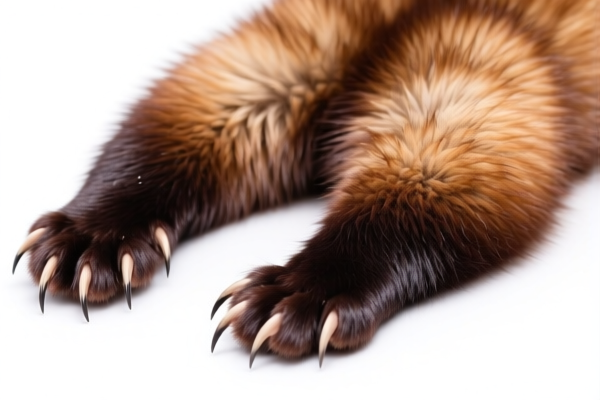
AI Analysis
🦊 Whole Mink Fur (with Claws) – Premium Luxury Material Classification Guide
🌐 HS Code Reference & Customs Clearance Guide | 2024 Latest Tariff Analysis | Professional Entry Strategy
📌 1. Product Definition & Classification: What Exactly is "Whole Mink Fur with Claws"?
Whole Mink Fur (with Claws) refers to processed mink pelts that retain their natural anatomical structure, specifically including the feet with claws intact. In international trade, this is considered a "Whole Skin" or "Original Form" of fur, rather than a cut or assembled piece.
⚠️ Key Distinction:
- If the fur is whole, intact, and includes natural parts (like tails or claws) → It is classified as Whole Mink Fur (Chapter 43, Heading 4301).
- If the fur is cut, assembled, or used as a separate accessory (e.g., just the tail) → It may fall under Prepared Skins/Parts (Heading 4302).
- Claws are considered a natural part of the whole skin and do not change the classification to a "part" if the skin is otherwise whole.
📦 2. HS Code Classification Details (Based on Provided Data)
According to the provided <DATA>, the product "Whole Mink Fur (with Claws)" is classified under the same HS Code as "Whole Mink Fur (with Tail)" because claws are considered a natural state of the whole skin.
| HS Code | Product Description | Application Scenario | Contains Natural Parts? |
|---|---|---|---|
4301.10.00.20 |
Whole Mink Fur (with Claws/Tail) | Whole pelts, natural state, including claws/tails | ✅ Yes (Natural) |
4301.10.00.10 |
Whole Mink Fur (with Tail) | Whole pelts, natural state, including tails | ✅ Yes (Natural) |
🔍 Important Note:
- The data explicitly states: "Whole Mink Fur (with Claws) can refer to 4301.10.00.20, as the material is mink fur and the form is complete, with claws being in a natural state."
- Do NOT classify this as a "tail-only" product (which would be4302.11.00.10or4302.11.00.20) unless the claws/tails are separated from the main body.
💰 3. 2024 Latest Tariff Rate Breakdown (Including Surtaxes & Policy Add-ons)
✅ Applicable Country: USA (US)
✅ Origin: China (CN) (Assumed based on tax details provided)
✅ Effective Date: Current (Post-2025 Trade Policies)
🎯 1. 4301.10.00.20 – Whole Mink Fur (with Claws/Tail)
| Item | Detail |
|---|---|
| Base Tariff | 0.0% (ad valorem) |
| Section 301 Surtax | +7.5% |
| Section 122 Surtax | +10% |
| Total Tariff Rate | 17.5% |
| Tax Calculation | CIF Value × 17.5% |
| De Minimis Eligibility | ❌ No (De Minimis exemption does not apply to fur/animal products from China under current rules) |
| Legal Basis | USITC:4301.10.00.20 → Section 301: 7.5% → Section 122: 10% |
📌 Explanation:
- Base Rate (0%): Mink fur whole skins have a low base tariff.
- Section 301 (7.5%): US additional tariffs on Chinese goods.
- Section 122 (10%): Tariffs under the International Emergency Economic Powers Act (IEEPA) or specific trade remedy actions.
- Total: 17.5%. This is significantly lower than prepared fur parts (4302), which face 37.1% due to higher base rates.
⚠️ Critical Warning: Do NOT Misclassify as Tail-Only!
If you mistakenly classify "Whole Mink Fur (with Claws)" as "Mink Fur Tail Only" under 4302.11.00.10 or 4302.11.00.20, the tax rate jumps to 37.1%.
| Item | Detail for 4302.11.00.10/20 (Tail Only) |
|---|---|
| Base Tariff | 2.1% |
| Section 301 Surtax | +25.0% |
| Section 122 Surtax | +10% |
| Total Tariff Rate | 37.1% |
| Difference | +19.6% HIGHER than whole skin classification |
📌 Reason:
- Tail-only products are considered "prepared skins or parts" (Heading 4302), not "whole skins" (Heading 4301).
- Claws and tails on a WHOLE pelt keep it in Heading 4301.
- SEPARATED tails/claws fall under Heading 4302.
🛠️ 4. Customs Clearance Practical Advice (Pitfall Avoidance Guide)
✅ 1. Required Documentation Checklist
| Document | Required? | Notes |
|---|---|---|
| ✅ Commercial Invoice | ✔️ | Must clearly state "Whole Mink Fur, with Claws & Tail" |
| ✅ Packing List | ✔️ | Specify quantity, weight, and dimensions |
| ✅ Product Photos | ✔️ | Show intact pelt with claws/tails attached |
| ✅ Fur Trade License | ✔️ | CITES permits if applicable (depending on species origin) |
| ✅ Certificate of Origin | ✔️ | For China origin verification |
| ❌ Separate Tail Declaration | ✖️ | Do NOT declare as "tail only" if attached to the body |
✅ 2. Declaration Tips (Key Phrases)
🔥 "Whole Skin, Not Parts!"
| Scenario | Correct Declaration | Incorrect Declaration |
|---|---|---|
| Pelt with claws/tails intact | "Whole Mink Fur, Natural State, with Claws and Tail" |
"Mink Fur Tail" |
| Separated tail only | "Prepared Mink Fur Tail" |
"Whole Mink Fur" |
| Processed fur pieces | "Cut Mink Fur Panels" |
"Whole Mink Fur" |
✅ 3. Special Cases
| Case | Handling Advice |
|---|---|
| Claws are trimmed off | If claws are removed, it may still be classified as 4301.10.00.20 if the rest of the pelt is whole, but verify with customs. |
| Tail is removed | If the tail is severed, the pelt is still "whole" but the tail is a separate item. Declare as "Whole Mink Fur" and "Mink Fur Tail" separately if both are shipped. |
| OEM Custom Orders | Provide design specs to prove it’s a whole pelt for fur coats/trimmings. |
🌍 5. Global Market Comparison (2024)
| Country/Region | Recommended HS Code | Tariff Rate | Notes |
|---|---|---|---|
| 🇺🇸 USA | 4301.10.00.20 |
17.5% | Includes Section 301 + 122 |
| 🇨🇳 China | 4301.10.00.20 |
5-10% | Varies by trade agreement |
| 🇪🇺 EU | 4301.10.00.20 |
0-5% | Lower tariffs, stricter CITES rules |
| 🇯🇵 Japan | 4301.10.00.20 |
0-3% | Low base rates |
📌 Conclusion:
- The USA imposes a 17.5% total tariff on whole mink fur from China.
- Misclassifying as "tail-only" (4302) results in 37.1%, nearly double the cost.
- Always ensure claws and tails are attached to the main body in your photos and description.
📌 6. Common Mistakes & Pitfalls
❌ Mistake 1: Declaring "Whole Mink Fur" but shipping separated tails.
👉 Consequence: Customs may reclassify as 4302 → 37.1% tariff + penalties.
❌ Mistake 2: Omitting "with claws" in the description.
👉 Consequence: Customs may doubt the "whole skin" status → Delayed clearance.
❌ Mistake 3: Using "Mink Fur Tail" for a whole pelt.
👉 Consequence: Underpayment of duties → Back taxes + fines.
✅ Correct Action:
"Whole Mink Fur, Natural State, with Claws and Tail, Processed, for Garment Manufacturing"
🎯 7. Conclusion: Precision Classification Saves Money!
🎯 Remember:
🔹 "Claws on a whole pelt = Whole Skin (17.5%)"
🔹 "Separated tail = Part (37.1%)"
🔹 Never split whole pelts into parts to save space!
📌 Pro Tip:
If you are importing from non-China origins (e.g., Denmark, Finland), tariffs may be lower or exempt. Always verify origin-based tariffs.
📣 Immediate Action:
📞 Contact a licensed customs broker.
📸 Provide clear photos showing claws and tails attached.
📝 Declare as "Whole Mink Fur, with Claws" under4301.10.00.20.
✨ Accurate classification starts with precise documentation!
💼 Save 19.6% tariff by getting it right!
Customer Reviews
About HS Code Classification
The Harmonized System (HS) is an internationally standardized nomenclature developed by the World Customs Organization (WCO) to classify traded products. Over 200 countries use the HS system as the basis for customs tariffs, trade statistics, and import/export regulations.
Each HS code follows a hierarchical structure:
- Chapter (2 digits) — Broad category of goods (e.g., Chapter 84: Machinery and Mechanical Appliances)
- Heading (4 digits) — More specific grouping within the chapter
- Subheading (6 digits) — Internationally standardized breakdown, used by all WCO member countries
- National subdivisions (8-10 digits) — Country-specific extensions for further classification, such as US HTSUS 10-digit codes
Correct HS code classification is essential for smooth customs clearance, accurate duty payment, and compliance with trade regulations. Misclassification can lead to customs delays, overpayment of duties, or penalties.
When importing from CN to US, the applicable tariff rates may include:
- Most-Favored-Nation (MFN) rate — The standard duty rate applied to WTO members
- General rate — Applied to countries without trade agreements
- Trade remedy duties — Additional tariffs such as Section 301 (anti-dumping), Section 232 (national security), or countervailing duties
The information provided on this page is for reference purposes only. For official classification, please consult with your local customs authority or a licensed customs broker.