Whole Mink Fur with Claws
CN → US| HS Code | Tariff Rate | Origin | Destination | Doc |
|---|---|---|---|---|
| 4301100010 | 17.5% | CN | US | Official Doc |
| 4301100020 | 17.5% | CN | US | Official Doc |
Product Images
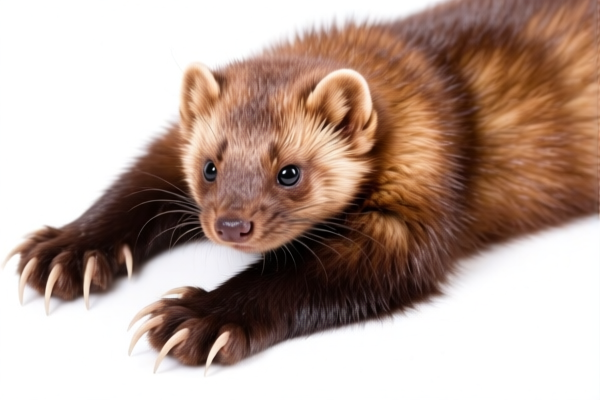
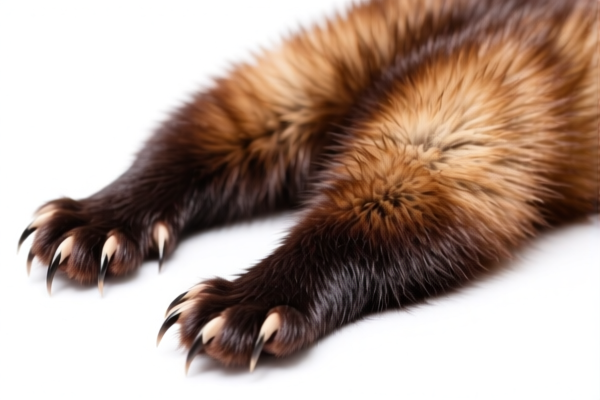
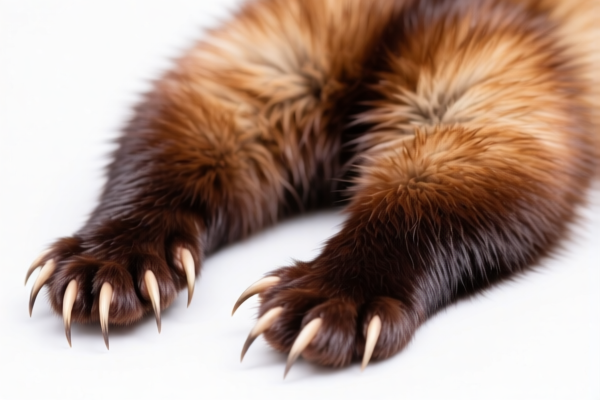
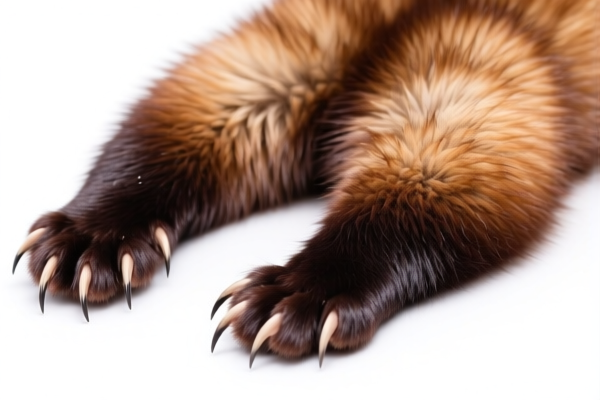
AI Analysis
🦫 Whole Mink Fur with Claws (Raw Furskins)
🌐 HS Code Reference & Customs Clearance Guide | 2026 Latest Tariff Analysis | Professional Strategy 📌 I. Product Definition & Classification: Understanding "Whole Mink Fur with Claws"
"Whole mink fur with claws" refers to the raw furskins of minks that are complete, including the head, body, tail, and paws (with claws). In international trade, these are classified under Chapter 43 (Furskins and artificial fur) and specifically under Heading 43.01 (Raw furskins).
The key distinction here is that the skin is whole (not cut into pieces) and raw (not tanned or further prepared). The presence of claws confirms it is a "whole" skin suitable for furriers' use.
⚠️ Key Distinction: - If the skin is whole (with head, tail, and paws/claws) → It falls under 4301.10 (Of mink, whole, with or without head, tail or paws). - If the skin is cut (e.g., backs, bellies, or strips) → It falls under different subheadings (e.g., 4301.20). - Note: Since the prompt specifies "with claws," it implies a whole skin, likely including paws.
📦 II. HS Code Classification Details (2026 Latest Tariff Authority)
Based on the provided data, there are two specific HS codes for whole mink furskins. The difference lies in the specific description or market classification ("Wild" vs. "Other").
| HS Code | Product Description | Applicable Scenario | Classification Logic |
|---|---|---|---|
4301.10.00.10 |
Of mink, whole, with or without head, tail or paws Wild | Wild-caught mink furskins | Specifically for wild mink. |
4301.10.00.20 |
Of mink, whole, with or without head, tail or paws Other | Farm-raised or non-wild mink furskins | For mink that is not wild (e.g., farmed). |
🔍 Important Note: - Both codes cover raw furskins suitable for furriers' use. - The term "with claws" is part of the "whole" skin description. Whether the paws/claws are removed or kept does not change the heading (4301.10), but it affects the specific sub-code if "Wild" vs. "Other" is determined. - Claws are typically kept on whole skins for identity and quality assessment.
💰 III. 2026 Latest Tariff Rate Breakdown (Detailed)
✅ Applicable Country: United States (US)
✅ Origin: China (CN) (Assumed based on context of "tax" data provided)
✅ Effective Date: Current rates apply as per provided data
🎯 1. 4301.10.00.10 — Whole Mink Fur (Wild)
| Item | Content |
|---|---|
| Base Tariff Rate | 0.0% |
| Additional Tariff (Section 301/Trade War) | +7.5% |
| Total Tariff Rate | 7.5% |
| Tax Calculation | CIF Value × 7.5% |
| Legal Basis | Based on provided data: Base: 0.0%, Additional: 7.5% |
📌 Explanation: - The base tariff for raw furskins of mink is often 0% under normal trade conditions. - However, due to ongoing trade tensions (specifically US-China trade policies), an additional 7.5% is levied. - Total Duty: 7.5% of the customs value.
🎯 2. 4301.10.00.20 — Whole Mink Fur (Other, e.g., Farmed)
| Item | Content |
|---|---|
| Base Tariff Rate | 0.0% |
| Additional Tariff (Section 301/Trade War) | +7.5% |
| Total Tariff Rate | 7.5% |
| Tax Calculation | CIF Value × 7.5% |
| Legal Basis | Based on provided data: Base: 0.0%, Additional: 7.5% |
📌 Explanation: - Identical tax treatment to wild mink in this dataset. - Total Duty: 7.5% of the customs value.
🛠️ IV. Customs Clearance Practical Advice (Actionable Tips)
✅ 1. Required Documentation Checklist
| Document | Must Provide | Notes |
|---|---|---|
| ✅ Commercial Invoice | ✔️ | Must clearly state "Whole Mink Fur, Raw" and specify "Wild" or "Farmed". |
| ✅ Packing List | ✔️ | Detail number of skins, weight, and dimensions. |
| ✅ Certificate of Origin | ✔️ | Essential for verifying country of origin to apply correct additional tariffs. |
| ✅ Furriers' Classification Certificate | ✔️ | Some ports require verification that the skins are suitable for furriers' use. |
| ✅ CITES Permit (if applicable) | ⚠️ | Mink is generally not CITES-listed, but verify if exotic varieties apply. Most farmed mink (Neovison vison) are exempt. |
✅ 2. Classification Strategy (Key Tips)
🔥 “Whole Skin, Check Wild or Farm, 7.5% Total!”
| Scenario | Correct HS Code | Duty Rate |
|---|---|---|
| Whole mink fur, Wild-caught | 4301.10.00.10 |
7.5% |
| Whole mink fur, Farmed (Other) | 4301.10.00.20 |
7.5% |
| Cut mink fur (not whole) | 4301.20... |
Different rate |
| Tanned mink fur | 4302... |
Different rate |
📌 Critical Tip: - Ensure the declaration clearly states "Raw" and "Whole". If it is tanned, it moves to Heading 4302, which has different rates. - The phrase "with claws" confirms it is a whole skin. Do not describe it as "pieces" or "cuttings" unless it is actually cut.
✅ 3. Common Pitfalls & Avoidance
❌ Error 1: Describing as "Mink Leather" or "Tanned Fur" when it is Raw
👉 Consequence: Wrong HS Code, potential penalty, delayed clearance.
✅ Fix: Use exact term "Raw Furskin, Whole, Mink".
❌ Error 2: Ignoring the "Wild" vs. "Other" distinction
👉 Consequence: While duty rate is the same in this data, misclassification can lead to audit flags.
✅ Fix: Clearly state origin (Wild/Captive) in the invoice.
❌ Error 3: Failing to declare "Additional Tariff" implications
👉 Consequence: Unexpected cost if not budgeted.
✅ Fix: Budget for 7.5% total duty on CIF value.
🌍 V. Global Market Comparison (2026)
| Country/Region | Recommended HS Code | Duty Rate | Notes |
|---|---|---|---|
| 🇺🇸 USA | 4301.10.00.10 / .20 |
7.5% | Base 0% + Additional 7.5% |
| 🇨🇳 China | 4301.10.00.10 / .20 |
Varies | Import duties may differ; check local tariff schedule. |
| 🇪🇺 EU | 4301.10 |
Varies | EU may have different base rates and VAT. |
| 🇯🇵 Japan | 4301.10 |
Varies | Check for any anti-dumping duties. |
📌 Conclusion: - For US imports, the total duty is 7.5%. - Ensure proper documentation to avoid delays. - Mink fur is a high-value item; accuracy in classification is critical to avoid penalties.
📌 VI. Frequently Asked Questions (FAQ)
Q: Are claws required to be kept on the skin?
A: Not strictly required, but if the skin is declared as "whole with paws," claws are typically present. If paws are removed, it may still be "whole" but with paws removed. The HS Code 4301.10 covers both "with or without head, tail or paws."
Q: Is CITES required for mink fur?
A: Generally, no. The American mink (Neovison vison) and European mink (Mustela lutreola) have different listings. Most commercial mink is farmed and not CITES-listed. Always verify the specific species.
Q: Can I use a lower duty rate?
A: Only if the fur originates from a country with a Free Trade Agreement (FTA) with the US, or if it is exempted. For China-origin fur, the 7.5% additional tariff applies.
🎯 VII. Final Advice: Professional Clearance for Maximum Savings
🎯 Remember:
🔹 "Raw Whole Mink: 7.5% Total Duty"
🔹 "Wild vs. Farm: Declare Clearly"
🔹 "Documentation is Key to Smooth Clearance"
📌 Tips: - If you are importing into the US, ensure your supplier provides a Certificate of Origin to verify the country. - For high-value shipments, consider hiring a licensed customs broker to handle the classification. - Keep photos of the furskins (with and without fur) for potential inspection.
📣 Take Action Now:
📞 Consult a Customs Broker + Prepare Invoice + Apply for HS Code Confirmation
🚀 Ensure Smooth Clearance, Minimize Costs, Maximize Profit!
✨ Professional Clearance Starts with Accurate Classification!
💼 Every Dollar Saved is a Dollar Earned!
Customer Reviews
About HS Code Classification
The Harmonized System (HS) is an internationally standardized nomenclature developed by the World Customs Organization (WCO) to classify traded products. Over 200 countries use the HS system as the basis for customs tariffs, trade statistics, and import/export regulations.
Each HS code follows a hierarchical structure:
- Chapter (2 digits) — Broad category of goods (e.g., Chapter 84: Machinery and Mechanical Appliances)
- Heading (4 digits) — More specific grouping within the chapter
- Subheading (6 digits) — Internationally standardized breakdown, used by all WCO member countries
- National subdivisions (8-10 digits) — Country-specific extensions for further classification, such as US HTSUS 10-digit codes
Correct HS code classification is essential for smooth customs clearance, accurate duty payment, and compliance with trade regulations. Misclassification can lead to customs delays, overpayment of duties, or penalties.
When importing from CN to US, the applicable tariff rates may include:
- Most-Favored-Nation (MFN) rate — The standard duty rate applied to WTO members
- General rate — Applied to countries without trade agreements
- Trade remedy duties — Additional tariffs such as Section 301 (anti-dumping), Section 232 (national security), or countervailing duties
The information provided on this page is for reference purposes only. For official classification, please consult with your local customs authority or a licensed customs broker.