Whole Mink Skin (with Head)
CN → US| HS Code | Tariff Rate | Origin | Destination | Doc |
|---|---|---|---|---|
| 4103901140 | 17.5% | CN | US | Official Doc |
| 4103901190 | 17.5% | CN | US | Official Doc |
| 4103902000 | 20.8% | CN | US | Official Doc |
| 4301100020 | 17.5% | CN | US | Official Doc |
| 4103901190 | 17.5% | CN | US | Official Doc |
Product Images
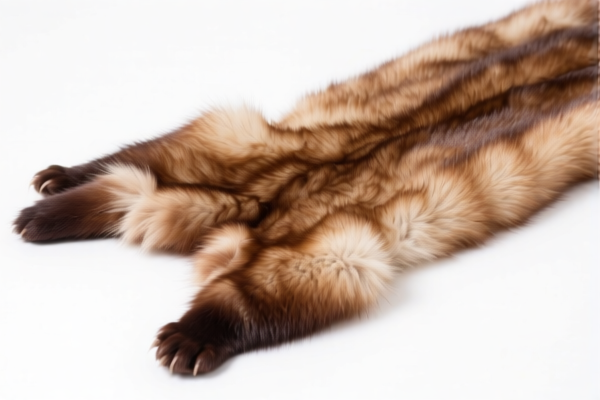
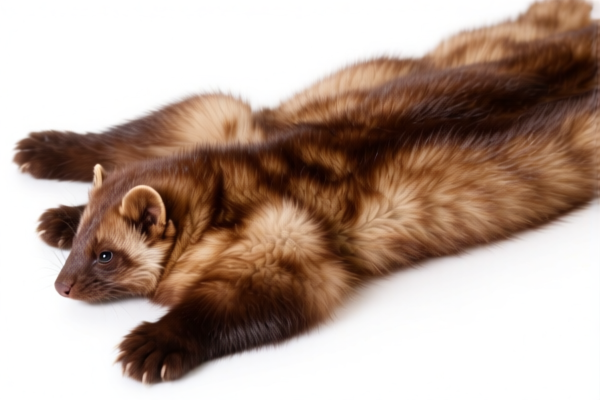
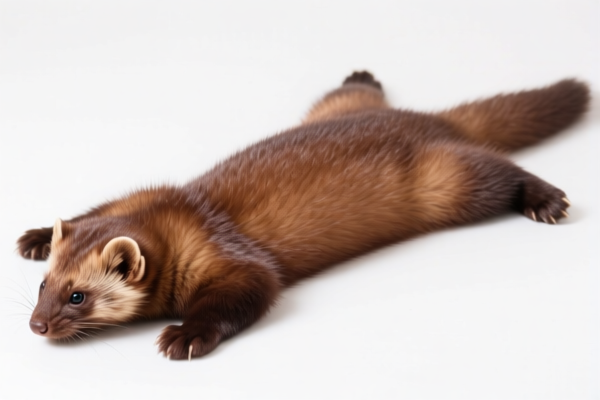
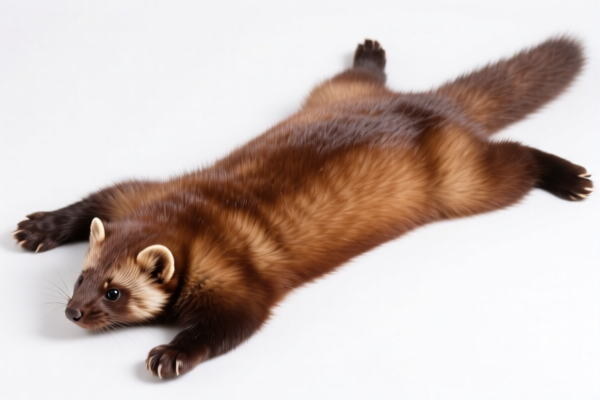
AI Analysis
🐾 Whole Mink Skin (with Head) – Raw & Un-tanned
🌐 HS Code Reference & Customs Clearance Guide | 2026 Latest Tariff Analysis | Professional Entry Strategy for Raw Fur
📌 I. Product Definition & Classification: What Exactly Is "Whole Mink Skin"?
Whole Mink Skin (with Head) refers to raw, un-tanned pelts of mink, typically preserved through salting or freezing, retaining the head and often the tail. In international trade, the classification hinges on whether the skin has undergone any tanning or further preparation.
Raw Skins (Un-tanned):
- No chemical tanning (vegetable, chrome, or salt curing only for preservation);
- Maintains original biological structure (epidermis, dermis, hair follicles);
- Classified under Chapter 41 (Raw Hides and Skins).
Prepared Skins (Tanned/Dressed):
- Underwent tanning processes to make them durable and flexible;
- Classified under Chapter 43 (Furskins and Artificial Fur).
⚠️ Critical Distinction:
- If the skin is raw, un-tanned, and has head/tail → It falls under Chapter 41.
- If the skin is tanned, dressed, or otherwise prepared → It may fall under Chapter 43.
- Misclassification Risk: Declaring raw skins as "prepared furs" or vice versa can lead to significant tariff discrepancies and customs delays.
📦 II. HS Code Classification Details (2026 Latest Tariff Authority Comparison)
Based on the provided data, here are the applicable HS Codes for Whole Mink Skin (with Head) in its raw/un-tanned state:
| HS Code | Product Description | Applicable Scenario | Tax Details |
|---|---|---|---|
4103.90.11.40 |
Other raw hides and skins (mink, with head, un-tanned) | Raw mink pelts, preserved, with head | Base: 0%, Section 301: 7.5%, Section 122: 10% → Total: 17.5% |
4103.90.11.90 |
Other raw hides and skins (mink, un-tanned) | Raw mink pelts, preserved, without head/tail | Base: 0%, Section 301: 7.5%, Section 122: 10% → Total: 17.5% |
4103.90.20.00 |
Other raw hides and skins (mink, un-tanned) | General raw mink skins | Base: 3.3%, Section 301: 7.5%, Section 122: 10% → Total: 20.8% |
4301.10.00.20 |
Mink skins, prepared (whole, with tail) | Tanned/dressed mink skins, whole with tail | Base: 0%, Section 301: 7.5%, Section 122: 10% → Total: 17.5% |
🔍 Key Clarification from Data:
-4103.90.11.40: Specifically matches raw mink skins with heads.
-4103.90.11.90: Matches raw mink skins (general category).
-4103.90.20.00: Another code for raw mink skins, but with a different base rate (3.3% vs 0%).
-4301.10.00.20: Applies only if the skins are prepared/tanned. If your product is raw, this code is incorrect unless processing has occurred.
💰 III. 2026 Latest Tariff Rate Breakdown (Including Surcharges & Policy Add-ons)
✅ Applicable Country: United States (US)
✅ Country of Origin: China (CN)
✅ Effective Date: November 10, 2025 onwards
🎯 1. 4103.90.11.40 — Raw Mink Skins (with Head)
| Item | Content |
|---|---|
| Base Tariff | 0% (ad valorem) |
| USITC Surtax (Section 301) | +7.5% |
| Section 122 Surtax | +10% |
| Total Tariff Rate | 17.5% |
| Tax Calculation | CIF Value × 17.5% |
| De Minimis Exemption | ❌ Not Applicable |
| Legal Basis Path | USITC:4103.90.11.40 → Section 301: 7.5% → Section 122: 10% |
📌 Explanation:
- Base Rate 0%: Raw hides and skins often enjoy low base duties.
- Section 301 (7.5%): Additional duty on Chinese goods under the US Trade Act.
- Section 122 (10%): Surtax under the Trade Expansion Act for specific categories.
- Total 17.5%: Must be factored into cost modeling.
🎯 2. 4103.90.11.90 — Raw Mink Skins (General)
| Item | Content |
|---|---|
| Base Tariff | 0% |
| USITC Surtax (Section 301) | +7.5% |
| Section 122 Surtax | +10% |
| Total Tariff Rate | 17.5% |
| Tax Calculation | CIF Value × 17.5% |
| De Minimis Exemption | ❌ Not Applicable |
| Legal Basis Path | USITC:4103.90.11.90 → Section 301: 7.5% → Section 122: 10% |
📌 Note:
- Same tariff structure as4103.90.11.40.
- Use this code if the head is not specified or if the skin is generic raw mink.
🎯 3. 4103.90.20.00 — Raw Mink Skins (Alternative Subcategory)
| Item | Content |
|---|---|
| Base Tariff | 3.3% |
| USITC Surtax (Section 301) | +7.5% |
| Section 122 Surtax | +10% |
| Total Tariff Rate | 20.8% |
| Tax Calculation | CIF Value × 20.8% |
| De Minimis Exemption | ❌ Not Applicable |
| Legal Basis Path | USITC:4103.90.20.00 → Section 301: 7.5% → Section 122: 10% |
📌 Caution:
- This code has a higher base rate (3.3%), resulting in a 20.8% total duty.
- Only use if4103.90.11.40or.90does not accurately describe the product.
🎯 4. 4301.10.00.20 — Prepared Mink Skins (Whole with Tail)
| Item | Content |
|---|---|
| Base Tariff | 0% |
| USITC Surtax (Section 301) | +7.5% |
| Section 122 Surtax | +10% |
| Total Tariff Rate | 17.5% |
| Tax Calculation | CIF Value × 17.5% |
| De Minimis Exemption | ❌ Not Applicable |
| Legal Basis Path | USITC:4301.10.00.20 → Section 301: 7.5% → Section 122: 10% |
📌 Critical Warning:
- Only use if skins are TANNED or DRESSED.
- If your product is raw, misclassifying as4301.10.00.20constitutes false declaration.
- While the tariff is the same (17.5%), the legal risk is high.
🛠️ IV. Customs Clearance Practical Advice (Real-World Pitfall Guide)
✅ 1. Required Documentation Checklist (Non-Negotiable)
| Document | Required | Notes |
|---|---|---|
| ✅ Commercial Invoice | ✔️ | Must clearly state "Raw Mink Skins, Un-tanned, with Head" |
| ✅ Packing List | ✔️ | Detail quantity, weight, and whether heads/tails are included |
| ✅ Product Photos | ✔️ | Clear images showing raw texture, no tanning chemicals, heads intact |
| ✅ Certificate of Origin | ✔️ | Required for tariff determination |
| ✅ Treatment Certificate | ✔️ | Proof of preservation method (e.g., frozen, salted) to confirm un-tanned status |
| ✅ Supplier Declaration | ✔️ | Confirm no tanning processes were applied |
✅ 2. Declaration Tips (Key Strategies)
🔥 “Raw vs. Prepared: Clarify State, Avoid Penalty!”
| Scenario | Correct Declaration | Wrong Declaration |
|---|---|---|
| Raw mink skins with heads | 4103.90.11.40 |
4301.10.00.20 → Misclassification risk |
| Raw mink skins (no head) | 4103.90.11.90 |
4301.10.00.20 |
| Tanned mink skins with tail | 4301.10.00.20 |
4103.90.11.40 → False declaration |
| Mixed shipments (raw + tanned) | Split declarations | Combined → Audit risk |
✅ 3. Special Cases Handling
| Scenario | Handling Advice |
|---|---|
| OEM Custom Orders | Provide design specs; clarify if any pre-tanning was done |
| Skirts/Coats vs. Raw Skins | If processed into garments, classification changes entirely (e.g., Chapter 43 or 61) |
| Samples | Still subject to duties; declare as "Commercial Sample" but pay applicable tax |
| Frozen vs. Salted | Both are "raw" if un-tanned; ensure preservation method is documented |
🌍 V. Global Market Customs Comparison (2026 Latest)
| Country/Region | Recommended HS Code | Tariff Rate | Certification Requirements | Notes |
|---|---|---|---|---|
| 🇺🇸 United States | 4103.90.11.40 |
17.5% (CN origin) | USDA, CITES (if applicable) | High scrutiny on fur imports |
| 🇨🇳 China | 4103.90.11.40 |
5–10% | No special certs | Lower duty for raw skins |
| 🇪🇺 European Union | 4103.90 |
Varies | CITES, Animal Welfare Certs | Strict animal product regulations |
| 🇦🇺 Australia | 4103.90 |
5–10% | Biosecurity Permits | High biosecurity standards |
| 🇯🇵 Japan | 4103.90 |
5–15% | Veterinary Certs | Requires health certificates |
📌 Conclusion:
- US and China are key markets for raw mink skins;
- EU and Australia have stricter biosecurity and animal welfare requirements;
- Always verify CITES status — some mink species may be regulated.
📌 VI. Common Errors & Pitfall Guide (Lessons Learned)
❌ Error 1: Declaring raw skins as prepared furs (4301.10.00.20)
👉 Consequence: Misdeclaration, potential fines, shipment detention.
❌ Error 2: Omitting "with head" in description
👉 Consequence: Customs may reject 4103.90.11.40, force reclassification to .90 or .20.00.
❌ Error 3: Not providing preservation proof (frozen/salted)
👉 Consequence: Customs may suspect tanning, leading to inspection delays.
❌ Error 4: Using vague terms like "fur products"
👉 Consequence: Unclear classification, high risk of audit.
✅ Correct Practice:
“Raw Mink Skins, Un-tanned, Preserved by Freezing, With Heads, Quantity: 100 pcs, CIF: $5,000”
🎯 VII. Conclusion: Accurate Classification Saves Time & Money!
🎯 Remember:
🔹 “Raw = Chapter 41, Prepared = Chapter 43”
🔹 “With Head = .40, Without Head = .90”
🔹 “17.5% Duty for Raw Mink from China”
🔹 “Always Declare State: Raw vs. Tanned”
📌 Pro Tip:
If your mink skins are sourced from Canada or USA, check for preferential tariffs under USMCA/CUSMA. However, for Chinese-origin raw mink, expect 17.5% total duty.
Recommend pre-classification ruling from CBP to avoid disputes.
📣 Immediate Action:
📞 Contact licensed customs broker + Provide product photos + Request HS Code pre-ruling
🚀 Ensure smoother customs clearance, lower risks, and faster release!
✨ Professional Clearance Starts with Precise Classification!
💼 Every Percent Counts in Your Profit Margin!
Customer Reviews
About HS Code Classification
The Harmonized System (HS) is an internationally standardized nomenclature developed by the World Customs Organization (WCO) to classify traded products. Over 200 countries use the HS system as the basis for customs tariffs, trade statistics, and import/export regulations.
Each HS code follows a hierarchical structure:
- Chapter (2 digits) — Broad category of goods (e.g., Chapter 84: Machinery and Mechanical Appliances)
- Heading (4 digits) — More specific grouping within the chapter
- Subheading (6 digits) — Internationally standardized breakdown, used by all WCO member countries
- National subdivisions (8-10 digits) — Country-specific extensions for further classification, such as US HTSUS 10-digit codes
Correct HS code classification is essential for smooth customs clearance, accurate duty payment, and compliance with trade regulations. Misclassification can lead to customs delays, overpayment of duties, or penalties.
When importing from CN to US, the applicable tariff rates may include:
- Most-Favored-Nation (MFN) rate — The standard duty rate applied to WTO members
- General rate — Applied to countries without trade agreements
- Trade remedy duties — Additional tariffs such as Section 301 (anti-dumping), Section 232 (national security), or countervailing duties
The information provided on this page is for reference purposes only. For official classification, please consult with your local customs authority or a licensed customs broker.