Whole buffalo hides and skins for decoration
CN → US| HS Code | Tariff Rate | Origin | Destination | Doc |
|---|---|---|---|---|
| 4104413060 | 12.4% | CN | US | Official Doc |
| 4101203500 | 19.9% | CN | US | Official Doc |
| 4104113010 | 12.4% | CN | US | Official Doc |
| 4101503500 | 19.9% | CN | US | Official Doc |
| 4107915000 | 12.8% | CN | US | Official Doc |
Product Images
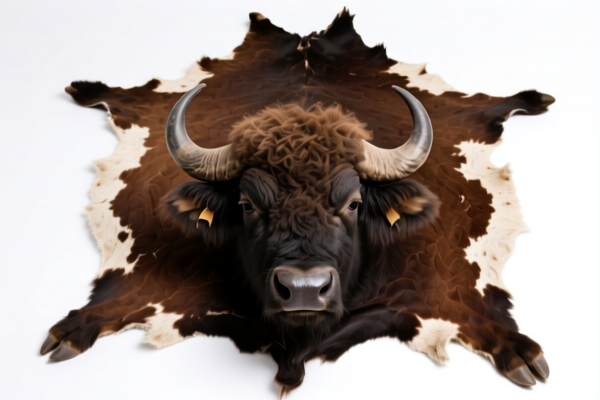
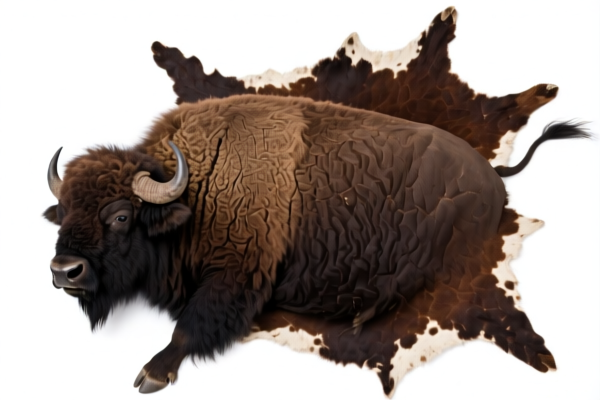
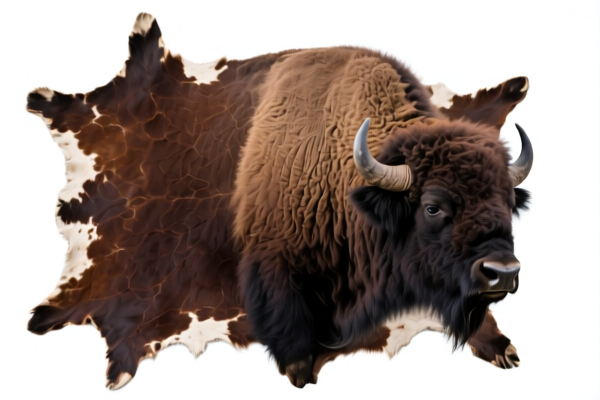
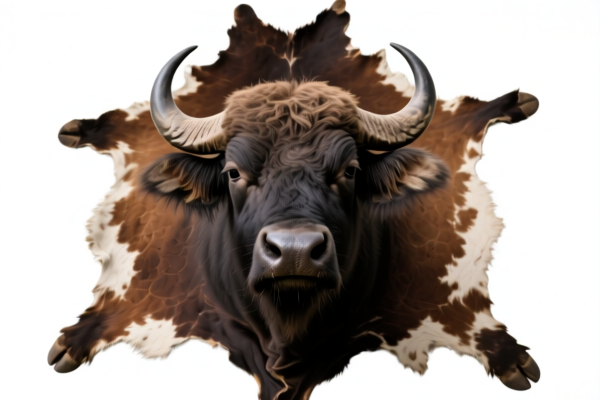
AI Analysis
🐃 Whole Buffalo Hides and Skins for Decoration (Furniture/Decorative Use)
🌐 HS Code Reference & Customs Clearance Guide | 2026 Latest Tariff Analysis | Professional Clearance Strategy
📌 I. Product Definition and Classification: What Are "Whole Buffalo Hides"?
Whole buffalo hides and skins intended for decoration or furniture upholstery are raw or partially processed animal skins. In international trade, their classification depends heavily on the state of preservation, processing level, and specific species characteristics.
Key Distinctions:
- Chapter 41 vs. Chapter 41 Variants:
- 41.01 (Raw Hides/Skins): Includes whole hides that are salted, fresh, or dried but not tanned or further prepared. This category often has stricter quotas or higher tariffs if they do not meet specific "whole" criteria.
- 41.04 (Tanned/Cured Hides): Includes hides that have undergone tanning (vegetable, chrome, etc.) but are not further dressed, dyed, or finished. These are more common for furniture manufacturing.
- 41.07 (Further Prepared Leather): Includes leather that has been dressdyed, pigmented, or otherwise finished.
⚠️ Critical Classification Point:
- If the hide is raw/salted (untanned) → Likely falls under 41.01 series.
- If the hide is tanned/cured but not finished → Likely falls under 41.04 or 41.07 series.
- The origin (US-China trade context) significantly impacts the final tax rate due to additional duties.
📦 II. HS Code Classification Details (Based on Provided Data)
| HS Code | Product Description | Applicable Scenario | State of Processing |
|---|---|---|---|
4104.41.30.60 |
Whole buffalo hides and skins for furniture/decoration | Tanned buffalo leather, whole hide | ✅ Tanned, not further prepared |
4101.20.35.00 |
Whole buffalo hides and skins for furniture/decoration | Raw buffalo hides, whole skin | ✅ Raw/Untanned |
4104.11.30.10 |
Whole buffalo hides and skins for furniture/decoration | Tanned buffalo leather, whole hide | ✅ Tanned, not further prepared |
4101.50.35.00 |
Whole buffalo hides and skins for furniture/decoration | Raw buffalo hides, whole skin | ✅ Raw/Untanned |
4107.91.50.00 |
Whole buffalo hides and skins for furniture/decoration | Further prepared leather for paving/upholstery | ✅ Dressed/Further Prepared |
🔍 Important Note:
- The difference between 41.01 and 41.04/41.07 lies in whether the hide has been tanned.
- 41.07 implies a higher level of preparation (e.g., dyeing, pigmenting) compared to 41.04.
- 41.01 refers to raw hides, which may face different regulatory scrutiny.
💰 III. 2026 Latest Tariff Rate Breakdown (Including Additional Duties)
✅ Applicable Country: United States (US)
✅ Origin: China (CN)
✅ Effective Date: Current rates apply as per provided data
🎯 1. 4104.41.30.60 & 4104.11.30.10 —— Tanned Buffalo Hides (Not Further Prepared)
| Item | Content |
|---|---|
| Base Duty Rate | 2.4% (ad valorem) |
| Section 301 Additional Duty | 0.0% (Not applicable for these subheadings in this dataset) |
| Section 122 Duty | 10.0% (Additional duty on certain leather products) |
| Total Duty Rate | 12.4% |
| Tax Calculation | CIF Value × 12.4% |
| De Minimis Exemption | ❌ Not Applicable (Low-value shipments do not exempt these high-value/raw materials) |
| Legal Basis Path | HTSUS:4104 → USITC:4104.41.30.60 → Section 122:10% |
📌 Explanation:
- Base Rate (2.4%): Standard MFN (Most Favored Nation) duty for tanned hides.
- Section 122 (10%): A specific additional duty often applied to leather products from certain origins to protect domestic tanning industries.
- Total (12.4%): Relatively moderate compared to other manufactured goods.
🎯 2. 4101.20.35.00 & 4101.50.35.00 —— Raw Buffalo Hides (Untanned)
| Item | Content |
|---|---|
| Base Duty Rate | 2.4% (ad valorem) |
| Section 301 Additional Duty | 7.5% (Additional duty on certain raw materials) |
| Section 122 Duty | 10.0% (Additional duty on certain leather products) |
| Total Duty Rate | 19.9% |
| Tax Calculation | CIF Value × 19.9% |
| De Minimis Exemption | ❌ Not Applicable |
| Legal Basis Path | HTSUS:4101 → USITC:4101.20.35.00 → Section 122:10% |
📌 Note:
- Raw hides (41.01) incur a 7.5% Section 301 duty in addition to the Section 122 duty.
- This makes raw hides more expensive to import than tanned hides (41.04) in this specific dataset.
🎯 3. 4107.91.50.00 —— Further Prepared Leather (Dyed/Pigmented)
| Item | Content |
|---|---|
| Base Duty Rate | 2.8% (ad valorem) |
| Section 301 Additional Duty | 0.0% (Not applicable for this subheading in this dataset) |
| Section 122 Duty | 10.0% (Additional duty on certain leather products) |
| Total Duty Rate | 12.8% |
| Tax Calculation | CIF Value × 12.8% |
| De Minimis Exemption | ❌ Not Applicable |
| Legal Basis Path | HTSUS:4107 → USITC:4107.91.50.00 → Section 122:10% |
📌 Observation:
- This code has a slightly higher base rate (2.8%) but avoids the 7.5% Section 301 duty seen in raw hides.
- Total rate (12.8%) is very close to tanned hides (12.4%).
🛠️ IV. Customs Clearance Practical Advice (Battle-Tested Pitfall Avoidance)
✅ 1. Required Documentation Checklist (Mandatory)
| Document | Required? | Notes |
|---|---|---|
| ✅ Commercial Invoice | ✔️ | Must specify: "Whole Buffalo Hides," species, tanning method, weight, value. |
| ✅ Packing List | ✔️ | Detail number of hides, weight per hide, total gross/net weight. |
| ✅ Bill of Lading/Air Waybill | ✔️ | Standard shipping document. |
| ✅ Certificate of Origin (CO) | ✔️ | To prove origin (China) and apply correct tariff rates. |
| ✅ Tanning Certificate | ✔️ | Crucial to distinguish between raw (41.01) and tanned (41.04/41.07). |
| ✅ Fumigation Certificate | ✔️ | Required for animal products to prevent pest introduction. |
| ✅ USDA Permit (if applicable) | ✔️ | Check if specific animal health permits are required for buffalo hides. |
✅ 2. Declaration Tips (Key Mantras)
🔥 "Tanned vs. Raw Matters, Section 122 Applies, Weight is Key, Documentation Must Match!"
| Scenario | Correct Declaration | Incorrect Action |
|---|---|---|
| Tanned Hides | Use 4104.xx.xx.xx or 4107.xx.xx.xx |
Misdeclare as raw hides (41.01) → Higher tax (19.9%) |
| Raw Hides | Use 4101.xx.xx.xx |
Misdeclare as tanned hides (41.04) → Audit risk, penalties |
| Further Prepared | Use 4107.xx.xx.xx |
Declare as 41.04 → May lead to dispute over "degree of preparation" |
| Mixed Shipments | Declare each HS Code separately | Mix codes → Customs may penalize entire shipment |
✅ 3. Special Considerations
| Situation | Handling Advice |
|---|---|
| Hydroponic/Chemical Residues | Ensure hides are fully cured/tanned to avoid USDA rejections. Provide lab tests if requested. |
| Weight Discrepancy | Ensure declared weight matches physical weight. Hides lose moisture; declare net weight of the product. |
| Section 122 Duty | This 10% duty is non-negotiable for these leather products from China. Factor it into cost calculations. |
| De Minimis ($800) | ❌ Do Not Expect Exemption. Animal hides are generally excluded from de minimis relief under current US regulations. |
🌍 V. Global Market Comparison (2026 Latest)
| Country/Region | Recommended HS Code | Tariff Rate | Certification | Notes |
|---|---|---|---|---|
| 🇺🇸 USA | 4104.41.30.60 / 4101.20.35.00 |
12.4% - 19.9% | USDA, Fumigation | High additional duties (Section 122 + Section 301) |
| 🇨🇳 China | 41.01 - 41.07 |
~0% - 5% | N/A | Export market, lower duties |
| 🇪🇺 EU | 41.01 - 41.07 |
~0% - 5% | EUTR (Timber/Angle) | Strict sustainability documentation |
| 🇬🇧 UK | 41.01 - 41.07 |
~0% - 5% | N/A | Post-Brexit tariffs may vary |
| 🇦🇺 Australia | 41.01 - 41.07 |
~0% - 5% | Biosecurity | Strict biosecurity checks |
📌 Conclusion:
- The US market imposes the highest costs due to Section 122 and Section 301 duties.
- Raw hides (41.01) are taxed more heavily (19.9%) than tanned hides (12.4-12.8%).
- Consider sourcing pre-tanned hides if possible to reduce duty burden.
📌 VI. Common Mistakes & Pitfall Avoidance (Blood-Swept Lessons)
❌ Mistake 1: Declaring tanned hides as raw hides to "save" on Section 122
👉 Consequence: Customs audit, penalties, and potential retroactive taxes + interest.
👉 Reality: Raw hides have a higher total duty (19.9%) than tanned hides (12.4%).
❌ Mistake 2: Ignoring the Section 122 duty (10%)
👉 Consequence: Under-declaration → Seizure of goods, fines.
👉 Reality: This duty is mandatory for these leather products.
❌ Mistake 3: Missing Fumigation Certificate
👉 Consequence: Shipment rejected or destroyed by USDA.
👉 Reality: Animal products require proof of pest-free treatment.
❌ Mistake 4: Inaccurate Weight Declaration
👉 Consequence: Customs may reassess duty based on estimated weight, leading to overpayment or penalties.
👉 Reality: Declare net weight of the hides only, excluding packaging.
✅ Best Practice:
"Buffalo Hides, Tanned, Whole, For Upholstery, 100% Natural, Fumigated, Certified by [Lab Name], Net Weight: [X] kg"
🎯 VII. Conclusion: Professional Declaration, Cost Savings, Efficient Clearance
🎯 Remember the Mantras:
🔹 "Tanned vs. Raw: Check the Code, Raw is More Expensive!"
🔹 "Section 122 is 10%: Factor It In, Don't Get Caught Flat!"
🔹 "Documents Must Match: Invoice, Packing, Origin, and Tanning Cert!"
📌 Pro Tip:
If your buffalo hides are sourced from Vietnam, India, or other non-China origins, you may avoid Section 301 and Section 122 duties, significantly reducing the total tariff.
Recommendation:
📞 Contact a licensed customs broker + Provide tanning certificates + Apply for Advance Ruling if unsure about the "degree of preparation."
📣 Immediate Action:
📞 Engage a professional customs broker + Provide product images + Verify tanning status
🚀 Ensure smooth clearance, efficient shipping, and maximized profit margins!
✨ Professional clearance starts with accurate classification!
💼 Every dollar of cost should be precisely calculated!
Customer Reviews
About HS Code Classification
The Harmonized System (HS) is an internationally standardized nomenclature developed by the World Customs Organization (WCO) to classify traded products. Over 200 countries use the HS system as the basis for customs tariffs, trade statistics, and import/export regulations.
Each HS code follows a hierarchical structure:
- Chapter (2 digits) — Broad category of goods (e.g., Chapter 84: Machinery and Mechanical Appliances)
- Heading (4 digits) — More specific grouping within the chapter
- Subheading (6 digits) — Internationally standardized breakdown, used by all WCO member countries
- National subdivisions (8-10 digits) — Country-specific extensions for further classification, such as US HTSUS 10-digit codes
Correct HS code classification is essential for smooth customs clearance, accurate duty payment, and compliance with trade regulations. Misclassification can lead to customs delays, overpayment of duties, or penalties.
When importing from CN to US, the applicable tariff rates may include:
- Most-Favored-Nation (MFN) rate — The standard duty rate applied to WTO members
- General rate — Applied to countries without trade agreements
- Trade remedy duties — Additional tariffs such as Section 301 (anti-dumping), Section 232 (national security), or countervailing duties
The information provided on this page is for reference purposes only. For official classification, please consult with your local customs authority or a licensed customs broker.