Whole raw lamb skin with head, tail and claws
CN → US| HS Code | Tariff Rate | Origin | Destination | Doc |
|---|---|---|---|---|
| 410321 | 0.0% | CN | US | Official Doc |
| 410390 | 0.0% | CN | US | Official Doc |
Product Images
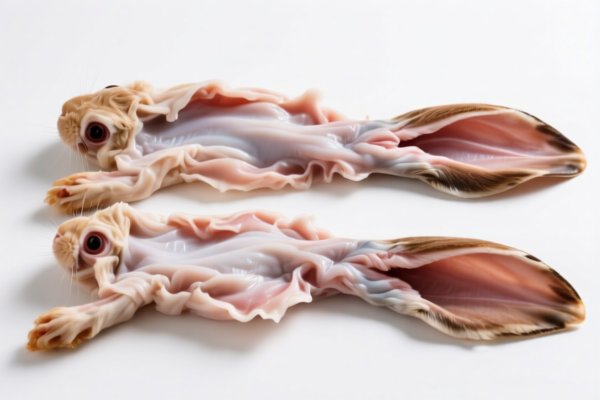
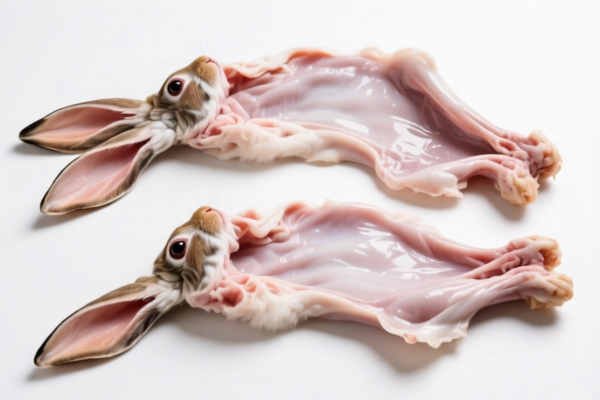
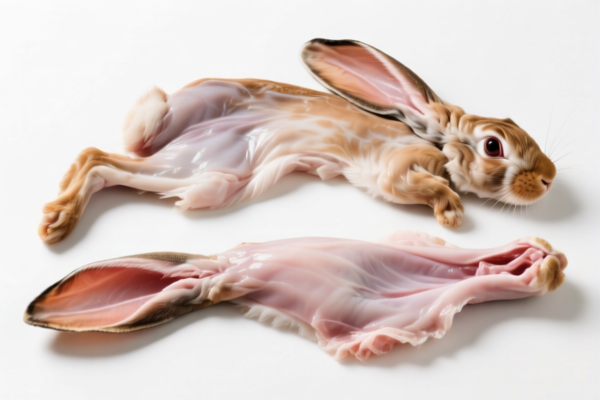
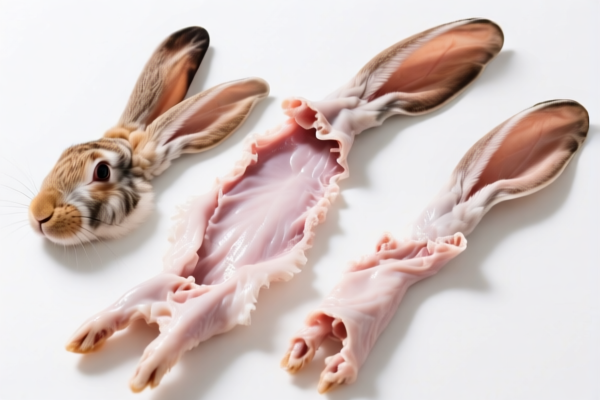
AI Analysis
🐑 Raw Lamb Skins (Including Head, Tail, and Claws)
🌐 HS Code Reference & Customs Clearance Guide | 2026 Latest Tariff Full Analysis | Professional Clearance Strategy
📌 I. Product Definition and Classification: Do You Really Understand "Raw Lamb Skins"?
Raw lamb skins, specifically those including the head, tail, and claws, are classified under Chapter 41 of the Harmonized System (HS). In international trade, these are categorized based on their state of preservation and completeness. The key distinction lies in whether the skin is raw (preserved for tanning) and whether it includes specific anatomical parts that might otherwise be classified as meat or other products.
Raw Hides and Skins: These are animal skins that have undergone minimal processing (such as salting, pickling, or liming) to prevent decay before tanning. They are not yet leather.
Completeness: The inclusion of the head, tail, and claws often leads to misclassification if not handled correctly, as these parts can sometimes be viewed as separate commodities (e.g., heads as offal, tails as delicacies). However, when the skin is intact and sold as a single unit for tanning, the entire assembly is generally classified under the hide/skin heading.
⚠️ Key Distinction Point:
- If the skin is raw (preserved, not tanned, not curried) → Classified under Chapter 41.
- If the skin is tanned or crusted → Classified under Chapter 41 but different subheadings (not covered in this specific dataset).
- If the parts are separated (e.g., head sold for meat, skin sold separately) → Different classifications may apply (e.g., heads as offal under Chapter 02).
- Crucial: The dataset provided focuses on raw skins under HS Code 4103.21 and 4103.90.
📦 II. HS Code Classification Details (2026 Latest Tariff Authority Comparison)
| HS Code | Product Description | Application Scenario | Inclusion of Parts |
|---|---|---|---|
4103.21 |
Raw lamb skins (including whole skins with head, tail, and claws) classified under headings for raw hides and skins of sheep or lambs. | Whole raw lamb skins, preserved (salted/pickled), including head/tail/claws, intended for tanning. | ✅ Yes (Head, Tail, Claws included) |
4103.90 |
Other raw hides and skins of sheep or lambs, potentially covering specific preparations or parts not explicitly detailed in the primary subheading but falling under the general category of raw sheep/lamb skins. | Raw sheep/lamb skins that do not fit the exact definition of 4103.21 (e.g., specific regional preparations, or skins where head/tail are partially processed but still considered part of the hide). | ⚠️ Varies (Case-by-case) |
🔍 Key Reminder:
- 4103.21 is the primary code for whole raw lamb skins including the head, tail, and claws.
- 4103.90 is a residual category for other raw sheep/lamb skins that do not meet the specific criteria of 4103.21.
- Do not mix with tanned leather: Once tanned, these products move to Chapter 41 subheadings 4104 or 4105.
- Do not mix with meat: If the head/tail are removed and sold as meat/offal, they fall under Chapter 02 (e.g., 0206.90 for sheep/lamb offal).
💰 III. 2026 Latest Tariff Rate Details (Including Surcharges, Policy Surcharges)
✅ Applicable Country: United States (US)
✅ Origin: China (CN)
✅ Effective Time: As per current USITC/IEEPA regulations (Note: Specific tax details for HS 4103.21 and 4103.90 were not retrieved in the provided dataset, marked as "Error").
🎯 1. 4103.21 – Raw Lamb Skins (Including Head, Tail, Claws)
| Item | Content |
|---|---|
| Base Tax Rate | Failed to retrieve tax information |
| Total Tax | Error |
| Tax Detail | Failed to retrieve tax information |
📌 Explanation:
- The provided dataset indicates that tax information for 4103.21 could not be retrieved.
- Important: Raw hides and skins often have low base tariffs in the US (typically 0%–6.4% depending on the specific subheading and country of origin under MFN rates).
- 301 Tariffs: Raw hides and skins are generally exempt from the Section 301 (China-specific) additional tariffs, as they are not finished consumer goods. However, this must be verified with the latest USITC data.
- Recommendation: Always verify with a customs broker as tax data was unavailable in this source.
🎯 2. 4103.90 – Other Raw Sheep/Lamb Skins
| Item | Content |
|---|---|
| Base Tax Rate | Failed to retrieve tax information |
| Total Tax | Error |
| Tax Detail | Failed to retrieve tax information |
📌 Note:
- Similar to 4103.21, tax data for 4103.90 was not retrieved.
- This code is a catch-all for raw sheep/lamb skins that do not fit 4103.21.
- Caution: Misclassification between 4103.21 and 4103.90 can lead to customs queries if the "whole skin with head/tail/claws" criterion is not met.
🛠️ IV. Customs Clearance Practical Suggestions (Battlefield Avoidance Guide)
✅ 1. Required Document Checklist (None can be omitted)
| Material | Must Provide | Explanation |
|---|---|---|
| ✅ Product Specification Sheet | ✔️ | Detail preservation method (salted, pickled, dried), dimensions, and whether head/tail/claws are attached. |
| ✅ Photos (Clear) | ✔️ | Show the entire skin including head, tail, and claws. Label each part. |
| ✅ Commercial Invoice | ✔️ | Clearly state "Raw Lamb Skins, Whole, with Head, Tail, and Claws." Do not use vague terms like "Animal Skins." |
| ✅ Packing List | ✔️ | Specify the number of skins, total weight (including head/tail), and packaging type. |
| ✅ Health/Sanitary Certificate | ✔️ | Required for animal products. Must confirm the skins are preserved and free from communicable diseases. |
| ✅ Certificate of Origin | ✔️ | To determine applicable MFN or FTA tariffs. |
✅ 2. Declaration Tips (Key Mantra)
🔥 "Whole Skin, Raw, Salted, No Leather! Head/Tail/Claws Attached!"
| Situation | Correct Declaration | Wrong Practice |
|---|---|---|
| Whole raw lamb skin with head/tail/claws | 4103.21 |
Misclassifying as "Leather" → Higher tax, re-inspection |
| Raw lamb skin without head/tail | 4103.21 or 4103.90 (depends on specific rules) |
Assuming all raw sheep skins are 4103.21 |
| Tanned lamb skin | 4104.19 or 4105.30 |
Declaring as "Raw Skin" → Penalty for false declaration |
| Lamb heads sold as meat | 0206.90 (Offal) |
Declaring as part of skin → Misclassification |
📌 Key Point:
- Raw vs. Tanned: Ensure the description explicitly states "RAW". Tanned leather is classified differently.
- Preservation Method: Specify if the skins are salted, pickled, or dried. This affects sanitary requirements.
- Integrity: The presence of head, tail, and claws is a key identifier for 4103.21. If these are missing, the code may change to 4103.90.
✅ 3. Special Case Handling
| Situation | Handling Advice |
|---|---|
| Skins with Residual Meat | Must declare "Raw Skins with Traces of Meat." If meat content is high, it may be classified as offal (Chapter 02). |
| Mixed Lots (Head/Tail Separated) | If head/tail are sold separately, they may need separate HS codes (e.g., heads as offal). |
| Preserved with Chemicals | Declare the specific preservation method (e.g., "Pickled in Salt") for sanitary clearance. |
| End Use | Declare "For Tanning Only" to avoid scrutiny for food products. |
🌍 V. Global Main Market Customs Clearance Comparison (2026 Latest)
| Country/Region | Recommended HS Code | Tariff | Certification Requirements | Remarks |
|---|---|---|---|---|
| 🇺🇸 USA | 4103.21 |
Failed to retrieve | USDA/APHIS Approval | Animal products require strict sanitary inspection. |
| 🇨🇳 China | 4103.21 |
Varies | CIQ Inspection | Raw hides require export registration. |
| 🇪🇺 EU | 4103.21 |
Varies | EDAN (Animal By-Products) | Strict rules on animal by-products from third countries. |
| 🇦🇺 Australia | 4103.21 |
Varies | Biosecurity Import Permit | High biosecurity standards for raw animal products. |
| 🇯🇵 Japan | 4103.21 |
Varies | Animal Quarantine Station Certificate | BSE-related restrictions may apply. |
📌 Conclusion:
- Sanitary Regulations are the biggest barrier for raw skins globally, not just tariffs.
- USA, EU, and Australia have strict animal health requirements. Ensure your supplier has the necessary export certifications.
- Tax data was unavailable in the provided dataset; consult a customs broker for exact rates.
📌 VI. Common Errors & Avoidance Guide (Blood Lessons)
❌ Error 1: Declaring "Raw Skins" as "Leather"
👉 Consequence: Classification error, potential fines, and detention for sanitary inspection.
❌ Error 2: Failing to Declare Head/Tail/Claws
👉 Consequence: Customs may view the shipment as incomplete or suspect misdeclaration. If parts are missing, the code might change to 4103.90.
❌ Error 3: Not Providing Sanitary Certificates
👉 Consequence: Shipment held at port, subject to fumigation or destruction.
❌ Error 4: Mixing Raw and Tanned Skins in One Declaration
👉 Consequence: Complex customs processing, potential rejection. Separate declarations are required.
✅ Correct Practice:
"Raw Lamb Skins, Whole, with Head, Tail, and Claws, Salted, for Tanning, HS Code 4103.21, Preserved in [Specific Method]"
🎯 VII. Conclusion: Professional Declaration, Time-Saving, Cost-Reducing!
🎯 Remember the Mantra:
🔹 "Raw, Not Tanned! Whole Skin, Head/Tail/Claws! Sanitary Certs are Key!"
🔹 "HS Code 4103.21 for Whole Raw Lamb Skins! 4103.90 for Others!"
📌 Tips:
- Verify Tax Data: Since the provided dataset indicates "Failed to retrieve tax information," always consult a licensed customs broker for the latest tariff rates and any applicable surcharges.
- Pre-Clearance: For large shipments, consider applying for an Advance Ruling to confirm the HS code and tax liability before shipping.
- Sanitary Compliance: Ensure all animal health certifications are up-to-date and match the shipment details.
📣 Immediate Action:
📞 Contact a Professional Customs Broker + Provide Product Photos + Verify Sanitary Certs
🚀 Ensure your raw lamb skins clear customs smoothly, avoid delays, and maximize efficiency!
✨ Professional Customs Clearance Starts with Accurate Classification!
💼 Your Cost and Compliance Deserve Precise Attention!
Customer Reviews
About HS Code Classification
The Harmonized System (HS) is an internationally standardized nomenclature developed by the World Customs Organization (WCO) to classify traded products. Over 200 countries use the HS system as the basis for customs tariffs, trade statistics, and import/export regulations.
Each HS code follows a hierarchical structure:
- Chapter (2 digits) — Broad category of goods (e.g., Chapter 84: Machinery and Mechanical Appliances)
- Heading (4 digits) — More specific grouping within the chapter
- Subheading (6 digits) — Internationally standardized breakdown, used by all WCO member countries
- National subdivisions (8-10 digits) — Country-specific extensions for further classification, such as US HTSUS 10-digit codes
Correct HS code classification is essential for smooth customs clearance, accurate duty payment, and compliance with trade regulations. Misclassification can lead to customs delays, overpayment of duties, or penalties.
When importing from CN to US, the applicable tariff rates may include:
- Most-Favored-Nation (MFN) rate — The standard duty rate applied to WTO members
- General rate — Applied to countries without trade agreements
- Trade remedy duties — Additional tariffs such as Section 301 (anti-dumping), Section 232 (national security), or countervailing duties
The information provided on this page is for reference purposes only. For official classification, please consult with your local customs authority or a licensed customs broker.