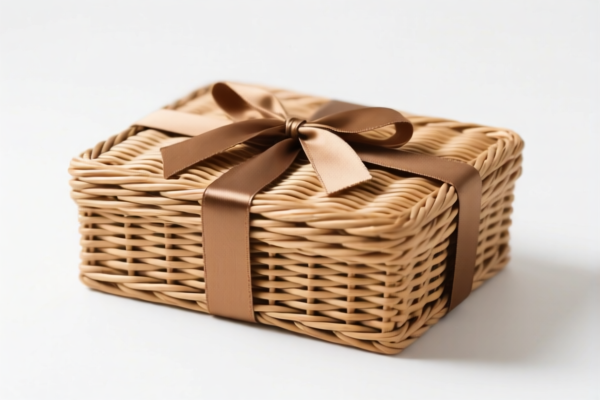
Wicker Woven Flat Gift Box
CN → US| HS Code | Tariff Rate | Origin | Destination | Doc |
|---|---|---|---|---|
| 4602191700 | 35.0% | CN | US | Official Doc |
| 4602191800 | 39.5% | CN | US | Official Doc |
Product Images



AI Analysis
🧺 Wicker Woven Flat Gift Box (Basketwork & Wickerwork)
🌐 HS Code Reference & Customs Clearance Guide | 2026 Latest Tariff Analysis | Professional Clearance Strategy
📌 I. Product Definition & Classification: Do You Truly Understand "Wicker"?
Wicker woven flat gift boxes are decorative packaging solutions crafted from plaited vegetable materials (such as rattan, willow, bamboo, or reed). In international trade, these items fall under Chapter 46: Preparation of Vegetable Fibres; Paper Yarn and Woven Paper; Articles of Basketry and Wickerwork.
The critical distinction lies in the specific description of the wickerwork:
- Wickerwork Articles: Items made directly to shape from plaiting materials or made up from articles of heading 4601. This includes baskets, bags, and boxes.
- Key Differentiator:
- If the item is specifically described as "Wickerwork" → It may fall under 4602.19.17.00 (subject to 25% additional duty).
- If the item is "Other" wickerwork or bags not explicitly classified as "Wickerwork" in the subheading → It falls under 4602.19.18.00 (subject to 0% additional duty).
⚠️ Crucial Distinction Point:
- If the product is explicitly described/manufactured as "Wickerwork" (often implying a specific rigid, frame-like structure or traditional wicker style) → 4602.19.17.00
- If the product is described as "Other" baskets/bags made of vegetable materials (including flat woven boxes that don't fit the strict "wickerwork" definition or are considered general "other") → 4602.19.18.00
📦 II. HS Code Classification Details (2026 Latest Tariff Authority Comparison)
| HS Code | Product Description | Applicable Scenario | Tax Rate (Total) |
|---|---|---|---|
4602.19.17.00 |
Wickerwork (Of vegetable materials: Other: Other baskets and bags, whether or not lined: Other: Wickerwork) | Rigid wicker boxes, traditional wicker-style gift containers | 25.0% |
4602.19.18.00 |
Other (Of vegetable materials: Other: Other baskets and bags, whether or not lined: Other: Other) | Flat woven boxes, general basketry, non-"wickerwork" specific items | 0.0% |
🔍 Key Reminder:
- The term "Wickerwork" is a specific subheading under 4602.19. If your product description in customs declarations emphasizes "Wickerwork," it triggers the 25% duty.
- The term "Other" is the residual category. If the product is a "flat gift box" made of woven plant fibers but does not strictly meet the "Wickerwork" definition (or if you describe it broadly as "woven basket/article"), it may fall under "Other" → 0% duty.
- Strategic Implication: Describing the product accurately as "Woven Gift Box" rather than "Wickerwork" can potentially lower the tax burden from 25% to 0%, if the physical characteristics allow it to be classified under "Other."
💰 III. 2026 Latest Tariff Rate Details (Including Surtaxes, Policy Add-ons)
✅ Applicable Country: United States (US)
✅ Origin: China (CN)
✅ Effective Time: 2025/2026 (Current Trade Policy Context)
🎯 1. 4602.19.17.00 —— Wickerwork
| Item | Content |
|---|---|
| Base Tariff Rate | 0.0% (ad valorem) |
| Additional Surtax | +25.0% |
| Total Tax Rate | 25.0% |
| Tax Calculation | CIF Value × 25.0% |
| De Minimis Exemption | ❌ Not Applicable (Section 301 duties generally apply regardless of value for covered HS codes) |
| Legal Basis Path | USITC:4602.19.17.00 → FOOTNOTE:301 (Section 301 Surtax) |
📌 Explanation:
- The 0% base tariff reflects the general MFN (Most Favored Nation) rate for basketry.
- The 25% additional tariff is the key cost driver. This is typically associated with Section 301 duties on specific Chinese goods.
- Total Cost: 25% of the CIF value. This is a significant cost for low-margin gift packaging.
🎯 2. 4602.19.18.00 —— Other (Woven/Basketry Articles)
| Item | Content |
|---|---|
| Base Tariff Rate | 0.0% (ad valorem) |
| Additional Surtax | 0.0% |
| Total Tax Rate | 0.0% |
| Tax Calculation | CIF Value × 0% = $0 |
| De Minimis Exemption | ❌ Not Applicable (No duty anyway, but de minimis rules still apply for entry processing) |
| Legal Basis Path | USITC:4602.19.18.00 → No Surtax Footnote |
📌 Note:
- This category benefits from zero additional tariffs.
- If the product is a flat woven box, ensuring it is classified under "Other" rather than "Wickerwork" can result in a 25% cost saving.
- Condition: The product must not be strictly defined as "Wickerwork" under the HTSUS notes. "Wickerwork" often implies a specific type of stiff, frame-based weaving. Flat, flexible, or less rigid woven boxes may qualify as "Other."
🛠️ IV. Customs Clearance Practical Advice (Real-World Pitfall Avoidance Guide)
✅ 1. Preparation Checklist (All Documents Required)
| Document | Must Provide | Explanation |
|---|---|---|
| ✅ Product Specifications | ✔️ | Material composition (e.g., "100% Rattan," "Willow," "Bamboo"), dimensions, lining material (if any). |
| ✅ Product Photos | ✔️ | Clear images showing the weave pattern, structure, and any handles/lids. Distinguish between "wicker" (stiff) and "woven" (flat/flexible). |
| ✅ Commercial Invoice | ✔️ | Use precise language. Avoid "Wickerwork" if possible; use "Woven Gift Box" or "Basketry Article" if technically accurate. |
| ✅ Packing List | ✔️ | Include net/gross weight, number of units, and packaging details. |
| ✅ Country of Origin Certificate | ✔️ | Essential for proving Chinese origin and applying applicable surtaxes. |
✅ 2. Declaration Strategy (Key Mantra)
🔥 "Describe as 'Woven,' Not 'Wicker' if Flexible: 25% vs. 0% Difference!"
| Scenario | Correct Declaration | Incorrect Declaration |
|---|---|---|
| Rigid, frame-based wicker box | 4602.19.17.00 (Wickerwork) |
- |
| Flat, flexible woven box | 4602.19.18.00 (Other) |
Mislabeling as "Wickerwork" → 25% |
| Bag-like woven container | 4602.19.18.00 (Other) |
Mislabeling as "Wickerwork" → 25% |
✅ 3. Special Handling Tips
| Situation | Handling Advice |
|---|---|
| Mixed Materials | If the box has plastic handles or metal clasps, ensure the vegetable material constitutes the essential character. If not, HS code may change to plastic/metal. |
| Lined Boxes | The description "whether or not lined" applies to both HS codes. Linings do not change the classification under 4602.19. |
| Gift Sets | If the box is part of a gift set (e.g., box + wine), the entire set may be classified based on the essential character. |
| Avoiding "Wickerwork" | Use terms like "Woven Bamboo Gift Box" or "Plaited Vegetable Material Container" to aim for 4602.19.18.00. |
🌍 V. Global Market Clearance Comparison (2026 Latest)
| Country/Region | Recommended HS Code | Tariff | Certification | Notes |
|---|---|---|---|---|
| 🇺🇸 USA | 4602.19.18.00 |
0% | None | Avoid 4602.19.17.00 (25%) |
| 🇨🇳 China | 4602.19.18.00 |
5-10% | None | Base import duty applies |
| 🇪🇺 EU | 4602.19 |
0-2.5% | None | Generally low duty for basketry |
| 🇬🇧 UK | 4602.19 |
0-2.5% | None | Post-Brexit tariff similar to EU |
📌 Conclusion:
- USA is the only major market with a 25% additional surtax for "Wickerwork" products from China.
- Strategic Advice: For flat gift boxes, classify under "Other" (4602.19.18.00) to achieve 0% duty. Ensure the product description and physical characteristics support this classification (i.e., not rigid "wickerwork").
📌 VI. Common Errors & Pitfall Guide (Lessons Learned)
❌ Error 1: Using "Wickerwork" in the product name
👉 Consequence: Customs may assign 4602.19.17.00 → 25% duty instead of 0%.
👉 Fix: Use "Woven Gift Box" or "Bamboo Container."
❌ Error 2: Ignoring the "Flat" vs. "3D" structure
👉 Consequence: If the box is rigid and framed, it may be deemed "Wickerwork."
👉 Fix: Provide photos showing flexibility or lack of rigid frame to support "Other" classification.
❌ Error 3: Declaring as "Plastic Box" for a Woven Box
👉 Consequence: Misdeclaration → Penalties, delays, or retroactive duties.
👉 Fix: Accurate material description is critical.
✅ Correct Practice:
"Flat Woven Bamboo Gift Box, Unlined, For Packaging Cosmetics, Model XYZ, 100% Natural Vegetable Material"
🎯 VII. Conclusion: Precise Classification, Significant Savings!
🎯 Key Takeaway:
🔹 "Wickerwork" = 25% Duty
🔹 "Other Woven/Basketry" = 0% Duty
🔹 "Flat Boxes" often qualify as "Other" if not rigidly "Wicker"🔹 HS Code Choice Determines Profit Margin!
🔹 25% Savings on a $10,000 Shipment = $2,500 Saved!
📌 Pro Tip:
If your box is made of rattan or willow, ensure it is not described as "Wickerwork" in customs documents. Use "Woven" or "Plaited" instead. Always consult with a customs broker to confirm the "Wickerwork" vs. "Other" distinction based on the specific weave structure.
📣 Immediate Action:
📞 Review product photos and descriptions with your customs broker.
📄 Update commercial invoices to use "Woven Gift Box" instead of "Wickerwork."
🚀 Save 25% on duties and boost your profit margin today!
✨ Professional Clearance Starts with Accurate Classification!
💼 Every Penny Saved is Pure Profit!
Customer Reviews
About HS Code Classification
The Harmonized System (HS) is an internationally standardized nomenclature developed by the World Customs Organization (WCO) to classify traded products. Over 200 countries use the HS system as the basis for customs tariffs, trade statistics, and import/export regulations.
Each HS code follows a hierarchical structure:
- Chapter (2 digits) — Broad category of goods (e.g., Chapter 84: Machinery and Mechanical Appliances)
- Heading (4 digits) — More specific grouping within the chapter
- Subheading (6 digits) — Internationally standardized breakdown, used by all WCO member countries
- National subdivisions (8-10 digits) — Country-specific extensions for further classification, such as US HTSUS 10-digit codes
Correct HS code classification is essential for smooth customs clearance, accurate duty payment, and compliance with trade regulations. Misclassification can lead to customs delays, overpayment of duties, or penalties.
When importing from CN to US, the applicable tariff rates may include:
- Most-Favored-Nation (MFN) rate — The standard duty rate applied to WTO members
- General rate — Applied to countries without trade agreements
- Trade remedy duties — Additional tariffs such as Section 301 (anti-dumping), Section 232 (national security), or countervailing duties
The information provided on this page is for reference purposes only. For official classification, please consult with your local customs authority or a licensed customs broker.