Wide Car Tire
CN → US| HS Code | Tariff Rate | Origin | Destination | Doc |
|---|---|---|---|---|
| 4012114000 | 39.0% | CN | US | Official Doc |
| 4012118000 | 38.4% | CN | US | Official Doc |
| 4011101070 | 39.0% | CN | US | Official Doc |
| 4011105000 | 38.4% | CN | US | Official Doc |
| 4011101070 | 39.0% | CN | US | Official Doc |
Product Images
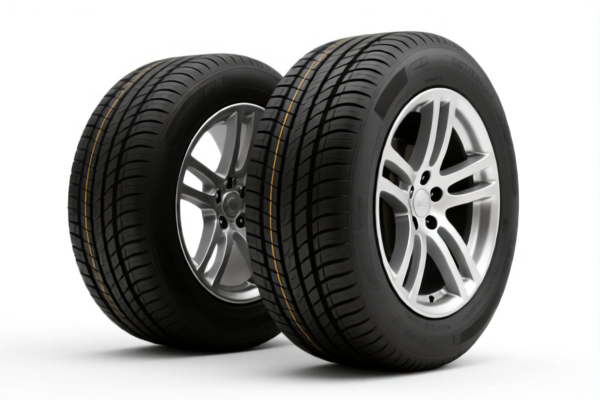
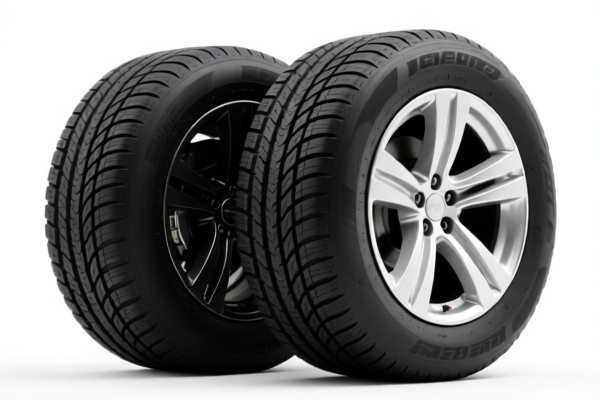
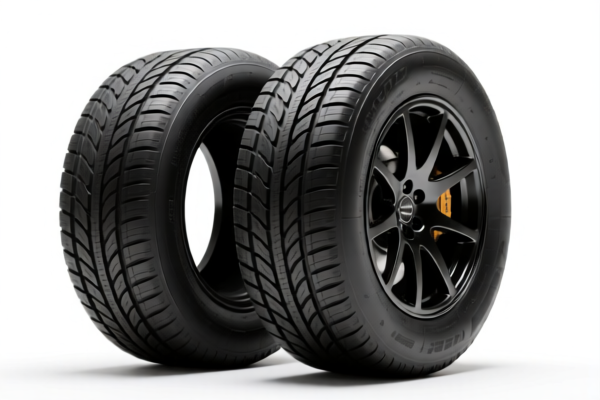
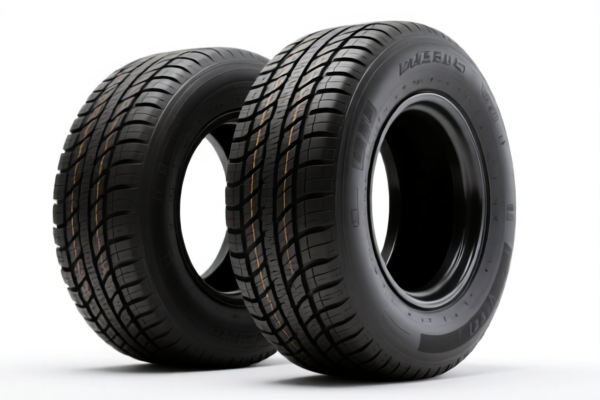
AI Analysis
🚗 Wide Car Tire (Automobile Tires)
🌐 HS Code Reference & Customs Clearance Guide | 2026 Latest Tariff Analysis | Professional Entry Strategies
📌 I. Product Definition & Classification: What Exactly is a "Wide Car Tire"?
A Wide Car Tire refers to pneumatic tires designed for passenger vehicles, characterized by a larger tread width to enhance grip, stability, and aesthetic appeal. In international trade, these fall under Chapter 40 (Rubber and Articles Thereof). The classification depends on whether the tire is new or retreaded, its structure (radial vs. non-radial), and specific physical characteristics (width, pattern).
⚠️ Key Distinction:
- New Pneumatic Tires: Most common, classified under 4011.10.
- Retreaded Tires: Classified under 4012.11 (if radial) or 4012.20 (if non-radial).
- Solid/Inflatable Conflicts: Must confirm they are pneumatic (air-filled) to avoid misclassification as solid rubber parts.
📦 II. HS Code Classification Details (2026 Latest Tariff Authority)
Based on the provided data, here are the precise HS codes for Wide Car Tires, along with their tax implications. All listed items are subject to US Import Tariffs (China Origin).
| HS Code | Product Description | Key Features | Total Tax Rate |
|---|---|---|---|
4012.11.40.00 |
Retreaded Pneumatic Tires, Radial | Wide, retreaded radial tires for passenger cars | 39.0% |
4012.11.80.00 |
Retreaded Pneumatic Tires, Radial (Other) | Wide, retreaded radial tires (other specific sub-category) | 38.4% |
4011.10.10.70 |
New Pneumatic Tires, Radial | Wide, new radial tires for passenger cars | 39.0% |
4011.10.50.00 |
New Pneumatic Tires, Radial (Other) | Wide, new radial tires for passenger cars (other sub-category) | 38.4% |
4011.10.10.70 |
New Pneumatic Tires, Radial (Redundant/Variant) | Wide, new radial tires for passenger cars | 39.0% |
🔍 Important Note:
- The primary difference between4011and4012is New vs. Retreaded.
- The difference between40.11.10.10.70and40.11.10.50.00(or.80) lies in specific design specifications or national statistical sub-codes.
- All items are subject to Section 301 (25%) and Section 1221 (10%) additional tariffs due to China origin.
💰 III. 2026 Latest Tariff Rate Breakdown (Detailed Tax Analysis)
✅ Applicable Country: United States (US)
✅ Country of Origin: China (CN)
✅ Effective Date: Current (Includes all recent tariff additions)
🎯 1. 4012.11.40.00 & 4011.10.10.70 — Retreaded (Radial) & New (Radial, Specific)
| Item | Content |
|---|---|
| Base Tariff | 4.0% (General Rate of Duty) |
| Section 301 Additional Tariff | +25.0% |
| Section 1221 Tariff | +10.0% |
| Total Tax Rate | 39.0% |
| Tax Calculation | CIF Value × 39.0% |
| De Minimis Exemption | ❌ Not Available (De Minimis is denied for Chinese rubber products under Section 301/1221) |
| Legal Basis Path | HTSUS:4012.11.40.00 / HTSUS:4011.10.10.70 → Section 301 (Footnote 9903.88.01) → Section 1221 |
📌 Explanation:
- The 4.0% base rate applies to general passenger car tires.
- The 25% is the standard USITC Section 301 tariff on Chinese goods.
- The 10% is the additional Section 1221 tariff specifically targeting certain rubber products from China.
- Total: 39%. This is a high-cost item for importers.
🎯 2. 4012.11.80.00 & 4011.10.50.00 — Retreaded (Other) & New (Other)
| Item | Content |
|---|---|
| Base Tariff | 3.4% (Special Rate for Some Rubber Sub-categories) |
| Section 301 Additional Tariff | +25.0% |
| Section 1221 Tariff | +10.0% |
| Total Tax Rate | 38.4% |
| Tax Calculation | CIF Value × 38.4% |
| De Minimis Exemption | ❌ Not Available |
| Legal Basis Path | HTSUS:4012.11.80.00 / HTSUS:4011.10.50.00 → Section 301 → Section 1221 |
📌 Note:
- The 3.4% base rate is slightly lower than 4.0%, leading to a total of 38.4% instead of 39.0%.
- The 25% + 10% additive structure remains unchanged.
- Even with a 0.6% difference in total tax, accurate classification is critical to avoid overpayment or misdeclaration.
🛠️ IV. Customs Clearance Practical Advice (Real-World Pitfall Guide)
✅ 1. Required Documentation Checklist (Non-Negotiable)
| Document | Must Provide | Description |
|---|---|---|
| ✅ Product Specification Sheet | ✔️ | Must include: Tire Size (e.g., 225/45R17), Load Index, Speed Rating, Tread Pattern, New/Retreaded Status. |
| ✅ Technical Data Sheet | ✔️ | Confirms Radial Structure (critical for HS 4011.10 vs. 4012.11). |
| ✅ Product Photos | ✔️ | Clear images of the sidewall showing brand, model, size, and "RADIAL" marking. |
| ✅ Bill of Lading/Air Waybill | ✔️ | Must match invoice details. |
| ✅ Commercial Invoice | ✔️ | Clearly state "Pneumatic Tires for Passenger Vehicles" and "Made in China". |
| ✅ Certificate of Origin | ✔️ | Required to prove Chinese origin (triggers tariffs). |
| ✅ EPA/Transportation Docs | ✔️ | If applicable, DOT certification and EPA compliance for rolling resistance. |
✅ 2. Declaration Tips (Critical口诀)
🔥 "New vs. Retread, Radial is Key, Size Matters, Tariff Varies!"
| Scenario | Correct Declaration | Wrong Action |
|---|---|---|
| New Tire | 4011.10.10.70 or 4011.10.50.00 |
Misdeclare as 4012 (Retreaded) → Risk of penalty. |
| Retreaded Tire | 4012.11.40.00 or 4012.11.80.00 |
Misdeclare as 4011 (New) → Severe Penalty. |
| Wide Tire | Specify Width in description | Vague "Car Tire" → Customs may detain for re-classification. |
| Solid Rubber Part | 4016.93.00.00 (Other rubber articles) |
Misdeclare as 4011 (Pneumatic) → Wrong tax rate. |
📌 Key Point:
- Do NOT use generic terms like "Rubber Part." Use "Pneumatic Tire for Passenger Car."
- Clearly state if it is Retreaded. Retreaded tires have stricter environmental and safety regulations.
✅ 3. Special Cases & Handling
| Case | Handling Advice |
|---|---|
| OEM Tires | Provide buyer’s authorization and technical specs. Ensure brand name matches declared goods. |
| Mixed Shipment (New & Retreaded) | Declare separately. Do not mix 4011 and 4012 on the same line item. |
| Tire + Wheel Assembly | If sold as a complete wheel with tire, it may be classified under 8708.95 (Rims/Wheels) or 8708.99 (Other parts), NOT as a tire. This significantly changes the tax structure. |
| Anti-Dumping/Countervailing Duties (AD/CVD) | Check if specific tire manufacturers are subject to AD/CVD orders. Some Chinese tire makers face hundreds of percent in additional duties. |
🌍 V. Global Market Comparison (2026 Update)
| Country/Region | Recommended HS Code | Base Tariff | Additional Tariffs | Notes |
|---|---|---|---|---|
| 🇺🇸 USA | 4011.10.10.70 / 4012.11.40.00 |
3.4% - 4.0% | +35% (25% Sec 301 + 10% Sec 1221) | Total ~38.4% - 39.0% |
| 🇨🇳 China | 4011.10.10.00 |
10% - 20% | None | Imports into China are different; this guide is for US imports. |
| 🇪🇺 EU | 4011.10.00.00 |
4.5% | None (WTO Rate) | No Section 301/1221 equivalent. Lower total cost. |
| 🇲🇽 Mexico | 4011.10.00.00 |
0% - 5% | NA/USMCA Benefits | If from Mexico/Canada, 0% under USMCA. |
| 🇻🇳 Vietnam | 4011.10.00.00 |
Varies | Possible USITC Investigation | Watch for Transshipment Risks. |
📌 Conclusion:
- USA is the highest-cost market for Chinese-origin tires due to Section 301 + Section 1221.
- EU and other markets offer significantly lower total tariffs (~4.5%).
- Supply Chain Strategy: Consider sourcing from Vietnam, Thailand, or Mexico to avoid US extra tariffs, but ensure no transshipment from China.
📌 VI. Common Mistakes & Pitfall Guide (Lessons Learned)
❌ Mistake 1: Mixing New and Retreaded tires in one shipment line
👉 Consequence: Customs rejection, delay, or forced reclassification → Fines.
❌ Mistake 2: Ignoring Section 1221 (10% Tariff)
👉 Consequence: Underpayment of duties → Back taxes + Interest.
❌ Mistake 3: Declaring as "Auto Parts" instead of "Tires"
👉 Consequence: Incorrect HS Code → Audit Risk and Penalties.
❌ Mistake 4: Not declaring "Made in China" clearly
👉 Consequence: If origin is disputed, higher tariffs may apply if country of origin is not proven.
✅ Correct Practice:
"Pneumatic Tire, Radial, New, Wide, Size 225/45R17, Brand XYZ, Made in China, DOT Certified"
🎯 VII. Conclusion: Precision is Profit
🎯 Remember the Mantra:
🔹 "New vs. Retread, Radial is Key"
🔹 "301 + 1221 = 35% Extra Cost"
🔹 "Total Tax ~38.4% - 39.0%"
📌 Pro Tip:
If your tires are transshipped through a third country, ensure substantial transformation occurs. Otherwise, the US may still attribute origin to China and apply tariffs.
Recommendation: Apply for a Binding Tariff Ruling (BTR) with US CBP before shipment to confirm the exact HS Code and tax liability.
📣 Immediate Action:
📞 Consult a licensed customs broker
📄 Prepare full technical specs and photos
🚀 Avoid costly delays and unexpected tariffs!
✨ Professional Customs Clearance Starts with Accurate Classification!
💼 Your Cost Per Unit Depends on Your HS Code!
Customer Reviews
About HS Code Classification
The Harmonized System (HS) is an internationally standardized nomenclature developed by the World Customs Organization (WCO) to classify traded products. Over 200 countries use the HS system as the basis for customs tariffs, trade statistics, and import/export regulations.
Each HS code follows a hierarchical structure:
- Chapter (2 digits) — Broad category of goods (e.g., Chapter 84: Machinery and Mechanical Appliances)
- Heading (4 digits) — More specific grouping within the chapter
- Subheading (6 digits) — Internationally standardized breakdown, used by all WCO member countries
- National subdivisions (8-10 digits) — Country-specific extensions for further classification, such as US HTSUS 10-digit codes
Correct HS code classification is essential for smooth customs clearance, accurate duty payment, and compliance with trade regulations. Misclassification can lead to customs delays, overpayment of duties, or penalties.
When importing from CN to US, the applicable tariff rates may include:
- Most-Favored-Nation (MFN) rate — The standard duty rate applied to WTO members
- General rate — Applied to countries without trade agreements
- Trade remedy duties — Additional tariffs such as Section 301 (anti-dumping), Section 232 (national security), or countervailing duties
The information provided on this page is for reference purposes only. For official classification, please consult with your local customs authority or a licensed customs broker.