Wide Dynamic Range Film Roll
CN → US| HS Code | Tariff Rate | Origin | Destination | Doc |
|---|---|---|---|---|
| 3703103090 | 38.7% | CN | US | Official Doc |
| 3703103060 | 38.7% | CN | US | Official Doc |
| 3702320160 | 38.7% | CN | US | Official Doc |
| 3701996060 | 35.0% | CN | US | Official Doc |
Product Images
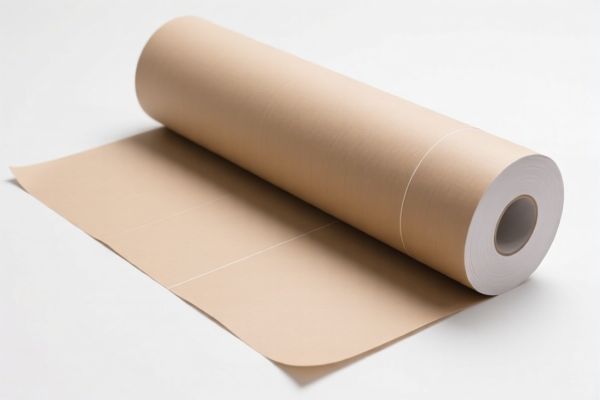
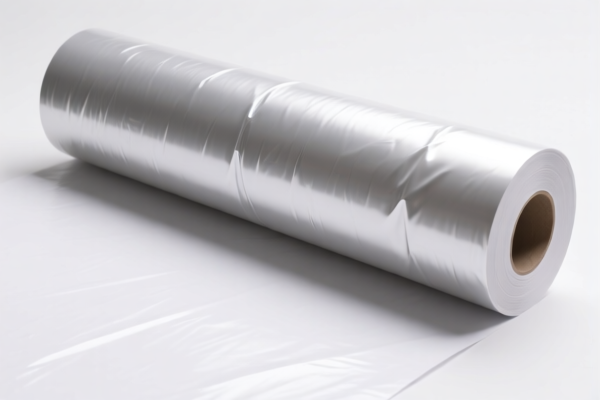
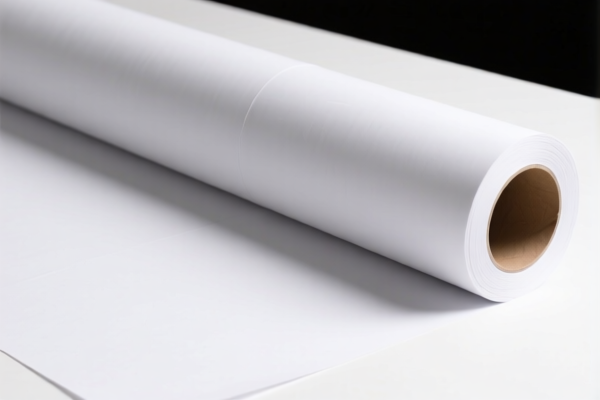
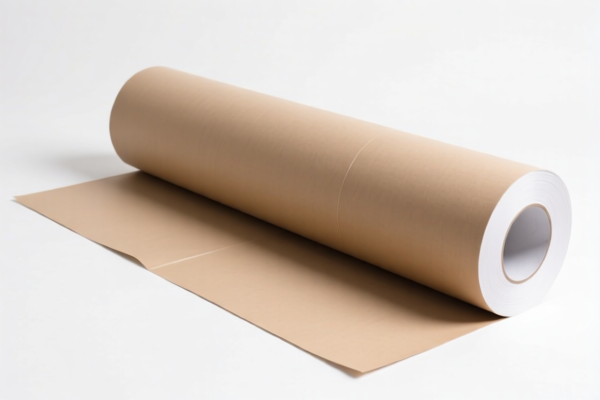
AI Analysis
🎞️ Wide Dynamic Range Film Roll (感光胶片卷)
🌐 HS Code Reference & Customs Clearance Guide | 2024/2025 Harmonized System Analysis | Professional Clearance Strategy
📌 I. Product Definition: What is "Wide Dynamic Range Film"?
Wide Dynamic Range Film Roll refers to photographic film characterized by an exceptional ability to capture details in both the brightest highlights and the darkest shadows simultaneously. In international trade, this product is classified under Chapter 37: Photographic or Cinematographic Goods.
The classification hinges on three critical factors: 1. Physical Form: It is a Roll (coiled), not sheet format. 2. Material Composition: It typically contains Silver Halide emulsion (light-sensitive chemical layer). 3. Functionality: "Wide Dynamic Range" is a performance attribute of the emulsion, confirming its identity as a photosensitive material.
⚠️ Key Classification Distinction:
- If the film is paper-based (e.g., photographic printing paper in roll form) → Chapter 3702.
- If the film is plastic/polyester-based with silver halide emulsion (standard photography/film) → Chapter 3703 or 3701.
- Note: "Wide Dynamic Range" does not change the chemical nature; it remains a Silver Halide photosensitive material.
📦 II. HS Code Classification Matrix (Detailed Breakdown)
Based on the specific product data, there are four potential HS Codes depending on the precise substrate (base material) and technical specifications. The tax implications vary slightly.
| HS Code | Product Description & Logic | Base Material Inference | Duty Rate (Total) |
|---|---|---|---|
| 3703.10.30.90 | Wide Dynamic Range Film Roll Summary: Photographic film, roll format, wide dynamic range fits photosensitive material attributes. |
Photographic Film (General Silver Halide) | 38.7% |
| 3703.10.30.60 | Wide Dynamic Range Film Roll Summary: Continuous tone characteristic, inferred as Silver Halide photosensitive material. |
Photographic Film (Continuous Tone) | 38.7% |
| 3702.32.01.60 | Wide Dynamic Film Roll Summary: Film form, wide dynamic range is a functional trait, inferred as Silver Halide emulsion. |
Paper-based or Special Substrate (Often X-ray or Technical Film) | 38.7% |
| 3701.99.60.60 | Wide Dynamic Roll Summary: Roll belongs to photosensitive material; "Wide Dynamic" is functional. Inferred as non-paper, non-textile photosensitive layer. |
Non-Paper/Non-Textile Plastic Base (e.g., Polyester Base) | 35.0% |
🔍 Critical Insight:
- Codes3703.10.30.90and3703.10.30.60are nearly identical in duty (38.7%) and apply to standard photographic films (negative/positive) with silver halide emulsion on a plastic base. - Code3702.32.01.60also carries 38.7% but often applies to X-ray films or technical films on paper or specialized bases. - Code3701.99.60.60is the cheapest option at 35.0%. It applies to other photosensitive materials not classified as paper, textiles, or standard photographic film (e.g., certain industrial or specialized plastic-based plates/rolls).
💰 III. 2024/2025 Tariff Rate Breakdown (Including Surcharges)
✅ Applicable Country: United States (US)
✅ Origin: China (CN)
✅ Effective Date: Current trade policies (Section 301 & IEEPA)
🎯 1. Standard Photographic Film (HS: 3703.10.30.90 / 3703.10.30.60)
Most Common Classification for Consumer/Prosumer Wide-Dynamic Film
| Item | Details |
|---|---|
| Basic MFN Rate | 3.7% |
| Section 301 Surcharge | +25.0% (Trade War Tariff) |
| IEEPA / 122 Clause | +10.0% (Additional China-specific tariff) |
| Total Effective Rate | 38.7% |
| De Minimis Exemption | ❌ NOT APPLICABLE (deny_de_minimis) |
| Calculation Base | CIF Value (Cost, Insurance, Freight) × 38.7% |
| Legal Reference Path | USITC:3703.10.30.90 → USITC Footnote 9903.88.01 → IEEPA:9903.01.25 |
📌 Explanation:
- 3.7%: The standard WTO Most Favored Nation (MFN) duty for photographic film. - 25%: Imposed under Section 301 of the Trade Act of 1974 against Chinese imports. - 10%: Imposed under IEEPA (International Emergency Economic Powers Act) related to specific Chinese goods lists (often referred to as "122 Clause" or similar executive order provisions in recent updates). - Result: These tariffs are cumulative. You cannot avoid them by declaring it as "Camera Accessories."
🎯 2. Specialized Non-Standard Film (HS: 3701.99.60.60)
Potential Cost-Saving Option (if product qualifies)
| Item | Details |
|---|---|
| Basic MFN Rate | 0.0% |
| Section 301 Surcharge | +25.0% |
| IEEPA / 122 Clause | +10.0% |
| Total Effective Rate | 35.0% |
| De Minimis Exemption | ❌ NOT APPLICABLE |
| Savings vs. Standard | 3.7% Less than 3703 classification |
📌 Explanation:
- The 0% base rate is for "Other" photosensitive materials not elsewhere specified. - Risk: Customs officers may scrutinize this classification heavily. If the product is clearly standard photographic film, misclassifying it here can lead to penalties and back-dated duties. Only use if the film is truly industrial/non-photographic (e.g., certain medical imaging rolls not covered by 3702/3703).
🛠️ IV. Customs Clearance Practical Advice (Avoiding Pitfalls)
✅ 1. Required Documentation Checklist
| Document | Mandatory? | Purpose |
|---|---|---|
| Product Specification Sheet | ✅ YES | Must explicitly state: "Silver Halide Emulsion," "Roll Format," "Wide Dynamic Range." |
| Composition Analysis | ✅ YES | Confirms presence of Silver Halide (crucial for Chapter 37 vs. Chapter 39/48). |
| Product Photos | ✅ YES | Show roll winding, leader/tailer, and packaging. Must look like film, not plastic wrap. |
| Commercial Invoice | ✅ YES | Description must be precise: "Wide Dynamic Range Photographic Film Roll, Silver Halide, 35mm/120/etc." |
| Packing List | ✅ YES | Confirm net weight and number of rolls. |
| Certificate of Origin | ✅ YES | Required to prove Chinese origin (to assess correct surcharges). |
✅ 2. Classification Strategy & Risk Management
| Scenario | Recommended HS Code | Why? | Risk Level |
|---|---|---|---|
| Standard Photography Film (Black & White, Color Negative/Positive) | 3703.10.30.90 or 3703.10.30.60 | Fits definition of "Photographic film containing silver halides." | 🟢 Low (Standard) |
| X-Ray or Medical Imaging Roll | 3702.32.01.60 | Often classified under 3702 (Paper/Other supports) if on paper/special base. | 🟡 Medium (Requires proof of base material) |
| Industrial/Technical Plastic Roll (Non-photo) | 3701.99.60.60 | Only if it does not fit 3702 or 3703 definitions. | 🔴 High (High audit risk) |
🔥 Golden Rule:
"If it exposes to light for image capture, it's Chapter 37. If it's on paper, look at 3702. If it's on plastic, look at 3703. 'Wide Dynamic' is just a feature, not a new material!"
✅ 3. Common Mistakes to Avoid
❌ Mistake 1: Declaring as "Plastic Rolls" (Chapter 39)
👉 Consequence: Misclassification. Film has a chemical emulsion layer; it is not just plastic. Customs will reclassify and charge 38.7% plus penalties.
❌ Mistake 2: Ignoring the 122/IEEPA 10% Surcharge
👉 Consequence: Underpayment. The total duty is not just 3.7% + 25% = 28.7%. It is 38.7%. Failing to include the 10% will result in immediate seizure or debt collection.
❌ Mistake 3: Mislabeling as "Camera Accessories"
👉 Consequence: Accessories (like bags or cleaners) have different codes. Film is the primary good. Declaring it incorrectly leads to high scrutiny.
✅ Correct Declaration Example:
"Photographic Film, Roll Form, 35mm Width, Silver Halide Emulsion on Polyester Base, Wide Dynamic Range Capability, Model XYZ, Made in China."
🌍 V. Global Market Comparison (2024/2025)
| Region | Recommended HS Code | Basic Duty | Surcharges | Total Est. Duty | Notes |
|---|---|---|---|---|---|
| 🇺🇸 USA | 3703.10.30.90 |
3.7% | 35% (301+IEEPA) | 38.7% | Highest barrier. |
| 🇪🇺 EU | 3703.10 |
6.5% | 0% | 6.5% | No Section 301. Stable. |
| 🇨🇳 China | 3703.10 |
6.5% | 0% | 6.5% | Import duty for entering China. |
| 🇬🇧 UK | 3703.10 |
6.5% | 0% | 6.5% | Post-Brexit alignment with EU rates. |
📌 Conclusion:
The US market is the most expensive due to the 35% combined surcharge. For non-US markets, the duty burden is significantly lower (~6.5%).
📌 VI. Final Checklist for Importers
- Confirm Base Material: Is it Polyester (Plastic) or Paper? This determines 3703 vs. 3702.
- Calculate Total Landed Cost: Include 38.7% for US imports from China.
- Pre-Arbitration Ruling: If the product is innovative, consider applying for a Binding Tariff Information (BTI) or US Customs Advance Ruling to lock in the HS Code.
- Supplier Compliance: Ensure the Chinese supplier provides accurate Material Safety Data Sheets (MSDS) if the chemical emulsion is considered hazardous.
🎯 VII. Conclusion: Smart Classification Saves Money!
🎯 Key Takeaway:
"Wide Dynamic Range" is a feature, not a material. Stick to Silver Halide definitions. For US imports, budget for ~39% duty. For other markets, expect ~6.5%.
📢 Immediate Action:
📞 Consult a licensed customs broker to verify the base material (Plastic vs. Paper).
📦 Prepare precise product descriptions to avoid misclassification penalties.
💰 Factor the 38.7% total duty into your pricing model for US shipments.
✨ Professional clearance starts with precise classification!
💼 Don't let complex tariffs eat your margins!
Customer Reviews
About HS Code Classification
The Harmonized System (HS) is an internationally standardized nomenclature developed by the World Customs Organization (WCO) to classify traded products. Over 200 countries use the HS system as the basis for customs tariffs, trade statistics, and import/export regulations.
Each HS code follows a hierarchical structure:
- Chapter (2 digits) — Broad category of goods (e.g., Chapter 84: Machinery and Mechanical Appliances)
- Heading (4 digits) — More specific grouping within the chapter
- Subheading (6 digits) — Internationally standardized breakdown, used by all WCO member countries
- National subdivisions (8-10 digits) — Country-specific extensions for further classification, such as US HTSUS 10-digit codes
Correct HS code classification is essential for smooth customs clearance, accurate duty payment, and compliance with trade regulations. Misclassification can lead to customs delays, overpayment of duties, or penalties.
When importing from CN to US, the applicable tariff rates may include:
- Most-Favored-Nation (MFN) rate — The standard duty rate applied to WTO members
- General rate — Applied to countries without trade agreements
- Trade remedy duties — Additional tariffs such as Section 301 (anti-dumping), Section 232 (national security), or countervailing duties
The information provided on this page is for reference purposes only. For official classification, please consult with your local customs authority or a licensed customs broker.