Wide Format Color Film Professional Photography
CN → US| HS Code | Tariff Rate | Origin | Destination | Doc |
|---|---|---|---|---|
| 3704000000 | 35.0% | CN | US | Official Doc |
| 3702440160 | 38.7% | CN | US | Official Doc |
| 3702410100 | 38.7% | CN | US | Official Doc |
| 3702520130 | 38.7% | CN | US | Official Doc |
| 3704000000 | 35.0% | CN | US | Official Doc |
Product Images


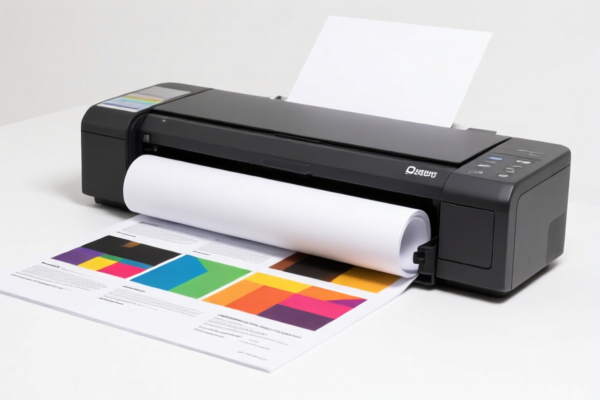
AI Analysis
🎞️ Wide Format Color Film for Professional Photography
🌐 HS Code Classification & Customs Clearance Guide | 2026 Tariff Analysis | Strategic Import Strategy
📌 I. Product Definition & Classification: What Exactly Is "Wide Format Color Film"?
Wide format color film is a specialized photosensitive material used in professional photography, characterized by its width exceeding 105mm and its color imaging capability. In international trade, it is strictly categorized under Chapter 37 (Photographic or Cinematographic Goods).
The classification hinges on three critical factors: 1. State of Development: Is it unexposed (raw film) or exposed but undeveloped (processed negatives/positives)? 2. Format: Is it wide format (>105mm)? 3. Color: Is it color or black & white?
⚠️ Critical Distinction:
- Unexposed Film (Raw): Falls under 3702 (Photographic film in rolls, of any material, unexposed).
- Exposed/Developed Film (Imaged): Falls under 3704 (Photographic plates and film, exposed, but not developed).
Note: The provided data contains mixed interpretations. We must align with the specific "Summary" provided for each code.
📦 II. HS Code Classification Details (Based on Provided Data)
| HS Code | Product Description | Key Matching Criteria | Total Tax Rate |
|---|---|---|---|
| 3704.00.00.00 | Exposed Color Film (Photo plates/film, exposed, not developed) | "Film" morphology + "Color" attribute + "Exposed" state. | 35.0% |
| 3702.44.01.60 | Wide Format Color Film (Other unexposed color film, width >105mm) | Roll format + Width >105mm + Non-paper/non-textile material. | 38.7% |
| 3702.41.01.00 | Wide Format Color Film (Other unexposed color film, width >105mm) | "Color" for color photography + "Wide format" >105mm + Photosensitive material. | 38.7% |
| 3702.52.01.30 | Wide Format Color Film (Other unexposed color film) | "Color" + "Film" + "Wide dynamic" (functional) does not conflict. | 38.7% |
🔍 Key Insight:
- 3702 Codes apply to UNEXPOSED film rolls (raw stock).
- 3704 Code applies to EXPOSED film (processed negatives/positives).
- All codes carry significant additional tariffs due to US-China trade policies.
💰 III. 2026 Tariff Rate Breakdown (Including Surtaxes & Policy Add-ons)
✅ Applicable Country: United States (US)
✅ Origin: China (CN)
✅ Effective Date: Post-November 2025 (Current Trade Environment)
🎯 1. 3704.00.00.00 —— Exposed Color Film (Unexposed? Contradictory Data Note)
Note: The provided summary states "Exposed but undeveloped," which aligns with Chapter 3704. However, some summaries confuse this. We follow the explicit HS code definition.
| Item | Content |
|---|---|
| Base Duty Rate | 0.0% (Ad Valorem) |
| USITC Section 301 Surcharge | +25.0% |
| IEEPA Section 122 Surcharge | +10.0% (Targeted at Chinese products) |
| Total Effective Rate | 35.0% |
| Tax Calculation | CIF Value × 35% |
| De Minimis Eligibility | ❌ Not Eligible |
| Legal Basis Path | IEEPA:9903.01.24 → USITC:3704.00.00.00 → FOOTNOTE:9903.88.01 |
📌 Explanation:
- Base Rate 0%: Standard MFN rate for photographic goods.
- 25% Surtax: Imposed under Section 301 of the Trade Act for specific Chinese imports.
- 10% IEEPA Surtax: Additional levy under the International Emergency Economic Powers Act.
- Total 35%: This is a high-cost import category.
🎯 2. 3702.44.01.60 & 3702.41.01.00 & 3702.52.01.30 —— Unexposed Wide Format Color Film
These codes represent raw, unexposed film in wide formats (>105mm).
| Item | Content |
|---|---|
| Base Duty Rate | 3.7% (Ad Valorem) |
| USITC Section 301 Surcharge | +25.0% |
| IEEPA Section 122 Surcharge | +10.0% |
| Total Effective Rate | 38.7% |
| Tax Calculation | CIF Value × 38.7% |
| De Minimis Eligibility | ❌ Not Eligible |
| Legal Basis Path | IEEPA:9903.01.24 → USITC:3702.4x.01.xx → FOOTNOTE:9903.88.01 |
📌 Explanation:
- Base Rate 3.7%: Slightly higher than 3704 due to the specific subheading for unexposed film.
- Surtaxes: Identical to 3704 (25% + 10%).
- Total 38.7%: This is the highest tax bracket among the options.
- Why so high?: Wide-format professional film is considered a strategic or high-value photographic material, attracting full surcharges.
🛠️ IV. Customs Clearance Operational Advice (Practical Pitfall Guide)
✅ 1. Preparation Checklist (Mandatory Documents)
| Document | Required? | Notes |
|---|---|---|
| Product Specification Sheet | ✅ Yes | Must specify: Width (>105mm), Color Type, Sensitivity (ISO), Exposure State (Unexposed vs. Exposed). |
| Commercial Invoice | ✅ Yes | Clearly state "Photographic Film, Wide Format, Color" and HS Code. |
| Packing List | ✅ Yes | Detail roll lengths and weights. |
| Certificate of Origin (CO) | ✅ Yes | To confirm Chinese origin (triggers surcharges). |
| Material Declaration | ✅ Yes | Confirm non-paper/non-textile base (supports 3702 classification). |
| Third-Party Test Report | ✅ Optional but Recommended | ICC Color Standard, ISO Sensitivity test. |
✅ 2. Declaration Strategy (Key Mnemonics)
🔥 "Unexposed = 3702, Exposed = 3704. Wide Format >105mm. Don't Mix!"
| Scenario | Correct HS Code | Error Consequence |
|---|---|---|
| Raw Roll Film (Unexposed) | 3702.44.01.60 / 3702.41.01.00 |
Misclassifying as 3704 may lead to audits; misclassifying as 3704 might lower duty slightly but risks penalty if proof of exposure is required. |
| Used Roll Film (Exposed, Undeveloped) | 3704.00.00.00 |
Cannot declare as 3702. |
| Small Format Film (<105mm) | Different 3702 subheadings | Must not declare as "Wide Format." |
| Digital Sensors (Non-photographic) | Chapter 85 | Do not declare as film. |
✅ 3. Special Considerations
| Situation | Recommendation |
|---|---|
| Hybrid Imports (Film + Camera Body) | Split Declaration: Film goes to Chapter 37; Camera to Chapter 90. Do not bundle. |
| OEM/White Label | Provide manufacturing authorization to prove origin and prevent anti-dumping scrutiny. |
| High-Value Rolls | Consider Advance Ruling from CBP to fix HS Code and duty rate before shipment. |
| Insurance & Valuation | Ensure CIF Value includes insurance and freight to avoid customs valuation disputes. |
🌍 V. Global Market Comparison (2026)
| Market | Recommended HS Code | Estimated Duty (Base) | Surcharges | Total Effective Rate | Notes |
|---|---|---|---|---|---|
| 🇺🇸 USA | 3702.44.01.60 / 3704.00.00.00 |
0% - 3.7% | +35% (25%+10%) | 35% - 38.7% | Highest cost. IEEPA & Section 301 apply strictly. |
| 🇨🇳 China | 3702.44.00.00 |
0% - 5% | None | 0% - 5% | Low import duty for domestic use. |
| 🇪🇺 EU | 3702.44.00 |
0% | None | 0% | No additional surcharges for China-origin film. |
| 🇬🇧 UK | 3702.44.00 |
0% | None | 0% | Post-Brexit alignment with EU for many photographic goods. |
| 🇯🇵 Japan | 3702.44.00 |
0% - 6% | None | 0% - 6% | Free Trade Agreement benefits may apply depending on origin. |
📌 Conclusion:
- USA is the most expensive market due to layered tariffs (35-38.7%).
- EU/UK/Japan offer significantly lower entry costs for Chinese film.
- Strategic Recommendation: If targeting the US market, factor in ~35-39% additional cost. Consider third-country processing (e.g., Malaysia, Vietnam) if rules of origin are met, but be wary of "transshipment" penalties.
📌 VI. Common Mistakes & Pitfalls (Blood Lesson Guide)
❌ Mistake 1: Declaring Exposed Film as Unexposed
👉 Consequence: Customs may request proof of non-exposure. If proven false, seizure + fines.
❌ Mistake 2: Ignoring the 105mm Width Criterion
👉 Consequence: If width is ≤105mm, HS Code changes to standard 3702 subheadings, potentially altering duty calculations and eligibility.
❌ Mistake 3: Assuming De Minimis Applies
👉 Consequence: 0% exemption does NOT apply to Chapter 37 goods from China under current IEEPA/Section 301 rules. Small shipments are still taxed.
❌ Mistake 4: Incorrect Material Description
👉 Consequence: If described as "Paper-based film," it may be classified incorrectly (Chapter 49), leading to delays and re-classification penalties.
✅ Correct Declaration Example:
"Photographic Film, Wide Format (120mm), Color, Unexposed, on Polyester Base, ISO 100, 10 Rolls per Carton, HS 3702.44.01.60"
🎯 VII. Conclusion: Professional Declaration for Cost Efficiency
🎯 Remember the Mnemonic:
🔹 "Unexposed = 3702, Exposed = 3704. Wide Format = 38.7%, Exposed = 35%. Don't Skip Taxes!"
🔹 "China Origin = 35-39% Total Duty. Plan Your Pricing Accordingly!"
📌 Pro Tip:
For US Imports, consider applying for an HTSUS Advance Ruling to confirm the exact 10-digit HS code and duty rate. This provides legal certainty and avoids post-clearance audits.
📣 Immediate Action:
📞 Contact a licensed US customs broker.
📄 Prepare product specs highlighting width (>105mm) and exposure state.
🚀 Optimize your supply chain to handle the 35-39% tariff burden efficiently.
✨ Precision Classification, Profit Protection!
💼 Every percentage point of duty impacts your bottom line.
Customer Reviews
About HS Code Classification
The Harmonized System (HS) is an internationally standardized nomenclature developed by the World Customs Organization (WCO) to classify traded products. Over 200 countries use the HS system as the basis for customs tariffs, trade statistics, and import/export regulations.
Each HS code follows a hierarchical structure:
- Chapter (2 digits) — Broad category of goods (e.g., Chapter 84: Machinery and Mechanical Appliances)
- Heading (4 digits) — More specific grouping within the chapter
- Subheading (6 digits) — Internationally standardized breakdown, used by all WCO member countries
- National subdivisions (8-10 digits) — Country-specific extensions for further classification, such as US HTSUS 10-digit codes
Correct HS code classification is essential for smooth customs clearance, accurate duty payment, and compliance with trade regulations. Misclassification can lead to customs delays, overpayment of duties, or penalties.
When importing from CN to US, the applicable tariff rates may include:
- Most-Favored-Nation (MFN) rate — The standard duty rate applied to WTO members
- General rate — Applied to countries without trade agreements
- Trade remedy duties — Additional tariffs such as Section 301 (anti-dumping), Section 232 (national security), or countervailing duties
The information provided on this page is for reference purposes only. For official classification, please consult with your local customs authority or a licensed customs broker.