Wide Format Movie Film Printing
CN → US| HS Code | Tariff Rate | Origin | Destination | Doc |
|---|---|---|---|---|
| 3705000000 | 35.0% | CN | US | Official Doc |
| 3702440130 | 38.7% | CN | US | Official Doc |
| 3701996030 | 35.0% | CN | US | Official Doc |
| 3701996060 | 35.0% | CN | US | Official Doc |
| 3702440160 | 38.7% | CN | US | Official Doc |
Product Images
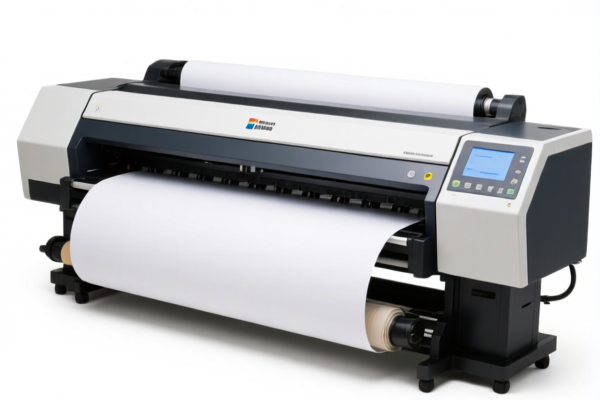
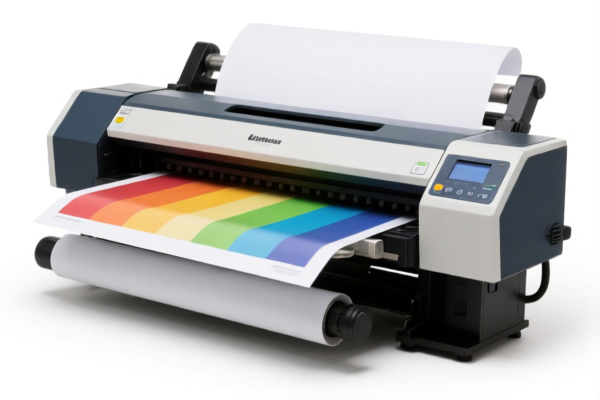
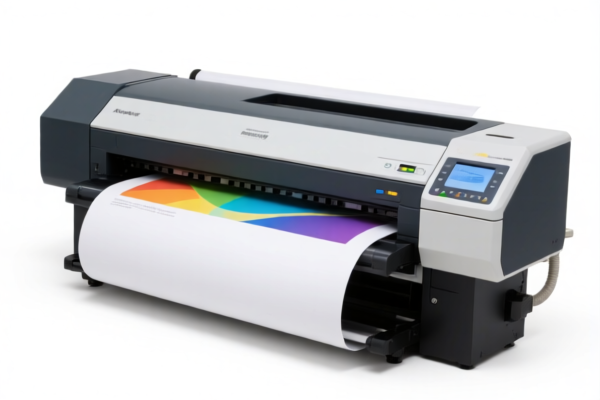
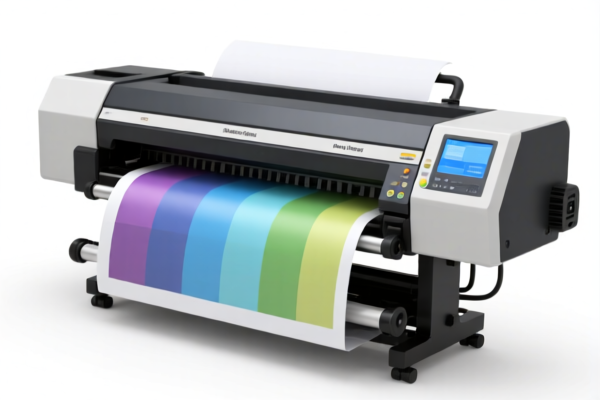
AI Analysis
🎬 Wide Format Movie Film Printing: HS Code Classification & Clearance Guide (2026)
🌐 HS Code Reference & Clearance Strategy | 2026 Latest Tariff Analysis | Professional Customs Solution
📌 Part I: Product Definition & Classification – What Exactly is "Wide Format Movie Film"?
"Wide Format Movie Film" in the context of printing and photography refers to specialized photographic media used for commercial motion pictures, large-scale advertising, or industrial imaging. It is crucial to distinguish between exposed/developed film (finished product) and unexposed/sensitive film (raw material).
In international trade, these are classified into two main categories:
- Exposed & Developed Film (
3705.00.00.00): Film that has already been photographed and chemically processed. It is a "finished image" ready for projection or duplication. - Unexposed & Sensitive Film (
3702&3701series): Raw photographic plates/films that are light-sensitive but have not yet been exposed. These are further divided by:- Positive Films: Used for duplicating negatives to create positives.
- Graphic Arts Films: Used in printing plates or technical drawing.
- Width & Material: Distinguished by width (e.g., >105mm) and base material (non-paper/non-textile).
⚠️ Key Distinction Point:
- If the film is already exposed and developed, it falls under 3705.
- If the film is unexposed, you must determine if it is a positive film (3702) or graphic arts film (3701), and check the width/base material for sub-category accuracy.
📦 Part II: HS Code Classification Details (2026 Official Tariff Correspondence)
Based on the provided data, here is the exact mapping for "Wide Format Movie Film Printing" products.
| HS Code | Product Description Summary | Key Characteristics | Total Tax Rate |
|---|---|---|---|
3705.00.00.00 |
Wide Format Positive Film, Exposed & Developed | Already printed/developed imagery; finished state. | 35.0% |
3702.44.01.30 |
Wide Format Positive Film, Unexposed, Width 105mm-610mm | Non-paper/non-textile base; specific width range. | 38.7% |
3701.99.60.30 |
Wide Format Positive Film, Unexposed, Graphic Arts Form | Used for graphic arts/printing plates; non-paper base. | 35.0% |
3701.99.60.60 |
Wide Format Positive Film, Unexposed, Non-paper/Non-textile | General sensitive film for positive processing; specific base. | 35.0% |
3702.44.01.60 |
Wide Format Positive Film, Unexposed, Width >105mm | Non-paper/non-textile material; broader width category. | 38.7% |
🔍 Critical Clarification:
-3705: Use only if the film is already developed.
-3702: Use for positive films that are unexposed, typically used for duplication in movie production.
-3701: Use for graphic arts films (e.g., for printing plates) that are unexposed.
- Tax Variance: The total tax rate varies between 35.0% and 38.7% depending on the specific width and material composition of the unexposed film.
💰 Part III: 2026 Latest Tariff Rate Breakdown (Including Add-ons & Policy Surcharges)
✅ Applicable Country: United States (US)
✅ Country of Origin: China (CN)
✅ Effective Date: Rates include Section 301 and IEEPA surcharges as of 2026.
🎯 1. 3705.00.00.00 – Wide Format Positive Film, Exposed & Developed
| Item | Content |
|---|---|
| Base Tariff | 0.0% |
| Section 301 Add-on | +25.0% |
| 122 Clause Add-on | +10.0% |
| Total Tax Rate | 35.0% |
| Calculation Basis | CIF Value × 35% |
| De Minimis Exemption? | ❌ No (High-value industrial/creative goods typically excluded) |
| Legal Path | Base: 0% → Section 301: 25% → 122 Clause: 10% |
📌 Explanation:
- Since the base tariff is 0%, the total cost is driven entirely by the 25% Section 301 tariff and the 10% 122 Clause tariff.
- This applies to finished, developed film, which is treated as a higher-value processed good.
🎯 2. 3702.44.01.30 & 3702.44.01.60 – Wide Format Positive Film, Unexposed (Specific Widths)
| Item | Content |
|---|---|
| Base Tariff | 3.7% |
| Section 301 Add-on | +25.0% |
| 122 Clause Add-on | +10.0% |
| Total Tax Rate | 38.7% |
| Calculation Basis | CIF Value × 38.7% |
| De Minimis Exemption? | ❌ No |
| Legal Path | Base: 3.7% → Section 301: 25% → 122 Clause: 10% |
📌 Note:
- These codes apply to unexposed positive films with specific width criteria (105mm-610mm or >105mm).
- The 3.7% base tariff makes these slightly more expensive than the 3701/3705 categories in total percentage.
- Material Constraint: Must be non-paper, non-textile base (typically cellulose acetate or polyester).
🎯 3. 3701.99.60.30 & 3701.99.60.60 – Wide Format Positive Film, Unexposed (Graphic Arts/Other)
| Item | Content |
|---|---|
| Base Tariff | 0.0% |
| Section 301 Add-on | +25.0% |
| 122 Clause Add-on | +10.0% |
| Total Tax Rate | 35.0% |
| Calculation Basis | CIF Value × 35% |
| De Minimis Exemption? | ❌ No |
| Legal Path | Base: 0% → Section 301: 25% → 122 Clause: 10% |
📌 Note:
-3701.99.60.30: Specifically for Graphic Arts Films (e.g., for lithographic plates).
-3701.99.60.60: For other films not falling under the specific width rules of 3702, or non-paper/non-textile bases.
- Despite different base descriptions, the total effective tax rate is 35.0%, same as developed film.
🛠️ Part IV: Clearance Practical Advice (Real-World Pitfall Guide)
✅ 1. Required Documentation Checklist
| Document | Mandatory? | Notes |
|---|---|---|
| ✅ Product Specifications | ✔️ | Must state: Exposed vs. Unexposed, Width, Base Material. |
| ✅ Technical Data Sheet | ✔️ | Confirm "Positive Film" nature and sensitivity type. |
| ✅ Commercial Invoice | ✔️ | Clearly describe: "Wide Format Positive Film, [Exposed/Unexposed], Width [X]mm". |
| ✅ Packaging List | ✔️ | Detail rolls/cases, prevent misdeclaration of parts. |
| ✅ Certificate of Origin | ✔️ | Essential for verifying Chinese origin for surcharge calculation. |
| ✅ Safety Data Sheet (SDS) | ✔️ | Required if chemicals are involved in processing/shipping. |
✅ 2. Declaration Tips (Key Mnemonics)
🔥 "Exposed 35, Unexposed 38.7, Base 0 or 3.7, Don't Guess!"
| Scenario | Correct Declaration | Mistake to Avoid |
|---|---|---|
| Developed Movie Reels | 3705.00.00.00 (35%) |
Misdeclare as unexposed → Risk of penalty if detected. |
| Unexposed, Width 105-610mm | 3702.44.01.30 (38.7%) |
Misdeclare as 3701 → Wrong base rate (0% vs 3.7%). |
| Unexposed, Graphic Arts | 3701.99.60.30 (35%) |
Misdeclare as general film → Incorrect sub-heading. |
| Unexposed, Width >105mm | 3702.44.01.60 (38.7%) |
Overlook width specification → Incorrect classification. |
✅ 3. Special Cases
| Case | Handling Advice |
|---|---|
| Sample Kits (Unexposed) | Still subject to full duty; do not claim "sample" exemption if value exceeds de minimis. |
| Mixed Shipments (Exposed + Unexposed) | Split Declaration! Declare 3705 and 3702/3701 separately to avoid confusion and incorrect total tax application. |
| Non-Standard Widths | If width is <105mm, it may fall under different HS codes (not in this dataset); verify with customs broker. |
| Paper/Textile Base | If the film is on paper/textile, it does not fit 3702.44.01.30/60 or 3701.99.60.60 as described. Re-classify accordingly. |
🌍 Part V: Global Market Comparison (2026 Update)
| Region | Recommended HS Code (Example) | Est. Total Duty (China Origin) | Certification |
|---|---|---|---|
| 🇺🇸 USA | 3705.00.00.00 / 3702.44.01.30 |
35.0% - 38.7% | FCC/ROHS (if packaging contains electronics) |
| 🇨🇳 China | 3705.00.00 |
Low/Exempt (Import) | N/A |
| 🇪🇺 EU | 3705 / 3702 |
~0-5% + VAT | REACH Compliance |
| 🇬🇧 UK | 3705 / 3702 |
~0-5% + VAT | UKCA Marking |
📌 Conclusion:
- USA tariffs are significantly higher due to Section 301 and 122 Clause add-ons.
- Cost Planning: Budget for 35-38.7% total landed cost impact.
- Alternative Sourcing: Consider sourcing from countries with IEEPA exemptions (e.g., Vietnam, Mexico) if eligible, though photographic film sourcing is often concentrated in Asia.
📌 Part VI: Common Errors & Pitfalls (Lessons Learned)
❌ Mistake 1: Declaring Unexposed film as Exposed (3705) to save 3.7% base tax.
👉 Consequence: If customs inspects and finds unexposed film, it's classified as 3702 (38.7%), resulting in back taxes + penalties.
👉 Reality: The base tax difference is small, but the risk of audit is high.
❌ Mistake 2: Ignoring the Width Specification.
👉 Consequence: 3702.44.01.30 (105-610mm) vs 3702.44.01.60 (>105mm). Misdeclaration can lead to incorrect duty assessment and delays.
❌ Mistake 3: Not specifying "Positive Film".
👉 Consequence: General "Photographic Film" might fall under different subheadings with different tax rates. Always specify Positive vs Negative.
❌ Mistake 4: Assuming De Minimis applies.
👉 Consequence: These are industrial/creative materials, rarely exempt from small-shipment thresholds. Expect full duty on all shipments.
✅ Correct Declaration Example:
"Wide Format Positive Photographic Film, Unexposed, Polyester Base, Width 350mm, for Movie Duplicating. HS Code: 3702.44.01.30"
🎯 Part VII: Conclusion – Precision in Classification Saves Money!
🎯 Remember the Rule:
🔹 "Exposed = 35%, Unexposed Positive (3702) = 38.7%, Unexposed Graphic (3701) = 35%."
🔹 "Base 0% + 35% Surcharges = 35%. Base 3.7% + 35% Surcharges = 38.7%."
📌 Pro Tip:
- If you are importing large volumes, consider applying for an Advance Ruling from US Customs to confirm the HS Code and duty rate before shipment.
- Always verify the base material (non-paper/non-textile) to ensure correct sub-classification under 3702 or 3701.
📣 Call to Action:
📞 Consult a Customs Broker before shipping.
📦 Label Clearly: "Unexposed Positive Film, Width X, Base Y".
🚀 Optimize Your Supply Chain: Factor in the 35-38.7% total tariff into your cost structure.
✨ Professional Clearance, Starting with Accurate Classification!
💼 Every Percentage Point Counts in International Trade!
Customer Reviews
About HS Code Classification
The Harmonized System (HS) is an internationally standardized nomenclature developed by the World Customs Organization (WCO) to classify traded products. Over 200 countries use the HS system as the basis for customs tariffs, trade statistics, and import/export regulations.
Each HS code follows a hierarchical structure:
- Chapter (2 digits) — Broad category of goods (e.g., Chapter 84: Machinery and Mechanical Appliances)
- Heading (4 digits) — More specific grouping within the chapter
- Subheading (6 digits) — Internationally standardized breakdown, used by all WCO member countries
- National subdivisions (8-10 digits) — Country-specific extensions for further classification, such as US HTSUS 10-digit codes
Correct HS code classification is essential for smooth customs clearance, accurate duty payment, and compliance with trade regulations. Misclassification can lead to customs delays, overpayment of duties, or penalties.
When importing from CN to US, the applicable tariff rates may include:
- Most-Favored-Nation (MFN) rate — The standard duty rate applied to WTO members
- General rate — Applied to countries without trade agreements
- Trade remedy duties — Additional tariffs such as Section 301 (anti-dumping), Section 232 (national security), or countervailing duties
The information provided on this page is for reference purposes only. For official classification, please consult with your local customs authority or a licensed customs broker.