Wide Perforated Cardstock
CN → US| HS Code | Tariff Rate | Origin | Destination | Doc |
|---|---|---|---|---|
| 4811904090 | 35.0% | CN | US | Official Doc |
| 4814900200 | 17.5% | CN | US | Official Doc |
| 4823903100 | 35.0% | CN | US | Official Doc |
| 4823906700 | 35.0% | CN | US | Official Doc |
| 4811904090 | 35.0% | CN | US | Official Doc |
Product Images
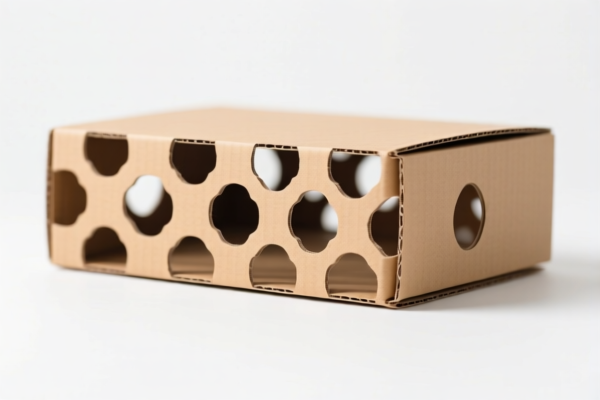

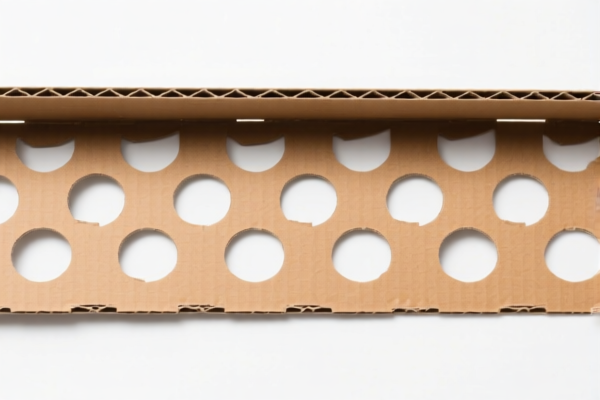
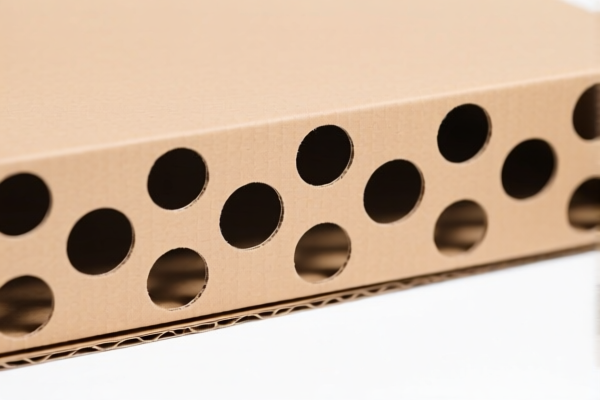
AI Analysis
🎴 Wide Perforated Cardstock (Wide Perforated Paper Rolls)
🌐 HS Code Reference & Customs Clearance Guide | 2026 Latest Tariff Analysis | Professional Compliance Strategy
📌 I. Product Definition & Classification: What Exactly is "Wide Perforated Cardstock"?
Wide Perforated Cardstock refers to cellulose-based paper or cardboard products that are: 1. Perforated: Designed with punched holes, typically for use in punch-card machines, data processing (historical), or specific mechanical tracking systems. 2. Wide Format: Usually supplied in large rolls rather than sheets. 3. Material: Composed of cotton paper, wood pulp, or other fibrous cellulosic materials.
In international trade, this product is not classified as a simple office supply but as a specialized cellulose product. The presence of perforations and the "cardstock" thickness often push it into specific sub-headings under Chapter 48 (Paper and Paperboard).
⚠️ Key Distinction:
- If it is unperforated standard paper → Likely4811or4802.
- If it is perforated for specific mechanical use (e.g., punch cards) → Likely4823.90.31.00.
- If it is coated or treated cellulose fiber product → Likely4823.90.67.00or4811.90.40.90.
- If it is a generic covering material → Likely4814.90.02.00.
📦 II. HS Code Classification Details (2026 Latest Tariff Authority Comparison)
Based on the provided data, here are the 5 specific HS Codes associated with "Wide Perforated Cardstock" variants, along with their tax implications.
| HS Code | Product Description | Application Scenario | Material/Feature | Total Tax Rate |
|---|---|---|---|---|
4811.90.40.90 |
Cotton paper rolls, roll form, cellulose-based | Generic cotton paper rolls, wide format | ✅ Cotton/Cellulose | 35.0% |
4814.90.02.00 |
Paper coverings, roll form, other category | Decorative coverings, architectural paper | ✅ Other Category | 17.5% |
4823.90.31.00 |
Unperforated cotton paper rolls, for punch cards | Specialized data/processing use | ✅ For Punch Cards* | 35.0% |
4823.90.67.00 |
Cellulose fiber products, rolled, coated/coated paper | Coated paper/cardboard rolls | ✅ Coated Cellulose | 35.0% |
4811.90.40.90 |
Other paper products, cotton paper rolls | Alternative generic classification | ✅ Cotton Paper | 35.0% |
🔍 Critical Note on
4823.90.31.00:
The summary states "Unperforated... for punch cards". This seems contradictory to "Perforated Cardstock."
Clarification: If your product is already perforated at the time of import, it MAY NOT fit4823.90.31.00perfectly if that code strictly requires "unperforated blanks." However, if it is "cardstock intended for punching," customs may accept it. If it is pre-perforated, you must check if it fits4823.90.67.00(as a processed cellulose product) or4811.90.40.90(processed paper). Misclassification here leads to heavy penalties.
💰 III. 2026 Latest Tariff Rate Breakdown (Including Surcharges & Policy Add-ons)
✅ Applicable Country: United States (US)
✅ Origin: China (CN)
✅ Effective Date: November 10, 2025 onwards
All items listed in the data source share a consistent tax structure based on US trade policy against Chinese goods.
🎯 1. General Rate: 4811.90.40.90 & 4823.90.31.00 & 4823.90.67.00
(Applies to most cotton/rolled paper products)
| Item | Content |
|---|---|
| Base Tariff | 0.0% (ad valorem) |
| USITC Additional Tariff (Section 301) | +25.0% |
| IEEPA Additional Tariff (Section 122) | +10.0% |
| Total Tax Rate | 35.0% |
| Tax Calculation | CIF Value × 35% |
| De Minimis Exemption | ❌ Not Applicable (deny_de_minimis) |
| Legal Authority Path | Section 301: 25% → Section 122: 10% → HS Code |
📌 Explanation:
- 25% Surcharge: Standard USITC Section 301 tariff on Chinese paper/cardboard products.
- 10% Surcharge: Identified as "122 Clause Tariff" in the data (likely referring to specific IEEPA or emergency powers add-on).
- Total: A flat 35% levy on the CIF value.
🎯 2. Special Rate: 4814.90.02.00
(Applies to "Other Category" Paper Coverings)
| Item | Content |
|---|---|
| Base Tariff | 0.0% |
| USITC Additional Tariff | +7.5% |
| IEEPA Additional Tariff (Section 122) | +10.0% |
| Total Tax Rate | 17.5% |
| Tax Calculation | CIF Value × 17.5% |
| De Minimis Exemption | ❌ Not Applicable |
| Legal Authority Path | Section 301: 7.5% → Section 122: 10% |
📌 Strategic Insight:
If your "Wide Perforated Cardstock" can be argued as a "Paper Covering" (e.g., wallpaper, architectural liner) rather than a "Printing Paper" or "Cardstock," you save 17.5% in tariffs (17.5% vs 35%).
However, this depends on the end-use and physical properties. If it's strictly for data processing or printing, it likely falls under the 35% bucket.
🛠️ IV. Customs Clearance Practical Advice (Battle-Tested Pitfall Guide)
✅ 1. Essential Documentation Checklist
| Document | Mandatory? | Description |
|---|---|---|
| ✅ Product Specification Sheet | ✔️ | Must detail: Width, Length, GSM/Thickness, Perforation Type (hole size/pitch), Material Composition (Cotton vs. Wood Pulp). |
| ✅ Commercial Invoice | ✔️ | Clearly state: "Wide Perforated Cardstock Rolls, HS Code XXXX." Do not use vague terms like "Paper." |
| ✅ Packing List | ✔️ | Specify roll dimensions and weight. Ensure no loose sheets are included if declaring as rolls. |
| ✅ Certificate of Origin | ✔️ | Essential for determining duty eligibility (China origin = high tariffs). |
| ✅ Pre-Import Sample/Photos | ⚠️ Highly Recommended | Show the perforation pattern clearly. Helps avoid classification disputes at the border. |
✅ 2. Classification Strategy (The Golden Rules)
🔥 "Check Perforation, Check Material, Check End-Use!"
| Scenario | Recommended HS Code | Risk Level |
|---|---|---|
| Pre-perforated rolls for punch cards/machines | 4823.90.31.00 or 4823.90.67.00 |
⚠️ Medium: Ensure it's not "unperforated" if code implies it. |
| Plain cotton paper rolls (no perforation) | 4811.90.40.90 |
✅ Low: Standard classification. |
| Coated/Treated cellulose rolls | 4823.90.67.00 |
⚠️ Medium: Must prove "coating" exists. |
| Architectural/Decorative paper coverings | 4814.90.02.00 |
✅ Low (if applicable): Lowest Tax (17.5%). |
📌 Warning:
- Do not claim4814.90.02.00(17.5%) if the product is clearly industrial cardstock for data processing. Customs will reclassify it and charge back-taxes + penalties.
- If the product is perforated, ensure the description matches the HS Code text. If4823.90.31.00says "Unperforated," but your item is perforated, avoid this code. Use4811.90.40.90or4823.90.67.00instead.
✅ 3. Special Cases
| Situation | Handling Advice |
|---|---|
| OEM Custom Perforation | Provide the perforation template/diagram. Customs needs to see it's a specialized product, not generic paper. |
| Mixed Shipments | If shipping both perforated and non-perforated rolls, separate them in the invoice. Mis-mixed shipments cause delays. |
| Origin Fraud | Do not mislabel Chinese origin as Vietnam/Thailand. US Customs has strict rules for Section 301/122 goods. |
🌍 V. Global Market Comparison (2026 Update)
| Country/Region | Recommended HS Code | Tariff (China Origin) | Key Certification | Notes |
|---|---|---|---|---|
| 🇺🇸 USA | 4811.90.40.90 / 4823.90.31.00 |
35% (Most) / 17.5% (Coverings) | None specific, but strict HS accuracy | High tariff due to Section 301 + 122 |
| 🇨🇳 China | 4811.90.40.90 |
~5-10% | GB Standard | No Section 301 |
| 🇪🇺 EU | 4823.90.90 |
~6.5% | CE (if coated with chemicals) | Lower base tariff, but VAT applies |
| 🇬🇧 UK | 4823.90.90 |
~6.5% | UKCA | Post-Brexit rules apply |
📌 Conclusion:
The USA is the most expensive market for this product due to the 35% total tariff.
For cost optimization, ensure the product is correctly classified. If it can be legally defined as "Paper Covering" (4814.90.02.00), you save 17.5%. Otherwise, budget for the full 35%.
📌 VI. Common Errors & Pitfalls (Blood & Tears Lessons)
❌ Error 1: Declaring "Perforated Cardstock" under 4823.90.31.00 (which specifies unperforated).
👉 Consequence: Customs flags the discrepancy, holds shipment, charges back-duties + penalties.
Fix: Use 4811.90.40.90 or 4823.90.67.00 for pre-perforated items.
❌ Error 2: Using "Paper" as a generic description on the Invoice.
👉 Consequence: Increased scrutiny, potential audit, delayed clearance.
Fix: Use precise terms: "Wide Perforated Cotton Paper Rolls for Industrial Use."
❌ Error 3: Ignoring the "122 Clause" surcharge.
👉 Consequence: Underpaying duties by 10%.
Fix: Always calculate Base + 301 + 122. Total = 35% or 17.5%.
🎯 VII. Conclusion: Professional Declaration, Cost Efficiency
🎯 Remember the Rule:
🔹 "Perforated? Check the Code! Unperforated? 35%!"
🔹 "Covering? 17.5%! Industrial? 35%! Don't Guess!"
🔹 "35% is the Price of Accuracy. 17.5% is the Reward for Correct Classification."
📌 Pro Tip:
If your wide perforated cardstock is used for decorative purposes (e.g., textured wall covering with perforations), argue for 4814.90.02.00.
If it is for data/machine use, stick to 4823 or 4811 series.
📣 Immediate Action:
📞 Contact your Customs Broker with a photo of the perforation pattern.
📄 Request an Advance Ruling if the shipment value is high.
🚀 Accurate HS Code = Predictable Cost. Guessing = Profit Killer!
✨ Professional Clearance Starts with Precise Classification!
💼 Every percentage point matters in US-China trade.
Customer Reviews
About HS Code Classification
The Harmonized System (HS) is an internationally standardized nomenclature developed by the World Customs Organization (WCO) to classify traded products. Over 200 countries use the HS system as the basis for customs tariffs, trade statistics, and import/export regulations.
Each HS code follows a hierarchical structure:
- Chapter (2 digits) — Broad category of goods (e.g., Chapter 84: Machinery and Mechanical Appliances)
- Heading (4 digits) — More specific grouping within the chapter
- Subheading (6 digits) — Internationally standardized breakdown, used by all WCO member countries
- National subdivisions (8-10 digits) — Country-specific extensions for further classification, such as US HTSUS 10-digit codes
Correct HS code classification is essential for smooth customs clearance, accurate duty payment, and compliance with trade regulations. Misclassification can lead to customs delays, overpayment of duties, or penalties.
When importing from CN to US, the applicable tariff rates may include:
- Most-Favored-Nation (MFN) rate — The standard duty rate applied to WTO members
- General rate — Applied to countries without trade agreements
- Trade remedy duties — Additional tariffs such as Section 301 (anti-dumping), Section 232 (national security), or countervailing duties
The information provided on this page is for reference purposes only. For official classification, please consult with your local customs authority or a licensed customs broker.