Wide Tire
CN → US| HS Code | Tariff Rate | Origin | Destination | Doc |
|---|---|---|---|---|
| 4011808010 | 38.4% | CN | US | Official Doc |
| 4011808020 | 38.4% | CN | US | Official Doc |
Product Images
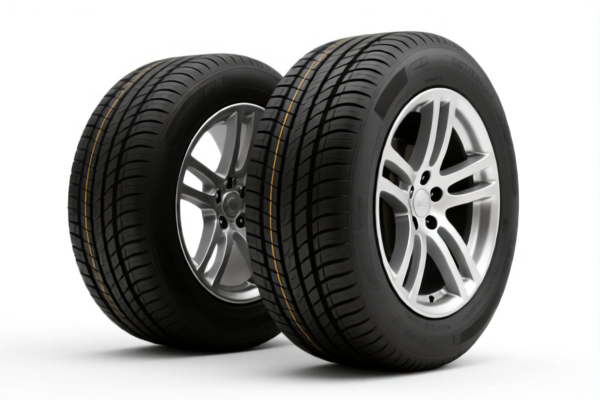
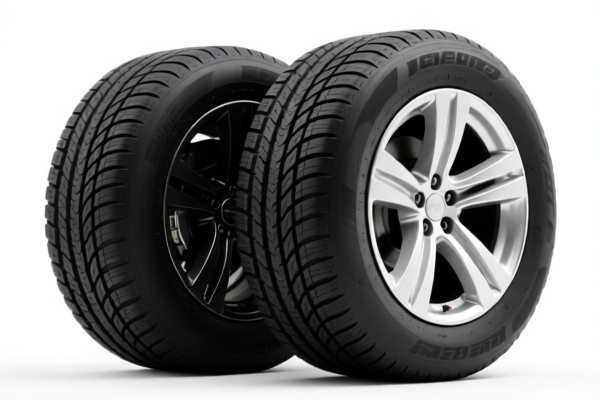
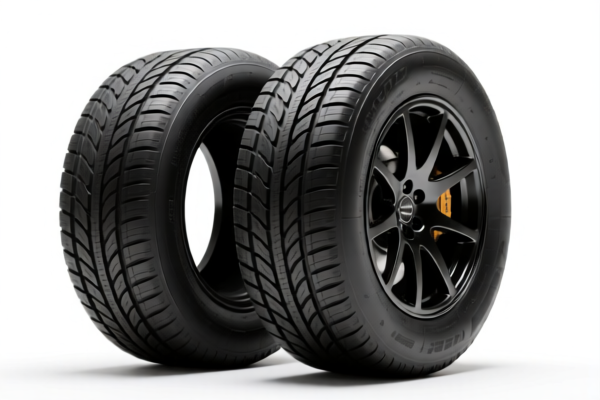
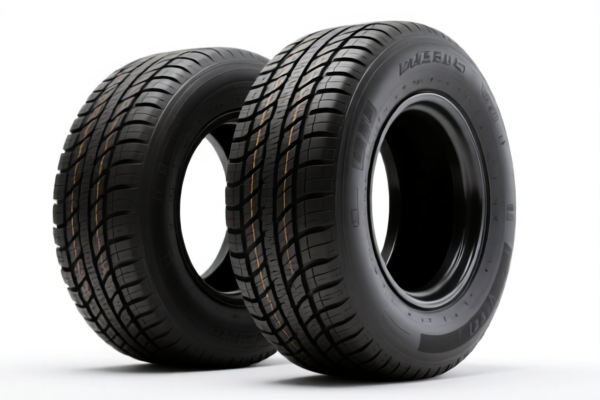
AI Analysis
🛞 Wide Tire (Industrial Pneumatic Tires)
🌐 HS Code Reference & Clearance Guide | 2026 Latest Tariff Analysis | Professional Clearance Strategy
📌 Part 1: Product Definition & Classification: Do You Really Understand "Wide Tires"?
In international trade, "Wide Tire" typically refers to new pneumatic tires of rubber designed for heavy-duty applications. Specifically, these are tires used on construction, mining, or industrial handling vehicles and machines (such as forklifts, excavators, loaders, and dump trucks).
They are not meant for passenger cars or standard trucks. The classification depends critically on the rim size.
⚠️ Key Distinction Point:
- If the rim size is ≤ 61 cm → Classified under 4011.80.80.10
- If the rim size is > 61 cm → Classified under 4011.80.80.20
📦 Part 2: HS Code Classification Details (2026 Latest Tariff Authority Comparison)
| HS Code | Product Description | Rim Size Condition | Typical Application |
|---|---|---|---|
4011.80.80.10 |
New pneumatic tires, rubber; for construction/mining/industrial handling; Other; Having a rim size not exceeding 61 cm | ≤ 61 cm | Small forklifts, industrial carts, mini-loaders |
4011.80.80.20 |
New pneumatic tires, rubber; for construction/mining/industrial handling; Other; Having a rim size exceeding 61 cm | > 61 cm | Large excavators, mining dump trucks, heavy loaders |
🔍 Important Reminder:
- Rim Size is Decisive: You must measure the rim diameter (not the overall tire diameter).
- Usage is Critical: These are for industrial/construction use. If they are for standard trucks, they fall under different HS codes.
- "Other" Category: These codes cover tires not specifically listed under sub-headings like "earth-moving machinery" or "passenger cars" if they fit the general industrial description.
💰 Part 3: 2026 Latest Tariff Rate Details (Including Surcharge Taxes)
✅ Applicable Country: United States (US)
✅ Origin: China (CN) (Note: Rates shown are for China-origin goods based on provided data)
✅ Effective Time: Current 2026 tariffs
🎯 1. 4011.80.80.10 — Wide Tire (Rim Size ≤ 61 cm)
| Item | Content |
|---|---|
| Base Tariff Rate | 0% (Ad Valorem) |
| Additional Tariff (Section 301/USITC) | 0% |
| Total Tax Rate | 0.0% |
| Tax Calculation | CIF Value × 0% = $0 |
| De Minimis Eligibility | ✅ Yes (Usually applies for low-value shipments, but industrial tires often exceed limits) |
| Legal Basis Path | USITC:4011.80.80.10 |
📌 Explanation:
- Tires with smaller rims (≤ 61 cm) used in industrial handling (e.g., smaller forklifts) enjoy zero additional tariffs.
- This is a significant cost advantage compared to larger industrial tires.
- Ensure your commercial invoice clearly states "Rim Size: XX cm" to prove eligibility.
🎯 2. 4011.80.80.20 — Wide Tire (Rim Size > 61 cm)
| Item | Content |
|---|---|
| Base Tariff Rate | 3.4% (Ad Valorem) |
| Additional Tariff (Section 301/USITC) | +25.0% |
| Total Tax Rate | 28.4% |
| Tax Calculation | CIF Value × 28.4% |
| De Minimis Eligibility | ❌ No (High value/industrial goods) |
| Legal Basis Path | USITC:4011.80.80.20 → FOOTNOTE:301 |
📌 Important Note:
- Large industrial tires (> 61 cm rim) are subject to high tariffs.
- The 25% additional tariff is applied due to US trade actions against Chinese goods.
- Total 28.4% makes this category expensive. Plan for higher landed costs.
🛠️ Part 4: Clearance Operational Advice (Practical Pitfall Guide)
✅ 1. Required Documentation Checklist (Non-negotiable)
| Document | Must Provide | Explanation |
|---|---|---|
| ✅ Product Specifications | ✔️ | Must include Rim Size, Tire Size (e.g., 12.00-20), Load Index, Ply Rating |
| ✅ Product Photos | ✔️ | Clear photos of the tire sidewall showing brand, model, and manufacturing date |
| ✅ Commercial Invoice | ✔️ | Must explicitly state: "Industrial Pneumatic Tire, New, Rubber", and Rim Diameter |
| ✅ Packing List | ✔️ | List quantity, gross weight, net weight per package |
| ✅ Certificate of Origin (CO) | ✔️ | To prove origin (especially if claiming non-China origin to avoid 28.4%) |
✅ 2. Declaration Tips (Key Mantras)
🔥 "Measure the Rim, State the Size, Avoid High Tax!"
| Scenario | Correct Declaration | Wrong Practice |
|---|---|---|
| Rim Size = 50 cm | 4011.80.80.10 |
Declaring as 4011.80.80.20 → Pays 28.4% instead of 0% |
| Rim Size = 70 cm | 4011.80.80.20 |
Declaring as 4011.80.80.10 → Customs penalty + Back Tax |
| Used Tires | ❌ Do Not Declare as "New" | Used tires have different HS codes and restrictions |
| Tire Tubes/Accompanying Parts | Declare separately | Mixing tubes with tires may complicate valuation |
✅ 3. Special Circumstances Handling
| Situation | Handling Advice |
|---|---|
| Custom Rims? | Provide engineering drawings to prove rim size classification |
| Mixed Shipments (Small + Large) | Split the Invoice: Clearly separate ≤61cm and >61cm items to apply correct rates per line item |
| Origin Change? | If tires are made in Vietnam/Malaysia, they may not be subject to the 25% additional tariff. Provide Foreign Country of Origin Certificate |
| Retreaded Tires? | These are NOT "New" tires. They fall under 4012.10. Do not use 4011 codes for retreads |
🌍 Part 5: Global Market Clearance Comparison (2026 Latest)
| Country/Region | Recommended HS Code | Tariff (China Origin) | Certification Required | Notes |
|---|---|---|---|---|
| 🇺🇸 USA | 4011.80.80.10 / .20 |
0% (≤61cm) 28.4% (>61cm) |
None (Standard) | High risk for >61cm due to 301 tariffs |
| 🇨🇳 China | 4011.80.80.10 / .20 |
Varies (Usually 0-5%) | CCC (if applicable) | Import duty may differ; check current Chinese tariff book |
| 🇪🇺 EU | 4011.80.10 / .80 |
0% (Mostly) | CE/UKCA (for machinery fitment) | Generally lower tariffs; no US-style surcharges |
| 🇦🇺 Australia | 4011.80.10 / .80 |
5% | RCM/ADR Compliance | Standard MFN rate applies |
📌 Conclusion:
- USA is the most complex market for industrial tires due to the rim-size-based tariff split.
- For US Importers: If rim size > 61 cm, consider supply chain diversification (e.g., sourcing from non-China origins) to mitigate the 28.4% tax burden.
- For Rim Size ≤ 61 cm: Enjoy 0% tariff advantage, but ensure precise measurement documentation.
📌 Part 6: Common Mistakes & Pitfall Guide (Lessons Learned)
❌ Mistake 1: Confusing Tire Overall Diameter with Rim Size
👉 Consequence: Misclassification → 28.4% tax applied to a 0% item OR vice versa → Customs Audit
❌ Mistake 2: Declaring "Industrial Tire" without specifying Rim Size
👉 Consequence: Customs will likely choose the higher tax code (4011.80.80.20) by default → Back Tax + Penalty
❌ Mistake 3: Using "Tire" generic term without "New" or "Rubber"
👉 Consequence: Customs may classify under used tires (4012) or rubber parts (4016) → Different duties and restrictions
❌ Mistake 4: Ignoring "Add-On" Tariffs
👉 Consequence: Assuming base rate applies → Surprise 25% bill at border
✅ Correct Practice:
"New Pneumatic Tire, Rubber, for Industrial Handling, Rim Size: 55cm, Model XYZ, Made in China"
🎯 Part 7: Conclusion: Precise Classification Saves Money!
🎯 Remember the Mantra:
🔹 "Rim Size ≤ 61cm: 0% Tax 🎉"
🔹 "Rim Size > 61cm: 28.4% Tax 💸"
🔹 "Measure Twice, Declare Once!"
📌 Tips:
- Always include Rim Diameter in the HS Code description on the commercial invoice.
- For large industrial tires, consult with a customs broker to explore exclusion lists or origin alternatives.
- Keep product photos and engineering specs ready for customs inspection.
📣 Immediate Action:
📞 Contact your customs broker
📐 Measure your Rim Diameter (not tire diameter!)
📄 Prepare accurate Commercial Invoice with clear product description
🚀 Clear Goods Smoothly, Save Cost, Boost Profit!
✨ Professional Clearance Starts with Accurate Classification!
💼 Every Tax Dollar Counts!
Customer Reviews
About HS Code Classification
The Harmonized System (HS) is an internationally standardized nomenclature developed by the World Customs Organization (WCO) to classify traded products. Over 200 countries use the HS system as the basis for customs tariffs, trade statistics, and import/export regulations.
Each HS code follows a hierarchical structure:
- Chapter (2 digits) — Broad category of goods (e.g., Chapter 84: Machinery and Mechanical Appliances)
- Heading (4 digits) — More specific grouping within the chapter
- Subheading (6 digits) — Internationally standardized breakdown, used by all WCO member countries
- National subdivisions (8-10 digits) — Country-specific extensions for further classification, such as US HTSUS 10-digit codes
Correct HS code classification is essential for smooth customs clearance, accurate duty payment, and compliance with trade regulations. Misclassification can lead to customs delays, overpayment of duties, or penalties.
When importing from CN to US, the applicable tariff rates may include:
- Most-Favored-Nation (MFN) rate — The standard duty rate applied to WTO members
- General rate — Applied to countries without trade agreements
- Trade remedy duties — Additional tariffs such as Section 301 (anti-dumping), Section 232 (national security), or countervailing duties
The information provided on this page is for reference purposes only. For official classification, please consult with your local customs authority or a licensed customs broker.