Wide Waterproof Photosensitive Paper Roll
CN → US| HS Code | Tariff Rate | Origin | Destination | Doc |
|---|---|---|---|---|
| 3703103060 | 38.7% | CN | US | Official Doc |
| 3703103090 | 38.7% | CN | US | Official Doc |
| 4811592000 | 35.0% | CN | US | Official Doc |
| 4811596000 | 35.0% | CN | US | Official Doc |
| 3705000000 | 35.0% | CN | US | Official Doc |
Product Images
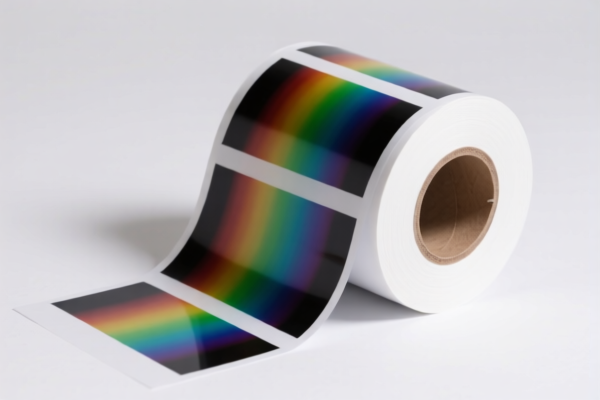
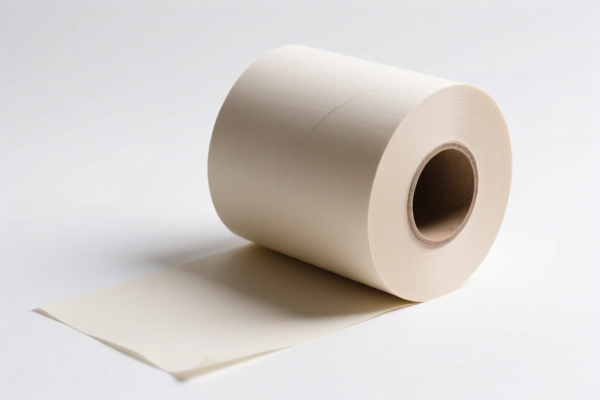
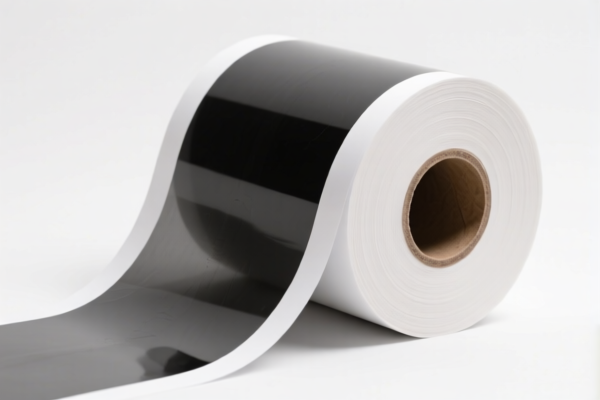
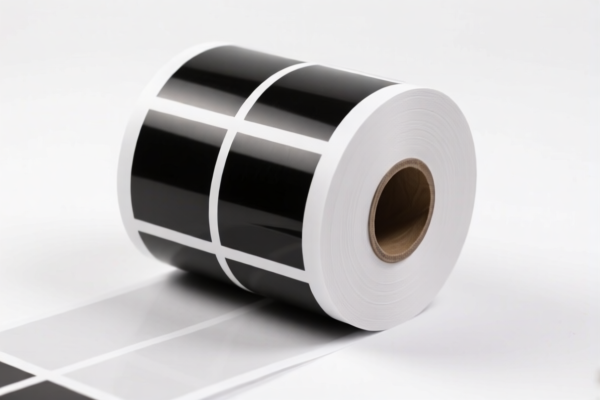
AI Analysis
📸 Wide Waterproof Photosensitive Paper Roll (RC Coated)
🌐 HS Code Reference & Customs Clearance Guide | 2026 Tariff Analysis | Professional Compliance Strategy
📌 I. Product Definition & Classification: What is "Wide Waterproof Photosensitive Paper"?
Wide waterproof photosensitive paper rolls, often referred to as RC (Resin Coated) Photosensitive Paper, are specialized materials used in photography, printing, and industrial imaging. Key characteristics include:
- Material Composition: Typically composed of a cellulose paper base coated with a resin (polyethylene) layer and light-sensitive silver halide emulsion. This structure provides water resistance ("waterproof") and high dimensional stability.
- Form Factor: Supplied in rolls with widths exceeding 610 mm (wide format), commonly used for large-format printers, commercial printing, or specialized photographic processing.
- State: Unexposed (light-sensitive) or Processed (fixed/dry), depending on the specific trade nature. Most imports involve unexposed rolls intended for further processing.
⚠️ Key Distinction:
- If the product is unexposed, silver-halide based, and classified strictly as photographic material → Chapter 37.
- If the product is considered a coated paper (regardless of light sensitivity) under general trade definitions → Chapter 48.
- If the product is processed/developed (e.g., photo plates/films) → Chapter 37 (Specific headings).
📦 II. HS Code Classification Details (2026 Harmonized System)
Below are the five potential HS Codes identified for this product, based on material, width, and state.
| HS Code | Product Description | Application Scenario | Total Tax Rate |
|---|---|---|---|
3703.10.30.60 |
Wide RC photosensitive paper rolls, width > 610mm, silver halide material, unexposed. | High-end photographic films, specialized imaging media. | 38.7% |
3703.10.30.90 |
Wide RC photosensitive paper rolls, roll form, RC coating, width > 610mm. | General wide-format photosensitive materials not covered by specific sub-headings. | 38.7% |
4811.59.20.00 |
Wide RC photosensitive paper rolls, coated paper material, roll form, wide format. | Treated as coated paper products, focusing on the paper base and coating process. | 35.0% |
4811.59.60.00 |
Wide RC photosensitive paper rolls, RC material (paper/cellulose), roll form, coated/sensitive treatment. | Paper-based products with light-sensitive coatings, classified under coated paper. | 35.0% |
3705.00.00.00 |
Wide B&W photosensitive paper rolls, material/use similar to photo plates/films, roll form. | Processed or specific B&W photographic plates/films in roll format. | 35.0% |
🔍 Critical Note:
- Chapter 37 (3703,3705): Classified as "Photographic or cinematographic goods." Higher tax burden due to specific trade policies.
- Chapter 48 (4811): Classified as "Paper and paperboard." Lower base duty, but still subject to additional tariffs.
- Why the difference? Customs may view the product as either a photographic article (Chapter 37) or a specialty coated paper (Chapter 48). The classification depends on the primary character and intended use declared.
💰 III. 2026 Tariff Rate Breakdown (Including Surcharges & Policy Add-ons)
✅ Applicable Country: United States (US)
✅ Origin: China (CN)
✅ Effective Date: November 10, 2025 (and subsequent imports)
🎯 1. Chapter 37 Codes (3703.10.30.60 & 3703.10.30.90)
Total Tax: 38.7%
| Item | Detail |
|---|---|
| Base Duty | 3.7% (Ad Valorem) |
| Section 301 Tariff (25%) | 25.0% (Added by USITC for Chinese imports) |
| Section 122 Tariff (10%) | 10.0% (Specific additional tariff for certain Chinese goods) |
| Total Effective Rate | 38.7% |
| Calculation Basis | CIF Value × 38.7% |
| De Minimis Exemption | ❌ Not Eligible (deny_de_minimis) |
| Legal Basis Path | USITC:3703.10.30.xx → FOOTNOTE:301 → IEEPA:Section 122 |
📌 Explanation:
- These codes fall under Section 301 (25%) and Section 122 (10%) surcharges.
- Base duty is low (3.7%), but the add-on tariffs are high, resulting in a nearly 40% total cost.
- This is typical for photographic materials from China, subject to strict trade restrictions.
🎯 2. Chapter 48 Codes (4811.59.20.00 & 4811.59.60.00)
Total Tax: 35.0%
| Item | Detail |
|---|---|
| Base Duty | 0.0% (Ad Valorem) |
| Section 301 Tariff (25%) | 25.0% |
| Section 122 Tariff (10%) | 10.0% |
| Total Effective Rate | 35.0% |
| Calculation Basis | CIF Value × 35.0% |
| De Minimis Exemption | ❌ Not Eligible (deny_de_minimis) |
| Legal Basis Path | USITC:4811.59.xx → FOOTNOTE:301 → IEEPA:Section 122 |
📌 Explanation:
- Base duty is 0%, making it cheaper than Chapter 37 codes.
- However, it still suffers from the 25% (Section 301) and 10% (Section 122) surcharges.
- Savings: 3.7% lower than Chapter 37 codes. This is the recommended classification if the product can be legally justified as "coated paper" rather than "photographic film."
🎯 3. Code 3705.00.00.00
Total Tax: 35.0%
| Item | Detail |
|---|---|
| Base Duty | 0.0% |
| Section 301 Tariff (25%) | 25.0% |
| Section 122 Tariff (10%) | 10.0% |
| Total Effective Rate | 35.0% |
| Calculation Basis | CIF Value × 35.0% |
| De Minimis Exemption | ❌ Not Eligible |
| Legal Basis Path | USITC:3705.00.00.00 → FOOTNOTE:301 → IEEPA:Section 122 |
📌 Explanation:
- Similar to Chapter 48 codes in tax burden.
- Applicable if the product is considered a processed photo plate/film in roll form.
- Risk: Customs may challenge this if the product is unexposed and clearly raw photographic material.
🛠️ IV. Customs Clearance Practical Advice (Pitfall Avoidance Guide)
✅ 1. Required Documentation Checklist
| Document | Required? | Notes |
|---|---|---|
| Product Specification Sheet | ✔️ | Must detail: Width (>610mm), Coating Type (RC), Sensitivity (Silver Halide), State (Unexposed/Processed). |
| Material Safety Data Sheet (MSDS) | ✔️ | RC paper may contain chemical emulsions; MSDS required for safety clearance. |
| Commercial Invoice | ✔️ | Clearly state: "Wide Format RC Photosensitive Paper Roll" + HS Code + Origin (CN). |
| Packing List | ✔️ | Specify roll dimensions, weight, and number of cores. |
| Certificate of Origin | ✔️ | Essential for proving Chinese origin (triggers 301/122 tariffs). |
| Import License (if applicable) | ✔️ | Some photographic materials may require special licenses; verify with CBP. |
✅ 2. Declaration Strategy (Key Mantras)
🔥 "Wide Format, RC Coated, Specify Width, Choose Chapter Carefully!"
| Scenario | Recommended HS Code | Risk Level |
|---|---|---|
| Unexposed, Silver Halide, Roll >610mm | 3703.10.30.60 / 3703.10.30.90 |
⚠️ High Tax (38.7%) but accurate for photographic goods. |
| Unexposed, Coated Paper (General Trade View) | 4811.59.20.00 / 4811.59.60.00 |
✅ Lower Tax (35.0%). Must prove "paper" nature. |
| Processed B&W Photo Plates/Films | 3705.00.00.00 |
⚠️ High Tax (35.0%). Only if processed. |
| Small Width (<610mm) | Different Codes | Not applicable here. |
📌 Warning:
- Do NOT misdeclare wide RC paper as "standard printing paper" to avoid tariffs.
- RC coating and light sensitivity are key identifiers. Misclassification can lead to penalties + back taxes.
✅ 3. Special Circumstances
| Situation | Handling Advice |
|---|---|
| OEM/White Label | Provide contract specifying "RC Photosensitive Paper." Avoid brand-specific claims if possible. |
| Sample Shipment | Still subject to full tariffs. No de minimis exemption for China-origin goods. |
| Mixed Containers | If mixed with non-Chinese goods, ensure clear segregation and documentation. |
| Customs Audit | Be prepared to provide lab test results confirming RC coating and silver halide composition. |
🌍 V. Global Market Comparison (2026)
| Country/Region | Recommended HS Code | Tariff (China Origin) | Certification | Notes |
|---|---|---|---|---|
| 🇺🇸 USA | 4811.59.20.00 / 3703.10.30.60 |
35% - 38.7% | No special | High tariffs due to 301/122. |
| 🇨🇳 China | 4811.59.20.00 |
~5-10% | N/A | Lower domestic duty. |
| 🇪🇺 EU | 4811.59.20.00 |
~6.5% | CE (if applicable) | No Section 301/122. |
| 🇬🇧 UK | 4811.59.20.00 |
~6.5% | UKCA | Post-Brexit rules apply. |
| 🇦🇺 Australia | 4811.59.20.00 |
~5% | RCM | No major surcharges. |
📌 Conclusion:
- USA has the highest entry barrier due to additional tariffs.
- EU/UK/AU offer better tariff conditions (~5-7%).
- Consider supply chain diversification if targeting the US market heavily.
📌 VI. Common Mistakes & Pitfalls (Lessons Learned)
❌ Mistake 1: Declaring as "Plain Paper" to avoid tariffs.
👉 Result: Customs seizure, fines, and blacklisting. RC paper is chemically distinct.
❌ Mistake 2: Ignoring the width specification.
👉 Result: If width is misdeclared, the HS Code may change, leading to incorrect tariff calculation.
❌ Mistake 3: Assuming "Photosensitive" always means Chapter 37.
👉 Result: Chapter 48 codes (4811) may be applicable and offer 3.7% savings. Always consult a broker.
❌ Mistake 4: Underestimating Section 122 Tariff.
👉 Result: The 10% S122 tariff is non-negotiable for many Chinese goods. Plan for this cost.
✅ Correct Approach:
"Wide Format RC Photosensitive Paper Roll, 1200mm Width, Silver Halide Emulsion, Unexposed, Origin: China"
🎯 VII. Conclusion: Professional Declaration, Cost Optimization!
🎯 Key Takeaways:
🔹 "RC Coating = Paper or Photo? Choose Wisely."
🔹 "US Tariffs: 35-39% is the new normal for China-origin photo materials."
🔹 "Always declare Width >610mm to ensure correct HS Code."
🔹 "Prepare MSDS and Specs for Customs Audit."
📌 Pro Tip:
If your RC paper is originating from Vietnam, Mexico, or Thailand, you may avoid Section 301/122 tariffs, reducing the rate to ~0-5%.
Recommendation: Apply for Advance Ruling from CBP to lock in the HS Code and tariff rate before shipment.
📣 Take Action Now:
📞 Contact a Licensed Customs Broker
📄 Prepare Detailed Product Specifications
🚀 Ensure Smooth Clearance, Minimize Costs, Maximize Profit!
✨ Professional Customs Clearance Starts with Accurate Classification!
💼 Every Dollar Saved is a Dollar Earned!
Customer Reviews
About HS Code Classification
The Harmonized System (HS) is an internationally standardized nomenclature developed by the World Customs Organization (WCO) to classify traded products. Over 200 countries use the HS system as the basis for customs tariffs, trade statistics, and import/export regulations.
Each HS code follows a hierarchical structure:
- Chapter (2 digits) — Broad category of goods (e.g., Chapter 84: Machinery and Mechanical Appliances)
- Heading (4 digits) — More specific grouping within the chapter
- Subheading (6 digits) — Internationally standardized breakdown, used by all WCO member countries
- National subdivisions (8-10 digits) — Country-specific extensions for further classification, such as US HTSUS 10-digit codes
Correct HS code classification is essential for smooth customs clearance, accurate duty payment, and compliance with trade regulations. Misclassification can lead to customs delays, overpayment of duties, or penalties.
When importing from CN to US, the applicable tariff rates may include:
- Most-Favored-Nation (MFN) rate — The standard duty rate applied to WTO members
- General rate — Applied to countries without trade agreements
- Trade remedy duties — Additional tariffs such as Section 301 (anti-dumping), Section 232 (national security), or countervailing duties
The information provided on this page is for reference purposes only. For official classification, please consult with your local customs authority or a licensed customs broker.