Wide format Film (Developed)
CN → US| HS Code | Tariff Rate | Origin | Destination | Doc |
|---|---|---|---|---|
| 3706106090 | 35.0% | CN | US | Official Doc |
| 3705000000 | 35.0% | CN | US | Official Doc |
| 3706900060 | 35.0% | CN | US | Official Doc |
Product Images


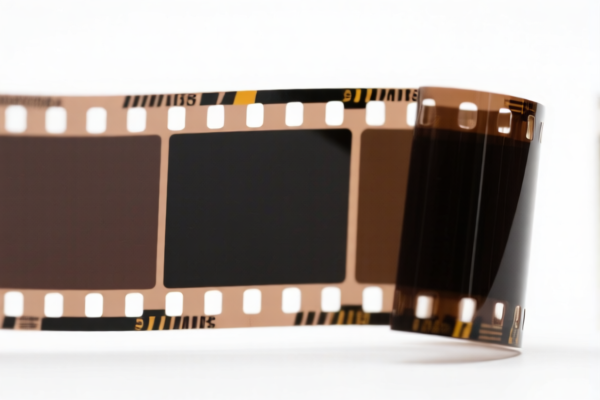

AI Analysis
🎬 Wide Format Film (Developed)
🌐 HS Code Reference & Clearance Guide | 2024–2026 Tariff Breakdown | Professional Entry Strategy
📌 I. Product Definition & Classification: Do You Know What "Wide Format Film (Developed)" Is?
Wide format film (developed) refers to photographic or motion-picture films that have already been exposed and processed (i.e., chemically developed), excluding cinematographic film for standard projection. These films are typically used for:
- Archival photography (e.g., large-format negatives)
- Medical imaging (e.g., X-ray film)
- Industrial inspection
- Wide-format printing (e.g., large photographic prints)
- Motion-picture films >35mm or non-standard widths
In international trade, developed films fall under Chapter 37 of the Harmonized System (HS), which covers "Photographic plates and film; chemicals for photography."
⚠️ Critical Distinction:
- Developed film = Already exposed & processed → HS 3705 or 3706
- Unexposed sensitized film = Not yet developed → HS 3701
- Cinematographic film (standard movie reels) → Excluded from these codes
📦 II. HS Code Classification Details (Based on Provided Data)
| HS Code | Product Description | Typical Application | Key Features |
|---|---|---|---|
| 3705.00.00.00 | Photographic plates and film, exposed and developed, other than cinematographic film | Archival photos, medical X-ray, industrial imaging | Flat, non-cinematic, developed |
| 3706.10.60.90 | Motion-picture film, exposed & developed; width ≥35mm; Other Other | Large-format cinematic film, special-effect reels | ≥35mm width, developed, non-standard |
| 3706.90.00.60 | Motion-picture film, exposed & developed; Other Other | Non-standard motion-picture film, <35mm or exotic formats | Any width, developed, not standard |
| 3701.30.00.00 | Photographic plates & film (flat), sensitized, unexposed; side >255mm | Large-format unexposed film (e.g., 8x10 inches) | Unexposed, >255mm dimension |
| 3701.99.60.60 | Other photographic plates & film (flat), sensitized, unexposed | Specialty unexposed film (non-standard size) | Unexposed, any material except paper/textile |
🔍 Key Note:
- Your input “Wide format Film (Developed)” clearly indicates exposed and developed status.
- Therefore, HS 3701 codes (unexposed) are NOT applicable.
- Only 3705.00.00.00 or 3706.x codes are valid depending on film type (photographic vs. motion-picture).
💰 III. 2024–2026 Tariff Rate Breakdown (Detailed Tax Clauses)
✅ Applicable Countries: United States (US)
✅ Country of Origin: China (CN)
✅ Effective Date: 2025–2026 (Section 301 & IEEPA tariffs active)
🎯 1. 3705.00.00.00 — Photographic Plates & Film (Developed, Non-Cinematic)
| Item | Details |
|---|---|
| Base Tariff | 0.0% |
| Section 301 Additional Duty | +25.0% |
| IEEPA Additional Duty | Not explicitly listed in provided data |
| Total Duty Rate | 25.0% |
| Duty Calculation | CIF Value × 25.0% |
| De Minimis Exemption | ❌ Not Available |
| Legal Basis Path | USITC:3705.00.00.00 → Section 301:3705.00.00.00 |
📌 Explanation:
- This code applies to developed photographic plates and film (e.g., large-format negatives, X-ray films).
- Despite a 0% base rate, the 25% Section 301 surcharge makes it costly for Chinese-origin goods.
- No de minimis exemption means even small shipments are taxed.
🎯 2. 3706.10.60.90 — Motion-Picture Film (Developed, ≥35mm Width)
| Item | Details |
|---|---|
| Base Tariff | 0.0% |
| Section 301 Additional Duty | +25.0% |
| Total Duty Rate | 25.0% |
| Duty Calculation | CIF Value × 25.0% |
| De Minimis Exemption | ❌ Not Available |
| Legal Basis Path | USITC:3706.10.60.90 → Section 301:3706.10.60.90 |
📌 Explanation:
- Applies to wide-format cinematic films (e.g., IMAX, 70mm reels) that are developed.
- ≥35mm width is a key criterion.
- 25% duty applies regardless of base rate.
🎯 3. 3706.90.00.60 — Motion-Picture Film (Developed, Other/Non-Standard)
| Item | Details |
|---|---|
| Base Tariff | 0.0% |
| Section 301 Additional Duty | +25.0% |
| Total Duty Rate | 25.0% |
| Duty Calculation | CIF Value × 25.0% |
| De Minimis Exemption | ❌ Not Available |
| Legal Basis Path | USITC:3706.90.00.60 → Section 301:3706.90.00.60 |
📌 Explanation:
- For non-standard motion-picture film (e.g., <35mm or exotic formats).
- Still subject to 25% Section 301 duty.
⚠️ Note on Unexposed Film (3701 Codes)
❌ Not Applicable to your query ("Developed" film).
- 3701.30.00.00 and 3701.99.60.60 are for unexposed sensitized film.
- If you mistakenly declare developed film under these codes, severe penalties may apply.
🛠️ IV. Practical Clearance Advice (Avoid Common Pitfalls)
✅ 1. Documentation Checklist (Mandatory)
| Document | Required? | Purpose |
|---|---|---|
| ✅ Commercial Invoice | ✔️ | Must state "Developed Film" + HS Code |
| ✅ Packing List | ✔️ | Show dimensions, weight, film type |
| ✅ Certificate of Origin | ✔️ | Prove origin (China = 25% duty) |
| ✅ Film Specifications | ✔️ | Width, type (photographic/cinematic), development status |
| ✅ Third-Party Test Report | ✔️ | Confirm film is developed (e.g., lab report) |
| ✅ Bill of Lading | ✔️ | Standard shipping docs |
✅ 2. Declaration Strategy (Critical Tips)
🔥 "Developed ≠ Unexposed; Cinematic ≠ Photographic"
| Scenario | Correct HS Code | Mistake | Consequence |
|---|---|---|---|
| Developed photo film (large format) | 3705.00.00.00 |
Use 3701.30.00.00 |
25% + penalties |
| Developed motion-picture film (≥35mm) | 3706.10.60.90 |
Use 3705.00.00.00 |
Misclassification |
| Unexposed wide film | 3701.30.00.00 |
Use 3705.00.00.00 |
Underpayment |
✅ 3. Special Cases
| Situation | Recommendation |
|---|---|
| OEM Custom Film | Provide client specs + development certificate |
| Mixed Shipments | Declare each film type separately |
| Transit to 3rd Country | Ensure HS Code matches final destination |
| Re-export | Verify if duty exemption applies |
🌍 V. Global Market Comparison (2024–2026)
| Country/Region | Recommended HS Code | Duty Rate | Certifications | Notes |
|---|---|---|---|---|
| 🇺🇸 USA | 3705.00.00.00 / 3706.10.60.90 |
25% | None | High duty for Chinese origin |
| 🇨🇳 China | 3705.00.00.00 |
0% | CCC | No Section 301 |
| 🇪🇺 EU | 3705.00.00.00 |
0% | CE | No Section 301 |
| 🇯🇵 Japan | 3705.00.00.00 |
0% | PSE | No Section 301 |
| 🇨🇦 Canada | 3705.00.00.00 |
0% | Health Canada | No Section 301 |
📌 Conclusion:
- USA is the only major market applying 25% Section 301 duty to developed film from China.
- EU, Japan, Canada, and China have 0% duty for these codes.
- Risk: High duty cost for US importers; consider supply chain diversification.
📌 VI. Common Mistakes & How to Avoid Them
❌ Mistake 1: Declaring developed film as unexposed (3701.30.00.00)
👉 Consequence: Underpayment + 25% back duty + penalty.
❌ Mistake 2: Using 3705.00.00.00 for motion-picture film
👉 Consequence: Incorrect classification → audit risk.
❌ Mistake 3: Missing development certificate
👉 Consequence: Customs may reject shipment.
✅ Correct Approach:
"Wide Format Developed Film, 35mm, Photographic, Exposed & Processed, Model XYZ, Lab-Certified"
🎯 VII. Final Takeaway: Precision in Classification Saves Money
🔹 Remember:
- Developed = 3705/3706 (25% duty for China→US)
- Unexposed = 3701 (Not applicable here)
- Cinematic vs. Photographic matters!🔹 Action Plan:
1. Confirm development status (exposed vs. unexposed).
2. Verify film width (≥35mm? <35mm?).
3. Choose correct HS Code before shipping.
4. Prepare lab reports and spec sheets.
📌 Pro Tip:
If your film is not from China (e.g., Vietnam, Mexico, EU), Section 301 duty may not apply.
👉 Request a pre-ruling from US Customs (CBP) for certainty.
📣 Next Steps:
📞 Consult a licensed customs broker + Submit Form CBP 598 (Entry Summary)
🚀 Avoid 25% duty shocks with proper HS Code classification!
✨ Smart Classification = Smooth Clearance
💼 Every percent of duty counts!
Customer Reviews
About HS Code Classification
The Harmonized System (HS) is an internationally standardized nomenclature developed by the World Customs Organization (WCO) to classify traded products. Over 200 countries use the HS system as the basis for customs tariffs, trade statistics, and import/export regulations.
Each HS code follows a hierarchical structure:
- Chapter (2 digits) — Broad category of goods (e.g., Chapter 84: Machinery and Mechanical Appliances)
- Heading (4 digits) — More specific grouping within the chapter
- Subheading (6 digits) — Internationally standardized breakdown, used by all WCO member countries
- National subdivisions (8-10 digits) — Country-specific extensions for further classification, such as US HTSUS 10-digit codes
Correct HS code classification is essential for smooth customs clearance, accurate duty payment, and compliance with trade regulations. Misclassification can lead to customs delays, overpayment of duties, or penalties.
When importing from CN to US, the applicable tariff rates may include:
- Most-Favored-Nation (MFN) rate — The standard duty rate applied to WTO members
- General rate — Applied to countries without trade agreements
- Trade remedy duties — Additional tariffs such as Section 301 (anti-dumping), Section 232 (national security), or countervailing duties
The information provided on this page is for reference purposes only. For official classification, please consult with your local customs authority or a licensed customs broker.