Wide format Gloss Photo Paper Roll
CN → US| HS Code | Tariff Rate | Origin | Destination | Doc |
|---|---|---|---|---|
| 4805911090 | 35.0% | CN | US | Official Doc |
| 4811902000 | 35.0% | CN | US | Official Doc |
| 4823908680 | 35.0% | CN | US | Official Doc |
| 4823400000 | 35.0% | CN | US | Official Doc |
| 4811592000 | 35.0% | CN | US | Official Doc |
Product Images
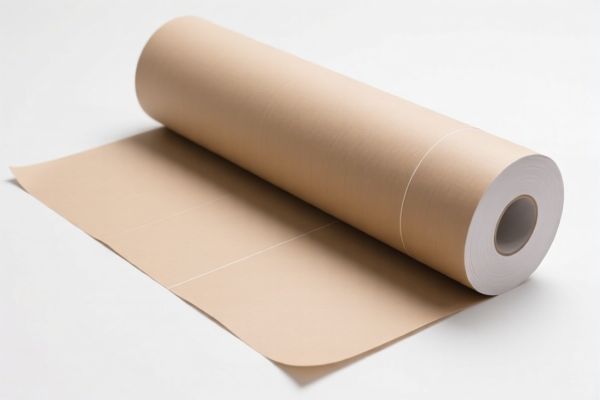
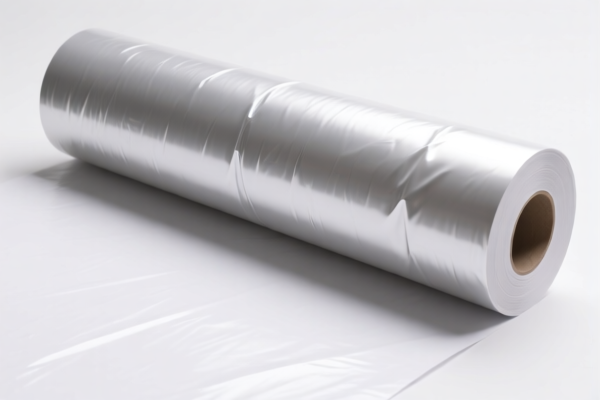
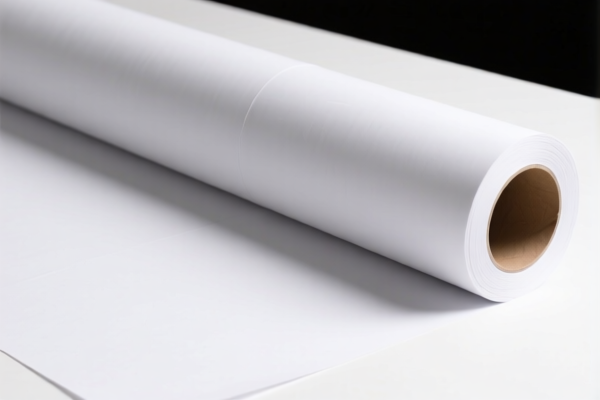
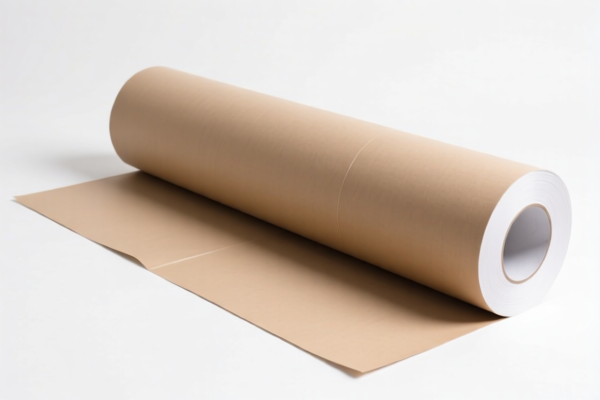
AI Analysis
🖨️ Wide Format Gloss Photo Paper Roll (Wide Format Printing Media)
🌐 HS Code Reference & Customs Clearance Guide | 2026 Latest Tariff Analysis | Professional Entry Strategy
📌 I. Product Definition & Classification: Do You Know "Gloss Photo Paper"?
Wide format gloss photo paper rolls are high-end printing media used for large-format inkjet printers. They are characterized by their glossy surface finish (for high color saturation and sharpness) and roll format (for continuous large-area printing). In international trade, classification depends on whether the paper is coated, uncoated, and its base material.
Key Distinctions: * Coated Paper (涂布纸): The surface is treated with clay, calcium carbonate, or polymer coatings to enhance print quality. This is the standard for "Gloss Photo Paper." * Uncoated Paper (未涂布纸): Plain paper without surface treatment. * Base Material: Usually wood pulp, recycled pulp, or specific cellulose derivatives.
⚠️ Critical Classification Point:
- If the paper has a glossy coating for printing → Typically classified under Chapter 48 (Paper/Paperboard), Heading 4811 or 4823.
- If it is plain/uncoated but wide roll → Could fall under 4805 or 4811.
- "Gloss" implies a coating or finish, pushing it away from raw pulp (4803/4804) toward processed paper products.
📦 II. HS Code Classification Details (2026 Latest Tariff Reference)
Based on the provided data, here are the possible HS Codes for "Wide Format Gloss Photo Paper Roll," along with their logical explanations and tax implications.
| HS Code | Product Description | Logical Classification Basis | Tax Status |
|---|---|---|---|
4811.59.20.00 |
Wide Format Gloss Photo Paper Roll | Best Fit for Coated Paper. Heading 4811 covers "Paper, paperboard... coated, impregnated... in rolls." Subheading 59 often covers "Other coated/printed paper." This is the most accurate code for coated photo paper used in printers. | 35% |
4805.91.10.90 |
Wide Format Paper Roll (Uncoated) | For Uncoated Wide Paper. Heading 4805 covers "Newsprint and other paper... not further worked than calendered, super-calendered...". If the "gloss" is achieved via post-print coating or if the base paper is uncoated but finished, this might apply. However, "Gloss Photo" usually implies pre-coated, making this a secondary/fallback option if not chemically coated. | 35% |
4811.90.20.00 |
Wide Format Paper Roll (Other Coated/Processed) | General Coated Paper Catch-All. If the specific coating doesn't fit 4811.59, this "Other" subheading under 4811 is used. It covers paper coated with substances like resins, waxes, or plastics. Width > 15cm is a key criteria for rolls. | 35% |
4823.40.00.00 |
Wide Format Paper Roll (Cut/Other Forms) | Paper of Pulp/Cellulose. If the product is considered a "paper制品" (paper article) rather than just "paper stock," or if it has been cut/sized in a way that falls under 4823 (Paper/paperboard articles). Less common for raw rolls, but possible if it's a specific "printing article." | 35% |
4823.90.86.80 |
Wide Format Paper Roll (Other Paper Products) | Catch-All for Paper Articles. If the product is classified as a "paper article" (制品) rather than "paper" (纸), this subheading under 4823 (Other paper/paperboard articles) is used. This is a "兜底" (fallback) category for items that don't fit specific paper headings. | 35% |
🔍 Important Note:
- All listed HS Codes carry a TOTAL TAX RATE of 35%.
- This rate consists of: 0% Base Tariff + 25% Section 301 Additional Tariff + 10% IEEPA Tariff.
- The specific HS Code choice depends on the exact manufacturing process (coating type, base material) and technical specifications (width, caliper, brightness).
- Do not guess: The difference between 4811 (processed paper) and 4805 (uncoated/calendered paper) is critical for customs scrutiny, even if the tax rate is the same in this specific data set.
💰 III. 2026 Latest Tariff Rate Breakdown (Including Additional Duties)
✅ Applicable Country: USA (US)
✅ Origin: China (CN)
✅ Effective Date: November 10, 2025 (and subsequent imports)
🎯 Tax Structure for All Listed HS Codes (4805.91.10.90, 4811.90.20.00, 4823.90.86.80, 4823.40.00.00, 4811.59.20.00)
| Item | Detail |
|---|---|
| Base Tariff Rate | 0% (General Rate for Paper Products) |
| Section 301 Additional Tariff | +25% (USITC Footnote 9903.88.01) |
| IEEPA Additional Tariff | +10% (Hearings on China/China HK Products, effective 2025-11-10) |
| Total Effective Tax Rate | 35% |
| Calculation Basis | CIF Value (Cost + Insurance + Freight) × 35% |
| De Minimis Exemption | ❌ NOT APPLICABLE (Deny De Minimis for Section 301/IEEPA goods) |
| Legal Reference Path | Section 301: 19 USC 1628 → IEEPA: 50 USC 1701 → USITC: 48xx.xx.xx |
📌 Explanation:
- 0% Base Tariff: Standard HTSUS rate for most paper products is 0%.
- 25% Section 301: Imposed due to trade tensions, specifically targeting Chinese-made paper products.
- 10% IEEPA: Additional tariff under the International Emergency Economic Powers Act, targeting specific Chinese goods.
- 35% Total: This is a high-cost entry. Proper classification is essential to avoid penalties, though the rate is uniform across these 5 codes in this dataset.
🛠️ IV. Customs Clearance Practical Advice (Risk Mitigation Guide)
✅ 1. Required Documentation Checklist (Must-Haves)
| Document | Required? | Purpose |
|---|---|---|
| ✅ Product Specification Sheet | ✔️ | Must detail: Coating type (clay, polymer, etc.), paper base (wood pulp, recycled), brightness, gloss level (units), width, length, weight. |
| ✅ Material Safety Data Sheet (MSDS) | ✔️ | To confirm no hazardous chemicals are used in the coating process (important for IEEPA scrutiny). |
| ✅ Product Photos (High Res) | ✔️ | Must show: Glossy surface, roll ends, label with dimensions, and any branding. |
| ✅ Commercial Invoice | ✔️ | Must clearly state "Wide Format Gloss Photo Paper Roll," HS Code, Origin: China. |
| ✅ Packing List | ✔️ | Detailing net/gross weight, number of rolls, dimensions. |
| ✅ Certificate of Origin (CO) | ✔️ | To prove origin (China) and subject to additional tariffs. |
✅ 2. Declaration Tips (Key Rules)
🔥 "Coating Defines Classification, Width Defines Format, Origin Defines Tariff!"
| Scenario | Correct Declaration Approach | Common Mistake |
|---|---|---|
| Coated Photo Paper | Use 4811.59.20.00 or 4811.90.20.00. Clearly state "Coated with..." in description. | Misdeclaring as "Uncoated Paper" (4805) → Audit risk. |
| Uncoated Base Paper | Use 4805.91.10.90. Clearly state "Uncoated," "Calendered." | Declaring "Gloss" without coating process proof → Rejection. |
| Paper Articles (Cut/Printed) | Use 4823.40.00.00 or 4823.90.86.80 only if it's a finished product (e.g., pre-cut, pre-printed). | Declaring rolls as "Articles" → Misclassification. |
| Width > 15cm | Ensure HS code chosen specifically covers rolls of this width. | Using codes for narrow paper → Incorrect classification. |
✅ 3. Special Handling
| Situation | Recommendation |
|---|---|
| OEM/White Label | Provide customer contract. Ensure invoice reflects actual seller. |
| Mixed Shipments | Declare each HS Code separately. Do not bundle different paper types. |
| High-Value Shipments | Consider Pre-Arrival Review (PAR) or Advance Ruling to confirm HS Code and avoid delays. |
| Coating Chemicals | Ensure coatings comply with US EPA and TSCA regulations. Non-compliance leads to seizure. |
🌍 V. Global Market Comparison (2026 Latest)
| Country/Region | Recommended HS Code | Tariff (China Origin) | Key Certification | Notes |
|---|---|---|---|---|
| 🇺🇸 USA | 4811.59.20.00 |
35% | No specific, but TSCA compliant | High tariffs. Strict on origin. |
| 🇨🇳 China | 4811.59.20.00 |
5-8% (Import Duty) | CCC (if applicable) | Lower tariffs, but export controls may apply. |
| 🇪🇺 EU | 4811.59.20.00 |
0-3% (Duty) | REACH Compliance | No additional tariffs. Focus on chemical safety. |
| 🇬🇧 UK | 4811.59.20.00 |
0-3% (Duty) | UKCA (if applicable) | Similar to EU post-Brexit. |
| 🇦🇺 Australia | 4811.59.20.00 |
5% (Duty) | Australian Performance Standards | No major additional tariffs. |
📌 Conclusion:
- USA is the highest cost market due to 35% combined tariffs.
- EU/UK/Australia are more tariff-friendly but have strict environmental/chemical regulations (REACH, TSCA) for coated papers.
- Supply Chain Strategy: Consider sourcing from Vietnam/Mexico if possible to mitigate US tariffs, but verify substantial transformation rules.
📌 VI. Common Errors & Pitfalls (Lessons Learned)
❌ Error 1: Declaring "Gloss Photo Paper" as "Uncoated Paper" (4805)
👉 Consequence: If customs verifies coating, they may impose penalties + back taxes + seizure.
✅ Fix: Provide coating specifications and chemical composition.
❌ Error 2: Ignoring the IEEPA 10% tariff
👉 Consequence: Underpayment of duties by 10%, leading to liquidation issues and fines.
✅ Fix: Include IEEPA in cost calculations and declaration.
❌ Error 3: Not specifying Roll Width
👉 Consequence: Customs may classify under narrow paper codes, causing delays and reclassification.
✅ Fix: Always state width (e.g., "1.5m Wide Roll") in description.
❌ Error 4: Using vague descriptions like "Printing Paper"
👉 Consequence: High risk of audits and disputes.
✅ Fix: Use precise terms: "Wide Format Gloss Photo Paper Roll, Coated, Wood Pulp Base."
🎯 VII. Conclusion: Precision in Classification Saves Money!
🎯 Key Takeaways:
🔹 "Gloss" implies Coating → Likely HS 4811.
🔹 "Roll" implies Format → Check width criteria.
🔹 "China Origin" → 35% Total Tariff in USA.
🔹 "No De Minimis" → All shipments subject to full tariff.
📌 Pro Tip:
- If your product is not coated but only "glossy" due to post-print treatment, argue for 4805.
- If it is pre-coated, stick to 4811.
- Always apply for a Pre-Arrival Review (PAR) for large shipments to secure binding classification.
📣 Immediate Action:
📞 Consult a licensed customs broker.
📄 Prepare detailed product specs (coating, base, dimensions).
🚀 Ensure your commercial invoice is precise to avoid delays.
✨ Professional Customs Clearance Starts with Accurate Classification!
💼 Your Bottom Line Depends on Every Percent!
Customer Reviews
About HS Code Classification
The Harmonized System (HS) is an internationally standardized nomenclature developed by the World Customs Organization (WCO) to classify traded products. Over 200 countries use the HS system as the basis for customs tariffs, trade statistics, and import/export regulations.
Each HS code follows a hierarchical structure:
- Chapter (2 digits) — Broad category of goods (e.g., Chapter 84: Machinery and Mechanical Appliances)
- Heading (4 digits) — More specific grouping within the chapter
- Subheading (6 digits) — Internationally standardized breakdown, used by all WCO member countries
- National subdivisions (8-10 digits) — Country-specific extensions for further classification, such as US HTSUS 10-digit codes
Correct HS code classification is essential for smooth customs clearance, accurate duty payment, and compliance with trade regulations. Misclassification can lead to customs delays, overpayment of duties, or penalties.
When importing from CN to US, the applicable tariff rates may include:
- Most-Favored-Nation (MFN) rate — The standard duty rate applied to WTO members
- General rate — Applied to countries without trade agreements
- Trade remedy duties — Additional tariffs such as Section 301 (anti-dumping), Section 232 (national security), or countervailing duties
The information provided on this page is for reference purposes only. For official classification, please consult with your local customs authority or a licensed customs broker.