Wide format High gloss Photographic Paper Roll
CN → US| HS Code | Tariff Rate | Origin | Destination | Doc |
|---|---|---|---|---|
| 3703103090 | 38.7% | CN | US | Official Doc |
| 4811908030 | 35.0% | CN | US | Official Doc |
| 3705000000 | 35.0% | CN | US | Official Doc |
| 4811909080 | 35.0% | CN | US | Official Doc |
| 3703103060 | 38.7% | CN | US | Official Doc |
Product Images

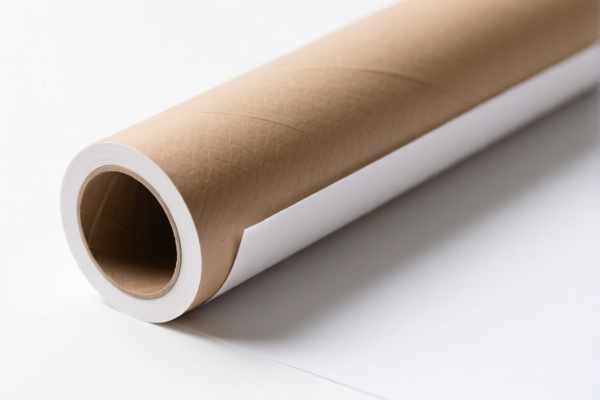
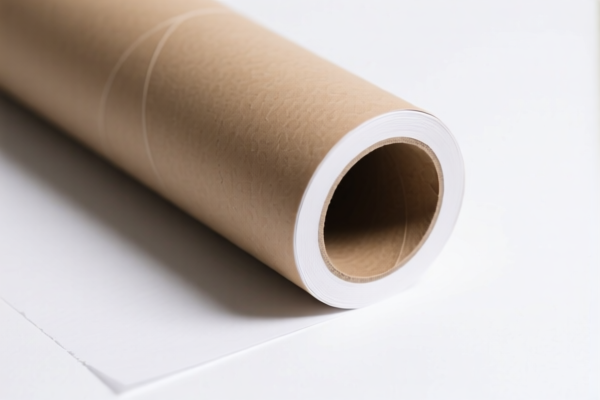
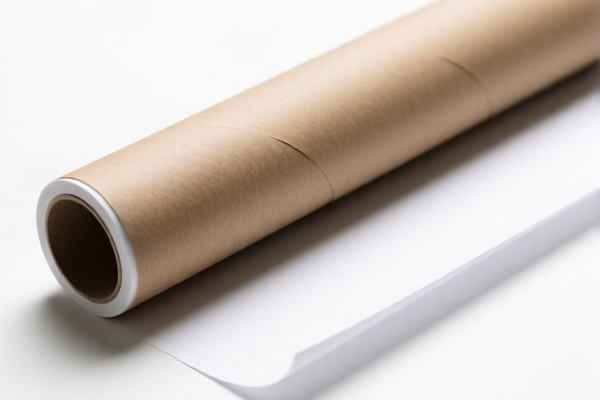
AI Analysis
📸 Wide Format High Gloss Photographic Paper Roll (Glossy Sensitized Paper Rolls)
🌐 HS Code Reference & Customs Clearance Guide | 2026 Latest Tariff Analysis | Professional Clearance Strategy
📌 I. Product Definition & Classification: What Exactly Is This Product?
"Wide Format High Gloss Photographic Paper Roll" refers to large-sized rolls of paper coated with light-sensitive emulsions (such as silver halide or thermal-sensitive chemicals), primarily used in architectural drafting, high-quality photographic printing, or document reproduction.
In international trade, the classification hinges on two critical factors: 1. The Nature of the Coating: Is it based on Silver Halide (traditional photographic sensitivity) or Thermal/Chemical Coating (heat/developing sensitive)? 2. The Functional Intent: Is it for image capture/reproduction (Class 37) or general paper manufacturing/copying (Class 48)?
⚠️ Critical Distinction:
- If the product is strictly for photographic/image reproduction and contains silver halide or equivalent photochemical sensitivity → It belongs to Chapter 37.
- If the product is essentially coated paper used for copying or thermal development without traditional photographic properties → It belongs to Chapter 48.
📦 II. HS Code Classification Details (2026 Latest Tariff Authority Comparison)
Based on the provided data, there are five possible HS Codes depending on the specific technical specification and customs interpretation.
| HS Code | Product Description Summary | Key Classification Logic | Total Tax Rate (CN to US) |
|---|---|---|---|
3703.10.30.90 |
Wide format B&W sensitzed paper roll, line reproduction type | Classified as "Line Reproduction Sensitized Paper". High specificity for photographic use. | 38.7% |
4811.90.80.30 |
Wide format B&W sensitzed paper roll, thermal-coated paper category | Classified as "Thermal Coated Paper". Focuses on the paper base and thermal function, not photographic silver. | 35.0% |
3705.00.00.00 |
Wide format B&W sensitzed paper roll, photographic plate/film attribute | Classified as "Other Photographic Plates/Films". Best fit if the product behaves like a photographic plate rather than paper. | 35.0% |
4811.90.90.80 |
Wide format B&W sensitzed paper roll, other coated paper (Cellulose-based) | Classified as "Other Coated Paper". A broad category for paper goods that don't fit specific thermal or photographic codes. | 35.0% |
3703.10.30.60 |
Wide format B&W sensitzed paper roll, continuous tone (Silver Halide) | Classified as "Continuous Tone Sensitized Paper". The most specific "Photographic" code for silver halide paper. | 38.7% |
🔍 Key Insight:
- Chapter 37 Codes (3703...,3705...) are generally for products with photographic/emulsion sensitivity. They carry a slightly higher base tariff (3.7%) but are the "correct" classification for true photographic paper.
- Chapter 48 Codes (4811...) are for coated papers (like thermal receipt paper or copy paper). They have a 0% base tariff but are often used when the "photographic" nature is deemed secondary to the "paper/thermal" nature.
💰 III. 2026 Latest Tariff Rate Breakdown (Including Surcharges & Policy Add-ons)
✅ Applicable Country: United States (US)
✅ Country of Origin: China (CN)
✅ Effective Date: November 10, 2025 onwards (for subsequent imports)
🎯 1. The "38.7%" Group (3703.10.30.90 & 3703.10.30.60)
Best for: True Silver Halide Photographic Paper
| Item | Detail |
|---|---|
| Base Tariff | 3.7% (Standard MFN rate for sensitized paper) |
| Section 301 Surcharge | +25.0% (USITC Footnote for Chinese goods) |
| Section 122 Tariff | +10.0% (Specific surcharge applicable to certain paper/photo products) |
| Total Effective Rate | 38.7% |
| Calculation Basis | CIF Value × 38.7% |
| De Minimis Exemption | ❌ NOT Eligible (Deny de minimis) |
| Legal Pathway | Section 122 → Section 301 → HTS: 3703.10.30.xx |
📌 Explanation:
- These codes fall under Section 122 of the Tariff Act, which allows for specific duties on certain imported goods.
- Combined with the standard Section 301 (25%) trade war tariff, the total burden is high.
- Why 38.7%? = 3.7% (Base) + 25% (301) + 10% (122).
🎯 2. The "35.0%" Group (4811.90.80.30, 3705.00.00.00, 4811.90.90.80)
Best for: Thermal Paper, Photographic Plates, or General Coated Paper
| Item | Detail |
|---|---|
| Base Tariff | 0.0% (Free entry for these specific sub-headings) |
| Section 301 Surcharge | +25.0% (USITC Footnote for Chinese goods) |
| Section 122 Tariff | +10.0% (Specific surcharge applicable) |
| Total Effective Rate | 35.0% |
| Calculation Basis | CIF Value × 35.0% |
| De Minimis Exemption | ❌ NOT Eligible (Deny de minimis) |
| Legal Pathway | Section 122 → Section 301 → HTS: 4811.xx / 3705.00 |
📌 Explanation:
- These codes have a 0% base tariff, saving 3.7% compared to the Group 1 codes.
- However, they still attract the full 35% punitive tariff (25% + 10%).
- Strategic Note: If your product can technically be classified as "Thermal Coated Paper" (4811) or "Photographic Plate" (3705), this reduces the total tax from 38.7% to 35.0%.
🛠️ IV. Customs Clearance Practical Advice (Real-World Pitfall Guide)
✅ 1. Documentation Checklist (Non-Negotiable)
| Document | Required | Purpose |
|---|---|---|
| ✅ Product Specification Sheet | ✔️ | Must explicitly state: "High Gloss," "Wide Format," "Sensitized/Photographic," or "Thermal Coated." |
| ✅ Technical Data Sheet (TDS) | ✔️ | Detail the chemical composition. Is it Silver Halide? Dye Thermal? Cyanotype? |
| ✅ Product Photos (Clear) | ✔️ | Show the roll, the core, and any packaging labels indicating "For Photographic Use" or "Thermal Paper." |
| ✅ Chemical MSDS/SDS | ✔️ | Required for customs to verify if the emulsion is hazardous or sensitive. |
| ✅ Commercial Invoice | ✔️ | Description must match the HS Code logic exactly. Do NOT use vague terms like "Paper." |
| ✅ Packing List | ✔️ | Confirm dimensions (width/length) to prove "Wide Format." |
✅ 2. Declaration Strategy (Key Mantra)
🔥 "Define the Emulsion, Not Just the Paper!"
| Scenario | Correct Declaration | Wrong Declaration | Consequence |
|---|---|---|---|
| True Photographic Paper (Silver Halide) | 3703.10.30.90 or 3703.10.30.60 |
"Thermal Copy Paper" | Risk of Rejection: Customs may argue it's not thermal. Pay 38.7%. |
| Thermal/Chemical Roll | 4811.90.80.30 |
"Photographic Film" | Risk of Rejection: If it's clearly paper, not film. Pay 35.0%. |
| Photographic Plate Equivalent | 3705.00.00.00 |
"Roll Paper" | Safe Middle Ground: Often accepted if product functions like a plate. Pay 35.0%. |
📌 Tip:
- If the product is developed using heat (like thermal receipt paper but for photos), lean toward4811.90.80.30.
- If the product is developed using light/chemicals (like traditional photo paper), lean toward3703.10.30.
- If in doubt,3705.00.00.00is a flexible catch-all for "photo-sensitive materials" that aren't standard film/paper, often resulting in the lower 35% rate.
✅ 3. Special Cases & Exceptions
| Situation | Handling Advice |
|---|---|
| OEM Custom Rolls | Provide client design specs. If it's a custom size, ensure it doesn't look like "standard paper" to avoid Chapter 48 misclassification. |
| Mixed Packaging | If rolls are packed with chemicals (developer), declare separately. Chemicals may have different HS codes and risks. |
| Small Sample Shipments | Even small samples are subject to Deny De Minimis. Do not attempt to split into multiple < $800 shipments. |
| Origin Labeling | Must clearly state "Made in China." Any ambiguity can trigger additional scrutiny under Section 301. |
🌍 V. Global Market Comparison (2026 Update)
| Country/Region | Recommended HS Code | Tariff Rate (China Origin) | Key Certifications | Notes |
|---|---|---|---|---|
| 🇺🇸 USA | 3703.10.30.90 or 4811.90.80.30 |
35.0% - 38.7% | FDA (if food contact), ASTM | High Tariff Zone. Section 122 & 301 apply. |
| 🇨🇳 China | 3703.10.30.90 or 4811.90.80.30 |
0% - 6.5% | CCC (if applicable) | Import into China is cheap. |
| 🇪🇺 EU | 3703.10.30 or 4811.90.80 |
~0% - 5% | REACH, CE | Generally low tariffs, but strict chemical regulations. |
| 🇬🇧 UK | 3703.10.30 or 4811.90.80 |
~0% - 5% | UKCA, REACH | Post-Brexit, similar to EU but separate certs. |
| 🇦🇺 Australia | 3703.10.30 or 4811.90.80 |
~5% - 10% | Australian Government Procurement | Moderate tariffs, no punitive surcharges. |
📌 Conclusion:
- The US is the most expensive market for this product due to Section 122 and 301 tariffs.
- EU/UK/Australia are favorable for volume shipping if you can secure non-Chinese origin or if the product doesn't trigger photochemical restrictions.
📌 VI. Common Errors & Pitfalls (Lessons Learned)
❌ Error 1: Declaring as "Copy Paper" (4811.90.90) without specifying "Sensitized."
👉 Consequence: Customs may classify as standard paper (0% + 25% = 25%), BUT if inspected, they will reclassify to 3703 or 4811.90.80.30 with penalties. Always declare "Sensitized" or "Photographic."
❌ Error 2: Using "Film" for Paper Rolls.
👉 Consequence: 3702 (Film) and 3703 (Paper) have different structures. Misdeclaring paper as film can lead to 10% penalty + back taxes.
❌ Error 3: Ignoring Section 122.
👉 Consequence: Many brokers forget the 10% Section 122 surcharge on paper/photo goods. This leads to underpayment and seizure. Always include the 10% in your cost model.
❌ Error 4: Vague Description "Glossy Paper."
👉 Consequence: Customs asks for more info. Delay in clearance. Be specific: "Wide Format, High Gloss, Light-Sensitized, Silver Halide/Thermal."
✅ Correct Declaration Example:
"Wide Format High Gloss Photographic Paper Roll, 48 inches width, sensitized emulsion, for professional photographic reproduction, not for commercial printing press use."
🎯 VII. Conclusion: Professional Declaration, Save Costs, Avoid Risks!
🎯 Remember the Mantra:
🔹 "Photo Paper is Chapter 37, Thermal Paper is Chapter 48."
🔹 "Section 122 is 10%, Section 301 is 25%. Total 35-38.7%!"
🔹 "Don't split shipments. Deny De Minimis applies!"
📌 Pro Tip:
If your product can be technically classified as 3705.00.00.00 (Photographic Plate/Other), you save 3.7% in base tariffs compared to the specific 3703 codes, while maintaining the 35% total rate. Consult a customs broker to see if your specific emulsion qualifies for this broader category.
📣 Immediate Action:
📞 Contact a licensed customs broker to file a Pre-Ruling Request for your specific batch.
📸 Provide high-res photos and chemical data to justify the HS Code.
🚀 Secure your supply chain against the 35-38.7% US Tariff by optimizing declarations.
✨ Professional Customs Clearance Starts with Accurate Classification!
💼 Every Percentage Point Saved is Profit Earned!
Customer Reviews
About HS Code Classification
The Harmonized System (HS) is an internationally standardized nomenclature developed by the World Customs Organization (WCO) to classify traded products. Over 200 countries use the HS system as the basis for customs tariffs, trade statistics, and import/export regulations.
Each HS code follows a hierarchical structure:
- Chapter (2 digits) — Broad category of goods (e.g., Chapter 84: Machinery and Mechanical Appliances)
- Heading (4 digits) — More specific grouping within the chapter
- Subheading (6 digits) — Internationally standardized breakdown, used by all WCO member countries
- National subdivisions (8-10 digits) — Country-specific extensions for further classification, such as US HTSUS 10-digit codes
Correct HS code classification is essential for smooth customs clearance, accurate duty payment, and compliance with trade regulations. Misclassification can lead to customs delays, overpayment of duties, or penalties.
When importing from CN to US, the applicable tariff rates may include:
- Most-Favored-Nation (MFN) rate — The standard duty rate applied to WTO members
- General rate — Applied to countries without trade agreements
- Trade remedy duties — Additional tariffs such as Section 301 (anti-dumping), Section 232 (national security), or countervailing duties
The information provided on this page is for reference purposes only. For official classification, please consult with your local customs authority or a licensed customs broker.