Wide format Low contrast Photo Paper Roll
CN → US| HS Code | Tariff Rate | Origin | Destination | Doc |
|---|---|---|---|---|
| 3703203030 | 38.7% | CN | US | Official Doc |
| 4811909030 | 35.0% | CN | US | Official Doc |
| 3703103030 | 38.7% | CN | US | Official Doc |
| 4811908030 | 35.0% | CN | US | Official Doc |
| 3701910060 | 38.7% | CN | US | Official Doc |
Product Images
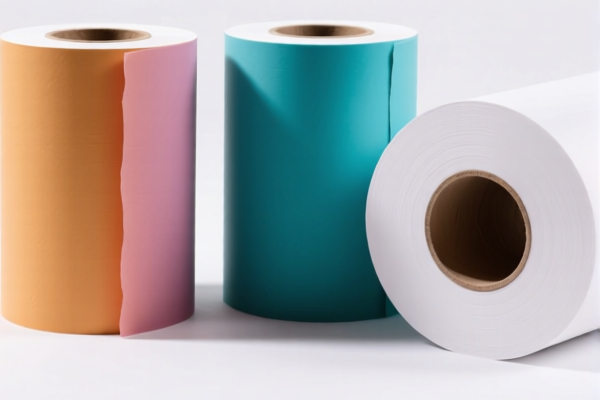
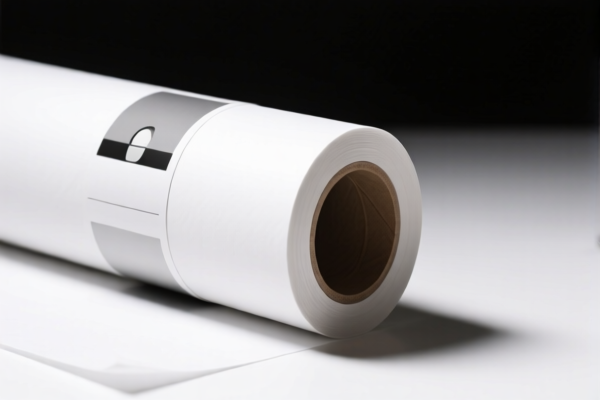
AI Analysis
📸 Wide Format Low Contrast Photo Paper Roll
🌐 HS Code Reference & Customs Clearance Guide | 2026 Latest Tariff Analysis | Professional Clearance Strategy
📌 I. Product Definition & Classification: Do You Really Understand "Photo Paper"?
Wide Format Low Contrast Photo Paper Roll is a specialized consumable used in professional photography, large-format printing, and industrial imaging. Unlike standard photo paper, "low contrast" variants are engineered to produce softer tonal transitions, often used for artistic portraits, fine art prints, or specific post-processing workflows.
In international trade, these products are strictly classified based on material composition and chemical treatment:
1. Silver Halide Based (Chemical Sensitivity):
- Physical support: Paper
- Coating: Light-sensitive silver halide emulsion
- Usage: Requires chemical development (darkroom or automated processors)
- Key Feature: "Photo" in the name implies sensitivity to light for image formation.
2. Pigment/Inkjet Based (Non-Sensitive):
- Physical support: Coated paper
- Coating: Hydrophilic/hydrophobic layers for ink absorption
- Usage: Prints directly with inkjet printers; no light sensitivity required
- Key Feature: "Paper roll" with coating, used for recording images but not "photographic" in the strict customs sense.
⚠️ Critical Distinction:
- If the paper is light-sensitive (silver halide) → It belongs to Chapter 37 (Photographic Goods).
- If the paper is non-sensitive (coated for inkjet) → It belongs to Chapter 48 (Paper & Paperboard).
- "Low Contrast" describes the optical property/finish, not the customs classification. It does not change the HS Code but must be declared to avoid misclassification disputes.
📦 II. HS Code Classification Details (2026 Latest Tariff Authority Cross-Reference)
| HS Code | Product Description | Applicable Scenario | Key Characteristic |
|---|---|---|---|
3703.20.30.30 |
Color Sensitized Paper/Board, Roll Form | Color photography using silver halide, paper base, roll form | ✅ Light Sensitive (Silver Halide) |
4811.90.90.30 |
Coated Paper Rolls, Other | Thermal paper or specific coated papers for inkjet/office, non-sensitized | ❌ Non-Sensitive (Paper Coating) |
3703.10.30.30 |
Color Halogenated Silver Paper Rolls | Professional color printing paper, roll form, specific material/usage limits | ✅ Light Sensitive (Silver Halide) |
4811.90.80.30 |
Coated/Decorative Paper Products, Roll Form | General coated paper, decorative rolls, paper-based substrates | ❌ Non-Sensitive (Paper Coating) |
3701.91.00.60 |
Color Photographic Film, Other | Non-paper/non-textile sensitives (e.g., plastic film, transparent base) | ✅ Light Sensitive (Film Base) |
🔍 Key Reminder:
- Chapter 37 (3701-3703): For sensitized materials (must be developed/processed to reveal images).
- Chapter 48 (4811): For non-sensitized coated papers (inkjet photo paper, glossy paper, etc.).
- "Low Contrast" is a marketing term; customs focuses on material and sensitivity.
- If the product is film (transparent/plastic base), it goes to3701. If it is paper, it goes to3703or4811.
💰 III. 2026 Latest Tariff Rate Breakdown (Including Surcharges & Policy Add-ons)
✅ Applicable Country: United States (US)
✅ Origin: China (CN)
✅ Effective Date: From November 10, 2025 (including subsequent imports)
🎯 1. 3703.20.30.30 & 3703.10.30.30 —— Color Sensitized Paper Rolls (Silver Halide)
| Item | Content |
|---|---|
| Base Tariff Rate | 3.7% (ad valorem) |
| Section 301 Surtax | +25.0% (USITC Footnote 9903.88.01) |
| IEEPA Surcharge | +10.0% (Targeting China/HK products, effective Nov 10, 2025) |
| Total Tariff Rate | 38.7% |
| Tax Calculation | CIF Value × 38.7% |
| De Minimis Exemption | ❌ Not Eligible (deny_de_minimis) |
| Legal Basis Path | IEEPA:9903.01.25 → IEEPA:9903.01.24 → USITC:3703.x0.x0.30 → FOOTNOTE:9903.88.01 |
📌 Explanation:
- Section 301 (25%): Applied to Chinese-origin photographic goods under specific subheadings.
- IEEPA (10%): Additional levy under the International Emergency Economic Powers Act.
- Total 38.7%: This is a high-cost category. Many importers mistakenly classify this as "paper" (Chapter 48) to avoid surcharges, but if it is light-sensitive, this is misclassification.
🎯 2. 4811.90.90.30 & 4811.90.80.30 —— Coated Paper Rolls (Non-Sensitive/Inkjet)
| Item | Content |
|---|---|
| Base Tariff Rate | 0.0% (ad valorem) |
| Section 301 Surtax | +25.0% (USITC Footnote 9903.88.01) |
| IEEPA Surcharge | +10.0% (Targeting China/HK products, effective Nov 10, 2025) |
| Total Tariff Rate | 35.0% |
| Tax Calculation | CIF Value × 35.0% |
| De Minimis Exemption | ❌ Not Eligible (deny_de_minimis) |
| Legal Basis Path | IEEPA:9901.25 → IEEPA:9903.01.24 → USITC:4811.90.x0.30 → FOOTNOTE:9903.88.01 |
📌 Note:
- Even though the base rate is 0%, the combined surcharge is 35%.
- This is 3.7% lower than the silver halide category due to the lower base rate.
- Crucial: Only use this code if the paper is NOT light-sensitive. If you declare inkjet paper as "photo paper" (Chapter 37), you pay more. If you declare light-sensitive paper as "inkjet paper" (Chapter 48), you face fraud penalties.
🎯 3. 3701.91.00.60 —— Color Photographic Film (Non-Paper)
| Item | Content |
|---|---|
| Base Tariff Rate | 3.7% |
| Section 301 Surtax | +25.0% |
| IEEPA Surcharge | +10.0% |
| Total Tariff Rate | 38.7% |
| Tax Calculation | CIF Value × 38.7% |
| De Minimis Exemption | ❌ Not Eligible |
| Legal Basis Path | IEEPA:9903.01.25 → USITC:3701.91.00.60 |
📌 Note:
- Use this only if the product is on a film base (plastic/polyester), not paper.
- "Wide format" can apply to film too (e.g., large format negatives).
🛠️ IV. Customs Clearance Practical Advice (Real-World Pitfall Avoidance Guide)
✅ 1. Required Documentation Checklist (Non-Negotiable)
| Document | Must Provide | Description |
|---|---|---|
| ✅ Technical Data Sheet (TDS) | ✔️ | Must specify: Paper vs. Film Base, Silver Halide vs. Inkjet, Light Sensitivity Status. |
| ✅ Product Photos (Unopened Roll) | ✔️ | Clear view of labeling. Look for terms like "Light Sensitive," "Keep in Dark," or "Digital/Inkjet Only." |
| ✅ Commercial Invoice | ✔️ | Describe as: "Wide Format Low Contrast Photo Paper Roll, [Paper/Film] Base, [Sensitized/Non-Sensitized]." |
| ✅ Certificate of Origin (CO) | ✔️ | To verify Chinese origin (triggers surcharges). |
| ✅ Packing List | ✔️ | Include net/gross weight and dimensions. |
| ✅ Third-Party Test Report | ✔️ | If disputed, a lab test proving light sensitivity (or lack thereof) is critical. |
✅ 2. Declaration Tips (Key Mnemonic)
🔥 "Material First, Sensitivity Second! Name Accurate, Tax Clear!"
| Scenario | Correct Declaration | Incorrect Practice |
|---|---|---|
| Light-Sensitive Paper (Silver Halide) | 3703.x0.x0.30 |
Declare as "Coated Paper" → Smuggling/Fraud Risk |
| Non-Sensitive Paper (Inkjet Photo Paper) | 4811.90.x0.30 |
Declare as "Photographic Film" → Overpayment |
| Plastic Film Base (Negative/Positive) | 3701.91.00.60 |
Declare as "Paper Roll" → Incorrect Classification |
| "Low Contrast" Description | Mention as Finish/Grade | Do not use as HS Code determinant |
✅ 3. Special Handling Scenarios
| Scenario | Handling Advice |
|---|---|
| OEM Custom Paper | Provide customer order + specification sheet. Ensure "Low Contrast" is defined in specs. |
| Mixed Packages (Paper + Film) | Must Split Declaration. Do not combine. Different HS Codes = Different Duties. |
| Sample vs. Commercial | Both are subject to 38.7% or 35.0%. No de minimis exemption for China-origin goods under IEEPA. |
| Unopened vs. Opened | Customs may inspect opened samples. If light sensitivity is altered by exposure, it may be deemed "unsellable" or reclassified. |
🌍 V. Global Market Clearance Comparison (2026 Latest)
| Country/Region | Recommended HS Code | Tariff (China Origin) | Certification Requirements | Notes |
|---|---|---|---|---|
| 🇺🇸 United States | 3703.20.30.30 or 4811.90.90.30 |
38.7% (Photo) / 35.0% (Paper) | None specific for customs, but FCC/CE not applicable | High Surcharge. Strict enforcement on Chapter 37. |
| 🇨🇳 China | 3703.20.30.30 or 4811.90.90.30 |
~3.7% / 0% | None | No 301/IEEPA surcharges. |
| 🇪🇺 European Union | 3703.20.30.30 or 4811.90.90.30 |
~3.7% / 0% | REACH (chemicals) | No Section 301. IEEPA does not apply. |
| 🇬🇧 United Kingdom | 3703.20.30.30 or 4811.90.90.30 |
~3.7% / 0% | UKCA (if applicable) | Post-Brexit, no US-style surcharges. |
| 🇯🇵 Japan | 3703.20.30.30 or 4811.90.90.30 |
~3.7% / 0% | PSE (if electronic components involved) | No additional tariffs for China in most cases. |
📌 Conclusion:
- The US is the most expensive market for these goods due to Section 301 + IEEPA combined surcharges.
- China, EU, UK, Japan charge only the base tariff (3.7% for photo, 0% for coated paper).
- Strategy: If targeting the US, ensure accurate classification to avoid penalties. If targeting other markets, the cost difference is minimal.
📌 VI. Common Errors & Pitfall Guide (Lessons Learned)
❌ Error 1: Declaring Light-Sensitive Photo Paper as "Coated Paper" (Chapter 48) to save 3.7%.
👉 Consequence: Customs audit reveals light sensitivity. Penalty + Back Taxes + Possible Fraud Charge.
👉 Real Cost: 38.7% + Penalties > 38.7%.
❌ Error 2: Declaring Inkjet Photo Paper as "Photographic Film" (Chapter 37).
👉 Consequence: Overpayment of 3.7% base tariff (38.7% vs 35.0%).
👉 Impact: Lost profit margin.
❌ Error 3: Using "Low Contrast" as the HS Code Determinant.
👉 Consequence: Customs rejects vague descriptions. Requires Technical Data Sheet.
👉 Delay: Cargo held at port for 2-4 weeks while documents are submitted.
❌ Error 4: Ignoring IEEPA 10% Surcharge.
👉 Consequence: Underpayment of 10% on CIF value. Interest + Penalties accrue monthly.
✅ Correct Approach:
"Wide Format Low Contrast Paper Roll, Non-Sensitized, Coated for Inkjet Printing, 36" Width, Roll Form, Model XYZ, Origin: China"
OR
"Wide Format Low Contrast Sensitized Paper Roll, Silver Halide Based, for Color Photography, Roll Form, Model ABC, Origin: China"
🎯 VII. Conclusion: Precision Classification, Cost Efficiency, Compliance!
🎯 Remember the Mnemonic:
🔹 "Paper vs. Film, Sensitive vs. Non-Sensitive!"
🔹 "3703 is 38.7%, 4811 is 35.0%!"
🔹 "Low Contrast is a Finish, Not a Code!"
🔹 "US Market = High Tax, Accuracy is Key!"
📌 Pro Tip:
If your photo paper rolls are originating from Vietnam, Malaysia, or Thailand, you may apply for IEEPA Exemption or Section 301 Exclusion (if applicable), reducing tariffs to 0%~5%.
Recommendation:
📞 Contact a licensed customs broker
📸 Provide Technical Data Sheet + Product Photos
📜 Apply for Pre-Ruling (Advance Ruling) to lock in the HS Code and tariff rate.
📣 Immediate Action:
🚀 Do Not Guess! Misclassification of photo goods is heavily audited.
💼 Your Margin Depends on Accurate HS Codes!
✨ Professional Customs Clearance Starts with Precise Classification!
💼 Every Percent of Tax Saved is Pure Profit!
Customer Reviews
About HS Code Classification
The Harmonized System (HS) is an internationally standardized nomenclature developed by the World Customs Organization (WCO) to classify traded products. Over 200 countries use the HS system as the basis for customs tariffs, trade statistics, and import/export regulations.
Each HS code follows a hierarchical structure:
- Chapter (2 digits) — Broad category of goods (e.g., Chapter 84: Machinery and Mechanical Appliances)
- Heading (4 digits) — More specific grouping within the chapter
- Subheading (6 digits) — Internationally standardized breakdown, used by all WCO member countries
- National subdivisions (8-10 digits) — Country-specific extensions for further classification, such as US HTSUS 10-digit codes
Correct HS code classification is essential for smooth customs clearance, accurate duty payment, and compliance with trade regulations. Misclassification can lead to customs delays, overpayment of duties, or penalties.
When importing from CN to US, the applicable tariff rates may include:
- Most-Favored-Nation (MFN) rate — The standard duty rate applied to WTO members
- General rate — Applied to countries without trade agreements
- Trade remedy duties — Additional tariffs such as Section 301 (anti-dumping), Section 232 (national security), or countervailing duties
The information provided on this page is for reference purposes only. For official classification, please consult with your local customs authority or a licensed customs broker.