Wide format Negative Film Roll
CN → US| HS Code | Tariff Rate | Origin | Destination | Doc |
|---|---|---|---|---|
| 3702430100 | 38.7% | CN | US | Official Doc |
| 3702440160 | 38.7% | CN | US | Official Doc |
| 3702320160 | 38.7% | CN | US | Official Doc |
| 3704000000 | 35.0% | CN | US | Official Doc |
| 3702960000 | 38.7% | CN | US | Official Doc |
Product Images
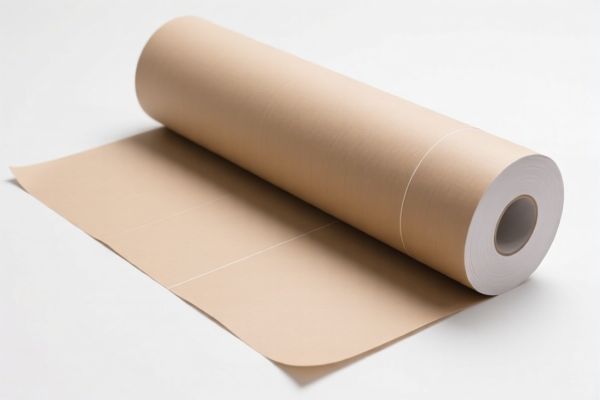
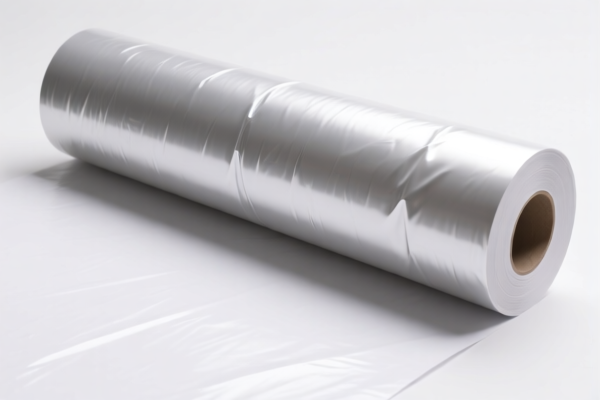
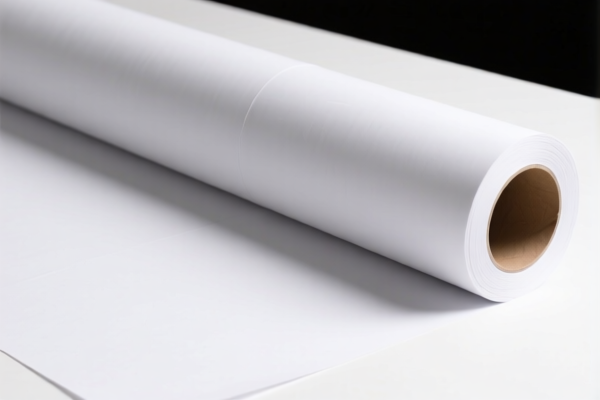
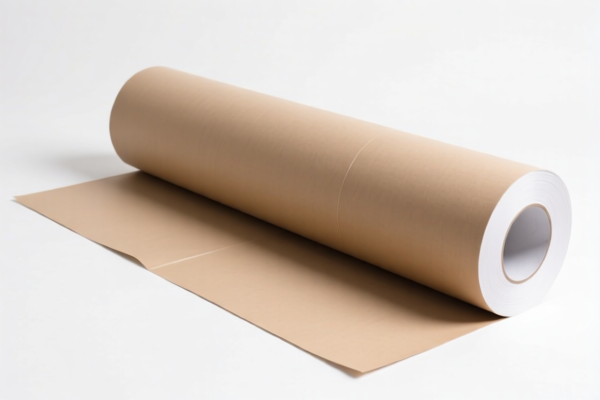
AI Analysis
🎞️ Wide Format Negative Film Roll (宽幅负片胶卷)
🌐 HS Code Reference & Customs Clearance Guide | 2026 Latest Tariff Analysis | Professional Strategy for Photographic Materials
📌 1. Product Definition: What Exactly Is "Wide Format Negative Film"?
In international trade, Negative Film Roll refers to light-sensitive photographic material that has been exposed (or unexposed) but not yet developed. It is characterized by: * Form: Rolls (not sheets or plates). * Material: Typically plastic base (acetate or polyester) coated with silver halide emulsion. Not made of paper, cardboard, or textiles. * State: Can be Unexposed (ready for use) or Exposed/Unprocessed (already used but not developed). * Width: "Wide Format" generally implies a width exceeding standard 35mm formats, often >105mm, used for large-format cameras or industrial inspection.
⚠️ Critical Distinction for Customs: * If the film is Unexposed → It is a "Light-sensitive photographic film." * If the film is Exposed but Unprocessed → It is "Exposure photography material." * Material Check: Must be non-paper/non-textile. If it’s on paper (like photo paper), it goes to a different chapter!
📦 2. HS Code Classification Matrix (Based on Provided Data)
| HS Code | Product Description | State/Condition | Tax Rate (Total) | Tax Details Breakdown |
|---|---|---|---|---|
| 3702.43.01.00 | Wide format negative roll (Roll form). Light-sensitive material. | Exposed, Unprocessed (Feature: Already exposed but not yet developed) |
38.7% | Base: 3.7% Section 301: 25.0% Section 122: 10% |
| 3702.44.01.60 | Wide format negative roll (Roll form). | Unexposed (Width >105mm; Non-paper, non-instant print) |
38.7% | Base: 3.7% Section 301: 25.0% Section 122: 10% |
| 3702.32.01.60 | Black & White Negative Roll | Unexposed (Perforated/Non-perforated film, Silver Halide) |
38.7% | Base: 3.7% Section 301: 25.0% Section 122: 10% |
| 3704.00.00.00 | Black & White Negative Roll | Exposed, Unprocessed (Photographic material, exposed but undeveloped) |
35.0% | Base: 0.0% Section 301: 25.0% Section 122: 10% |
| 3702.96.00.00 | Black & White Negative Roll | Unexposed (Generic light-sensitive film, non-paper/textile) |
38.7% | Base: 3.7% Section 301: 25.0% Section 122: 10% |
🔍 Key Insight: * Most Unexposed wide format films fall under Chapter 3702 (Light-sensitive photographic film), attracting a 38.7% total rate. * Exposed/Unprocessed films may fall under 3704.00.00.00 (Exposure photography materials) or stay in 3702 depending on specific formatting. The provided data shows 3704.00.00.00 has a slightly lower base rate (0%) but the same additional tariffs, resulting in a 35.0% total rate.
💰 3. Detailed Tariff Breakdown (USA Market Context)
✅ Origin: China (CN)
✅ Market: United States (US)
✅ Effective Date: Current policies (Section 301 & IEEPA)
🎯 A. The 38.7% Rate (HS Codes: 3702.43.01.00, 3702.44.01.60, 3702.32.01.60, 3702.96.00.00)
This is the standard rate for light-sensitive photographic film (usually unexposed).
| Item | Rate | Source/Legal Basis |
|---|---|---|
| Most Favored Nation (MFN) Base Rate | 3.7% | Harmonized Tariff Schedule (HTSUS) |
| Section 301 Additional Duty | 25.0% | US Trade Act of 1974, Sec. 301 |
| Section 122 Duty | 10% | Specific provision (likely IEEPA/Executive Order related) |
| TOTAL EFFECTIVE RATE | 38.7% | Ad Valorem |
📌 Explanation: * The 3.7% is the standard baseline for photographic films in the US. * The 25.0% is the notorious "Trump Tariff" or Section 301 duty on Chinese goods. * The 10% is an additional surcharge (Section 122), often applied to strategic or sensitive categories. * Result: A $10,000 shipment incurs $3,870 in duties alone.
🎯 B. The 35.0% Rate (HS Code: 3704.00.00.00)
This applies to exposure photography materials (usually exposed but undeveloped).
| Item | Rate | Source/Legal Basis |
|---|---|---|
| Most Favored Nation (MFN) Base Rate | 0.0% | Many exposure materials are duty-free under MFN |
| Section 301 Additional Duty | 25.0% | US Trade Act of 1974, Sec. 301 |
| Section 122 Duty | 10% | Specific provision |
| TOTAL EFFECTIVE RATE | 35.0% | Ad Valorem |
📌 Advantage: * If your film is already exposed (e.g., professional cinematography rolls sent for scanning), it might qualify for 3704.00.00.00, saving you 3.7% compared to unexposed film. * However, you must prove it is not for sale as raw material but for processing/service.
🛠️ 4. Customs Clearance Practical Advice (Avoiding Pitfalls)
✅ 1. Documentation Checklist (Mandatory)
| Document | Requirement | Reason |
|---|---|---|
| Commercial Invoice | Must specify: "Photographic Film," "Width >105mm," "Material: Polyester/Acetate Base," "Silver Halide Emulsion." | Prevents misclassification as "Paper" or "Plastic Sheet." |
| Product Specification | Confirm if Exposed or Unexposed. | Determines HS Code (3702 vs. 3704). |
| CoA (Certificate of Analysis) | Proof of chemical composition (Silver Halide). | Verifies it is a chemical photographic product, not digital. |
| HS Code Pre-Ruling | Highly Recommended | Given the high tariff (35-38.7%), a pre-ruling can provide legal certainty. |
✅ 2. Classification Strategy (Critical!)
| Scenario | Recommended HS Code | Why? |
|---|---|---|
| New Rolls (Unexposed) | 3702.44.01.60 or 3702.32.01.60 |
Standard light-sensitive film. Width >105mm fits 3702.44. |
| Exposed Rolls (Unprocessed) | 3704.00.00.00 |
"Exposure photography materials." Lower base tax (0%). |
| Paper-Based Negative | WRONG CATEGORY | If on paper, it’s NOT 3702. Check Chapter 3701/3703 or 4813. |
| Digital Negative File | WRONG CATEGORY | Digital files are not physical film. Different classification entirely. |
✅ 3. Common Errors & Consequences
❌ Error 1: Misidentifying Material as "Plastic Sheet"
👉 Consequence: Classified under Chapter 39 (Plastics), leading to incorrect duty rates and potential penalties for misdeclaration.
✅ Fix: Emphasize "Light-sensitive" and "Silver Halide" in description.
❌ Error 2: Ignoring "Width" Specification
👉 Consequence: If width is <105mm, it may fall under different subheadings (e.g., 35mm film).
✅ Fix: Clearly state width in mm in the invoice.
❌ Error 3: Confusing "Exposure" with "Development"
👉 Consequence: Customs may reject the claim for 3704 if the film is still considered "raw material" for commercial photography sales.
✅ Fix: Provide a letter of explanation from the manufacturer stating the film is already exposed and intended for processing.
🌍 5. Global Market Comparison (2026 Outlook)
| Country | HS Code | Base Rate | Additional Duties | Total Est. Rate | Notes |
|---|---|---|---|---|---|
| 🇺🇸 USA | 3702.44.01.60 | 3.7% | 35% (Sec 301 + 122) | 38.7% | High barrier for Chinese origin. |
| 🇪🇺 EU | 3702.44 | 6.5% | 0% | 6.5% | No Section 301 equivalent. |
| 🇨🇳 China | 3702.44 | 6.5% | 0% | 6.5% | Import duty for foreign film. |
| 🇯🇵 Japan | 3702.44 | 6.0% | 0% | 6.0% | No major surcharges. |
📌 Conclusion: The USA market is the most expensive due to layered tariffs (Base + 301 + 122). For US imports, consider: 1. Re-exporting from a third country (subject to rules of origin). 2. Using Exposed Film (
3704.00.00.00) if applicable to save 3.7%. 3. Advance Rulings to ensure correct classification and avoid retroactive penalties.
📌 6. Final Recommendations
- Verify State: Is the film Unexposed or Exposed? This is the single biggest factor in choosing between 3702 (38.7%) and 3704 (35.0%).
- Specify Width: Ensure the invoice explicitly states "Width > 105mm" to justify the "Wide Format" classification under 3702.44.
- Material Confirmation: Confirm the base is non-paper (e.g., Polyester). If it’s paper-based, the classification changes completely.
- Budget for Tariffs: With a total rate of 35-38.7%, factor this into your landed cost calculation immediately.
🎯 Pro Tip:
"Exposed is Cheaper, Unexposed is Standard. Paper is Not Film."
Use precise language in your commercial invoice:
"Large Format Silver Halide Photographic Film, Polyester Base, Width 120mm, Unexposed/Exposed as stated."
✨ Professional clearance starts with precise classification!
💼 Every percentage point matters in high-tariff segments.
Customer Reviews
About HS Code Classification
The Harmonized System (HS) is an internationally standardized nomenclature developed by the World Customs Organization (WCO) to classify traded products. Over 200 countries use the HS system as the basis for customs tariffs, trade statistics, and import/export regulations.
Each HS code follows a hierarchical structure:
- Chapter (2 digits) — Broad category of goods (e.g., Chapter 84: Machinery and Mechanical Appliances)
- Heading (4 digits) — More specific grouping within the chapter
- Subheading (6 digits) — Internationally standardized breakdown, used by all WCO member countries
- National subdivisions (8-10 digits) — Country-specific extensions for further classification, such as US HTSUS 10-digit codes
Correct HS code classification is essential for smooth customs clearance, accurate duty payment, and compliance with trade regulations. Misclassification can lead to customs delays, overpayment of duties, or penalties.
When importing from CN to US, the applicable tariff rates may include:
- Most-Favored-Nation (MFN) rate — The standard duty rate applied to WTO members
- General rate — Applied to countries without trade agreements
- Trade remedy duties — Additional tariffs such as Section 301 (anti-dumping), Section 232 (national security), or countervailing duties
The information provided on this page is for reference purposes only. For official classification, please consult with your local customs authority or a licensed customs broker.