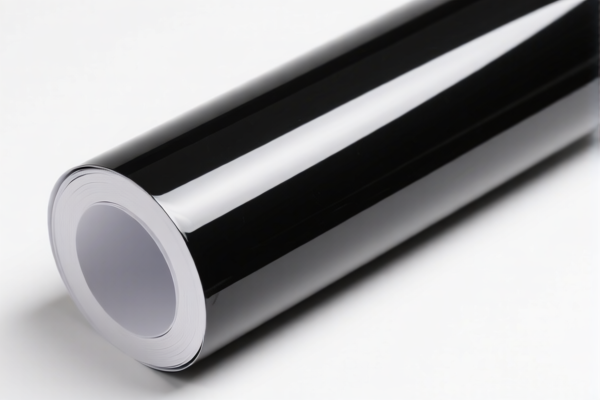
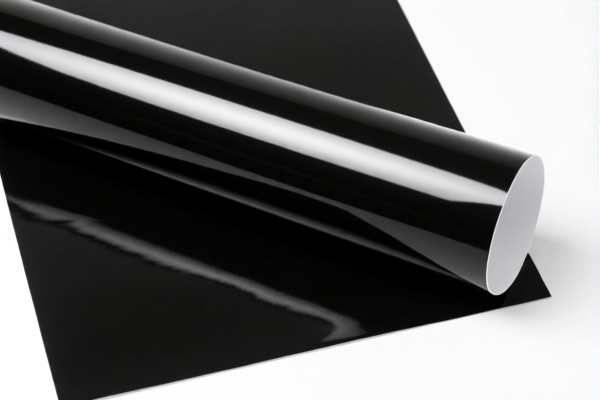
Wide format Photographic Paper Roll (Glossy)
CN → US| HS Code | Tariff Rate | Origin | Destination | Doc |
|---|---|---|---|---|
| 4811908030 | 35.0% | CN | US | Official Doc |
| 4811909030 | 35.0% | CN | US | Official Doc |
| 3703103060 | 38.7% | CN | US | Official Doc |
| 3703103090 | 38.7% | CN | US | Official Doc |
| 4823906700 | 35.0% | CN | US | Official Doc |
Product Images
AI Analysis
📸 Wide Format Photographic Paper Roll (Glossy)
🌐 HS Code Reference & Clearance Guide | 2026 Customs Tariff Analysis | Professional Import Strategy
📌 I. Product Definition & Classification: Understanding "Glossy Photo Paper"
Wide Format Photographic Paper (Glossy) is a high-resolution output medium used for professional printing, architectural rendering, and fine art reproduction. In international trade, its classification depends strictly on the material composition and chemical treatment.
Key Distinction:
- Standard Coated Paper (Inkjet/Laser): Base material is paper, treated with a coating to absorb ink/toner. Falls under Chapter 48.
- Traditional Photographic/Sensitive Paper: Base material contains silver halides or light-sensitive chemicals. Falls under Chapter 37.
⚠️ Critical Classification Point:
- If the paper is plain coated (no light-sensitive chemicals) → HS Code 4811/4823
- If the paper is light-sensitive (silver halide/emulsion) → HS Code 3703
📦 II. HS Code Classification Matrix (2026 Latest Tariff Data)
Based on the provided data, there are four primary HS Codes depending on the specific technical nature of the paper.
| HS Code | Product Description | Material Characteristics | Key Classification Logic |
|---|---|---|---|
4811.90.80.30 |
Coated Paper in Rolls | Base: Photo Paper (Paper Product) Form: Rolls Feature: Coated |
✅ Non-Sensitive: Standard inkjet/laser photo paper. ❌ Not light-sensitive. |
4811.90.90.30 |
Treated Surface Paper in Rolls | Base: Photo Paper (Paper/Cardboard) Form: Rolls Feature: Coated/Surface Treated |
✅ Non-Sensitive: Similar to above, but specifies "surface treatment." ❌ Not light-sensitive. |
3703.10.30.60 |
Halide Silver Paper in Rolls | Base: Halide Silver Paper Form: Rolls Use: Painting/Art Width: > 610mm |
✅ Sensitive: Traditional photographic paper with silver emulsion. ⚠️ Width exceeds 610mm triggers specific sub-heading. |
3703.10.30.90 |
Sensitive Paper in Rolls | Base: Sensitive Paper Form: Rolls Use: Non-continuous tone imaging Width: > 610mm |
✅ Sensitive: Generic sensitive paper for imaging. ⚠️ Width exceeds 610mm. |
4823.90.67.00 |
Coated Paper Board Articles in Rolls | Base: Coated Paper Form: Rolls Feature: Coated Paper/Cardboard Articles |
✅ Non-Sensitive: Final product or semi-finished coated board in roll form. |
🔍 Important Note:
- Chapter 48 (4811/4823) applies to non-sensitive coated papers (most common for modern wide-format inkjet printing).
- Chapter 37 (3703) applies only if the paper contains light-sensitive emulsions (traditional darkroom or specialized imaging).
- Width > 610mm is a critical threshold for the Chapter 37 codes.
💰 III. 2026 Tariff Rate Breakdown (Including Supplementary Duties)
✅ Applicable Country: United States (US)
✅ Origin: China (CN)
✅ Effective Date: Post-November 2025 Import
🎯 1. Non-Sensitive Coated Papers (HS Codes: 4811.90.80.30, 4811.90.90.30, 4823.90.67.00)
These codes apply to standard glossy photo papers used for large-format printing.
| Item | Details |
|---|---|
| Base Tariff Rate | 0.0% (Ad Valorem) |
| Section 301 Tariff (25%) | +25.0% (USITC Footnote 9903.88.01 type) |
| 122 Clause Tariff (IEEPA) | +10.0% (Specific clause for Chinese goods) |
| Total Effective Rate | 35.0% |
| Tax Calculation | CIF Value × 35% |
| De Minimis Exemption? | ❌ NO (Not eligible for de minimis) |
| Legal Basis Path | USITC:4811.90.80.30 → Section 301: 25% → 122 Clause: 10% |
📌 Interpretation:
- The base tariff is 0%, making it attractive before sanctions.
- However, the 25% Section 301 tariff and 10% 122 Clause tariff are mandatory for Chinese-origin goods.
- Total Duty = 35%. This is a high-cost item for importers.
🎯 2. Sensitive Photographic Paper (HS Codes: 3703.10.30.60, 3703.10.30.90)
These codes apply only if the paper is chemically sensitive (silver halide).
| Item | Details |
|---|---|
| Base Tariff Rate | 3.7% (Ad Valorem) |
| Section 301 Tariff (25%) | +25.0% |
| 122 Clause Tariff (IEEPA) | +10.0% |
| Total Effective Rate | 38.7% |
| Tax Calculation | CIF Value × 38.7% |
| De Minimis Exemption? | ❌ NO |
| Legal Basis Path | USITC:3703.10.30.60 → Section 301: 25% → 122 Clause: 10% |
📌 Interpretation:
- Base rate is slightly higher (3.7% vs 0%).
- Total Duty = 38.7%.
- Risk: Misclassifying sensitive paper as non-sensitive (Chapter 48) could lead to penalties for undervaluing duty (35% vs 38.7%).
🛠️ IV. Customs Clearance Practical Advice (Avoiding Pitfalls)
✅ 1. Documentation Checklist (Mandatory)
| Document | Required | Notes |
|---|---|---|
| ✅ Product Specification Sheet | ✔️ | Must specify: "Coated Paper" vs "Sensitive/Silver Halide Paper". |
| ✅ Material Composition Declaration | ✔️ | Explicitly state: "Contains NO silver halides" (for Chapter 48) OR "Contains silver halide emulsion" (for Chapter 37). |
| ✅ Commercial Invoice | ✔️ | Description must match HS Code: e.g., "Glossy Coated Paper Rolls" vs "Light-Sensitive Photographic Paper". |
| ✅ Bill of Lading | ✔️ | Weight and volume details. |
| ✅ Certificate of Origin | ✔️ | To confirm Chinese origin (triggers 301/122 duties). |
✅ 2. Classification Strategy (Key Tips)
🔥 "Know Your Chemistry: Coated is 35%, Sensitive is 38.7%"
| Scenario | Correct HS Code | Duty Rate | Why? |
|---|---|---|---|
| Standard Inkjet/Laser Photo Paper (Glossy) | 4811.90.80.30 or 4811.90.90.30 |
35% | No light-sensitive chemicals. |
| Wide Format (>610mm) Sensitive Paper (Art/Printing) | 3703.10.30.60 or 3703.10.30.90 |
38.7% | Contains silver halides/emulsion. |
| Coated Paper Board in Rolls | 4823.90.67.00 |
35% | Semi-finished coated product. |
⚠️ Critical Warning:
- If you declare Standard Photo Paper as Sensitive Paper (HS 3703), you will pay higher duty (38.7% vs 35%) unnecessarily.
- If you declare Sensitive Paper as Standard Paper (HS 4811), you risk customs detention, fines, and back-duties for misclassification.
✅ 3. Special Cases & Mitigation
| Situation | Recommendation |
|---|---|
| OEM Custom Paper | Provide customer contract + technical sheet proving it is non-sensitive coated paper to justify Chapter 48. |
| Width Exactly 610mm | Check if it falls under "≤610mm" rules. However, provided data specifies >610mm for HS 3703 codes. Ensure accurate measurement. |
| Duty Minimization | No legal exemption available for China-origin goods under current 2026 rules. Cost = 35-38.7%. |
| De Minimis (Section 321) | ❌ Not Applicable. High-value commercial shipments > $800 cannot use de minimis for these HS codes. |
🌍 V. Global Market Comparison (2026)
| Country/Region | Recommended HS Code | Base Duty | Total Duty (China Origin) | Notes |
|---|---|---|---|---|
| 🇺🇸 USA | 4811.90.80.30 |
0% | 35% | High 301 + 122 Clause duties. |
| 🇨🇳 China | 4811.90.80.30 |
0% | 0% | No import duty for domestic production. |
| 🇪🇺 EU | 4811.90.80.30 |
~5-7% | ~5-7% | No US-style 301/122 tariffs. |
| 🇬🇧 UK | 4811.90.80.30 |
~5% | ~5% | Post-Brexit tariff regime. |
| 🇯🇵 Japan | 4811.90.80.30 |
~5% | ~5% | FTAs may apply for some partners. |
📌 Conclusion:
- USA is the most expensive market for wide-format photo paper due to 35% total duty.
- Consider supply chain diversification (e.g., produce in Vietnam/Mexico) if targeting the US market, as these countries may be exempt from Section 301 and 122 Clause duties.
📌 VI. Common Mistakes & Pitfalls (Lessons Learned)
❌ Mistake 1: Using generic description "Paper Roll" on Invoice
👉 Result: Customs may classify under highest duty rate or demand reclassification → Delay.
❌ Mistake 2: Claiming De Minimis for Large Commercial Shipments
👉 Result: Shipment held at border, fined for evasion → Costly delays.
❌ Mistake 3: Confusing "Glossy Coated" (Chapter 48) with "Light-Sensitive" (Chapter 37)
👉 Result: Overpaying 3.7% or underpaying 3.7% → Audit Risk.
✅ Best Practice:
Use precise descriptions:
"Wide Format Glossy Coated Photo Paper Rolls (Non-Sensitive), Inkjet Compatible, Width 760mm"
🎯 VII. Final Recommendation: Optimize Your Clearance
🎯 Action Plan:
1. Confirm Material: Verify with manufacturer if paper is coated (Chapter 48) or sensitive (Chapter 37).
2. Choose Correct HS:
- Non-sensitive → 4811.90.80.30 (35% Duty)
- Sensitive → 3703.10.30.60/90 (38.7% Duty)
3. Prepare Docs: Include Material Declaration to prove non-sensitivity.
4. Plan Costs: Budget 35-38.7% of CIF value for US customs duties.
💡 Pro Tip:
If volume is high, consider Advance Ruling from US Customs to lock in classification and avoid disputes.
For US-bound goods, evaluate third-country manufacturing to bypass 301/122 tariffs.
📣 Ready to Import?
📞 Contact a licensed customs broker today.
🚀 Ensure your Invoice Description matches your HS Code exactly.
💼 Avoid surprise duties, avoid delays, protect your margins!
✨ Precision in Classification, Profit in Clearance!
💼 Every percentage point of duty saved is profit earned!
Customer Reviews
About HS Code Classification
The Harmonized System (HS) is an internationally standardized nomenclature developed by the World Customs Organization (WCO) to classify traded products. Over 200 countries use the HS system as the basis for customs tariffs, trade statistics, and import/export regulations.
Each HS code follows a hierarchical structure:
- Chapter (2 digits) — Broad category of goods (e.g., Chapter 84: Machinery and Mechanical Appliances)
- Heading (4 digits) — More specific grouping within the chapter
- Subheading (6 digits) — Internationally standardized breakdown, used by all WCO member countries
- National subdivisions (8-10 digits) — Country-specific extensions for further classification, such as US HTSUS 10-digit codes
Correct HS code classification is essential for smooth customs clearance, accurate duty payment, and compliance with trade regulations. Misclassification can lead to customs delays, overpayment of duties, or penalties.
When importing from CN to US, the applicable tariff rates may include:
- Most-Favored-Nation (MFN) rate — The standard duty rate applied to WTO members
- General rate — Applied to countries without trade agreements
- Trade remedy duties — Additional tariffs such as Section 301 (anti-dumping), Section 232 (national security), or countervailing duties
The information provided on this page is for reference purposes only. For official classification, please consult with your local customs authority or a licensed customs broker.