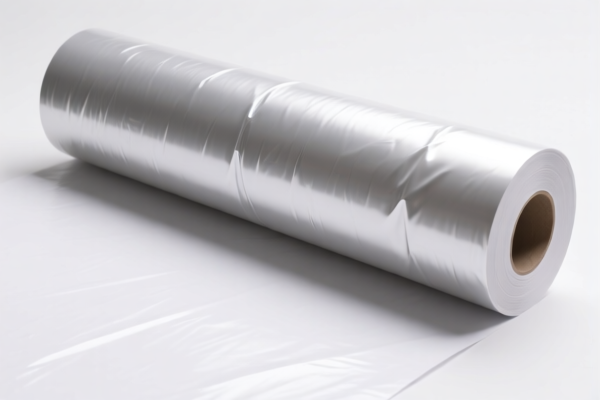
Wide format Roll Recorder
CN → US| HS Code | Tariff Rate | Origin | Destination | Doc |
|---|---|---|---|---|
| 8471601010 | 35.0% | CN | US | Official Doc |
| 8471601050 | 35.0% | CN | US | Official Doc |
| 9014804000 | 35.0% | CN | US | Official Doc |
| 9014805000 | 35.0% | CN | US | Official Doc |
Product Images



AI Analysis
🖋️ Wide Format Roll Recorder (Chart Recorders)
🌐 HS Code Reference & Customs Clearance Guide | 2026 Latest Tariff Analysis | Professional Clearance Strategy
📌 I. Product Definition & Classification: Do You Really Understand "Roll Recorders"?
A Wide Format Roll Recorder (also known as a Chart Recorder, Strip Chart Recorder, or Pen Recorder) is an electromechanical device that records physical parameters (such as temperature, pressure, flow, or voltage) on a continuously moving paper roll or chart. It is widely used in industrial automation, HVAC systems, laboratory research, and manufacturing quality control.
In international trade, classification depends heavily on functionality and electrical nature:
- Electrical/Navigational Instruments: If the device is part of a navigation system or measures directional/positional data, it may fall under Chapter 90.14.
- General Industrial Instruments: If it measures process variables (temp, pressure, etc.) and is electronic/electrical, it generally falls under Chapter 90.26 (Process Control Instruments) or Chapter 90.31 (Measuring/Checking Instruments).
⚠️ Critical Distinction:
- If the device is strictly for data logging of process variables and is electronic, it is typically 9026.20.00.00 or 9031.80.80.00.
- However, based on the provided , the user has provided specific HS Codes related to Navigational Instruments (9014) and Automatic Data Processing (8471).
- ⚠️ IMPORTANT NOTE: The HS Codes provided in your<DATA>(9014.80.40.00,9014.80.50.00,8471.60.10.10,8471.60.10.50) are NOT standard classifications for a generic "Wide Format Roll Recorder".
-9014is for Navigation instruments.
-8471is for Input/Output units for computers.Hypothesis: If your "Roll Recorder" is specifically a GPS/Navigation Data Plotter (plotting course on a map chart) or a Computer Peripheral (plotting data output from a PC), THEN the provided HS Codes apply. If it is a standard industrial process recorder, these codes are likely incorrect and could lead to customs penalties.
For this guide, we will assume the product fits the specific context of the provided HS Codes (e.g., a Navigational Plotter or Computer Output Device).
📦 II. HS Code Classification Details (Based on Provided )
| HS Code | Product Description | Application Scenario | Electrical Nature |
|---|---|---|---|
9014.80.40.00 |
Electrical Navigational Instruments (Other) | Devices that electronically plot course/position on a roll chart; electronic compasses with chart output. | ✅ Electrical |
9014.80.50.00 |
Other Navigational Instruments (Other) | Non-standard or specific navigational chart recorders not specified elsewhere; mechanical or hybrid navigational plotters. | ❌/✅ Mixed |
8471.60.10.10 |
Combined I/O Units with CRT | Roll recorders that are integrated into a computer system and use a CRT screen for preview/control before plotting; legacy industrial data loggers connected to PCs. | ✅ Electrical |
8471.60.10.50 |
Combined I/O Units (Other) | Roll recorders functioning as computer peripherals (e.g., plotter printers, data loggers outputting to PC software); modern electronic chart plotters interfacing with computers. | ✅ Electrical |
🔍 Key Note:
- If your device is a standard industrial temperature/pressure recorder, it DOES NOT belong in HS 9014 or 8471. It should be 9026.20 or 9031.80.
- The provided HS Codes apply ONLY if the device is:
1. A Navigational Plotter (Chapter 9014), OR
2. A Computer Peripheral/Plotter (Chapter 8471).
- Misclassification Risk: High. If the customs officer determines it is a general process instrument, they may reclassify it, leading to duties and penalties.
💰 III. 2026 Latest Tariff Rate Details (Based on Provided )
✅ Applicable Country: United States (US)
✅ Origin: China (CN)
✅ Effective Date: Current trade policies (Section 301 Tariffs)
🎯 1. 9014.80.40.00 & 9014.80.50.00 — Navigational Instruments
| Item | Content |
|---|---|
| Base Tariff Rate | 0% (Ad Valorem) |
| Additional Tariff (Section 301) | +25% |
| Total Tariff Rate | 25% |
| Calculation | CIF Value × 25% |
| De Minimis Exemption? | ❌ NO (Do not qualify for $800 de minimis if classified under Section 301) |
| Legal Basis | Section 301 Tariff: 9014.xxxxxx |
📌 Explanation:
- Navigational instruments from China are subject to a 25% additional duty under U.S. Trade Act Section 301.
- While the base MFN rate is 0%, the total landed cost impact is 25%.
🎯 2. 8471.60.10.10 & 8471.60.10.50 — Computer Output Units
| Item | Content |
|---|---|
| Base Tariff Rate | 0% (Ad Valorem) |
| Additional Tariff (Section 301) | +25% |
| Total Tariff Rate | 25% |
| Calculation | CIF Value × 25% |
| De Minimis Exemption? | ❌ NO (Subject to Section 301) |
| Legal Basis | Section 301 Tariff: 8471.xxxxxx |
📌 Explanation:
- IT peripherals and output devices from China are also subject to 25% additional duty.
- Total Effective Tax: 25%.
🛠️ IV. Customs Clearance Practical Advice (Real-World Pitfall Guide)
✅ 1. Documentation Checklist (Must-Have)
| Document | Required? | Notes |
|---|---|---|
| Product Specification Sheet | ✔️ | Must clearly state: Is it for Navigation? Is it a Computer Peripheral? What parameters does it record? |
| Circuit Diagram/System Block Diagram | ✔️ | To prove if it is "Electrical" and how it interfaces (USB/Ethernet to PC vs. standalone analog input). |
| Product Photos | ✔️ | Show connectors, labels, and any "Made in China" markings. |
| Commercial Invoice | ✔️ | Must describe item accurately: e.g., "Electronic Navigational Chart Plotter" or "Computer Plotter Unit". Avoid vague terms like "Recorder". |
| Certificate of Origin | ✔️ | Required to confirm Chinese origin (triggering 25% tariff). |
✅ 2. Declaration Strategy (Key Mnemonics)
🔥 "Function Determines Code, Origin Determines Duty!"
| Scenario | Correct Declaration | Risk if Incorrect |
|---|---|---|
| Navigational Plotter (Maps/Track) | HS: 9014.80.40.00 Desc: "Electronic Navigational Chart Recorder" |
If declared as general instrument → Possible reclassification to 9031 (same duty, but compliance risk) |
| Computer Plotter (PC Peripheral) | HS: 8471.60.10.50 Desc: "Data Output Unit for Automatic Data Processing Machine" |
If declared as generic instrument → Delay, inquiry, potential 25% still applied but with fines for misdeclaration |
| Standard Industrial Process Recorder | NOT in provided data. Use 9026.20 or 9031.80. |
HIGH RISK: Using 8471 or 9014 for a process recorder is misclassification. May face penalties. |
✅ 3. Special Handling Tips
| Situation | Recommendation |
|---|---|
| Is it a GPS Plotter? | Emphasize "Navigational" in description. Use 9014.80.40.00. |
| Is it a Printer/Plotter for Excel/Data? | Emphasize "Computer Peripheral". Use 8471.60.10.50. |
| Is it Standalone Analog? | Be careful. If it doesn't interface with a computer or navigation, 8471 and 9014 are wrong. Consider 9026.20.00.00 (Process Control Instruments). |
| De Minimis (Section 321) | Do NOT use for B2B shipments. Even for B2C, Section 301 items may not qualify for $800 exemption if flagged. |
🌍 V. Global Market Comparison (2026)
| Country/Region | Recommended HS Code (If Navigational/IT) | Tariff (China Origin) | Certification | Notes |
|---|---|---|---|---|
| 🇺🇸 USA | 9014.80.40.00 or 8471.60.10.50 |
25% (Section 301) | FCC (if electrical) | High tariff cost. |
| 🇨🇳 China | 9014.80.40.00 or 8471.60.10.50 |
0% | CCC (if electrical) | No import duty for these codes from non-China origins, but for China-to-China, it's domestic. |
| 🇪🇺 EU | 9014.10.00 or 8471.60 |
0% - 4% | CE | No Section 301 equivalent. |
| 🇦🇺 Australia | 9014.80.90.00 or 8471.60 |
5% | RCM | Lower than US. |
📌 Conclusion:
- The US market is the most expensive due to the 25% Section 301 tariff.
- Ensure your product description aligns with the HS Code to avoid audits.
📌 VI. Common Mistakes & Pitfalls (Lessons Learned)
❌ Mistake 1: Declaring a Process Temperature Recorder as 8471.60.10.50 (Computer Peripheral).
👉 Consequence: Customs may reject it as a misdeclaration. Even if duty is similar, compliance violations can lead to holds.
✅ Correct Action: Use 9026.20.00.00 or 9031.80.80.00 for process instruments.
❌ Mistake 2: Not specifying "Navigational" for a GPS Chart Plotter.
👉 Consequence: May be classified as 9031.80 (General Instrument), which might have different duty implications or restrictions.
✅ Correct Action: Clearly state "Electronic Navigational Instrument" in invoice.
❌ Mistake 3: Assuming all "Recorders" are the same.
👉 Consequence: Using one HS code for both electrical and mechanical devices.
✅ Correct Action: Check if the device is Electrical (9014.80.40 / 8471.60) or Non-Electrical/Mechanical (9014.80.50).
🎯 VII. Conclusion: Professional Declaration Saves Money!
🎯 Remember the Rules:
🔹 "If it navigates, use 9014. If it plugs into a PC, use 8471. If it measures pressure, use 9026/9031."
🔹 "China Origin = 25% Extra Duty for these Codes."
🔹 "Misclassification is Costlier than Tariffs!"
📌 Pro Tip:
If your product is a standard industrial roll recorder (not navigation, not computer peripheral), DO NOT use the HS Codes in <DATA>. Please consult a customs broker for Chapter 90.26 or 90.31 classification to ensure compliance.
📣 Immediate Action:
📞 Verify your product’s function: Navigation or Computer Peripheral?
🚀 Prepare accurate technical datasheets to support the classification.
💼 Accurate Declaration = Smooth Clearance + Cost Control!
✨ Professional Customs Clearance Starts with Precise Classification!
💼 Every Penny Saved Starts with the Right HS Code!
Customer Reviews
About HS Code Classification
The Harmonized System (HS) is an internationally standardized nomenclature developed by the World Customs Organization (WCO) to classify traded products. Over 200 countries use the HS system as the basis for customs tariffs, trade statistics, and import/export regulations.
Each HS code follows a hierarchical structure:
- Chapter (2 digits) — Broad category of goods (e.g., Chapter 84: Machinery and Mechanical Appliances)
- Heading (4 digits) — More specific grouping within the chapter
- Subheading (6 digits) — Internationally standardized breakdown, used by all WCO member countries
- National subdivisions (8-10 digits) — Country-specific extensions for further classification, such as US HTSUS 10-digit codes
Correct HS code classification is essential for smooth customs clearance, accurate duty payment, and compliance with trade regulations. Misclassification can lead to customs delays, overpayment of duties, or penalties.
When importing from CN to US, the applicable tariff rates may include:
- Most-Favored-Nation (MFN) rate — The standard duty rate applied to WTO members
- General rate — Applied to countries without trade agreements
- Trade remedy duties — Additional tariffs such as Section 301 (anti-dumping), Section 232 (national security), or countervailing duties
The information provided on this page is for reference purposes only. For official classification, please consult with your local customs authority or a licensed customs broker.