Wide format unexposed film roll
CN → US| HS Code | Tariff Rate | Origin | Destination | Doc |
|---|---|---|---|---|
| 3702440160 | 38.7% | CN | US | Official Doc |
| 3702420100 | 38.7% | CN | US | Official Doc |
| 3707100090 | 38.0% | CN | US | Official Doc |
| 3707903290 | 35.0% | CN | US | Official Doc |
Product Images

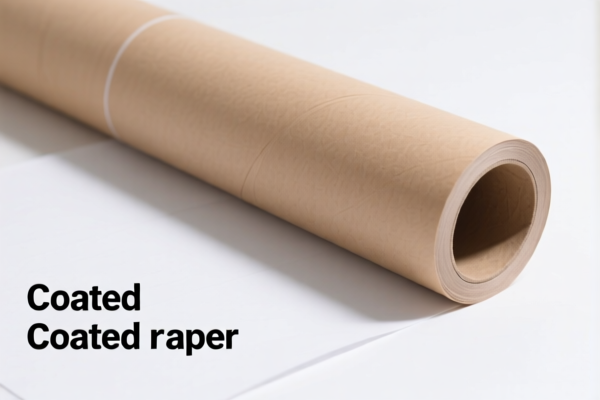

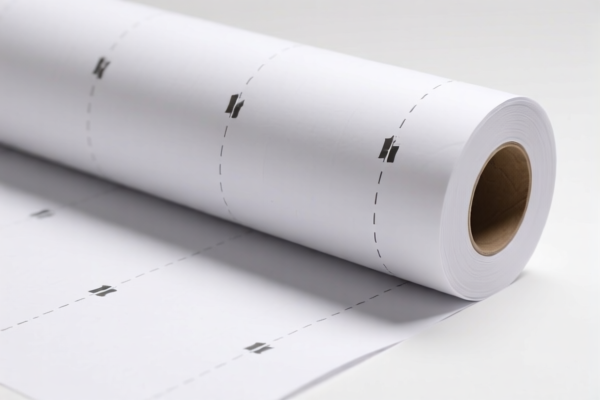
AI Analysis
🎞️ Wide Format Unexposed Film Roll (Photographic)
🌐 HS Code Reference & Customs Clearance Guide | 2026 Latest Tariff Full Analysis | Professional Clearance Strategy
📌 I. Product Definition & Classification: What Exactly is "Wide Format Film"?
Wide Format Unexposed Film Roll refers to photographic film rolls with a width exceeding 105mm, which are sensitive to light (photosensitive) and have not yet been developed (unexposed). In international trade, these are primarily used for large-format photography, industrial inspection, or scientific imaging.
The classification depends heavily on whether the item is classified as raw photographic material (films) or chemical preparations used in photography.
⚠️ Key Distinction:
- If it is a film base coated with silver halide emulsion (raw material) → Classified under Chapter 3702 or 3707. - If it is not photographic film but a chemical agent used to process it → Classified under 3707.90. - Material Constraint: Must not be on paper or textile bases.
📦 II. HS Code Classification Details (2026 Latest Tariff Authority Comparison)
Based on the provided data, here are the four specific HS Codes and their corresponding tax breakdowns. Note that all entries imply import from China to the USA (given the "Section 301" and "IEEPA" tariff structure mentioned in the tax details).
| HS Code | Product Description | Summary in Data | Total Tax Rate | Tax Composition |
|---|---|---|---|---|
3702.44.01.60 |
Wide Format Film Roll (Non-developed) Width > 105mm, Scroll Mount, Photosensitive/Unexposed, Non-paper/Non-textile base. |
宽幅胶卷(非冲洗),宽度超过105mm,卷装摄影胶片,感光未曝光,非纸类非纺织材料 | 38.7% | Base: 3.7% Add'l: 25.0% Sec 122: 10% |
3702.42.01.00 |
Wide Format Film Roll (Non-developed) Photosensitive Scroll Film, Width > 105mm, Non-paper/Non-textile, Photosensitive Material. |
宽幅胶卷(非冲洗),感光卷轴胶片,宽度超过105mm,非纸非纺织材料,感光材料 | 38.7% | Base: 3.7% Add'l: 25.0% Sec 122: 10% |
3707.10.00.90 |
Wide Format Film Roll (Non-developed) Chemical Preparations for Photography, Sensitizing Emulsion, Other Categories. |
宽幅胶卷(非冲洗),摄影用化学制品,增感乳剂,未明确分色类型,属其他类别 | 38.0% | Base: 3.0% Add'l: 25.0% Sec 122: 10% |
3707.90.32.90 |
Wide Format Film Roll (Non-developed) Chemical Agents for Photography, Unexposed State, Other Category, No Material Conflict. |
宽幅胶卷(非冲洗),摄影用化学制剂,未感光状态,属其他类目,无材质冲突 | 35.0% | Base: 0.0% Add'l: 25.0% Sec 122: 10% |
🔍 Important Note:
- Codes3702.44and3702.42refer to the film itself (photosensitive material). - Codes3707.10and3707.90refer to chemical preparations (emulsions/agents) used in photography. The data labels them as "Wide Format Film Roll" but describes them as "Chemical Preparations," which may indicate a specific formulation or a classification nuance in the source data. Always verify if the product is the physical film strip or a liquid chemical agent.
💰 III. 2026 Latest Tariff Rate Detailed Explanation (Including Additional Taxes & Policies)
✅ Applicable Country: United States (US)
✅ Origin: China (CN)
✅ Effective Time: Current 2026 Tariff Structure
🎯 1. HS Code 3702.44.01.60 & 3702.42.01.00 — Wide Format Photographic Film
| Item | Content |
|---|---|
| Base Tariff | 3.7% (Most Favored Nation Rate for Chapter 37) |
| Section 301 Tariff | +25.0% (Trump-era tariffs, currently retained under Biden admin for most Chinese goods) |
| Section 122 / IEEPA Tariff | +10.0% (Additional tariffs under International Emergency Economic Powers Act or specific trade remedies) |
| Total Effective Rate | 38.7% |
| Tax Calculation | CIF Value × 38.7% |
| De Minimis Exemption | ❌ Not Eligible (Section 301 and Section 122 tariffs generally do not qualify for de minimis exemption under current CBP enforcement for Chinese goods) |
| Legal Basis Path | HTSUS:3702.44.01.60 → USITC:301 Footnote → IEEPA:9903.01.24 |
📌 Explanation:
- These films are considered high-tech or industrial supplies. The 3.7% base rate is standard for photographic film. - The 25% Section 301 tariff is the most significant cost driver, applied to goods from China. - The 10% additional tariff (labeled as "122 Clause" in data) further increases the burden, totaling nearly 40%.
🎯 2. HS Code 3707.10.00.90 — Chemical Preparations for Photography (Sensitizing Emulsion)
| Item | Content |
|---|---|
| Base Tariff | 3.0% |
| Section 301 Tariff | +25.0% |
| Section 122 / IEEPA Tariff | +10.0% |
| Total Effective Rate | 38.0% |
| Tax Calculation | CIF Value × 38.0% |
| De Minimis Exemption | ❌ Not Eligible |
| Legal Basis Path | HTSUS:3707.10.00.90 → USITC:301 Footnote → IEEPA:9903.01.24 |
📌 Explanation:
- Slightly lower base rate (3.0% vs 3.7%) results in a total of 38.0%. - Still subject to all additional trade tariffs.
🎯 3. HS Code 3707.90.32.90 — Other Chemical Agents for Photography (Unexposed)
| Item | Content |
|---|---|
| Base Tariff | 0.0% |
| Section 301 Tariff | +25.0% |
| Section 122 / IEEPA Tariff | +10.0% |
| Total Effective Rate | 35.0% |
| Tax Calculation | CIF Value × 35.0% |
| De Minimis Exemption | ❌ Not Eligible |
| Legal Basis Path | HTSUS:3707.90.32.90 → USITC:301 Footnote → IEEPA:9903.01.24 |
📌 Explanation:
- This category has 0% Base Tariff, making it the cheapest option at 35.0% total. - Risk: This code is for "Other" chemical agents. Misclassifying actual film rolls (which are physical goods) as "chemical agents" can lead to severe penalties, including seizure of goods. Ensure the product is indeed a chemical agent, not the film itself.
🛠️ IV. Customs Clearance Practical Advice (Battle-Tested Pitfall Avoidance Guide)
✅ 1. Preparation Checklist (Missing Items = Delay)
| Document | Mandatory? | Explanation |
|---|---|---|
| ✅ Product Specification Sheet | ✔️ | Must specify width (>105mm), sensitivity, emulsion type, and format (roll/film). |
| ✅ Material Composition Statement | ✔️ | Explicitly state: "Non-paper base, Non-textile base, Silver Halide Emulsion on Polymer Base." |
| ✅ HS Code Justification Letter | ✔️ | Explain why it is 3702 (Film) vs 3707 (Chemical). If it's film, 3702 is correct. |
| ✅ Commercial Invoice | ✔️ | Clearly describe as "Wide Format Unexposed Photographic Film Roll" or "Photographic Chemical Preparation." |
| ✅ Packing List | ✔️ | Detail roll dimensions, weight, and number of rolls. |
| ✅ Certificate of Origin (CO) | ✔️ | Required for origin verification, especially for Section 301 application. |
✅ 2. Declaration Tips (Key Mantra)
🔥 "Material Matters, Width Defines, Don't Mix Chemical with Film!"
| Scenario | Correct HS Code | Wrong Declaration | Consequence |
|---|---|---|---|
| Physical Film Roll (>105mm) | 3702.44.01.60 or 3702.42.01.00 |
Declared as "Chemical" (3707) |
Misclassification Penalty + Back Taxes |
| Chemical Emulsion (Liquid/Paste) | 3707.10.00.90 or 3707.90.32.90 |
Declared as "Film Roll" | Rejection of Entry + Return |
| Width ≤ 105mm | Different Code (e.g., 3702.41) | Declared as Wide Format (>105mm) | Incorrect Valuation & Tariff |
| Paper-based Film | Different Code (e.g., 3703) | Declared as Non-paper | Wrong Duty Rate & Inspection Flag |
✅ 3. Special Handling
| Situation | Handling Advice |
|---|---|
| OEM Custom Film | Provide client specifications and proof that it is not generic retail film. |
| High Sensitivity Film | Declare "Light-Sensitive Material" for proper handling instructions during shipping. |
| Mixed Shipment (Film + Chemicals) | Must Split Declarations. Do not combine film and chemicals in one line item. |
🌍 V. Global Market Comparison (2026 Latest)
| Country/Region | Recommended HS Code | Tariff (CN Origin) | Certification | Notes |
|---|---|---|---|---|
| 🇺🇸 USA | 3702.44.01.60 |
38.7% | N/A | High tariffs due to Section 301 & 122. |
| 🇨🇳 China | 3702.44.01.60 |
4.0% (Import) | N/A | Low import duty, no Section 301. |
| 🇪🇺 EU | 3702.44.00 |
0% | CE/REACH | Generally 0% duty for photographic film. |
| 🇯🇵 Japan | 3702.44.000 |
0% | PSE | 0% duty for most photographic supplies. |
📌 Conclusion:
- The USA is the most expensive market for these goods due to additional tariffs. - Consider origin diversification (e.g., manufacturing in Vietnam or Thailand) if possible to mitigate Section 301 tariffs, though Section 122 may still apply depending on specific trade policies.
📌 VI. Common Mistakes & Pitfall Avoidance (Lessons Learned)
❌ Mistake 1: Misclassifying Film Rolls as Chemicals (3707) to save on the 0.7% base rate.
👉 Consequence: Customs will detect the physical nature of the goods. Seizure, heavy fines, and loss of import privileges. The base rate difference (3.7% vs 0%) is negligible compared to the risk.
❌ Mistake 2: Ignoring the >105mm Width specification.
👉 Consequence: If width is actually ≤105mm, it falls under a different subheading with potentially different duties. Incorrect declaration leads to retroactive tax adjustments.
❌ Mistake 3: Assuming De Minimis (Section 321) applies to small shipments.
👉 Consequence: Section 301 and Section 122 tariffs do not benefit from the $800 de minimis exemption. All duties must be paid regardless of value.
✅ Correct Practice:
"Photographic Film Roll, Unexposed, Silver Halide on Polyester Base, Width 120mm, for Large Format Camera, HS Code 3702.44.01.60."
🎯 VII. Conclusion: Professional Declaration, Save Time, Reduce Costs!
🎯 Remember the Mantra:
🔹 "Film vs. Chemical, Don't Confuse!"
🔹 "Width > 105mm, Code 3702!"
🔹 "China Origin? Expect 35-39% Duty!"
🔹 "No De Minimis, Pay Up!"
📌 Pro Tip:
If your film is intended for industrial X-ray or scientific use, verify if it qualifies for any specific exemptions under Chapter 30 or 9022, though photographic film is strictly Chapter 37.
For high-volume imports, apply for a Binding Ruling (ISF/ACE) from CBP to lock in the HS Code classification before shipment.
📣 Immediate Action:
📞 Consult a licensed customs broker + Provide Product Specs + Apply for Pre-Ruling if value is high.
🚀 Ensure your film clears customs smoothly, accurately, and profitably!
✨ Professional Clearance Starts with Precise Classification!
💼 Every percentage point of duty matters!
Customer Reviews
About HS Code Classification
The Harmonized System (HS) is an internationally standardized nomenclature developed by the World Customs Organization (WCO) to classify traded products. Over 200 countries use the HS system as the basis for customs tariffs, trade statistics, and import/export regulations.
Each HS code follows a hierarchical structure:
- Chapter (2 digits) — Broad category of goods (e.g., Chapter 84: Machinery and Mechanical Appliances)
- Heading (4 digits) — More specific grouping within the chapter
- Subheading (6 digits) — Internationally standardized breakdown, used by all WCO member countries
- National subdivisions (8-10 digits) — Country-specific extensions for further classification, such as US HTSUS 10-digit codes
Correct HS code classification is essential for smooth customs clearance, accurate duty payment, and compliance with trade regulations. Misclassification can lead to customs delays, overpayment of duties, or penalties.
When importing from CN to US, the applicable tariff rates may include:
- Most-Favored-Nation (MFN) rate — The standard duty rate applied to WTO members
- General rate — Applied to countries without trade agreements
- Trade remedy duties — Additional tariffs such as Section 301 (anti-dumping), Section 232 (national security), or countervailing duties
The information provided on this page is for reference purposes only. For official classification, please consult with your local customs authority or a licensed customs broker.