Wide width Unprocessed Roll Film
CN → US| HS Code | Tariff Rate | Origin | Destination | Doc |
|---|---|---|---|---|
| 3920200055 | 39.2% | CN | US | Official Doc |
| 3920100000 | 39.2% | CN | US | Official Doc |
| 3920992000 | 39.2% | CN | US | Official Doc |
| 3920991000 | 41.0% | CN | US | Official Doc |
| 3921190090 | 41.5% | CN | US | Official Doc |
Product Images
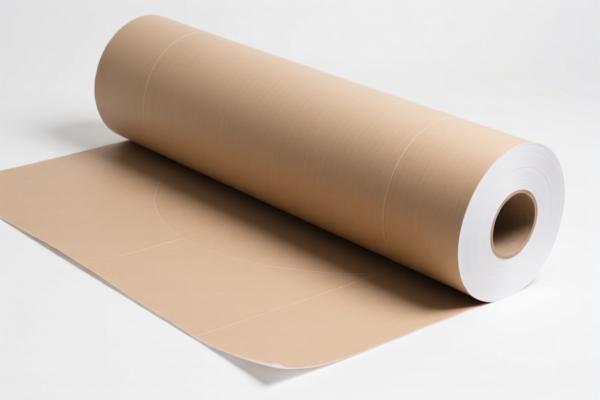
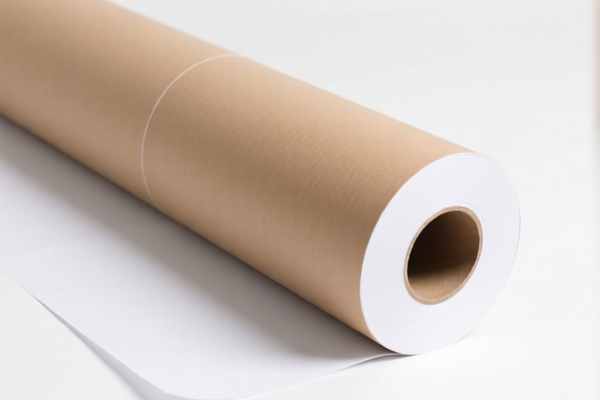

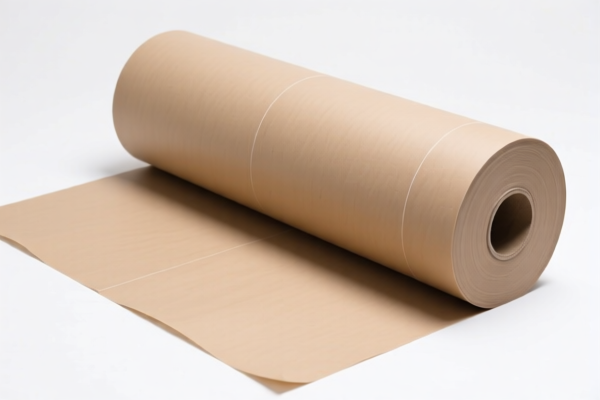
AI Analysis
🎞️ Wide Width Unprocessed Roll Film (Plastic)
🌐 HS Code Reference & Customs Clearance Guide | 2026 Latest Tariff Analysis | Professional Compliance Strategy
📌 I. Product Definition & Classification: What is "Unprocessed Roll Film"?
Wide Width Unprocessed Roll Film refers to plastic films supplied in continuous rolls, typically used for industrial packaging, protection, agriculture, or further processing. The key characteristics are: * Material: Plastic (Polymers such as PE, PP, PET, PVC, etc.). * State: Unprocessed/Primary Form. It has not been reinforced, layered, or significantly treated beyond basic extrusion and winding. * Form: Rolls (Coils).
⚠️ Critical Distinction:
- If the film is clear/colorless and unprinted, it usually falls under Chapter 39 (Plastics and Articles Thereof).
- If the film is colored/printed and considered "finished" or "treated," it may shift to 3920.99 or 3921.19.
- "Unprocessed" implies the material is in its basic polymer sheet form, susceptible to further cutting, printing, or lamination.
📦 II. HS Code Classification Details (Based on Provided Data)
Based on the provided JSON data, the classification depends on specific attributes like color, processing level, and width. Here are the four valid HS codes derived from <DATA>:
| HS Code | Product Description (from Data) | Key Characteristics | Total Tax Rate |
|---|---|---|---|
3920.20.00.55 |
Wide Width Roll Film (Unprocessed) | Form: Roll film. Unprocessed fits primary form characteristics. Inferred: Plastic material. | 39.2% |
3920.10.00.00 |
Wide Width Roll Film (Unprocessed) | Form: Film. Inferred: Plastic. Unprocessed fits "unreinforced" definition. | 39.2% |
3920.99.20.00 |
Unprocessed Colored Film | Form: Film. Inferred: Plastic. Fits "Other Plastics" catch-all category. | 39.2% |
3920.99.10.00 |
Unprocessed Colored Film | Form: Film. Inferred: Plastic. Unprocessed fits "unreinforced" feature. | 41.0% |
3921.19.00.90 |
Unprocessed Colored Film | Form: Film. Inferred: Plastic. Belongs to "Other" catch-all category. | 41.5% |
🔍 Key Insight:
- Codes starting with 3920 generally refer to "Plates, sheets, film, foil and strip, of plastics, non-cellular and not reinforced, laminated, supported or similarly combined with other materials." - Codes starting with 3921 refer to "Other plates, sheets, film, foil and strip, of plastics." - The difference in tax rates (39.2% vs. 41.0%/41.5%) often hinges on whether the film is considered "colored/treated" and specific sub-category nuances in the Harmonized Tariff Schedule.
💰 III. 2026 Latest Tariff Rate Breakdown (Including Surcharges & Policy Add-ons)
✅ Applicable Country: USA (US)
✅ Origin: China (CN)
✅ Effective Date: 2025-11-10 onwards (for subsequent imports)
🎯 1. 3920.20.00.55 & 3920.10.00.00 & 3920.99.20.00 — Standard Unprocessed Plastic Films
| Item | Content |
|---|---|
| Base Duty | 4.2% (Ad Valorem) |
| Section 301 Surcharge | +25.0% (From USITC Footnote 9903.88.01 / Trade Act of 1974) |
| 122 Clause Tariff | +10.0% (Specific clause applied to certain plastic imports from China) |
| Total Effective Rate | 39.2% |
| Calculation Method | CIF Value × 39.2% |
| De Minimis Exemption | ❌ Not Eligible (Deny De Minimis) |
| Legal Path | USITC:3920.xxxx.xxxx → SECTION_301:25% → 122_CLAUSE:10% |
📌 Explanation:
- Base Duty (4.2%): Standard Most Favored Nation (MFN) rate for plastic films. - Section 301 (+25%): Retaliatory tariff against China on plastics and plastic articles. - 122 Clause (+10%): An additional punitive tariff applied under specific trade enforcement provisions for Chinese plastic products. - Total: 39.2%. This is a very high tariff burden. Profit margins must account for this.
🎯 2. 3920.99.10.00 — Unprocessed Colored Film (Specific Sub-category)
| Item | Content |
|---|---|
| Base Duty | 6.0% (Ad Valorem) |
| Section 301 Surcharge | +25.0% |
| 122 Clause Tariff | +10.0% |
| Total Effective Rate | 41.0% |
| Calculation Method | CIF Value × 41.0% |
| De Minimis Exemption | ❌ Not Eligible |
📌 Note:
- Slightly higher base duty (6.0%) compared to clear/standard films (4.2%). - Same surcharges apply. Total cost is even higher.
🎯 3. 3921.19.00.90 — Other Plastic Films (Catch-all/Other)
| Item | Content |
|---|---|
| Base Duty | 6.5% (Ad Valorem) |
| Section 301 Surcharge | +25.0% |
| 122 Clause Tariff | +10.0% |
| Total Effective Rate | 41.5% |
| Calculation Method | CIF Value × 41.5% |
| De Minimis Exemption | ❌ Not Eligible |
📌 Note:
- This code is for "Other" plastic articles not elsewhere specified. - Highest base duty (6.5%) among the options. - Total: 41.5%. This is the most expensive classification. Avoid if3920codes are applicable.
🛠️ IV. Customs Clearance Practical Advice (Field Pitfall Avoidance Guide)
✅ 1. Required Documentation Checklist (Non-negotiable)
| Document | Must Provide | Description |
|---|---|---|
| ✅ Product Specification Sheet | ✔️ | Material type (e.g., PE, PP), thickness, width, weight per roll, color (if any). |
| ✅ HS Code Justification | ✔️ | Detailed explanation of why it is "unprocessed" and not "fabricated" (e.g., no printing, no lamination). |
| ✅ Product Photos | ✔️ | Clear images of the roll, label, and cross-section. |
| ✅ Commercial Invoice | ✔️ | Must accurately describe goods as "Unprocessed Plastic Roll Film" and match HS Code. |
| ✅ Packing List | ✔️ | Weight and dimensions of each roll. |
| ✅ Certificate of Origin | ✔️ | Essential for verifying Chinese origin and applying correct surcharges. |
✅ 2. Declaration Tips (Key Mantra)
🔥 "Unprocessed is Key, Color Changes Duty, Base 4-6, Plus 35 Fixed!"
| Scenario | Correct Declaration | Wrong Practice |
|---|---|---|
| Clear, Unprinted, Unreinforced Film | 3920.10.00.00 or 3920.20.00.55 (Base 4.2%) |
Misdeclaring as 3921 → Higher base duty |
| Colored but Unprocessed (No Print/Lamination) | 3920.99.20.00 or 3920.99.10.00 (Base 6.0%) |
Claiming it's "finished" → Incorrect code |
| Laminated, Printed, or Reinforced Film | 3921.19.00.90 (Base 6.5%) or other 3921 codes |
Declaring as "unprocessed" → Misclassification Penalty |
| Small Samples (De Minimis) | ❌ Not Applicable | Trying to use Section 321 (de minimis) → Seized & Fined |
✅ 3. Special Cases Handling
| Situation | Handling Advice |
|---|---|
| OEM Custom Width/Color | Provide customer order + technical drawing. Prove it's still in "primary form" (unprocessed). |
| Multi-layer Co-extruded Film | If layers are bonded during extrusion (not laminated after), it may still be 3920. If laminated later, it might be 3921. Crucial distinction! |
| Industrial vs. Consumer Use | Use is irrelevant for HS Code 39, but ensure description matches industrial grade. |
| Origin Shift (Non-China) | If film is manufactured in Vietnam/Thailand, IEEPA/Section 301 surcharges may not apply. Huge savings! |
🌍 V. Global Main Market Clearance Comparison (2026 Latest)
| Country/Region | Recommended HS Code | Tariff (China Origin) | Certification | Notes |
|---|---|---|---|---|
| 🇺🇸 USA | 3920.20.00.55 / 3920.10.00.00 |
39.2% (China) | None for plastic film generally | High burden due to 301 + 122 Clause. |
| 🇨🇳 China | 3920.20.00.55 |
~4.2% | None | Low import duty. |
| 🇪🇺 EU | 3920.20.00 |
~6.5% | REACH Compliance | No major anti-dumping for most films. |
| 🇦🇺 Australia | 3920.20.00 |
~5% | None | Moderate duty. |
| 🇯🇵 Japan | 3920.20.00 |
~5-6% | None | Stable trade relations. |
📌 Conclusion:
- USA is the most expensive market due to layered tariffs (Base + 301 + 122).
- Diversification is Key: Consider sourcing or manufacturing from non-China countries (Vietnam, Mexico, Thailand) to avoid Section 301 and 122 Clause tariffs.
- Pre-裁定 (Advance Ruling): Highly recommended to get an official HS Code determination from CBP before shipment to avoid audits.
📌 VI. Common Mistakes & Pitfall Guide (Lessons Learned)
❌ Mistake 1: Declaring "Laminated Film" as "Unprocessed Film"
👉 Consequence: Misclassification. Laminated films belong to 3921, not 3920. Penalties + Back Taxes.
❌ Mistake 2: Ignoring the "122 Clause"
👉 Consequence: If your HS Code triggers the 122 Clause, forgetting to declare it leads to underpayment and potential fraud allegations.
❌ Mistake 3: Assuming De Minimis Applies
👉 Consequence: Plastic films from China are explicitly excluded from Section 321 de minimis benefits. Small shipments will still be taxed and audited.
❌ Mistake 4: Vague Description "Plastic Roll"
👉 Consequence: Customs will assign a generic code with higher penalty rates or delay clearance for further inspection.
✅ Correct Approach:
"Polyethylene (PE) Unprocessed Plastic Roll Film, Width 1.2m, Thickness 0.05mm, Color: Clear, For Industrial Packaging, Model: XYZ, Origin: China"
🎯 VII. Conclusion: Professional Declaration, Cost Efficiency!
🎯 Remember the Mantra:
🔹 "Unprocessed = 3920, Processed = 3921, China = +35% Extra!"
🔹 "HS Code Determines Life or Death, 2% Difference in Base Means Thousands in Tax!"
📌 Pro Tip:
If your plastic film is manufactured in Vietnam, Mexico, Thailand, or Malaysia, you can potentially exempt IEEPA/Section 301 surcharges. The total tax could drop to 4.2% - 6.5%.
Action: Evaluate supply chain relocation or third-party processing to avoid the ~40% US tariff burden.
📣 Immediate Action:
📞 Contact a licensed customs broker + Provide Product Specs + Apply for CBP Advance Ruling
🚀 Ensure your plastic film clears customs smoothly, avoids penalties, and protects margins!
✨ Professional Clearance Starts with Accurate Classification!
💼 Every Percent of Tax Saved is Pure Profit!
Customer Reviews
About HS Code Classification
The Harmonized System (HS) is an internationally standardized nomenclature developed by the World Customs Organization (WCO) to classify traded products. Over 200 countries use the HS system as the basis for customs tariffs, trade statistics, and import/export regulations.
Each HS code follows a hierarchical structure:
- Chapter (2 digits) — Broad category of goods (e.g., Chapter 84: Machinery and Mechanical Appliances)
- Heading (4 digits) — More specific grouping within the chapter
- Subheading (6 digits) — Internationally standardized breakdown, used by all WCO member countries
- National subdivisions (8-10 digits) — Country-specific extensions for further classification, such as US HTSUS 10-digit codes
Correct HS code classification is essential for smooth customs clearance, accurate duty payment, and compliance with trade regulations. Misclassification can lead to customs delays, overpayment of duties, or penalties.
When importing from CN to US, the applicable tariff rates may include:
- Most-Favored-Nation (MFN) rate — The standard duty rate applied to WTO members
- General rate — Applied to countries without trade agreements
- Trade remedy duties — Additional tariffs such as Section 301 (anti-dumping), Section 232 (national security), or countervailing duties
The information provided on this page is for reference purposes only. For official classification, please consult with your local customs authority or a licensed customs broker.