Wigs and Hair Accessories
CN → US| HS Code | Tariff Rate | Origin | Destination | Doc |
|---|---|---|---|---|
| 6704110000 | 17.5% | CN | US | Official Doc |
| 6704200000 | 10.0% | CN | US | Official Doc |
| 6703003000 | 17.5% | CN | US | Official Doc |
| 7117909000 | 28.5% | CN | US | Official Doc |
Product Images
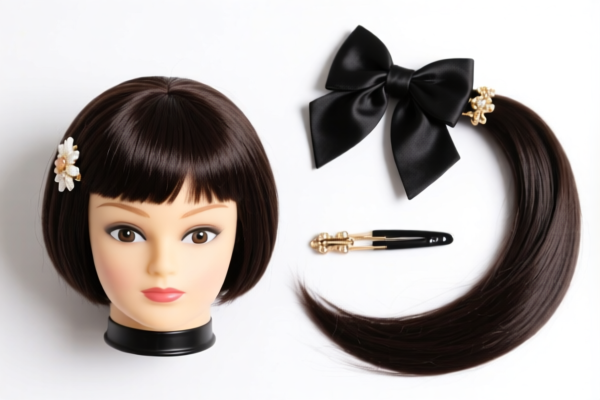

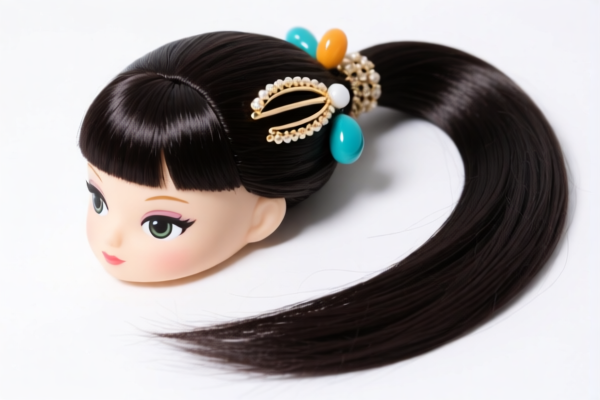

AI Analysis
💇♀️ Wigs & Hair Accessories (假发及其他头发制品)
🌐 HS Code Reference & Customs Clearance Guide | 2026 Latest Tariff Analysis | Professional Clearance Strategy
📌 1. Product Definition & Classification: Do You Really Know "Wigs"?
Wigs and hair accessories are complex products in international trade, with classification strictly depending on material composition (Human Hair vs. Synthetic) and product form (Complete Wig vs. Hair Pieces/Locks). Misclassification can lead to drastic tariff differences, especially under current US trade policies.
Key Distinctions: * Human Hair Products (人发制品): Made from collected human hair. Generally enjoys lower base tariffs but is subject to specific "Section 122" tariffs. * Synthetic/Fiber Hair Products (合成纤维制品): Made from acrylic, polyester, or other artificial fibers. Subject to higher overall tax burdens due to combined additional tariffs. * Complete Wigs (假发): Pre-styled, ready-to-wear hairpieces. * Hair Pieces/Locks (假发片/发束): Raw or semi-processed hair strands used for manufacturing or weaving.
⚠️ Critical Warning:
- Material Matters: Using "Wig" as a generic description is dangerous. You MUST specify if it is Human Hair or Synthetic Fiber.
- Form Matters: Is it a finished wig or raw hair locks? This determines whether it falls under Chapter 67 (Prepared wigs) or Chapter 71 (Imitation jewelry/accessories).
📦 2. HS Code Classification Details (2026 Latest Tariff Authority)
Based on the provided data, here are the four potential classifications for "Wigs and Hair Accessories," categorized by material and form.
| HS Code | Product Description | Material/Type | Key Characteristics |
|---|---|---|---|
| 6704.11.00.00 | Wigs, false braids & other articles of hair | Synthetic Fiber / Artificial Hair | Made from synthetic fibers. Ready-to-wear wigs or hairpieces. |
| 6704.20.00.00 | Wigs, false braids & other articles of hair | Human Hair | Made from processed human hair. High-quality finished wigs. |
| 6703.00.30.00 | Wigs, false braids & other articles of hair | Hair Strands / Fibers | Unworked or merely cleaned hair/locks used as raw material for wig making. |
| 7117.90.90.00 | Imitation jewelry & similar imitated ornaments | Artificial Fiber / Hair | Hair pieces classified as "ornaments" or "accessories" rather than functional wigs. |
🔍 Important Note:
- 6704.11.00.00 vs 6704.20.00.00: The main difference is Synthetic vs. Human Hair. Human hair has a lower base tariff (0%) but still faces Section 122 tariffs. Synthetic hair faces higher total taxes due to the combination of Additional Tariffs and Section 122. - 6703.00.30.00: This is for raw hair/locks (e.g., ponytails for weavers), not finished wigs. - 7117.90.90.00: This is a misclassification risk zone. Some small hair clips or decorative hair extensions might be wrongly declared as "imitation jewelry." If declared here, it incurs a high base tariff (11%).
💰 3. 2026 Latest Tariff Rate Breakdown (Including Additional Taxes & Policies)
✅ Applicable Country: United States (US)
✅ Origin: China (CN)
✅ Effective Time: Current US Trade Policy (2026)
🎯 1. 6704.11.00.00 —— Synthetic Hair Wigs & Accessories
| Item | Content |
|---|---|
| Base Tariff | 0.0% |
| Additional Tariff (301/Section 122 context) | +7.5% |
| Section 122 Tariff | +10.0% |
| Total Tax Rate | 17.5% |
| Tax Calculation | CIF Value × 17.5% |
| De Minimis Exemption | ❌ Not Applicable |
📌 Explanation:
- Base Tariff (0%): Wigs often have a low base MFN rate.
- Additional Tariff (7.5%): Part of the broader US trade measures against Chinese goods.
- Section 122 Tariff (10%): Specific to textiles/apparel/hair products under certain executive orders.
- Total: 17.5%. This is a moderate-high tariff for a consumer good.
🎯 2. 6704.20.00.00 —— Human Hair Wigs & Accessories
| Item | Content |
|---|---|
| Base Tariff | 0.0% |
| Additional Tariff | 0.0% |
| Section 122 Tariff | +10.0% |
| Total Tax Rate | 10.0% |
| Tax Calculation | CIF Value × 10.0% |
| De Minimis Exemption | ❌ Not Applicable |
📌 Explanation:
- Base Tariff (0%): Human hair products enjoy a preferential base rate.
- Additional Tariff (0%): Exempt from the 7.5% additional tariff applied to synthetics.
- Section 122 Tariff (10%): Still applies to human hair products.
- Total: 10.0%. This is the most cost-effective classification for finished wigs.
🎯 3. 6703.00.30.00 —— Raw Hair Locks / Hair Strands
| Item | Content |
|---|---|
| Base Tariff | 0.0% |
| Additional Tariff | +7.5% |
| Section 122 Tariff | +10.0% |
| Total Tax Rate | 17.5% |
| Tax Calculation | CIF Value × 17.5% |
| De Minimis Exemption | ❌ Not Applicable |
📌 Explanation:
- Used for unprocessed or lightly processed hair (e.g., bulk hair for wig factories).
- Tax rate is the same as synthetic wigs (17.5%) due to the Additional Tariff.
🎯 4. 7117.90.90.00 —— Hair Pieces Classified as Imitation Jewelry
| Item | Content |
|---|---|
| Base Tariff | 11.0% |
| Additional Tariff | +7.5% |
| Section 122 Tariff | +10.0% |
| Total Tax Rate | 28.5% |
| Tax Calculation | CIF Value × 28.5% |
| De Minimis Exemption | ❌ Not Applicable |
📌 Explanation:
- Base Tariff (11.0%): Imitation jewelry has a much higher base rate.
- Total: 28.5%. This is a high-risk classification.
- Warning: Only use this if the item is clearly a decorative hair clip/ornament and not a functional wig or hair extension. Misdeclaring a wig as "jewelry" to avoid higher taxes can lead to severe penalties.
🛠️ 4. Customs Clearance Practical Advice (Avoid Pitfalls)
✅ 1. Documentation Checklist (Essential)
| Document | Required | Notes |
|---|---|---|
| ✅ Product Description | ✔️ | Must specify: Material (Human/Synthetic), Type (Wig/Hair Piece/Locks), Size, Color. |
| ✅ Material Composition | ✔️ | Explicitly state "% Human Hair" vs. "% Synthetic Fiber". Customs may require lab tests. |
| ✅ Product Photos | ✔️ | Clear images of the product, labels, and any packaging showing material content. |
| ✅ Invoice & Packing List | ✔️ | Ensure unit price and quantity match the HS Code definition. |
| ✅ Origin Certificate | ✔️ | If applicable for other markets, but for US, Origin is China. |
✅ 2. Declaration Tips (Key Rules)
🔥 “Material is King, Form is Queen!”
| Scenario | Correct HS Code | Mistake to Avoid |
|---|---|---|
| Finished Human Hair Wig | 6704.20.00.00 |
Misdeclared as synthetic → 17.5% (Overpaid) or 28.5% (Penalty) |
| Finished Synthetic Wig | 6704.11.00.00 |
Misdeclared as human hair → Severe Penalty for fraud |
| Bulk Human Hair Locks | 6703.00.30.00 |
Misdeclared as finished wig → May trigger inspection for "preparation" status |
| Decorative Hair Clip | 7117.90.90.00 |
Only if it’s a clip/ornament, not a wig/hairpiece |
| Hair Extensions (Wefts) | 6704.20.00.00 or 6703.00.30.00 |
Depends on processing level. Consult with a broker. |
✅ 3. Special Cases
| Situation | Handling Advice |
|---|---|
| Mixed Material Wigs | If a wig contains both human and synthetic hair, classification depends on the principal material or value. Usually, if >50% human hair by value, 6704.20.00.00 may apply. |
| Hair Extensions | Clearly distinguish between "wigs" (finished hairpieces) and "extensions" (wefts/locks). Extensions often fall under 6704.20.00.00 if processed, or 6703.00.30.00 if raw. |
| Wig Caps/Parts | If sold separately, they may be classified under different headings. Ensure all parts are included in the main declaration. |
🌍 5. Global Market Comparison (2026)
| Country/Region | Recommended HS Code | Tariff (China Origin) | Notes |
|---|---|---|---|
| 🇺🇸 USA | 6704.20.00.00 (Human) |
10.0% | Lowest rate for finished wigs. |
| 🇺🇸 USA | 6704.11.00.00 (Synth) |
17.5% | Higher rate for synthetics. |
| 🇪🇺 EU | 6704.20.00 |
Varies (usually 0-4%) | No Section 122 equivalent. |
| 🇬🇧 UK | 6704.20.00 |
Varies (usually 0-4%) | Post-Brexit tariffs apply. |
| 🇨🇳 China | 6704.20.00 |
5% - 10% | Import duty for re-export. |
📌 Conclusion:
- Human Hair Wigs (6704.20.00.00) are the most tariff-efficient product for the US market (10%).
- Synthetic Wigs (6704.11.00.00) are 7.5% more expensive in taxes.
- Avoid7117.90.90.00unless you are certain the product is an ornament.
📌 6. Common Mistakes & Pitfalls (Lessons Learned)
❌ Mistake 1: Declaring a synthetic wig as human hair to save 7.5%
👉 Consequence: Customs audit, seizure, and heavy fines for fraud.
❌ Mistake 2: Using "Wig" as the only description without specifying material
👉 Consequence: Customs may classify based on the highest risk material (Synthetic) or detain the shipment for clarification.
❌ Mistake 3: Misclassifying hair extensions as "Imitation Jewelry" (7117)
👉 Consequence: Incorrect tax rate (28.5% vs 10-17.5%) and potential penalties for misdeclaration.
✅ Correct Approach:
"Human Hair Wig, 100% Remy Human Hair, 18-inch, Brown, Finished Wig, Model XYZ, Origin: China"
🎯 7. Conclusion: Professional Classification, Maximize Profit!
🎯 Remember the Rule of Thumb:
🔹 "Human Hair is King (10%), Synthetic is Costly (17.5%), Jewelry is for Ornaments (28.5%)."
🔹 "Always declare material and form clearly. Don't guess!"
📌 Pro Tip:
If you are exporting Human Hair Wigs, ensure you have certificates of material composition ready. Customs may request proof that the product is indeed 100% human hair to qualify for the 10% rate.
📣 Immediate Action:
📞 Contact a licensed customs broker.
📄 Provide detailed product specifications (Material, Form, Usage).
🚀 Get an Advance Ruling (if possible) to lock in the HS Code and avoid surprise taxes at customs!
✨ Professional Customs Clearance Starts with Accurate Classification!
💼 Your Cost Efficiency Depends on Precision!
Customer Reviews
About HS Code Classification
The Harmonized System (HS) is an internationally standardized nomenclature developed by the World Customs Organization (WCO) to classify traded products. Over 200 countries use the HS system as the basis for customs tariffs, trade statistics, and import/export regulations.
Each HS code follows a hierarchical structure:
- Chapter (2 digits) — Broad category of goods (e.g., Chapter 84: Machinery and Mechanical Appliances)
- Heading (4 digits) — More specific grouping within the chapter
- Subheading (6 digits) — Internationally standardized breakdown, used by all WCO member countries
- National subdivisions (8-10 digits) — Country-specific extensions for further classification, such as US HTSUS 10-digit codes
Correct HS code classification is essential for smooth customs clearance, accurate duty payment, and compliance with trade regulations. Misclassification can lead to customs delays, overpayment of duties, or penalties.
When importing from CN to US, the applicable tariff rates may include:
- Most-Favored-Nation (MFN) rate — The standard duty rate applied to WTO members
- General rate — Applied to countries without trade agreements
- Trade remedy duties — Additional tariffs such as Section 301 (anti-dumping), Section 232 (national security), or countervailing duties
The information provided on this page is for reference purposes only. For official classification, please consult with your local customs authority or a licensed customs broker.