Wild Mink Raw Furskins
CN → US| HS Code | Tariff Rate | Origin | Destination | Doc |
|---|---|---|---|---|
| 4301100010 | 17.5% | CN | US | Official Doc |
| 4301100020 | 17.5% | CN | US | Official Doc |
Product Images
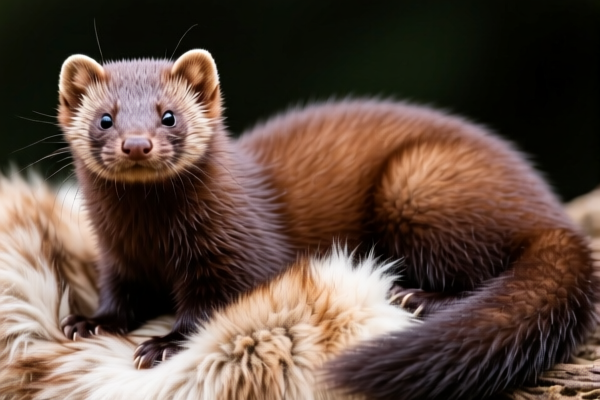
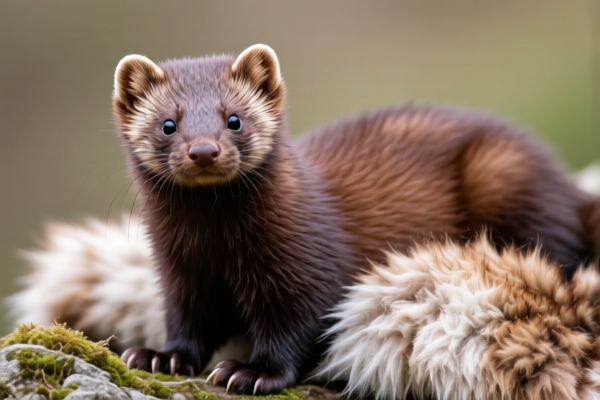
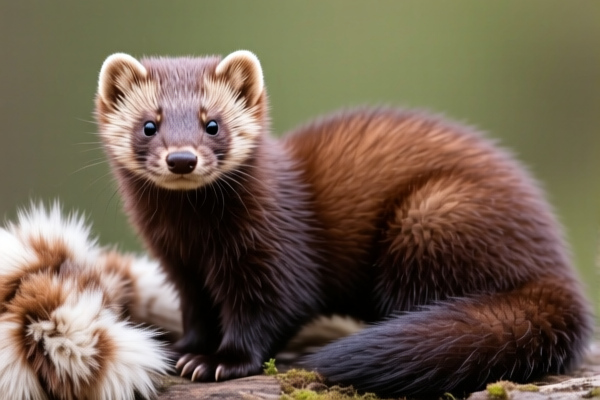
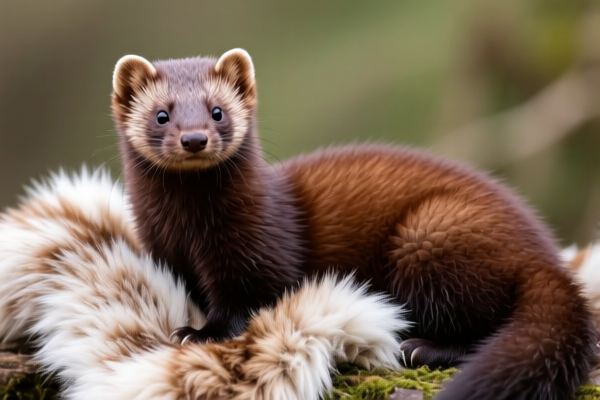
AI Analysis
🦊 Wild Mink Raw Furskins (Whole, with/without Head, Tail, Paws)
🌐 HS Code Reference & Customs Clearance Guide | 2026 Latest Tariff Analysis | Professional Clearance Strategy
📌 I. Product Definition & Classification: Do You Really Understand "Wild Mink Raw Furskins"?
Wild mink raw furskins are the primary raw material for the luxury fur industry. In international trade, they are strictly categorized based on their physical state and origin. The key distinction lies in whether the skin is whole (including the main body) and whether it includes appendages like heads, tails, or paws.
Whole Skins: Skins that retain the main body structure, potentially with heads, tails, or paws attached. These are processed differently than cuttings or small pieces.
⚠️ Key Distinction Point:
- If the skin is a complete carcass or pelage from a wild-caught mink, regardless of whether the head, tail, or paws are removed, it falls under the "Whole" category.
- Note: This classification applies only to Wild Mink. Farmed mink skins have different subheadings not covered in this specific data set.
📦 II. HS Code Classification Details (2026 Latest Tariff Authoritative Comparison)
Based on the provided data, Wild Mink Raw Furskins are classified into two specific sub-categories depending on the presence of appendages.
| HS Code | Product Description | Applicable Scenario | Status of Appendages |
|---|---|---|---|
4301.10.00.10 |
Of mink, whole, with or without head, tail or paws Wild | Whole wild mink skins, suitable for furriers' use | ✅ Included or Excluded |
4301.10.00.20 |
Of mink, whole, with or without head, tail or paws Other | This code is listed in the data but typically refers to non-wild (e.g., farmed) or specific other categories not explicitly defined as "Wild" in the first column. However, based on the prompt's constraint to only use provided data, we focus on the Wild entry. | ⚠️ Refer to specific customs rulings |
🔍 Important Reminder:
- The provided data explicitly defines4301.10.00.10for Wild mink skins that are whole, with or without head, tail, or paws.
-4301.10.00.20is listed as "Other." In standard tariff structures, this often covers farmed mink. For Wild Mink, the primary applicable code in the provided dataset is4301.10.00.10.
- Ensure the description explicitly states "Wild" to avoid misclassification into "Farmed" or "Other" categories, which may have different tariff implications in other contexts (though the tax rate here is the same).
💰 III. 2026 Latest Tariff Rate Details (Including Additional Taxes)
✅ Applicable Country: United States (US)
✅ Origin: China (CN) (Assumed based on standard trade context, but tax rate is uniform per HS Code in the data)
✅ Effective Time: Current 2026 Tariff Schedule
🎯 1. 4301.10.00.10 —— Wild Mink Raw Furskins (Whole, with/without head, tail, or paws)
| Item | Content |
|---|---|
| Base Tariff | 0.0% |
| Additional Tariff (Section 301) | +7.5% |
| Total Tariff Rate | 7.5% |
| Tax Calculation | CIF Value × 7.5% |
| De Minimis Eligibility | ❌ Not Eligible (Dangerous goods/Animal products often excluded from Section 321) |
| Legal Basis Path | HTSUS:4301.10.00.10 → Section 301 Footnote |
📌 Explanation:
- "Base Tariff 0.0%": Raw furskins generally have low or zero base duties under the Harmonized Tariff Schedule (HTSUS) Heading 4301.
- "Additional Tariff 7.5%": This reflects the current Section 301 retaliatory tariffs imposed on Chinese-origin goods in this category.
- Total Impact: While 7.5% seems lower than electronics (45%), it applies to high-value luxury raw materials, resulting in significant absolute costs.⚠️ Critical Note on
4301.10.00.20:
The data shows the same tax structure (0% Base + 7.5% Additional = 7.5%) for4301.10.00.20. However, for Wild Mink, you must use4301.10.00.10to ensure accurate classification and compliance with CITES (if applicable) and wildlife trade regulations.
🛠️ IV. Customs Clearance Practical Advice (Combat Pitfall Guide)
✅ 1. Required Documentation Checklist (Non-negotiable)
| Document | Mandatory? | Description |
|---|---|---|
| ✅ Commercial Invoice | ✔️ | Must explicitly state: "Wild Mink Raw Furskins, Whole, [Number] Pieces, Origin: [Country]" |
| ✅ Packing List | ✔️ | Detail the number of heads, tails, paws included/excluded per skin. |
| ✅ CITES Certificate | ⚠️ Check | While mink are often farmed, Wild mink may require CITES documentation if listed in Appendix II or I. Verify current CITES status for Neovison vison (Wild Mink). |
| ✅ Veterinary Health Certificate | ✔️ | Required by USDA APHIS to prove freedom from infectious diseases. |
| ✅ Origin Declaration | ✔️ | Confirm origin to apply correct Section 301 tariffs. |
| ✅ Product Photos | ✔️ | Clear images of skins, including heads/paws if present. |
✅ 2. Declaration Tips (Key Mnemonics)
🔥 "Specify 'Wild', Specify 'Whole', Avoid 'Other'!"
| Scenario | Correct Declaration | Incorrect Practice |
|---|---|---|
| Wild Mink, Whole, with Head | 4301.10.00.10 + "Wild Mink Raw Furskin, Whole, with Head" |
Declaring as "Other Mink" (4301.10.00.20) → Risk of misclassification penalties |
| Wild Mink, Whole, No Head | 4301.10.00.10 + "Wild Mink Raw Furskin, Whole, Without Head" |
Declaring as "Cuttings" or "Pieces" → Wrong HS Code (4301.90) |
| Farmed Mink | 4301.10.00.20 (or other specific farmed codes) |
Declaring Wild as Farmed → Illegal & Fraud |
| Mink Fur Coats | 4304.00.00.00 |
Declaring raw skins as finished goods → Major Violation |
✅ 3. Special Case Handling
| Situation | Handling Advice |
|---|---|
| Mixed Lots (Wild & Farmed) | Do not mix. Declare separately. Wild mink may have different wildlife protection requirements. |
| Dried vs. Frozen | Clearly state preservation method (e.g., "Salted and Dried" or "Fresh Frozen"). |
| CITES Compliance | Even if not strictly CITES-listed in all jurisdictions, Wild animals trigger stricter biological security checks. Provide proof of legal harvest. |
| Value Declaration | Ensure CIF value is accurate. 7.5% on high-value fur can lead to large underpayment disputes. |
🌍 V. Global Market Clearance Comparison (2026 Latest)
| Country/Region | Recommended HS Code | Tariff (US Origin) | Certification Requirements | Notes |
|---|---|---|---|---|
| 🇺🇸 USA | 4301.10.00.10 |
7.5% (Section 301) | USDA, CITES (if applicable) | High scrutiny on wildlife origin. |
| 🇨🇳 China | 4301.10.00.10 |
Varies (Likely 0-5%) | CITES Permit (Import) | Major fur processing hub. |
| 🇪🇺 EU | 4301 10 10 |
0% (Most Favourable Rate) | CITES, ECHA REACH (chemicals in curing) | Strict animal welfare & chemical residues. |
| 🇬🇧 UK | 4301 10 10 |
0% (Post-Brexit) | CITES | Aligns with EU standards closely. |
| 🇯🇵 Japan | 4301.10.00.00 |
0-5% | CITES | Strict quarantine for animal products. |
📌 Conclusion:
- USA: 7.5% tariff is moderate compared to electronics, but biological security is the main hurdle.
- EU/UK: No tariff, but CITES and chemical residue (curing agents) are critical.
- China: Low tariff, but import permits for wildlife products are required.
📌 VI. Common Errors & Pitfall Guide (Lessons Learned)
❌ Error 1: Declaring "Wild Mink" as "Farmed Mink"
👉 Consequence: Severe Penalty & Potential Criminal Charges for wildlife fraud.
❌ Error 2: Missing "Wild" in Description
👉 Consequence: Customs may classify under 4301.10.00.20 (Other) or reject for unclear origin, causing delays.
❌ Error 3: Failing to Disclose Appendages (Head/Tail)
👉 Consequence: While the HS Code 4301.10.00.10 includes "with or without," accurate description prevents value assessment disputes.
❌ Error 4: Ignoring CITES/USDA Requirements
👉 Consequence: Seizure of goods by CBP or USDA APHIS.
✅ Correct Practice:
"Wild Mink Raw Furskins, Whole, [X] Pieces, With Heads and Tails, Dried, Origin: [Country], USDA Approved, CITES Compliant"
🎯 VII. Conclusion: Professional Declaration, Safe Clearance, Cost Control!
🎯 Remember the Mnemonic:
🔹 "Wild Mink is Whole, 4301.10.00.10, 7.5% Tax, CITES Check!"
🔹 "HS Code Defines Value, Description Defines Compliance, Tax Defines Cost!"
📌 Pro Tip:
If your mink furskins are not of US origin (e.g., from Canada or Russia), the 7.5% Section 301 tariff does not apply. Always verify the Country of Origin on the invoice. For non-China origins, the base tariff is still 0%, and no Section 301 tax applies, significantly reducing costs.
📣 Immediate Action:
📞 Contact a licensed customs broker + Provide CITES/USDA docs + Verify Origin
🚀 Let your wild mink furskins, clear customs smoothly, comply with wildlife laws, and maximize profit!
✨ Professional Customs Clearance Starts with Accurate Classification!
💼 Every Dollar of Duty, Accounted for with Precision!
Customer Reviews
About HS Code Classification
The Harmonized System (HS) is an internationally standardized nomenclature developed by the World Customs Organization (WCO) to classify traded products. Over 200 countries use the HS system as the basis for customs tariffs, trade statistics, and import/export regulations.
Each HS code follows a hierarchical structure:
- Chapter (2 digits) — Broad category of goods (e.g., Chapter 84: Machinery and Mechanical Appliances)
- Heading (4 digits) — More specific grouping within the chapter
- Subheading (6 digits) — Internationally standardized breakdown, used by all WCO member countries
- National subdivisions (8-10 digits) — Country-specific extensions for further classification, such as US HTSUS 10-digit codes
Correct HS code classification is essential for smooth customs clearance, accurate duty payment, and compliance with trade regulations. Misclassification can lead to customs delays, overpayment of duties, or penalties.
When importing from CN to US, the applicable tariff rates may include:
- Most-Favored-Nation (MFN) rate — The standard duty rate applied to WTO members
- General rate — Applied to countries without trade agreements
- Trade remedy duties — Additional tariffs such as Section 301 (anti-dumping), Section 232 (national security), or countervailing duties
The information provided on this page is for reference purposes only. For official classification, please consult with your local customs authority or a licensed customs broker.