Wild Mink Raw Hide with Paws Whole Skin
CN → US| HS Code | Tariff Rate | Origin | Destination | Doc |
|---|---|---|---|---|
| 4103901190 | 17.5% | CN | US | Official Doc |
| 4103902000 | 20.8% | CN | US | Official Doc |
Product Images
AI Analysis
🦫 Wild Mink Raw Hides with Paws & Whole Skins (Unprepared)
🌐 HS Code Reference & Customs Clearance Guide | 2026 Latest Tariff Analysis | Professional Clearance Strategy
📌 I. Product Definition & Classification: Do You Know "Raw Mink Skins"?
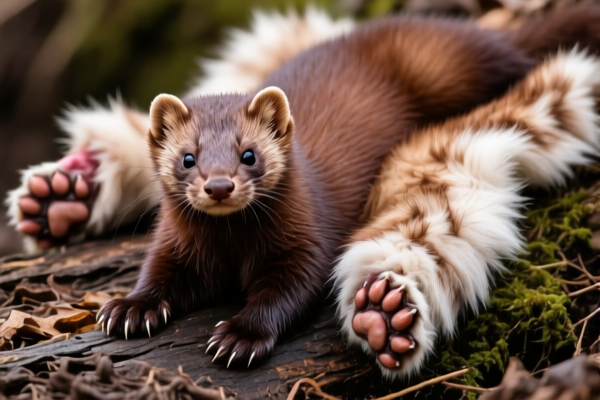
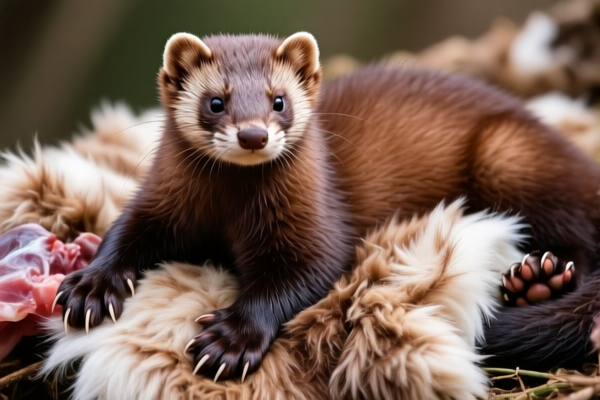
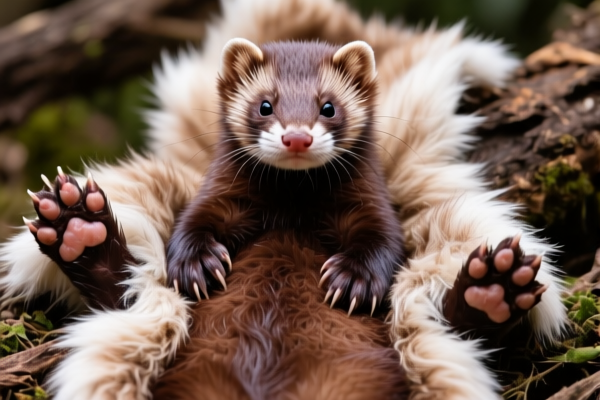
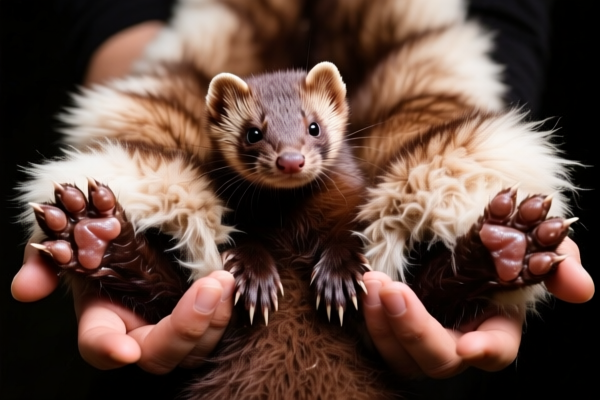
Wild Mink Raw Hides with Paws, also known as "Whole Skins with Paws," are the untreated skins of wild minks, preserved through salting, drying, liming, or pickling, but not tanned, parchment-dressed, or further prepared. In international trade, these are classified under Chapter 41 (Raw Hides and Skins), specifically as Other Raw Hides and Skins.
⚠️ Key Distinction:
- If the skin is fresh, salted, dried, or pickled (preserved but not tanned) → It falls under Chapter 41 (Raw Hides/Skins).
- If the skin is tanned, fur-dressed, or further processed → It falls under Chapter 43 (Fur Skins and Furs).
- "With Paws" is a specific characteristic that may affect grading but does not change the fundamental HS Code category for raw goods, unless specific sub-headings exist for "with paws" (which generally do not for wild mink in the US tariff schedule compared to farmed mink).
📦 II. HS Code Classification Details (2026 Latest Tariff Authority Comparison)
Based on the provided data, wild mink raw hides with paws are classified under the following HS Codes, depending on whether they are "pretanned" or "other." Since the product is described as "raw hide" (not tanned), it falls into 4103.
| HS Code | Product Description | Application Scenario | Pretanned? |
|---|---|---|---|
4103.90.11.90 |
Other raw hides and skins... Other: Not pretanned Other | Wild mink raw hides, salted/dried, no pretanning process | ❌ No |
4103.90.20.00 |
Other raw hides and skins... Other: Other: Other | Other raw hides/skins not covered by the above specific "not pretanned" category (often used for broader "other" classifications if specific pretanning criteria are not met or for mixed lots) | ✅ Varies |
🔍 Critical Note:
- Wild Mink is generally classified under "Other" raw hides (not bovine, porcine, caprine, ovine, or equine).
- The term "With Paws" does not typically create a separate HS Code in the 10-digit US tariff schedule for raw hides; it is considered a feature of the skin's condition.
- Key Differentiator: The primary split in the provided data is between "Not Pretanned" (4103.90.11.90) and "Other" (4103.90.20.00). For standard wild mink raw hides, "Not Pretanned" is the most accurate if no tanning/pretanning chemicals have been applied beyond preservation (salting/drying).
💰 III. 2026 Latest Tariff Rate Details (Including Surtaxes & Policy Add-ons)
✅ Applicable Country: United States (US)
✅ Origin: China (CN) (Assumed based on the tax detail format in the DATA)
✅ Effective Date: 2025/2026 Current Regulations
🎯 1. 4103.90.11.90 —— Raw Hides & Skins: Other: Not Pretanned Other
| Item | Content |
|---|---|
| Base Tariff Rate | 0% (ad valorem) |
| Surtax Rate | 7.5% |
| Total Tax Rate | 7.5% |
| Tax Calculation | CIF Value × 7.5% |
| De Minimis Exemption | ❌ Not Applicable (Raw hides are typically subject to strict customs control and do not qualify for $800 de minimis if commercial quantity) |
| Legal Basis | Chapter 41, Note 1 & 2; HTSUS 4103.90.11.90 |
📌 Explanation:
- The 0% base tariff reflects the US policy on raw agricultural/animal products not further processed.
- The 7.5% surtax is a specific additional duty often applied to certain raw materials or under specific trade remedies (e.g., Section 301 or other bilateral agreements, though the DATA specifies 7.5% directly).
- Wild Mink is considered a luxury raw material; however, as raw (un-tanned), it attracts lower base tariffs than finished fur goods.
🎯 2. 4103.90.20.00 —— Other Raw Hides & Skins: Other: Other: Other
| Item | Content |
|---|---|
| Base Tariff Rate | 3.3% (ad valorem) |
| Surtax Rate | 7.5% |
| Total Tax Rate | 10.8% |
| Tax Calculation | CIF Value × 10.8% |
| De Minimis Exemption | ❌ Not Applicable |
| Legal Basis | Chapter 41, HTSUS 4103.90.20.00 |
📌 Explanation:
- This code is used if the skins do not fit the "Not Pretanned" description or are classified under a broader "Other" category for unspecified raw hides.
- The 3.3% base + 7.5% surtax results in a higher total duty of 10.8%.
- Risk: Misclassifying a "Not Pretanned" skin as "Other" could lead to underpayment (if 7.5% is paid instead of 10.8%) or overpayment (if 10.8% is paid when 7.5% is due). Accuracy is key.
🛠️ IV. Customs Clearance Practical Advice (Battle-Tested Pitfall Guide)
✅ 1. Required Documentation Checklist (Non-Negotiable)
| Document | Must Provide | Explanation |
|---|---|---|
| ✅ Commercial Invoice | ✔️ | Must clearly state "Wild Mink Raw Hides with Paws," preserved by (salting/drying). |
| ✅ Packing List | ✔️ | Detail the number of skins, weight (gross/net), and dimensions. |
| ✅ Preservation Method Certificate | ✔️ | Declare if salted, dried, limed, or pickled. This affects sanitary inspection. |
| ✅ Wildlife Compliance (CITES) | ✔️ | Crucial: Wild mink may be subject to CITES regulations. Provide import/export permits if applicable. |
| ✅ USDA/APHIS Form | ✔️ | Animal products require USDA certification to prevent disease spread. |
| ✅ Product Photos | ✔️ | Show the skins with paws, labeling, and preservation state. |
✅ 2. Declaration Tips (Key Mnemonic)
🔥 "Raw is Low Base, Tanned is High Base. Wild Needs CITES, Paws Don't Change Code!"
| Scenario | Correct Declaration | Wrong Approach |
|---|---|---|
| Wild Mink Raw, Salted | 4103.90.11.90 (7.5%) |
Declare as "Fur Garment Parts" → Higher tax & CITES issues |
| Wild Mink Raw, Dried | 4103.90.11.90 (7.5%) |
Declare as "Leather" → Incorrect Chapter 41 vs 42 |
| Wild Mink Tanned | 4302.xx.xx (Different Chapter) |
Declared as Raw Hide → Misclassification |
| Farmed Mink vs Wild | Check Origin Label | Mixing wild/farmed declarations → CITES Violation |
✅ 3. Special Circumstances Handling
| Situation | Handling Advice |
|---|---|
| CITES Regulations | Wild mink (Neovison vison) is not currently listed in CITES Appendix I/II globally, but some states (e.g., California, New York) have strict bans. Check local state laws! |
| Pests & Diseases | USDA may inspect for brucellosis, tuberculosis, etc. Ensure skins are properly cured to prevent odor/pest issues. |
| Paws Included | Ensure the invoice describes "with paws" to avoid confusion with "pelt" (which might imply removed paws). This affects grading but not HS Code. |
| Pre-tanned Skins | If skins have been "pre-tanned" (e.g., sumac-tanned for fur), they may move to Chapter 43. Confirm with the supplier! |
🌍 V. Global Market Clearance Comparison (2026 Latest)
| Country/Region | Recommended HS Code | Tariff Rate | Certification Requirements | Notes |
|---|---|---|---|---|
| 🇺🇸 USA | 4103.90.11.90 |
7.5% | USDA + CITES (if applicable) | 10.8% if misclassified as "Other" |
| 🇨🇳 China | 4103.90.20.00 |
~10-13% | Animal Quarantine Certificate | High tariff on raw hides |
| 🇪🇺 EU | 4103 90 |
~10-12% | REACH + Sanitary Cert | Strict animal welfare laws |
| 🇯🇵 Japan | 4103 90 |
~10-15% | Animal Quarantine | High inspection standards |
📌 Conclusion:
- The US offers the lowest tariff (7.5%) for properly classified wild mink raw hides.
- CITES and USDA compliance are the biggest hurdles, not the tariff itself.
- Misclassification (e.g., using4103.90.20.00) increases cost by 3.3% without benefit.
📌 VI. Common Mistakes & Pitfall Guide (Lessons Learned)
❌ Mistake 1: Declaring "Wild Mink" as "Farmed Mink"
👉 Consequence: Potential CITES fraud charges or fines if wild origin cannot be proven.
❌ Mistake 2: Using "Leather" instead of "Raw Hide"
👉 Consequence: Wrong HS Code (Chapter 41 vs 42), leading to clearance delays and penalties.
❌ Mistake 3: Ignoring "Paws" Description
👉 Consequence: Customs may question the weight/value ratio, leading to additional inspections.
❌ Mistake 4: Failing to Declare Preservation Method
👉 Consequence: USDA rejection due to unknown disease risk.
✅ Correct Approach:
"Wild Mink Raw Hides, Whole Skin with Paws, Salted, Preserved, CITES Compliant (if required), USDA Certified"
🎯 VII. Conclusion: Precision in Classification, Smooth Customs Clearance!
🎯 Remember the Mantra:
🔹 "Raw is 7.5% (if Not Pretanned), Tanned is Chapter 43. Wild Needs Check, Paws Don't Change Tax."
🔹 "HS Code 4103.90.11.90 is your friend for raw wild mink. Save 3.3% and avoid penalties!"
📌 Pro Tip:
If your wild mink skins are imported from Canada, Russia, or Europe, ensure you have the CITES permit (if applicable) and USDA health certificate.
For US domestic shipments, check state-level regulations on wild mink trade.
📣 Immediate Action:
📞 Contact a licensed customs broker + Provide photos of skins + Verify CITES status
🚀 Ensure your wild mink raw hides clear customs smoothly, legally, and cost-effectively!
✨ Professional Clearance Starts with Accurate Classification!
💼 Every Dollar Saved in Tariffs is Pure Profit!
Customer Reviews
About HS Code Classification
The Harmonized System (HS) is an internationally standardized nomenclature developed by the World Customs Organization (WCO) to classify traded products. Over 200 countries use the HS system as the basis for customs tariffs, trade statistics, and import/export regulations.
Each HS code follows a hierarchical structure:
- Chapter (2 digits) — Broad category of goods (e.g., Chapter 84: Machinery and Mechanical Appliances)
- Heading (4 digits) — More specific grouping within the chapter
- Subheading (6 digits) — Internationally standardized breakdown, used by all WCO member countries
- National subdivisions (8-10 digits) — Country-specific extensions for further classification, such as US HTSUS 10-digit codes
Correct HS code classification is essential for smooth customs clearance, accurate duty payment, and compliance with trade regulations. Misclassification can lead to customs delays, overpayment of duties, or penalties.
When importing from CN to US, the applicable tariff rates may include:
- Most-Favored-Nation (MFN) rate — The standard duty rate applied to WTO members
- General rate — Applied to countries without trade agreements
- Trade remedy duties — Additional tariffs such as Section 301 (anti-dumping), Section 232 (national security), or countervailing duties
The information provided on this page is for reference purposes only. For official classification, please consult with your local customs authority or a licensed customs broker.