Wild Mink Raw Skin with Claws (Whole)
CN → US| HS Code | Tariff Rate | Origin | Destination | Doc |
|---|---|---|---|---|
| 4103901190 | 17.5% | CN | US | Official Doc |
| 4103901140 | 17.5% | CN | US | Official Doc |
| 4301100010 | 17.5% | CN | US | Official Doc |
| 4301100020 | 17.5% | CN | US | Official Doc |
| 4302110010 | 37.1% | CN | US | Official Doc |
Product Images
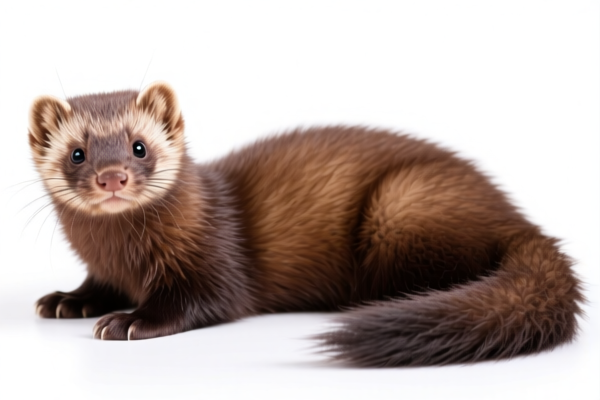
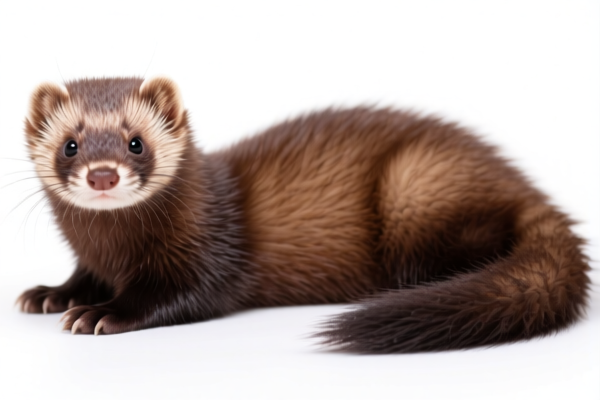
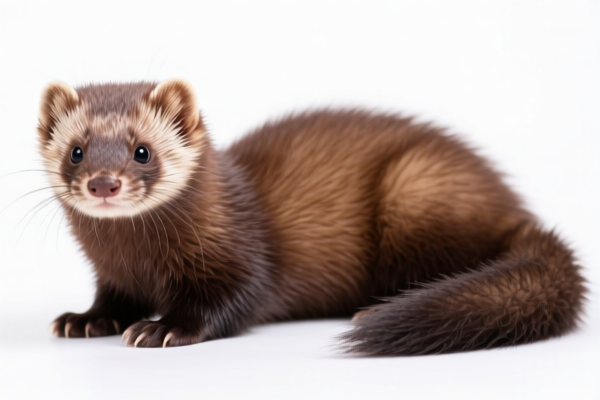
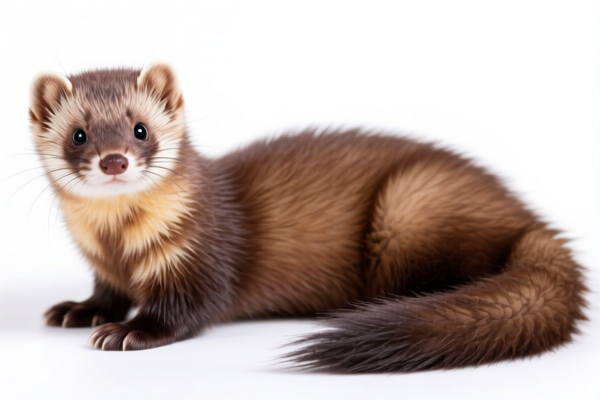
AI Analysis
🦫 Wild Mink Raw Skin with Claws (Whole) – The "Untanned Treasure"
🌐 HS Code Reference & Customs Clearance Guide | 2026 Latest Tariff Breakdown | Professional Furry Trade Strategy
📌 I. Product Definition & Classification: Is It Raw Leather or Finished Fur?
The "Wild Mink Raw Skin with Claws (Whole)" is a specialized raw material in the global fur trade. It is critical to distinguish it from finished fur products.
Key Characteristics: 1. State: Raw/Untanned (未经鞣制). The skin has NOT undergone tanning, curing, or processing to become soft/fashionable yet. 2. Form: Whole Skin with Claws (带爪/带尾). It retains the head, tail, and paws (claws), indicating it is a natural, untrimmed hide. 3. Material: Mink (貂皮). Specifically identified as mink, not fox, raccoon, or other species.
⚠️ Critical Classification Distinction:
- If the skin is untanned/raw → It falls under Chapter 41 (Raw Hides and Skins).
- If the skin is tanned/dressed → It falls under Chapter 43 (Fur Skins and Furs.
- Why not 4301? HS Code 4301.10.00 specifically refers to tanned or further prepared mink skins (whole). Since your input specifies "Raw Skin", it must be classified under 4103.90.11.
📦 II. HS Code Classification Details (2026 Latest Tariff Authority)
Based on the provided <DATA>, here is the precise mapping for "Wild Mink Raw Skin with Claws (Whole)":
| HS Code | Product Description | Status | Key Feature |
|---|---|---|---|
4103.90.11.90 |
Raw Mink Skins (with tail), Untanned | ✅ Match | Un-tanned raw hide, categorized under other raw skins. Matches "Untanned Raw Skin" description. |
4103.90.11.40 |
Raw Skins (Raw Skins), Un-pre-tanned | ✅ Match | Fits the morphology of un-pre-tanned raw materials, primary raw product. |
4301.10.00.10 |
Whole Mink Fur (Tanned/Dressed) | ❌ Mismatch | This is for tanned mink fur. Your input says "Raw". |
4301.10.00.20 |
Mink Skins, Whole, with Claws (Tanned) | ❌ Mismatch | This is for tanned mink skins. Raw skins do not go here. |
4302.11.00.10 |
Unassembled Tanned Mink Skins (Collinsky) | ❌ Mismatch | This is for tanned skins, specifically Collinsky type. |
🔍 Priority Selection:
Between4103.90.11.90and4103.90.11.40, both refer to raw/un-tanned mink skins.
- Use4103.90.11.90if the description emphasizes "Mink" (貂皮) specifically in the "Other Raw Skins" category.
- Use4103.90.11.40if the classification focuses on the "Raw Skin" (原皮) general category without specific mink sub-coding in your local tariff book.
Recommendation: Verify with local customs if4103.90.11.90(Mink-specific) or4103.90.11.40(General Raw) is preferred for wild mink. Both have the same tax rate.
💰 III. 2026 Latest Tariff Rate Breakdown (Including Surtaxes & Policy Add-ons)
✅ Applicable Country: USA (US)
✅ Origin: China (CN)
✅ Effective Date: November 10, 2025 (and subsequent imports)
🎯 1. HS Code 4103.90.11.90 & 4103.90.11.40 — Raw Mink Skins (Untanned)
| Item | Content |
|---|---|
| Base Tariff | 0.0% (Ad Valorem) |
| Section 301 Surtax | +7.5% (USITC Footnote for Raw Hides/Skins) |
| Section 122 Tariff | +10% (Under IEEPA, targeting Chinese origin) |
| Total Tariff Rate | 17.5% |
| Tax Calculation | CIF Value × 17.5% |
| De Minimis Exemption | ❌ NOT Applicable (deny_de_minimis) |
| Legal Basis Path | IEEPA:9903.01.25 → USITC:4103.90.11 → FOOTNOTE:301/122 |
📌 Explanation:
- Base Rate 0%: Raw hides and skins generally have low base duties.
- 7.5% Surtax: Applies to specific raw animal products under Section 301.
- 10% IEEPA Tariff: Applies to all Chinese-origin goods under recent executive orders.
- Total 17.5%: This is a moderate-high tariff for raw materials. It is significantly lower than tanned furs (37.1%) but still a major cost factor.
🎯 2. Why NOT the Tanned Codes? (4301.10.00 Series)
If you mistakenly classify "Raw Skin" as "Tanned Skin" (4301.10.00), you risk under-declaration penalties. However, note that:
| Item | Content |
|---|---|
| HS Code | 4301.10.00.10 / 4301.10.00.20 (Tanned Mink) |
| Base Tariff | 0.0% |
| Section 301 Surtax | +7.5% |
| Section 122 Tariff | +10% |
| Total Tariff | 17.5% |
| Wait... | The tax rate is the same IF the base rate is 0%. |
⚠️ CRITICAL WARNING:
The tax rate for Raw (4103.90.11) and Tanned Whole (4301.10.00) is identical (17.5%) in the provided data.
HOWEVER, misclassification is illegal.
- Raw Skin → Chapter 41 (4103.90.11)
- Tanned Skin → Chapter 43 (4301.10.00)
Customs officers will inspect the smell, texture, and water content. Raw skins smell stronger, are stiffer, and are often salted or dried differently. Do not swap codes to avoid penalties.
🛠️ IV. Customs Clearance Practical Advice (Battle-Tested Pitfall Avoidance)
✅ 1. Documentation Checklist (Non-negotiable)
| Document | Required | Notes |
|---|---|---|
| ✅ Commercial Invoice | ✔️ | Must clearly state: "RAW MINK SKINS, WILD, WITH CLAWS AND TAIL, UNTANNED". Do NOT use "Fur Product" (implies finished). |
| ✅ Packing List | ✔️ | Specify quantity, weight (net/gross), and skin count. |
| ✅ Phytosanitary Certificate | ✔️ | Critical for Animal Products. Proves no pests/disease. Required by USDA/APHIS. |
| ✅ Import Permit (USDA) | ✔️ | Wild mink may require special import permits from the US Fish & Wildlife Service or USDA. |
| ✅ Photos of Goods | ✔️ | Show texture, claws, tail, and salt/drying status to prove RAW status. |
| ✅ Certificate of Origin | ✔️ | To prove CN origin for 17.5% tax calculation. |
✅ 2. Declaration Tips (Key Mantra)
🔥 "Raw is Chapter 41, Tanned is Chapter 43. Clawed & Wild needs Phytosanitary!"
| Scenario | Correct HS Code | Wrong Action | Consequence |
|---|---|---|---|
| Raw, Saline/Dried Mink Skins | 4103.90.11.90 / 4103.90.11.40 |
Classify as 4301 |
Penalty for misclassification + potential seizure for lacking tanning records. |
| Tanned, Ready-to-Sew Mink Skins | 4301.10.00.10 / 4301.10.00.20 |
Classify as 4103 |
Penalty for undervaluing/under-declaring processing status. |
| Raw Skins without Phytosanitary Cert | Any Raw Code | Skip Certificate | HOLD/DESTROY by USDA. No entry allowed. |
| Mixture of Raw & Tanned | Separate HS Codes | Mixed Declaration | REJECTION. Must separate shipments or declare separately. |
✅ 3. Special Case Handling
| Situation | Handling Advice |
|---|---|
| Wild vs. Farm-raised | "Wild" may trigger additional CITES or US Fish & Wildlife Service checks. Ensure legal sourcing documents are attached. |
| Claws Attached | Explicitly state "WITH CLAWS" in the description. If claws are removed, the product might be classified differently (e.g., as trimmings). |
| Salted vs. Fresh | Fresh raw skins require cold chain logistics and strict biosecurity. Salted/dried are easier to clear but still need Phytosanitary. |
| De Minimis (Section 321) | ❌ NOT APPLICABLE. Animal products and goods from China under Section 301/122 are excluded from $800 de minimis exemption. |
🌍 V. Global Market Clearance Comparison (2026)
| Country/Region | Recommended HS Code | Tariff Rate | Certification Required | Notes |
|---|---|---|---|---|
| 🇺🇸 USA | 4103.90.11.90/40 |
17.5% | Phytosanitary + USDA Permit | High scrutiny on animal origin. |
| 🇨🇳 China | 4103.90.11 |
Varies (Low Base) | CIQ Inspection | Raw hides import may require specific licenses. |
| 🇪🇺 EU | 4103.90 |
~0-2% | REACH + Animal Health Cert | Strict on animal welfare and traceability. |
| 🇯🇵 Japan | 4103.90 |
~0% | Health Certificate | Minimal tariffs, but strict health checks. |
📌 Conclusion:
- USA is the most complex market due to Section 122/301 taxes and USDA regulations.
- Raw skins are heavily regulated for biosecurity globally.
- Documentation is more important than HS Code here. One missing certificate = Return/Destroy.
📌 VI. Common Mistakes & Pitfall Guide (Lessons Learned)
❌ Mistake 1: Calling "Raw Skin" a "Fur Product" in the invoice.
👉 Consequence: Customs may assign it to a different code, leading to audits.
👉 Fix: Use precise language: "Raw Mink Hide, Untanned."
❌ Mistake 2: Omitting "With Claws" in the description.
👉 Consequence: Discrepancy between documents and physical goods → Seizure.
👉 Fix: Always specify "Whole with Head, Tail, and Claws."
❌ Mistake 3: Assuming De Minimis applies to raw animal products.
👉 Consequence: Package confiscated. Animal products are exempt from $800 de minimis.
👉 Fix: Plan for full formal entry and 17.5% duty payment.
❌ Mistake 4: Confusing Raw (Chapter 41) with Tanned (Chapter 43).
👉 Consequence: Legal violation. Raw skins are not "furs" in the trade sense until tanned.
👉 Fix: Know your stage of processing. Raw = 41. Tanned = 43.
✅ Correct Declaration Example:
"Raw Mink Skins, Wild Origin, Untanned, Whole with Claws and Tail, Salted/Dried, No Tanning Process, HS 4103.90.11.90, Country of Origin: China."
🎯 VII. Conclusion: Precision in Biosecurity & Tariffs
🎯 Remember the Mantra:
🔹 "Raw = Chapter 41, Tanned = Chapter 43."
🔹 "Claws & Wild = USDA Permit Required."
🔹 "No De Minimis = 17.5% Duty Applies."
📌 Pro Tip:
If you are importing large quantities, consider applying for an Advance Ruling from US Customs and Border Protection (CBP) to confirm the HS Code (
4103.90.11.90vs4103.90.11.40) and obtain USDA import permits before shipment.
This prevents costly delays at the port.
📣 Immediate Action:
📞 Contact a licensed customs broker specializing in animal products.
📄 Secure Phytosanitary Certificates from the exporter's government.
🚀 Ensure 17.5% duty budget is included in your landed cost calculation.
✨ Professional Clearance Starts with Accurate Raw Material Declaration!
💼 Your Fur Trade Success Depends on Biosecurity Compliance!
Customer Reviews
About HS Code Classification
The Harmonized System (HS) is an internationally standardized nomenclature developed by the World Customs Organization (WCO) to classify traded products. Over 200 countries use the HS system as the basis for customs tariffs, trade statistics, and import/export regulations.
Each HS code follows a hierarchical structure:
- Chapter (2 digits) — Broad category of goods (e.g., Chapter 84: Machinery and Mechanical Appliances)
- Heading (4 digits) — More specific grouping within the chapter
- Subheading (6 digits) — Internationally standardized breakdown, used by all WCO member countries
- National subdivisions (8-10 digits) — Country-specific extensions for further classification, such as US HTSUS 10-digit codes
Correct HS code classification is essential for smooth customs clearance, accurate duty payment, and compliance with trade regulations. Misclassification can lead to customs delays, overpayment of duties, or penalties.
When importing from CN to US, the applicable tariff rates may include:
- Most-Favored-Nation (MFN) rate — The standard duty rate applied to WTO members
- General rate — Applied to countries without trade agreements
- Trade remedy duties — Additional tariffs such as Section 301 (anti-dumping), Section 232 (national security), or countervailing duties
The information provided on this page is for reference purposes only. For official classification, please consult with your local customs authority or a licensed customs broker.