Wild Rabbit Skin
CN → US| HS Code | Tariff Rate | Origin | Destination | Doc |
|---|---|---|---|---|
| 4103901130 | 17.5% | CN | US | Official Doc |
| 4301900000 | 10.0% | CN | US | Official Doc |
| 4103901190 | 17.5% | CN | US | Official Doc |
| 4301800202 | 17.5% | CN | US | Official Doc |
Product Images
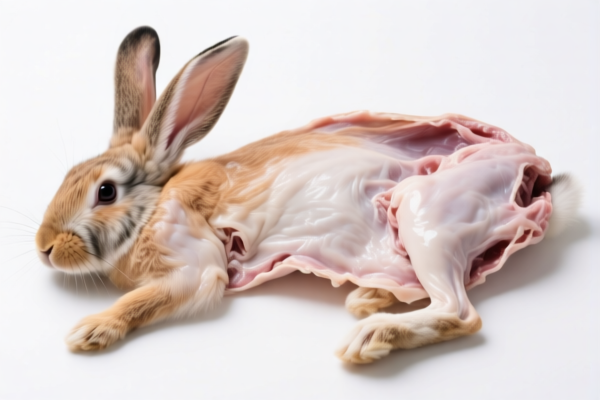
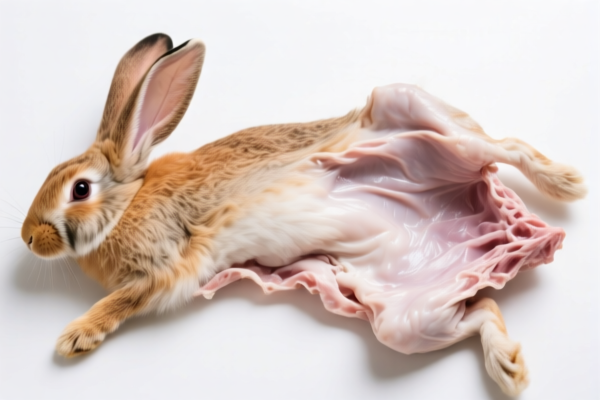
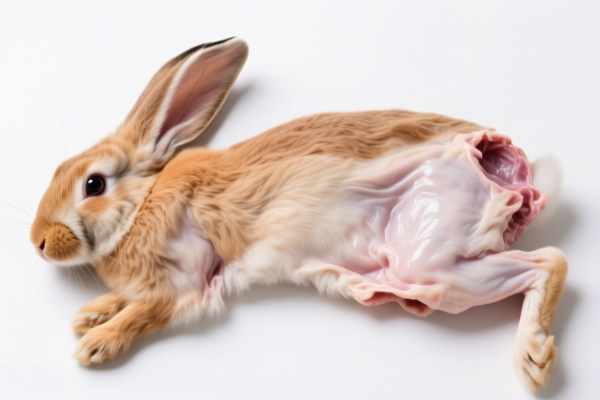
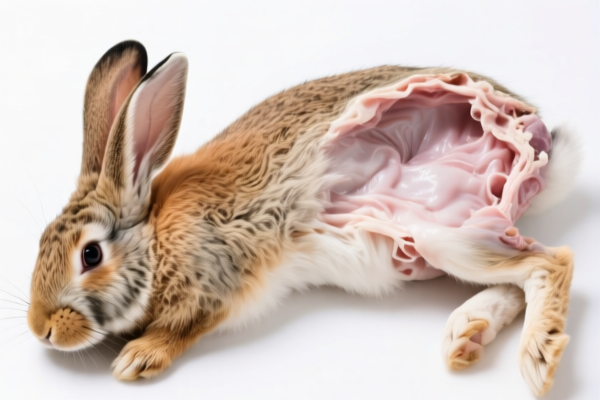
AI Analysis
🐰 Wild Rabbit Skin (Raw Pelts)
🌐 HS Code Reference & Clearance Guide | 2026 Latest Tariff Analysis | Professional Customs Strategy
📌 I. Product Definition & Classification: What is "Wild Rabbit Skin"?
Raw Rabbit Skin (生兔皮) refers to the untanned, salted, or preserved hides of wild rabbits, exported for further processing into fur garments, accessories, or textiles. In international trade, the classification hinges on whether the pelt is considered a general "Raw Skin" (Chapter 41) or a "Raw Fur Skin" (Chapter 43).
Key Distinction: * Chapter 41 (Hides/Skins): Treats the material as a generic raw skin, often subject to stricter trade restrictions (e.g., Section 301, IEEPA). * Chapter 43 (Fur/Skins): Treats the material as a specific fur product, potentially benefiting from different trade policies or lower base tariffs, though still subject to specific surcharges.
⚠️ Critical Classification Point: * If declared as "Other Raw Skins" → HS Code 4103.90.11.30 or 4103.90.11.90 * If declared as "Raw Fur Skins (Other)" → HS Code 4301.90.00.00 * If declared as "Rabbit Raw Skins (Specific)" → HS Code 4301.80.02.02
📦 II. HS Code Classification Details (2026 Latest Tariff Authority Mapping)
| HS Code | Product Description | Summary Logic | Applicable Scenario |
|---|---|---|---|
4103.90.11.30 |
Other raw skins (兜底/General Catch-all) | Matches "unpre-tanned" status & general catch-all logic | Generic raw pelts not meeting specific Chapter 43 criteria |
4301.90.00.00 |
Raw Fur Skins (Other) | Matches "Fur" material category & raw pelt form | Standard raw rabbit pelts classified as fur products |
4103.90.11.90 |
Other raw skins (Non-specific variety) | Matches "unpre-tanned" & non-specific variety attributes | Raw pelts where species specificity is not emphasized |
4301.80.02.02 |
Rabbit Raw Skins | Fully matches material (Rabbit) & form (Raw) | Precise classification for rabbit-specific fur trade |
🔍 Key Reminder: * HS 4103.90.11.30/90 and 4301.80.02.02 are subject to higher combined surcharges (17.5%) in this dataset. * HS 4301.90.00.00 has a lower total tax burden (10.0%), relying on the "Fur" classification exemption for certain surcharges.
💰 III. 2026 Latest Tariff Rate Breakdown (Including Surcharges & Policy Add-ons)
✅ Applicable Country: United States (US)
✅ Origin: China (CN) (Implied by "122 Tariff" and Section 301 context in data)
✅ Effective Time: 2025-2026 Trade Period
🎯 1. 4103.90.11.30 & 4103.90.11.90 — Other Raw Skins (Chapter 41)
| Item | Detail |
|---|---|
| Base Tariff | 0.0% |
| Section 301 Surcharge | 7.5% (Additional Tariff) |
| IEEPA / "122" Clause Surcharge | 10.0% (Targeted China Surcharge) |
| Total Tax Rate | 17.5% |
| Tax Calculation | CIF Value × 17.5% |
| De Minimis Exemption? | ❌ No (High tariff items usually excluded from 800 USD threshold benefits) |
| Legal Basis Path | USITC:4103.90.11.30/90 → Section 301 Footnote → IEEPA:9903.01.25 (or similar 122 clause) |
📌 Explanation: * These codes fall under Chapter 41, which often attracts broader trade remedy measures. * The 17.5% rate is significantly higher than the Fur classification, impacting profit margins heavily. * The "122 Tariff" refers to specific executive orders targeting Chinese imports, adding the 10% layer on top of the base/Section 301 rates.
🎯 2. 4301.80.02.02 — Rabbit Raw Skins (Specific Fur Class)
| Item | Detail |
|---|---|
| Base Tariff | 0.0% |
| Section 301 Surcharge | 7.5% |
| IEEPA / "122" Clause Surcharge | 10.0% |
| Total Tax Rate | 17.5% |
| Tax Calculation | CIF Value × 17.5% |
| De Minimis Exemption? | ❌ No |
| Legal Basis Path | USITC:4301.80.02.02 → Section 301 Footnote → IEEPA:9903.01.25 |
📌 Note: * Despite being a specific "Rabbit" pelt (Chapter 43), this specific subheading still incurs the 7.5% + 10% surcharges. * Do not assume "Chapter 43 = Lower Taxes" automatically; check the specific subheading surcharges.
🎯 3. 4301.90.00.00 — Raw Fur Skins (Other) — LOWEST TARIFF OPTION
| Item | Detail |
|---|---|
| Base Tariff | 0.0% |
| Section 301 Surcharge | 0.0% |
| IEEPA / "122" Clause Surcharge | 10.0% |
| Total Tax Rate | 10.0% |
| Tax Calculation | CIF Value × 10.0% |
| De Minimis Exemption? | ❌ No (Still subject to 10% surcharge) |
| Legal Basis Path | USITC:4301.90.00.00 → IEEPA:9903.01.25 (Exemptions from Section 301 apply here) |
📌 Advantage: * This code benefits from exemption from the 7.5% Section 301 additional tariff. * It only carries the 10% IEEPA/122 Clause surcharge. * Savings: 7.5% lower than the other three options. This is the most cost-effective classification if compliant.
🛠️ IV. Customs Clearance Practical Advice (Avoiding Pitfalls)
✅ 1. Preparation Checklist (Mandatory Documents)
| Document | Required | Explanation |
|---|---|---|
| ✅ Commercial Invoice | ✔️ | Must specify "Wild Rabbit Skin, Raw, Salted/Dried" |
| ✅ Packing List | ✔️ | Detail quantity, weight, and number of skins |
| ✅ Species Declaration | ✔️ | Confirm "Wild Rabbit" (Oryctolagus cuniculus or others) |
| ✅ Health/Veterinary Certificate | ✔️ | Proof of disease-free status (Critical for animal products) |
| ✅ Processing Status Proof | ✔️ | Photos showing raw, unsalted, or salted state (not tanned) |
| ✅ CITES Permit | ✔️ | If endangered species, CITES documentation is mandatory |
✅ 2. Declaration Strategy (Key Mantra)
🔥 "Classify as Fur, Not General Skin, to Save 7.5%!"
| Scenario | Recommended HS Code | Result |
|---|---|---|
| Standard Raw Rabbit Pelts | 4301.90.00.00 |
10% Tax (Best Case) |
| Generic Raw Skins | 4103.90.11.30/90 |
17.5% Tax (Avoid if possible) |
| Specific Rabbit Raw Skins | 4301.80.02.02 |
17.5% Tax (Check if exemption applies) |
📌 Warning: * Misdeclaring as
4103(General Skin) when it qualifies as4301(Fur) may lead to overpayment of tariffs. * However, misdeclaring as4301when it does not meet "Fur" criteria may lead to penalties or re-classification. * Always provide product images to Customs brokers to prove the "Fur" characteristic (hair attached, skin structure).
✅ 3. Special Cases
| Case | Handling Advice |
|---|---|
| Endangered Wild Rabbit Species | Requires CITES Permit; may be banned entirely regardless of HS Code. |
| Tanned/Processed Skins | Cannot use these HS Codes. Must reclassify under Chapter 43 (Tanned Fur). |
| Mix of Pelts | If mixed with other raw skins, the entire shipment may be classified under the most restrictive code. |
🌍 V. Global Market Comparison (2026 Update)
| Country/Region | Recommended HS Code | Total Tariff (China Origin) | Notes |
|---|---|---|---|
| 🇺🇸 USA | 4301.90.00.00 |
10.0% | Best option to minimize IEEPA impact |
| 🇺🇸 USA | 4103.90.11.30 |
17.5% | Higher due to Section 301 + IEEPA |
| 🇪🇺 EU | 4103.90 or 4301.90 | Varies (0-12%) | No US-style IEEPA surcharge; check Anti-Dumping |
| 🇨🇳 China | 4103.90 / 4301.90 | 5-15% | Import duties vary; check FTAs if applicable |
📌 Conclusion for US Importers: * The 10.0% rate for
4301.90.00.00is significantly cheaper than the 17.5% for other codes. * Ensure your supplier declares the goods as "Raw Fur Skins" rather than generic "Raw Hides" to qualify for the lower surcharge.
📌 VI. Common Mistakes & Pitfalls (Lessons Learned)
❌ Mistake 1: Declaring as 4103.90.11.30 without justification.
👉 Consequence: Paying 7.5% extra unnecessarily.
👉 Fix: Provide evidence that it is a "Fur Skin" (Chapter 43) to use 4301.90.00.00.
❌ Mistake 2: Ignoring "122 Clause" (IEEPA) surcharges. 👉 Consequence: Unexpected 10% tax on all shipments. 👉 Fix: Factor this 10% into your landed cost calculation immediately.
❌ Mistake 3: Confusing "Raw" with "Tanned". 👉 Consequence: Customs rejection, fines, or forced re-classification. 👉 Fix: Clearly state "RAW" or "UNTANNED" in the invoice. Tanned skins have different HS codes.
🎯 VII. Conclusion: Strategic Classification for Profit Maximization
🎯 Key Takeaway:
🔹 "Fur Classification (4301.90.00.00) saves 7.5% vs. General Skin (4103)"
🔹 "Always budget for the 10% IEEPA surcharge"
🔹 "Verify CITES status for Wild Rabbits"
📌 Pro Tip: If your supplier can provide a Certificate of Origin from a Free Trade Agreement (FTA) partner (e.g., not China), the IEEPA surcharge may be avoided entirely. Check if your supplier has alternative sourcing options.
📣 Immediate Action:
📞 Contact your Customs Broker: Confirm if
4301.90.00.00is accepted for your specific pelt quality. 🚀 Optimize Landed Cost: Use the 10.0% rate for financial planning, not 17.5%.
✨ Smart Classification = Lower Costs = Higher Margins!
💼 Don't let a 7.5% misclassification eat your profits.
Customer Reviews
About HS Code Classification
The Harmonized System (HS) is an internationally standardized nomenclature developed by the World Customs Organization (WCO) to classify traded products. Over 200 countries use the HS system as the basis for customs tariffs, trade statistics, and import/export regulations.
Each HS code follows a hierarchical structure:
- Chapter (2 digits) — Broad category of goods (e.g., Chapter 84: Machinery and Mechanical Appliances)
- Heading (4 digits) — More specific grouping within the chapter
- Subheading (6 digits) — Internationally standardized breakdown, used by all WCO member countries
- National subdivisions (8-10 digits) — Country-specific extensions for further classification, such as US HTSUS 10-digit codes
Correct HS code classification is essential for smooth customs clearance, accurate duty payment, and compliance with trade regulations. Misclassification can lead to customs delays, overpayment of duties, or penalties.
When importing from CN to US, the applicable tariff rates may include:
- Most-Favored-Nation (MFN) rate — The standard duty rate applied to WTO members
- General rate — Applied to countries without trade agreements
- Trade remedy duties — Additional tariffs such as Section 301 (anti-dumping), Section 232 (national security), or countervailing duties
The information provided on this page is for reference purposes only. For official classification, please consult with your local customs authority or a licensed customs broker.