Willow Woven Picnic Basket
CN → US| HS Code | Tariff Rate | Origin | Destination | Doc |
|---|---|---|---|---|
| 4602191700 | 35.0% | CN | US | Official Doc |
| 4601920500 | 37.7% | CN | US | Official Doc |
| 4602110700 | 35.0% | CN | US | Official Doc |
| 4601942000 | 41.6% | CN | US | Official Doc |
| 4601940500 | 37.7% | CN | US | Official Doc |
Product Images
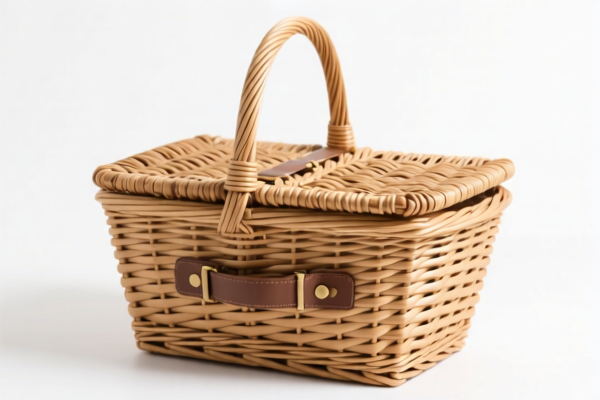
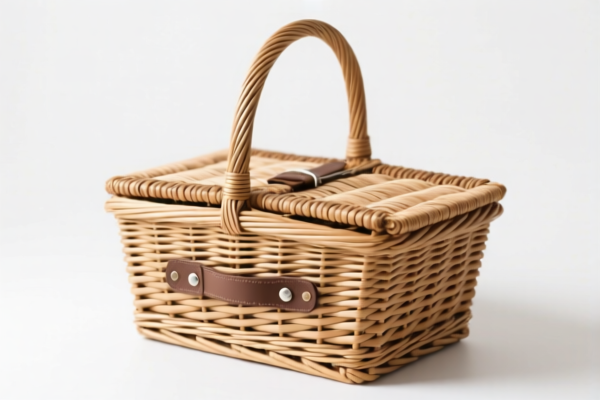
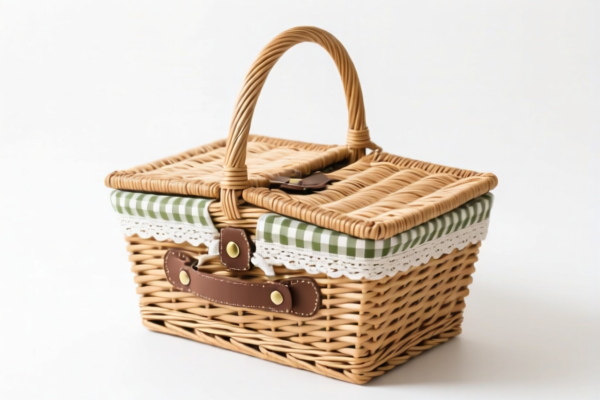
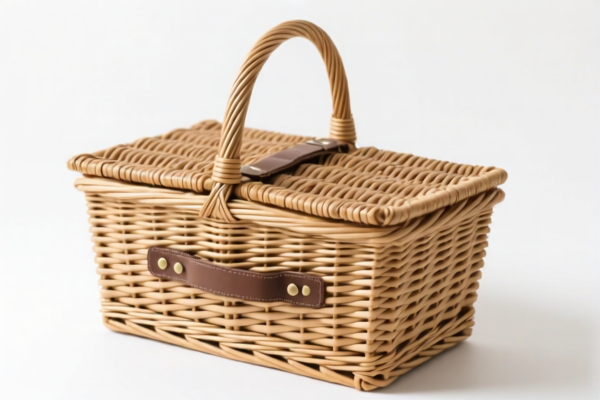
AI Analysis
🧺 Willow Woven Picnic Basket (Rattan/Plant Fiber Baskets)
🌐 HS Code Reference & Customs Clearance Guide | 2026 Latest Tariff Full Analysis | Professional Level Clearance Strategy
📌 I. Product Definition and Classification: Do You Really Understand "Willow Baskets"?
A Willow Woven Picnic Basket is a container primarily made from flexible plant materials (willow, rattan, bamboo, or other natural fibers). In international trade, the classification depends heavily on the specific material composition and the form/structure of the product (woven sheet vs. basket shape).
The key distinction lies in whether it is classified as a "Woven Material" (Chapter 46.01) or a "Manufactured Article" (Chapter 46.02).
⚠️ Key Distinction Point:
- If the product is a finished basket with handles, rigid structure, and specific utility → Often falls under 4602 (Basketware).
- If the product is considered a woven mat/sheet or made from specific bamboo/rattan sheets → May fall under 4601.
- Note: The data below reflects the specific 2026 tariff classifications for "Willow Woven Picnic Baskets" as per the provided dataset.
📦 II. HS Code Classification Details (2026 Latest Tariff Authority Cross-Reference)
| HS Code | Product Description | Applicable Scenario | Tax Rate |
|---|---|---|---|
4602.19.17.00 |
Willow Basket, Material: Willow/Plant Fiber, Form: Basket | General willow baskets made from raw willow strips | 35.0% |
4601.92.05.00 |
Willow Basket, Material: Bamboo/Rattan Woven Material, Form: Woven Article | Baskets made from processed bamboo/rattan sheets | 37.7% |
4602.11.07.00 |
Willow Basket, Material: Willow, Form: Basket/Bag | Traditional willow basketware, rigid structures | 35.0% |
4601.94.20.00 |
Willow Basket, Material: Willow, Form: Woven Article/Similar | Willows processed into woven mats or similar non-basket shapes (high base tariff) | 41.6% |
4601.94.05.00 |
Willow Basket, Material: Other Plant Material, Form: Woven Material | Baskets made from non-willow plant fibers (e.g., grass, straw) | 37.7% |
🔍 Important Reminder:
- 4602 codes generally apply to finished basketware (rigid, shaped items).
- 4601 codes often apply to woven materials or products made from bamboo/rattan sheets.
- Misclassification can lead to significant duty differences (e.g., 35% vs. 41.6%).
💰 III. 2026 Latest Tariff Rate Details (Including Surtaxes, Policy Add-ons)
✅ Applicable Country: United States (US)
✅ Origin: China (CN)
✅ Effective Date: 2025 November 10 onwards (including subsequent imports)
🎯 1. 4602.19.17.00 & 4602.11.07.00 —— Willow Baskets (Basketware)
| Item | Content |
|---|---|
| Base Duty Rate | 0.0% (ad valorem) |
| USITC Surtax | +25.0% (From USITC Footnote 9903.88.01 / Section 301) |
| IEEPA Surtax | +10.0% (Targeting China/HK products, effective Nov 10, 2025) |
| Total Tax Rate | 35.0% |
| Tax Calculation | CIF Value × 35% |
| De Minimis Exemption | ❌ Not Available (deny_de_minimis applies to Section 301 goods) |
| Legal Basis Path | IEEPA:9903.01.25 → USITC:4602.19.17.00 / 4602.11.07.00 |
📌 Explanation:
- "USITC Surtax 25%" is from the "Additional Duties" under Section 301 of the Trade Act;
- "IEEPA 10%" is the additional duty on Chinese goods under the International Emergency Economic Powers Act;
- Total 35%, this is a high tariff, must be predicted in advance!
🎯 2. 4601.92.05.00 & 4601.94.05.00 —— Woven Baskets (Bamboo/Rattan/Other Plant)
| Item | Content |
|---|---|
| Base Duty Rate | 2.7% (ad valorem) |
| USITC Surtax | +25.0% |
| IEEPA Surtax | +10.0% |
| Total Tax Rate | 37.7% |
| Tax Calculation | CIF Value × 37.7% |
| De Minimis Exemption | ❌ Not Available |
| Legal Basis Path | IEEPA:9903.01.25 → USITC:4601.92.05.00 |
📌 Note:
- These codes have a 2.7% base duty, unlike the 0% base duty for some willow basketwares;
- Even if it is a "bamboo mat" or "rattan sheet basket," as long as it is imported from China, the 25% + 10% surtaxes apply;
- Total 37.7%, slightly higher than the 35% for pure willow baskets.
🎯 3. 4601.94.20.00 —— Willow Woven Articles (Similar Products)
| Item | Content |
|---|---|
| Base Duty Rate | 6.6% (ad valorem) |
| USITC Surtax | +25.0% |
| IEEPA Surtax | +10.0% |
| Total Tax Rate | 41.6% |
| Tax Calculation | CIF Value × 41.6% |
| De Minimis Exemption | ❌ Not Available |
| Legal Basis Path | IEEPA:9903.01.25 → USITC:4601.94.20.00 |
📌 Warning:
- This code has the highest base duty (6.6%) among the listed options;
- Applies to willow products that are classified as "woven materials" or "similar articles" rather than strict "basketware";
- Total 41.6%, the most expensive option in this dataset.
🛠️ IV. Customs Clearance Practical Advice (Combat Pit-Avoidance Guide)
✅ 1. Preparation Checklist (Missing One = Risk)
| Material | Must Provide | Explanation |
|---|---|---|
| ✅ Product Spec Sheet | ✔️ | Material composition (Willow vs. Bamboo vs. Other), dimensions, weight |
| ✅ Product Photos (Label) | ✔️ | Clear view of weaving pattern, handles, and any brand labels |
| ✅ Commercial Invoice | ✔️ | Must specify "Willow Woven Picnic Basket" or "Plant Fiber Basket" |
| ✅ Packing List | ✔️ | Show quantity and gross/net weight per carton |
| ✅ Origin Certificate (CO) | ✔️ | Essential for proving Chinese origin to apply correct surtaxes |
✅ 2. Declaration Tips (Key Mantra)
🔥 "Material First, Shape Second, Code Precision Saves Money!"
| Situation | Correct Declaration | Wrong Approach |
|---|---|---|
| Rigid Willow Basket | 4602.19.17.00 or 4602.11.07.00 (35%) |
Misclassified as "Woven Mat" → 41.6% |
| Bamboo/Rattan Sheet Basket | 4601.92.05.00 (37.7%) |
Misclassified as "Willow" → Potential audit risk |
| Mixed Material Basket | 4601.94.05.00 (37.7%) |
Vague description "Basket" → Delays |
| Willow Mat (Flat) | 4601.94.20.00 (41.6%) |
Declared as "Basket" → Incorrect shape |
✅ 3. Special Case Handling
| Situation | Handling Advice |
|---|---|
| Willow vs. Bamboo | Must specify material. Willow (Salix) often falls under 4602 with 0% base; Bamboo under 4601 with 2.7% base. |
| Picnic Basket with Liner | If the liner is fabric (e.g., cotton), the basket is still the principal material. Declare as basket. |
| OEM Custom Baskets | Provide design drawings to prove it is "basketware" (4602) and not just "woven material" (4601). |
| De Minimis Risk | Do NOT use Section 321 (De Minimis) clearance for these items. The 25% + 10% taxes are not exempt. |
🌍 V. Global Market Comparison (2026 Latest)
| Country/Region | Recommended HS Code | Total Duty (China Origin) | Notes |
|---|---|---|---|
| 🇺🇸 United States | 4602.19.17.00 |
35.0% | Includes 25% Sec 301 + 10% IEEPA |
| 🇺🇸 United States | 4601.94.20.00 |
41.6% | Highest duty for willow woven articles |
| 🇨🇳 China | 4602.11.00.00 |
0% | Export declaration (no duty) |
| 🇪🇺 European Union | 4602.11.00.00 |
0% | No Section 301 equivalent |
| 🇬🇧 United Kingdom | 4602.11.00.00 |
0% | No Section 301 equivalent |
📌 Conclusion:
- The United States is the only major market imposing additional surtaxes (35% - 41.6%) on willow/plant fiber baskets from China;
- Europe, Asia, and other markets do not impose these additional tariffs, making them cheaper to export to.
📌 VI. Common Errors & Pit-Avoidance Guide (Lessons Learned)
❌ Error 1: Declaring a "Willow Basket" as "Textile Bag"
👉 Consequence: Wrong HS Code, potential penalty, and 35% tax missed or wrongly applied.
❌ Error 2: Using De Minimis (Section 321) for Small Baskets
👉 Consequence: Blocked shipment. Section 301 and IEEPA taxes are not exempt under De Minimis for goods from China.
❌ Error 3: Vague Description "Woven Container"
👉 Consequence: Customs may classify it as the highest bracket (4601.94.20.00 at 41.6%) or delay for classification review.
❌ Error 4: Confusing "Willow" with "Plastic Rattan"
👉 Consequence: Plastic rattan falls under Chapter 39 (Plastics), not Chapter 46 (Plant fibers). Wrong classification leads to compliance violations.
✅ Correct Declaration Example:
"Picnic Basket, Hand-woven from Willow Strips, Natural Color, with Cotton Liner, Model WB-2026, HS 4602.19.17.00"
🎯 VII. Conclusion: Professional Declaration, Save Cost, Ensure Smooth Clearance!
🎯 Remember the Mantra:
🔹 "Willow Basket: 35% (4602), Bamboo/Rattan: 37.7% (4601), Woven Sheet: 41.6% (4601)!"
🔹 "No De Minimis for China! Prepare Docs Early!"
📌 Pro Tip:
If your baskets are made in Vietnam, Thailand, or India, you may be eligible for lower or zero additional tariffs.
Recommend pre-booking an Advance Ruling with US Customs to confirm the exact HS Code and avoid post-clearance adjustments.
📣 Immediate Action:
📞 Contact a professional customs broker + Provide Product Photos + Apply for HS Code Pre-ruling
🚀 Let your Willow Baskets clear customs smoothly, boost profits, and expand globally!
✨ Professional Customs Clearance Starts with Accurate Classification!
💼 Every cent of your cost deserves precise calculation!
Customer Reviews
About HS Code Classification
The Harmonized System (HS) is an internationally standardized nomenclature developed by the World Customs Organization (WCO) to classify traded products. Over 200 countries use the HS system as the basis for customs tariffs, trade statistics, and import/export regulations.
Each HS code follows a hierarchical structure:
- Chapter (2 digits) — Broad category of goods (e.g., Chapter 84: Machinery and Mechanical Appliances)
- Heading (4 digits) — More specific grouping within the chapter
- Subheading (6 digits) — Internationally standardized breakdown, used by all WCO member countries
- National subdivisions (8-10 digits) — Country-specific extensions for further classification, such as US HTSUS 10-digit codes
Correct HS code classification is essential for smooth customs clearance, accurate duty payment, and compliance with trade regulations. Misclassification can lead to customs delays, overpayment of duties, or penalties.
When importing from CN to US, the applicable tariff rates may include:
- Most-Favored-Nation (MFN) rate — The standard duty rate applied to WTO members
- General rate — Applied to countries without trade agreements
- Trade remedy duties — Additional tariffs such as Section 301 (anti-dumping), Section 232 (national security), or countervailing duties
The information provided on this page is for reference purposes only. For official classification, please consult with your local customs authority or a licensed customs broker.