Willow Woven Storage Bin
CN → US| HS Code | Tariff Rate | Origin | Destination | Doc |
|---|---|---|---|---|
| 3926909989 | 22.8% | CN | US | Official Doc |
| 4602191700 | 35.0% | CN | US | Official Doc |
| 4602196000 | 35.0% | CN | US | Official Doc |
Product Images
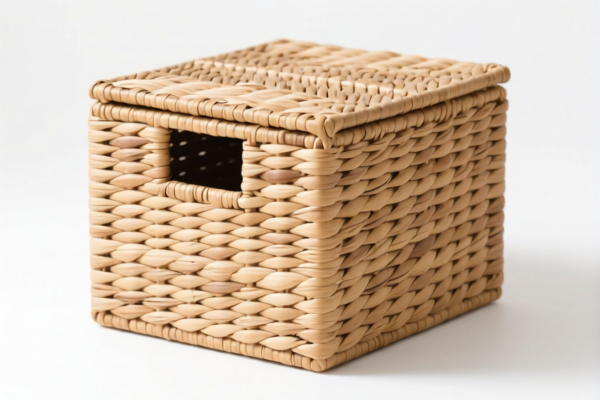
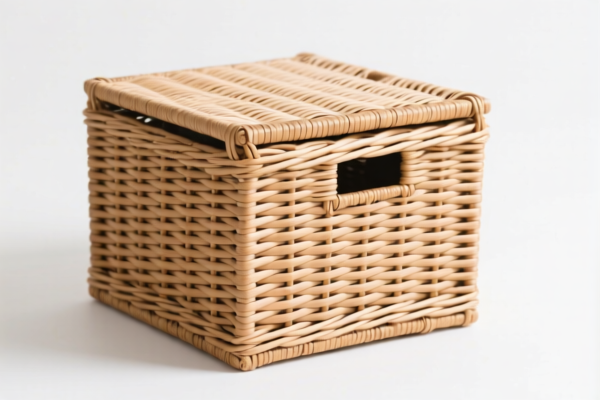
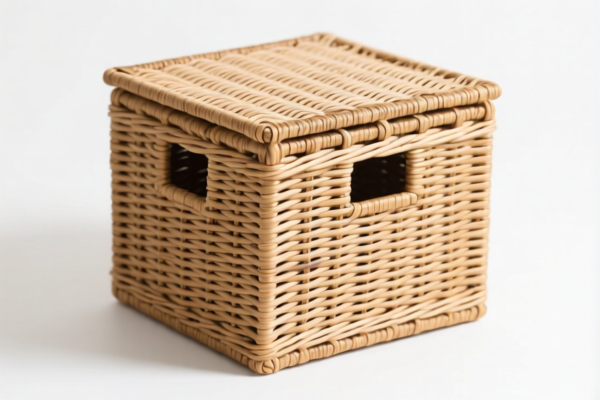
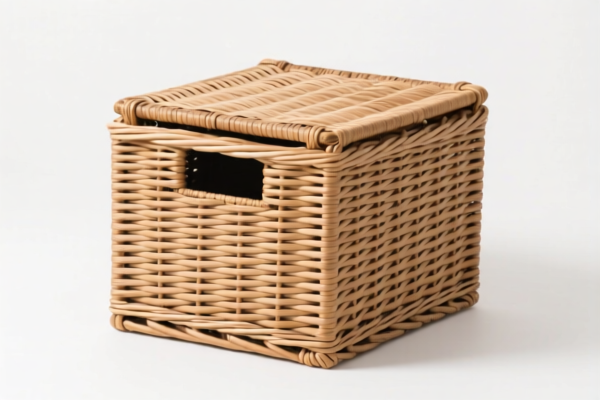
AI Analysis
🧺 Willow Woven Storage Bin (Rattan/Plant Fiber Basket)
🌐 HS Code Reference & Customs Clearance Guide | 2026 Latest Tariff Analysis | Professional Entry Strategy
📌 I. Product Definition & Classification: Do You Really Understand "Willow Storage Bins"?
The "Willow Woven Storage Bin" is a versatile household item used for organizing items, often serving as decorative decor. In international trade, its classification depends heavily on the material composition and manufacturing process. It falls into two primary categories:
1. Plant Material Weaving (Class 46): If made primarily from willow, rattan, bamboo, or other plaiting materials (e.g., straw, reed), it is classified as a "Basketry Article." This is the most common and preferred classification for genuine natural fiber products. 2. Plastic/Composite Article (Class 39): If the item is made of plastic, or if the plastic content outweighs the natural fibers (or if it is a molded plastic item designed to look like willow), it falls under "Articles of Plastic."
⚠️ Key Distinction Point:
- If the material is natural plant fiber (willow, rattan, bamboo) and shaped by weaving/plaiting →归入 Chapter 46 (Basketry)
- If the material is plastic, or a composite where plastic is the essential character → 归入 Chapter 39 (Plastics)
📦 II. HS Code Classification Details (2026 Latest Tariff Authority Comparison)
| HS Code | Product Description | Application Scenario | Material Character |
|---|---|---|---|
3926.90.99.89 |
Other articles of plastic, not elsewhere specified | Plastic storage bins, plastic-looking woven bins, or plastic-fiber composites | ✅ Plastic-dominated |
4602.19.17.00 |
Basketry articles of willow or other plaiting materials | Genuine willow baskets, natural fiber woven storage bins | ✅ Natural Plant Fiber |
4602.19.60.00 |
Other basketry articles | Woven storage items made from other plant materials (bamboo, reed, etc.) | ✅ Natural Plant Fiber |
🔍 Important Reminder:
- Chapter 46 (4602.19.xxxx) is generally the correct classification for natural willow. The description explicitly covers "Basketry articles of willow." - Chapter 39 (3926.90.xxxx) applies only if the product is plastic or primarily plastic-based. Misclassifying a natural willow bin as plastic will lead to underpayment of tariffs (since plant fibers have 0% base duty but face higher Section 301 penalties in some contexts, whereas plastic has a 5.3% base duty).
💰 III. 2026 Latest Tariff Rate Breakdown (Including Add-on Tariffs & Policy Surcharges)
✅ Applicable Country: United States (US)
✅ Country of Origin: China (CN)
✅ Effective Date: November 10, 2025 (and subsequent imports)
🎯 1. 3926.90.99.89 —— Other Articles of Plastic (Plastic Storage Bin)
| Item | Content |
|---|---|
| Base Duty Rate | 5.3% (ad valorem) |
| Section 301 Add-on Duty | +7.5% (Standard Section 301 rate for this subheading) |
| Section 122 Clause Duty | +10% (Specific surcharge applicable to this HS code) |
| Total Effective Rate | 22.8% |
| Tax Calculation | CIF Value × 22.8% |
| De Minimis Eligibility | ❌ Not Eligible (Deny De Minimis) |
| Legal Basis Path | Section 122: 10% + Section 301: 7.5% + Base: 5.3% → Total: 22.8% |
📌 Explanation:
- The 5.3% is the standard MFN base duty for most plastic articles. - The 7.5% is the Section 301 additional duty applicable to plastic products from China. - The 10% is a specific Section 122 clause duty. - Total 22.8%: This is a moderately high tariff rate. You must factor this into your landed cost.
🎯 2. 4602.19.17.00 & 4602.19.60.00 —— Basketry Articles (Willow/Natural Fiber)
| Item | Content |
|---|---|
| Base Duty Rate | 0.0% (ad valorem) |
| Section 301 Add-on Duty | +25.0% (Higher Section 301 rate for basketry/plaiting materials) |
| Section 122 Clause Duty | +10% (Specific surcharge applicable to this HS code) |
| Total Effective Rate | 35.0% |
| Tax Calculation | CIF Value × 35.0% |
| De Minimis Eligibility | ❌ Not Eligible (Deny De Minimis) |
| Legal Basis Path | Section 122: 10% + Section 301: 25.0% + Base: 0.0% → Total: 35.0% |
📌 Explanation:
- 0% Base Duty: Natural plant materials like willow enjoy a 0% base tariff under US Harmonized Tariff Schedule (HTSUS). - 25% Section 301: Despite the 0% base, basketry articles from China are subject to a higher Section 301 surcharge (25% vs 7.5% for plastic). - 10% Section 122: An additional 10% clause applies. - Total 35.0%: This is a very high effective tariff rate due to the aggressive Section 301 surcharge on natural fiber products. - Critical Insight: Although the base duty is 0%, the effective tax burden (35%) is HIGHER than for plastic bins (22.8%). This is a crucial cost-comparison point for importers.
🛠️ IV. Customs Clearance Practical Advice (Real-World Pitfall Avoidance Guide)
✅ 1. Documentation Checklist (All Required)
| Document | Mandatory? | Description |
|---|---|---|
| ✅ Product Specification Sheet | ✔️ | Must clearly state material composition (e.g., "100% Natural Willow" vs "Plastic Coated"). |
| ✅ Detailed Photos | ✔️ | Show the weaving texture, material cross-section (if possible), and finish. |
| ✅ Commercial Invoice | ✔️ | Clearly describe item as "Willow Woven Storage Basket" or "Plastic Storage Bin." Avoid vague terms like "Storage Box." |
| ✅ Packing List | ✔️ | Include dimensions and weight. |
| ✅ Material Composition Certificate | ✔️ | If claiming natural fiber, provide proof to support 4602 classification. |
✅ 2. Classification Strategy (Key Mantra)
🔥 "Material is King, Section 301 is the Trap, Declare Accurately or Pay the Price!"
| Scenario | Correct Declaration | Risk if Misclassified |
|---|---|---|
| Genuine Willow/Natural Fiber | 4602.19.17.00 or 4602.19.60.00 |
If declared as Plastic (3926): Underpayment Penalty. You pay 22.8% instead of 35.0%, but CBP may assess back duties + interest. |
| Plastic Resembling Willow | 3926.90.99.89 |
If declared as Natural Fiber (4602): Overpayment. You pay 35.0% instead of 22.8%, hurting your margin. |
| Mixed Material (Plastic Handles + Willow Body) | Analyze "Essential Character" | If plastic handles dominate, may still be 3926. If willow body dominates, 4602. |
📌 Note:
- Do NOT assume "Willow" always means cheaper tariffs. The 25% Section 301 surcharge makes it more expensive than plastic in this specific case. - Accurate Material Description is critical. If the product is "Plastic Willow Pattern," it MUST be3926.
✅ 3. Special Case Handling
| Scenario | Handling Advice |
|---|---|
| Plastic-Coated Willow | If the coating makes it non-plant-like, classify under 3926. |
| Woven Plastic Strip | If the "woven" material is actually plastic tape, classify under 3926. |
| Mixed Shipment | Do not mix 4602 and 3926 in one line item. Separate declarations required. |
| De Minimis (Section 321) | ❌ Excluded. Both HS codes are subject to Section 301 and 122, meaning de minimis relief ($800) does not apply. |
🌍 V. Global Market Comparison (2026 Latest)
| Country/Region | Recommended HS Code | Total Effective Duty (China Origin) | Notes |
|---|---|---|---|
| 🇺🇸 USA | 4602.19.17.00 / 3926.90.99.89 |
35.0% (Willow) / 22.8% (Plastic) | High Section 301 impact. |
| 🇨🇳 China (Export) | Varies | Depends on export policy | No export duty typically. |
| 🇪🇺 EU | 4602.11 / 3926.90 |
~0-5% (Base) + No Section 301 | No 122 clause equivalent. |
| 🇬🇧 UK | 4602.19 / 3926.90 |
~0-5% (Base) | Post-Brexit, no Section 301. |
📌 Conclusion:
- The US market is unique due to the combination of Section 301 and Section 122 duties. - Plastic bins (22.8%) are currently cheaper to import into the US than genuine Willow bins (35.0%) from China, despite plastic having a higher base duty. This is a counter-intuitive but critical cost-saving insight.
📌 VI. Common Mistakes & Pitfall Guide (Blood & Tears Lessons)
❌ Mistake 1: Assuming "Willow" = 0% Duty
👉 Consequence: You expect 0% tax but face 35% due to Section 301 + 122. Margin destroyed!
❌ Mistake 2: Using "Storage Box" without Material Specification
👉 Consequence: CBP may classify as "Other" or "General," leading to delays, audits, and potential penalties.
❌ Mistake 3: Claiming De Minimis ($800 exemption) for B2B Shipment
👉 Consequence: Section 321 exemptions are denied for Section 301/122 goods. Full duties apply.
❌ Mistake 4: Misidentifying Plastic-Weave as Natural Willow
👉 Consequence: Paying 35% for a product that should be 22.8%. Unnecessary cost increase.
✅ Correct Approach:
"Willow Woven Storage Basket, Natural Plant Fiber, 100% Willow, Hand-Woven" → HS: 4602.19.17.00
"Plastic Storage Bin, Woven Appearance, PP Material" → HS: 3926.90.99.89
🎯 VII. Conclusion: Professional Classification, Smart Cost Management!
🎯 Remember the Mantra:
🔹 "Willow Looks Cheap, But Tax is Steep (35%)!
Plastic Looks Bad, But Tariff is Sweet (22.8%)!
Check Material, Check Section 301, Don't Get Rejected!"🔹 "De Minimis is Dead for These Codes!"
📌 Pro Tip:
- If your product is mixed material (e.g., willow body + plastic handle), consult a customs broker to determine the "Essential Character."
- For large volumes, consider Supply Chain Diversification. Sourcing willow products from Vietnam or India may avoid the 25% Section 301 surcharge, drastically reducing the effective tax rate.
📣 Immediate Action:
📞 Contact your customs broker with photos and material specs.
📊 Run a Landed Cost Calculation comparing3926(22.8%) vs4602(35.0%).
🚀 Optimize your HS Code to save money!
✨ Professional Customs Clearance Starts with Accurate Classification!
💼 Every percentage point of duty impacts your bottom line!
Customer Reviews
About HS Code Classification
The Harmonized System (HS) is an internationally standardized nomenclature developed by the World Customs Organization (WCO) to classify traded products. Over 200 countries use the HS system as the basis for customs tariffs, trade statistics, and import/export regulations.
Each HS code follows a hierarchical structure:
- Chapter (2 digits) — Broad category of goods (e.g., Chapter 84: Machinery and Mechanical Appliances)
- Heading (4 digits) — More specific grouping within the chapter
- Subheading (6 digits) — Internationally standardized breakdown, used by all WCO member countries
- National subdivisions (8-10 digits) — Country-specific extensions for further classification, such as US HTSUS 10-digit codes
Correct HS code classification is essential for smooth customs clearance, accurate duty payment, and compliance with trade regulations. Misclassification can lead to customs delays, overpayment of duties, or penalties.
When importing from CN to US, the applicable tariff rates may include:
- Most-Favored-Nation (MFN) rate — The standard duty rate applied to WTO members
- General rate — Applied to countries without trade agreements
- Trade remedy duties — Additional tariffs such as Section 301 (anti-dumping), Section 232 (national security), or countervailing duties
The information provided on this page is for reference purposes only. For official classification, please consult with your local customs authority or a licensed customs broker.