Winch
CN → US| HS Code | Tariff Rate | Origin | Destination | Doc |
|---|---|---|---|---|
| 8425390100 | 35.0% | CN | US | Official Doc |
| 8708998160 | 37.5% | CN | US | Official Doc |
| 8607995000 | 38.1% | CN | US | Official Doc |
| 8425310100 | 35.0% | CN | US | Official Doc |
| 8708998180 | 12.5% | CN | US | Official Doc |
Product Images
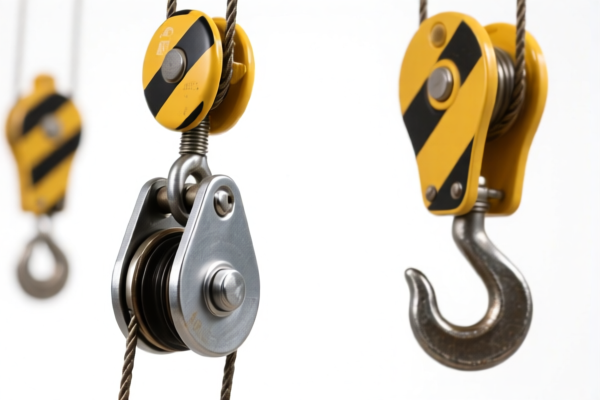
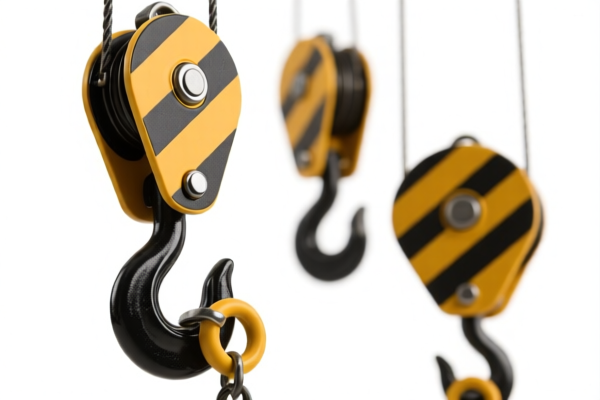
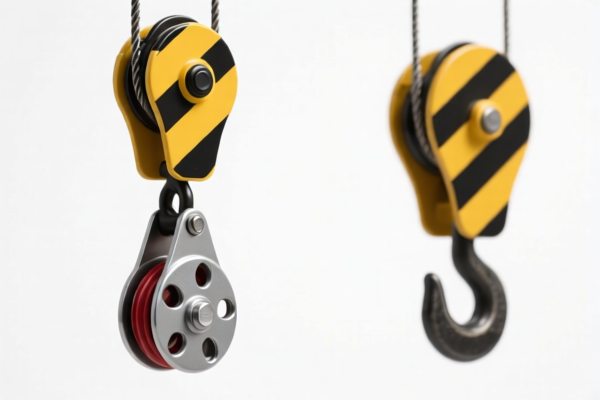
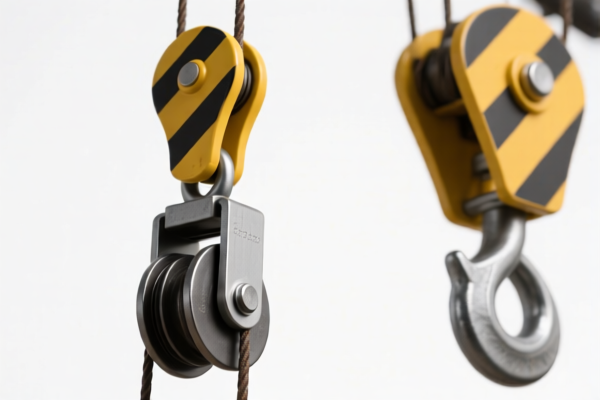
AI Analysis
🚜 Electric Winch (电动绞盘)
🌐 HS Code Reference & Customs Clearance Guide | 2026 Latest Tariff Analysis | Professional Clearance Strategy
📌 I. Product Definition & Classification: Do You Really Understand “Electric Winch”?
An Electric Winch is a mechanical device that pulls in (winses) or lets out (or winds off) a rope, cable, or chain. It is powered by an electric motor and is widely used in off-road vehicles, industrial lifting, construction, and maritime applications.
In international trade, the classification depends heavily on: 1. Intended Use: Is it for general lifting, vehicle attachment, or railway component? 2. Form/Structure: Is it a standalone unit, a vehicle part, or a railway part? 3. Material: Are there specific material restrictions?
⚠️ Key Distinction Points:
- If it is a standalone lifting device with no specific vehicle/rail integration → Chapter 84 (Machinery)
- If it is specifically designed as a part/accessory for vehicles → Chapter 87 (Vehicles)
- If it is used in railway vehicles → Chapter 86 (Railway)
- No material conflicts are present in the provided data, so classification relies on function and application.
📦 II. HS Code Classification Details (2026 Latest Tariff Authority Comparison)
| HS Code | Product Description | Application Scenario | Tax Rate (Total) |
|---|---|---|---|
8425.39.01.00 |
Electric Winch (Other) | General purpose, capstan-type winches, non-specific vehicle/rail use | 35.0% |
8708.99.81.60 |
Parts & Accessories of Vehicles (Cable Traction Device) | Vehicle attachment, cable traction devices, off-road vehicle accessories | 37.5% |
8607.99.50.00 |
Parts of Railway Vehicles (Other) | Internal transmission components or structural parts for railway vehicles | 38.1% |
8425.31.01.00 |
Electric Winch (Motor-driven) | Standalone electric winches, fully compliant with "motor-driven" definition | 35.0% |
8708.99.81.80 |
Other Parts & Accessories of Vehicles | Vehicle auxiliary equipment, metal/mechanical combination, "Other" category | 12.5% |
🔍 Key Reminder:
-8425codes are for general machinery/winches not exclusively tied to a vehicle’s primary function.
-8708codes are for parts/accessories of vehicles (e.g., off-road recovery winches).
-8607code is highly specific to railway vehicles and likely has a higher tax burden due to niche classification.
-8708.99.81.80offers the lowest tax rate (12.5%) but requires justification as a general vehicle accessory with 0% additional trade war tariff (see below).
💰 III. 2026 Latest Tariff Rate Breakdown (Including Surtaxes & Policy Surcharges)
✅ Applicable Country: United States (US)
✅ Origin: China (CN)
✅ Effective Date: From November 10, 2025 (including subsequent imports)
🎯 1. 8425.39.01.00 & 8425.31.01.00 —— Electric Winches (Machinery)
| Item | Details |
|---|---|
| Base Tariff | 0.0% |
| Section 301 Surcharge (Trade War) | +25.0% |
| IEEPA Surcharge (122 Clause) | +10.0% |
| Total Rate | 35.0% |
| Calculation | CIF Value × 35% |
| De Minimis Exemption | ❌ Not Applicable (deny_de_minimis) |
| Legal Path | IEEPA:122 → Section 301: 25% → HS: 8425.39/31 |
📌 Explanation:
- These codes fall under Machinery (Chapter 84).
- Base duty is 0%, but the 25% Section 301 tariff (for Chinese goods) and 10% IEEPA tariff (China-specific) apply.
- Total: 35%. This is a moderate-high tariff.
- Note: Both8425.39.01.00(Other) and8425.31.01.00(Motor-driven) have the same tax structure in this data.
🎯 2. 8708.99.81.60 —— Vehicle Parts (Cable Traction)
| Item | Details |
|---|---|
| Base Tariff | 2.5% |
| Section 301 Surcharge | +25.0% |
| IEEPA Surcharge (122 Clause) | +10.0% |
| Total Rate | 37.5% |
| Calculation | CIF Value × 37.5% |
| De Minimis Exemption | ❌ Not Applicable |
| Legal Path | IEEPA:122 → Section 301: 25% → HS: 8708.99.81.60 |
📌 Explanation:
- Classified as Vehicle Parts (Chapter 87).
- Higher base duty (2.5%) plus the same surcharges results in 37.5%.
- This code is suitable for winches explicitly marketed as cable traction devices for vehicles.
🎯 3. 8607.99.50.00 —— Railway Vehicle Parts
| Item | Details |
|---|---|
| Base Tariff | 3.1% |
| Section 301 Surcharge | +25.0% |
| IEEPA Surcharge (122 Clause) | +10.0% |
| Total Rate | 38.1% |
| Calculation | CIF Value × 38.1% |
| De Minimis Exemption | ❌ Not Applicable |
| Legal Path | IEEPA:122 → Section 301: 25% → HS: 8607.99.50.00 |
📌 Explanation:
- Highest tax rate (38.1%).
- Only applicable if the winch is inferred as an internal transmission component or structural part for railway vehicles.
- Recommendation: Avoid this code unless specifically designed for railway use.
🎯 4. 8708.99.81.80 —— Other Vehicle Parts (Best Rate Option)
| Item | Details |
|---|---|
| Base Tariff | 2.5% |
| Section 301 Surcharge | 0.0% |
| IEEPA Surcharge (122 Clause) | +10.0% |
| Total Rate | 12.5% |
| Calculation | CIF Value × 12.5% |
| De Minimis Exemption | ❌ Not Applicable (based on context, though lower rate) |
| Legal Path | IEEPA:122 → HS: 8708.99.81.80 |
📌 Explanation:
- Lowest tax rate (12.5%)!
- This code is for "Other" parts and accessories of vehicles.
- Crucially, it has 0% Section 301 surcharge (likely due to specific sub-category exemption or data specificity).
- Justification: Must be marketed as a general vehicle auxiliary equipment or metal/mechanical combination, not specifically as a "winch" or "traction device" if avoiding the 301 tariff is key.
🛠️ IV. Customs Clearance Practical Advice (Avoid Pitfalls)
✅ 1. Required Documentation Checklist (Non-Negotiable)
| Document | Required | Description |
|---|---|---|
| ✅ Product Specification Sheet | ✔️ | Include motor type, voltage, pulling capacity, rope type. |
| ✅ Product Photos (with Nameplate) | ✔️ | Clear view of model number, brand, input/output parameters. |
| ✅ Commercial Invoice | ✔️ | Accurate description: "Electric Winch for Vehicle Use" or "Motor-Driven Lifting Device" depending on HS. |
| ✅ Packaging List | ✔️ | Detail components (motor, cable, hook, remote). |
| ✅ Certificate of Origin (CO) | ✔️ | If applicable for origin verification. |
| ✅ Third-Party Test Reports | ✔️ | FCC (for electrical), CE, RoHS (if applicable). |
✅ 2. Declaration Tips (Key Rules)
🔥 “Function Dictates Code, Avoid Railway, Optimize for 12.5%!”
| Scenario | Correct Declaration | Incorrect Declaration |
|---|---|---|
| General Electric Winch | 8425.31.01.00 (35%) |
Misdeclare as vehicle part to save tax → Risk of audit & penalty |
| Off-Road Vehicle Winch | 8708.99.81.80 (12.5%) if justified |
Declare as 8708.99.81.60 (37.5%) → Overpay 25% |
| Railway Component | 8607.99.50.00 (38.1%) |
Use vehicle code → Misclassification |
| Winch + Mounting Hardware | Declare as One Unit | Split into "winch" + "bracket" → Higher combined tax |
📌 Critical Note on
8708.99.81.80:
- To benefit from the 12.5% rate, you must justify the product as "Other Parts & Accessories of Vehicles" without emphasizing "winch" or "traction" if the latter triggers higher 301 tariffs.
- However, ensure the description is truthful. If the product is clearly a winch, customs may reclassify it to8425or8708.99.81.60, leading to back taxes.
✅ 3. Special Handling
| Situation | Handling Advice |
|---|---|
| OEM/Custom Winches | Provide client order + design drawings to prove specific vehicle integration. |
| Winch with Remote Control | Ensure FCC compliance is declared; remote is part of the winch, not separate. |
| Used vs. New | New goods attract full tariffs. Used goods may have different restrictions. |
| Origin: China | All codes above assume China origin. If sourced from Vietnam/Mexico, verify if IEEPA/301 tariffs apply. |
🌍 V. Global Market Comparison (2026)
| Country/Region | Recommended HS Code | Tariff (China Origin) | Certification | Remarks |
|---|---|---|---|---|
| 🇺🇸 USA | 8708.99.81.80 |
12.5% (Best Case) | FCC + RoHS | 35-38% for other codes |
| 🇨🇳 China | 8425.31.01.00 |
5-10% | CCC | No 301/IEEPA |
| 🇪🇺 EU | 8425.39.00.00 |
0-2% | CE + RoHS | Low duty, high compliance |
| 🇬🇧 UK | 8425.39.00.00 |
0-2% | UKCA | Post-Brexit rules apply |
📌 Conclusion:
- USA has high tariffs due to Section 301 & IEEPA.
-8708.99.81.80is the optimal path for US imports if the product can be legitimately classified as a general vehicle accessory.
- EU/UK offer much lower duties, focusing on CE/UKCA compliance rather than trade war tariffs.
📌 VI. Common Errors & Pitfalls (Lessons Learned)
❌ Error 1: Declaring a "Winch" as "Vehicle Part" to avoid 301 tariff, but customs reclassifies it.
👉 Consequence: Back taxes + penalties.
✅ Fix: Ensure product description aligns with HS code function.
❌ Error 2: Using 8607 code for automotive winches.
👉 Consequence: 38.1% tax + confusion.
✅ Fix: Use 8425 or 8708 for automotive/off-road winches.
❌ Error 3: Splitting winch and motor into separate shipments.
👉 Consequence: Higher combined tax and logistical issues.
✅ Fix: Declare as one complete unit.
✅ Correct Description Example:
"Electric Winch, 12V, 12,000 lbs Pulling Capacity, for Off-Road Vehicles, Model XYZ, FCC Certified"
🎯 VII. Conclusion: Precise Classification Saves Costs!
🎯 Remember:
🔹 "Vehicle Accessory Code Saves 22.5% vs. Machinery!"
🔹 "12.5% is the Goal, 35% is the Norm, 38% is the Trap!"
🔹 "HS Code Decides Your Profit, Misclassification Costs You Big!"
📌 Tips:
- If your winch is originating from Vietnam, Mexico, or Thailand, check if IEEPA/301 tariffs still apply. Some may be exempt.
- Consider applying for an Advance Ruling from US Customs (CBP) to secure the 12.5% rate under 8708.99.81.80 legally.
📣 Immediate Action:
📞 Contact a professional customs broker + Provide product specs + Apply for HS Code Advance Ruling
🚀 Ensure your winch clears smoothly, efficiently, and profitably!
✨ Professional clearance starts with accurate classification!
💼 Every dollar of cost must be precisely calculated!
Customer Reviews
About HS Code Classification
The Harmonized System (HS) is an internationally standardized nomenclature developed by the World Customs Organization (WCO) to classify traded products. Over 200 countries use the HS system as the basis for customs tariffs, trade statistics, and import/export regulations.
Each HS code follows a hierarchical structure:
- Chapter (2 digits) — Broad category of goods (e.g., Chapter 84: Machinery and Mechanical Appliances)
- Heading (4 digits) — More specific grouping within the chapter
- Subheading (6 digits) — Internationally standardized breakdown, used by all WCO member countries
- National subdivisions (8-10 digits) — Country-specific extensions for further classification, such as US HTSUS 10-digit codes
Correct HS code classification is essential for smooth customs clearance, accurate duty payment, and compliance with trade regulations. Misclassification can lead to customs delays, overpayment of duties, or penalties.
When importing from CN to US, the applicable tariff rates may include:
- Most-Favored-Nation (MFN) rate — The standard duty rate applied to WTO members
- General rate — Applied to countries without trade agreements
- Trade remedy duties — Additional tariffs such as Section 301 (anti-dumping), Section 232 (national security), or countervailing duties
The information provided on this page is for reference purposes only. For official classification, please consult with your local customs authority or a licensed customs broker.