Wind Chimes
CN → US| HS Code | Tariff Rate | Origin | Destination | Doc |
|---|---|---|---|---|
| 7020006000 | 40.0% | CN | US | Official Doc |
| 4421919880 | 38.3% | CN | US | Official Doc |
| 7326908688 | 87.9% | CN | US | Official Doc |
| 7326190080 | 87.9% | CN | US | Official Doc |
| 7020004000 | 41.6% | CN | US | Official Doc |
| 4421999880 | 38.3% | CN | US | Official Doc |
Product Images
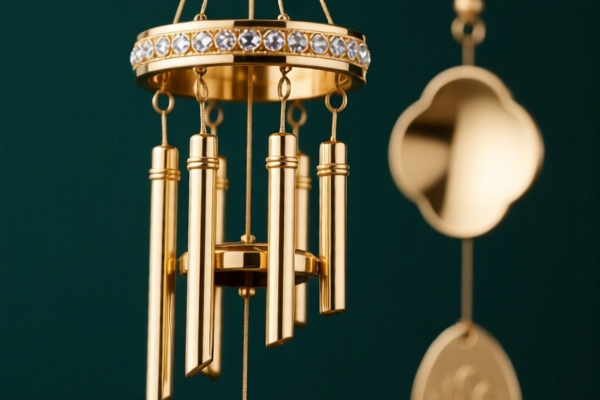
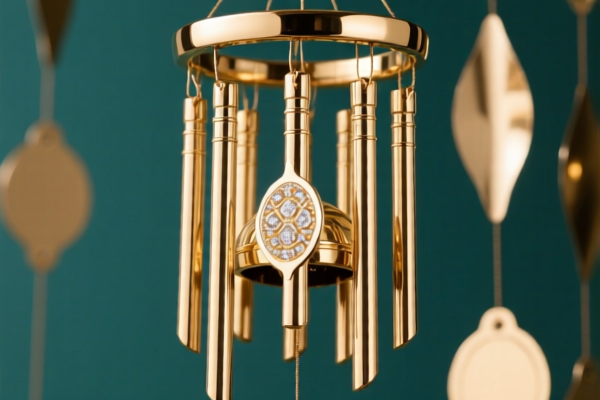
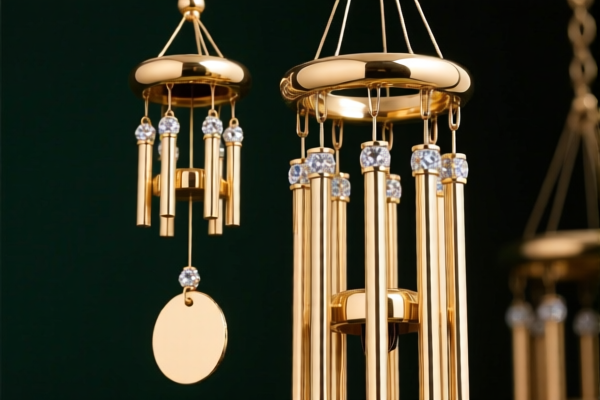
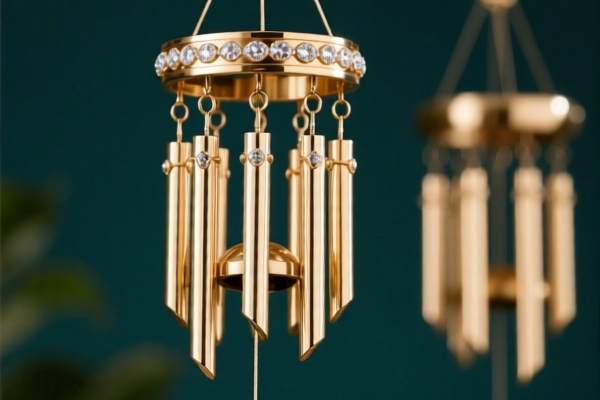
AI Analysis
🎐 Wind Chimes (Decorative Sonic Objects)
🌐 HS Code Reference & Customs Clearance Guide | 2026 Latest Tariff Analysis | Professional Clearance Strategy
📌 I. Product Definition & Classification: Do You Truly Understand "Wind Chimes"?
Wind chimes are decorative objects that produce sound when struck by the wind. They are typically composed of various materials such as glass, metal (steel/iron), bamboo, or wood. In international trade, classification is strictly determined by material composition. Misclassification based on "function" (sound production) rather than "material" is a common error that leads to significant tax discrepancies and customs delays.
⚠️ Key Classification Logic:
- Glass-based → Chapter 70 (Glassware)
- Metal-based (Steel/Iron) → Chapter 73 (Articles of Iron or Steel)
- Wood/Bamboo-based → Chapter 44 (Wood and Articles of Wood)
- No "Universal" Code: There is no single HS code for "Wind Chimes." You must classify by material.
📦 II. HS Code Classification Details (2026 Latest Tariff Authority Comparison)
| HS Code | Material Inference | Product Description & Logic | Total Tax Rate (CN→US) |
|---|---|---|---|
7020.00.60.00 |
Glass | Other Glass Articles. Fits the material requirement for "Other Glass Articles." No conflict in form or use. | 40.0% |
7020.00.40.00 |
Glass | Other Glass Articles. Fits the material scope of "Other Glass Articles." No obvious conflict in form or use. | 41.6% |
7326.90.86.88 |
Metal (Steel/Iron) | Other articles of iron or steel. Belongs to other iron articles not specifically listed. Fits the fallback classification logic. | 87.9% |
7326.19.00.80 |
Steel | Other articles of steel. Falls under the "Other Steel Articles" fallback category. No material or form conflict with wind chimes as metal decorations. | 87.9% |
4421.91.98.80 |
Bamboo/Wood | Other wooden articles. Infers material as bamboo or other wood. Fits the fallback classification logic for "Other Wood Articles." | 38.3% |
4421.99.98.80 |
Wood/Metal Mixed | Other wooden articles. Infers material as metal or wood, belonging to unlisted wood article categories. Matches the fallback attribute of "Other Wood Articles" with no material conflict. | 38.3% |
🔍 Critical Observation:
- Metal wind chimes carry the highest tariff burden (87.9%) due to the 50% surcharge on steel/aluminum/copper products.
- Glass and Wood/Bamboo options are significantly more cost-effective (38.3%–41.6%).
- Even within Glass (7020.00.60.00vs7020.00.40.00), slight structural or use differences can shift the base rate from 5% to 6.6%, impacting the final total.
💰 III. 2026 Latest Tariff Rate Breakdown (Including Surcharges & Policy Add-ons)
✅ Applicable Country: United States (US)
✅ Country of Origin: China (CN)
✅ Effective Date: November 10, 2025 onwards
🎯 1. 7020.00.60.00 / 7020.00.40.00 —— Glass Wind Chimes
| Item | Content |
|---|---|
| Base Duty | 5.0% (for .60) / 6.6% (for .40) |
| Section 301 Surcharge | +25.0% |
| Section 122 Surcharge | +10.0% |
| Steel/Aluminum/Copper Surcharge | ❌ Not Applicable |
| Total Tax Rate | 40.0% (for .60) / 41.6% (for .40) |
| Calculation Basis | CIF Value × Total Rate |
| De Minimis Eligibility | ❌ Not Eligible (Deny De Minimis) |
| Legal Basis Path | Base Tariff → Section 301 (Footnote) → Section 122 |
📌 Explanation:
- The 25% Section 301 tariff applies to most Chinese imports.
- The 10% Section 122 tariff is an additional surcharge for certain goods.
- Glass articles are exempt from the extra 50% steel/aluminum surcharge, making this category significantly cheaper than metal alternatives.
🎯 2. 7326.90.86.88 / 7326.19.00.80 —— Metal (Steel/Iron) Wind Chimes
| Item | Content |
|---|---|
| Base Duty | 2.9% |
| Section 301 Surcharge | +25.0% |
| Section 122 Surcharge | +10.0% |
| Steel/Aluminum/Copper Surcharge | +50.0% |
| Total Tax Rate | 87.9% |
| Calculation Basis | CIF Value × 87.9% |
| De Minimis Eligibility | ❌ Not Eligible (Deny De Minimis) |
| Legal Basis Path | Base Tariff → Section 301 → Section 122 → Steel/Aluminum Surcharge (50%) |
📌 Warning:
- The 50% surcharge on steel/aluminum products drastically increases costs.
- Total 87.9% is extremely high. If possible, avoid classifying metal wind chimes under these codes unless strictly necessary. Consider alternative materials (glass/bamboo) if design allows.
🎯 3. 4421.91.98.80 / 4421.99.98.80 —— Wood/Bamboo Wind Chimes
| Item | Content |
|---|---|
| Base Duty | 3.3% |
| Section 301 Surcharge | +25.0% |
| Section 122 Surcharge | +10.0% |
| Steel/Aluminum/Copper Surcharge | ❌ Not Applicable |
| Total Tax Rate | 38.3% |
| Calculation Basis | CIF Value × 38.3% |
| De Minimis Eligibility | ❌ Not Eligible (Deny De Minimis) |
| Legal Basis Path | Base Tariff → Section 301 → Section 122 |
📌 Advantage:
- Wood and bamboo articles are exempt from the 50% metal surcharge.
- With a 38.3% total rate, this is the most cost-effective option among the three main material categories.
- Ensure the product is primarily composed of wood/bamboo to qualify.
🛠️ IV. Customs Clearance Practical Advice (Battle-Tested Pitfall Avoidance)
✅ 1. Essential Documentation Checklist
| Document | Required | Notes |
|---|---|---|
| ✅ Product Specifications | ✔️ | Must specify primary material (Glass, Steel, Wood, Bamboo). |
| ✅ Material Declaration | ✔️ | Explicitly state: "Made of [Material]." Do not use vague terms like "Decorative Item." |
| ✅ Product Photos | ✔️ | Clear images showing material texture (e.g., grain for wood, transparency for glass, metal sheen). |
| ✅ Bill of Lading / Packing List | ✔️ | Must match HS Code description. |
| ✅ Commercial Invoice | ✔️ | Value must be accurate; misdeclaration leads to audits. |
✅ 2. Classification Tips (Key Mantra)
🔥 “Material Dictates Code, Not Function. Metal is Expensive, Glass/Wood is Smart.”
| Scenario | Correct HS Code | Wrong Approach | Consequence |
|---|---|---|---|
| Glass Tubes/Bells | 7020.00.60.00 or .40.00 |
Classify as Metal | ⚠️ Incorrect, but tax might be lower by chance; still risky. |
| Steel/Aluminum Tubes | 7326.90.86.88 or .19.00.80 |
Classify as Glass | ⚠️ High Risk of Audit & Penalty for Misclassification. |
| Bamboo/Wood Strips | 4421.91.98.80 or .99.98.80 |
Classify as Plastic | ⚠️ Plastic tariffs differ; ensure material accuracy. |
| Mixed Materials | Analyze Primary Material | Ignore material split | ⚠️ Customs may reclassify based on dominant component. |
✅ 3. Special Cases
| Situation | Handling Advice |
|---|---|
| Mixed Material Chimes (e.g., metal frame + glass bells) | Classify based on the principal character or essential material. If metal frame dominates, likely 7326. If glass bells are the main sound/value component, argue for 7020. Provide detailed BOM. |
| Set of Chimes | Declared as a single unit. Material of the majority of components determines the code. |
| Gift Items | No tariff benefit. Still subject to full duty + surcharges. |
🌍 V. Global Market Comparison (2026 Latest)
| Country/Region | Recommended HS Code | Tariff (China Origin) | Key Certification | Remarks |
|---|---|---|---|---|
| 🇺🇸 USA | 7020.00.60.00 / 7326.90.86.88 / 4421.91.98.80 |
38.3% – 87.9% | None Specific | High Tariffs Due to Section 301 & 122. Metal is most expensive. |
| 🇨🇳 China | 7020.00.60.00 / 7326.90.86.88 / 4421.91.98.80 |
0% - 10% | N/A | Low import tariffs for domestic production. |
| 🇪🇺 EU | 7020.00 / 7326.90 / 4421.91 |
0% - 2.7% | CE (if applicable) | No Section 301/122 equivalents. Much cheaper than US. |
| 🇬🇧 UK | 7020.00 / 7326.90 / 4421.91 |
0% - 2.7% | UKCA | Post-Brexit, aligned with EU standards mostly. |
📌 Conclusion:
- USA is the most expensive market for Wind Chimes due to Section 301 (25%) + Section 122 (10%) + Steel Surcharge (50%).
- Metal wind chimes are particularly vulnerable to high tariffs in the US.
- Consider supply chain diversification (e.g., sourcing from Vietnam/Mexico) if targeting the US market with metal goods, to avoid US-China surcharges.
📌 VI. Common Errors & Pitfall Avoidance (Blood-Learning Lessons)
❌ Error 1: Classifying all Wind Chimes under one HS Code
👉 Consequence: Customs rejection, delays, and potential fines. Material matters!
❌ Error 2: Using "Wind Chimes" as the only description
👉 Consequence: Ambiguity leads to arbitrary classification by CBP. Specify Material!
❌ Error 3: Ignoring the Steel Surcharge for Metal Chimes
👉 Consequence: Underpayment of 50% surcharge → Back taxes + Interest + Penalties.
❌ Error 4: Claiming "De Minimis" Exemption
👉 Consequence: Denied. These items are explicitly excluded from de minimis treatment under current US rules.
✅ Correct Approach:
"Glass Wind Chimes, Hand-blown, for Home Decoration, HS 7020.00.60.00"
OR
"Steel Wind Chimes, Outdoor Decorative, HS 7326.90.86.88"
🎯 VII. Conclusion: Professional Classification Saves Money!
🎯 Remember the Mantra:
🔹 “Material First, Not Function.”
🔹 “Metal is Heavy, Glass is Light, Wood is Bright.” (Referring to Tax Burden)
🔹 “Check Section 301 & 122, Before You Cross.”
📌 Pro Tip:
If your product is primarily Wood or Bamboo, you save ~50% compared to Metal.
If you must use Metal, consider pre-payment calculations with a licensed customs broker to ensure accuracy.
For Glass, verify the exact sub-heading (.60 vs .40) based on shape/use to optimize the 1.6% difference.
📣 Immediate Action:
📞 Contact a Customs Broker + Provide Material Specs + Apply for Advance Ruling if shipment volume is high.
🚀 Let your Wind Chimes ring clear, not costly!
✨ Professional Clearance Starts with Accurate Classification!
💼 Every Dollar Saved in Tariffs is Pure Profit!
Customer Reviews
About HS Code Classification
The Harmonized System (HS) is an internationally standardized nomenclature developed by the World Customs Organization (WCO) to classify traded products. Over 200 countries use the HS system as the basis for customs tariffs, trade statistics, and import/export regulations.
Each HS code follows a hierarchical structure:
- Chapter (2 digits) — Broad category of goods (e.g., Chapter 84: Machinery and Mechanical Appliances)
- Heading (4 digits) — More specific grouping within the chapter
- Subheading (6 digits) — Internationally standardized breakdown, used by all WCO member countries
- National subdivisions (8-10 digits) — Country-specific extensions for further classification, such as US HTSUS 10-digit codes
Correct HS code classification is essential for smooth customs clearance, accurate duty payment, and compliance with trade regulations. Misclassification can lead to customs delays, overpayment of duties, or penalties.
When importing from CN to US, the applicable tariff rates may include:
- Most-Favored-Nation (MFN) rate — The standard duty rate applied to WTO members
- General rate — Applied to countries without trade agreements
- Trade remedy duties — Additional tariffs such as Section 301 (anti-dumping), Section 232 (national security), or countervailing duties
The information provided on this page is for reference purposes only. For official classification, please consult with your local customs authority or a licensed customs broker.